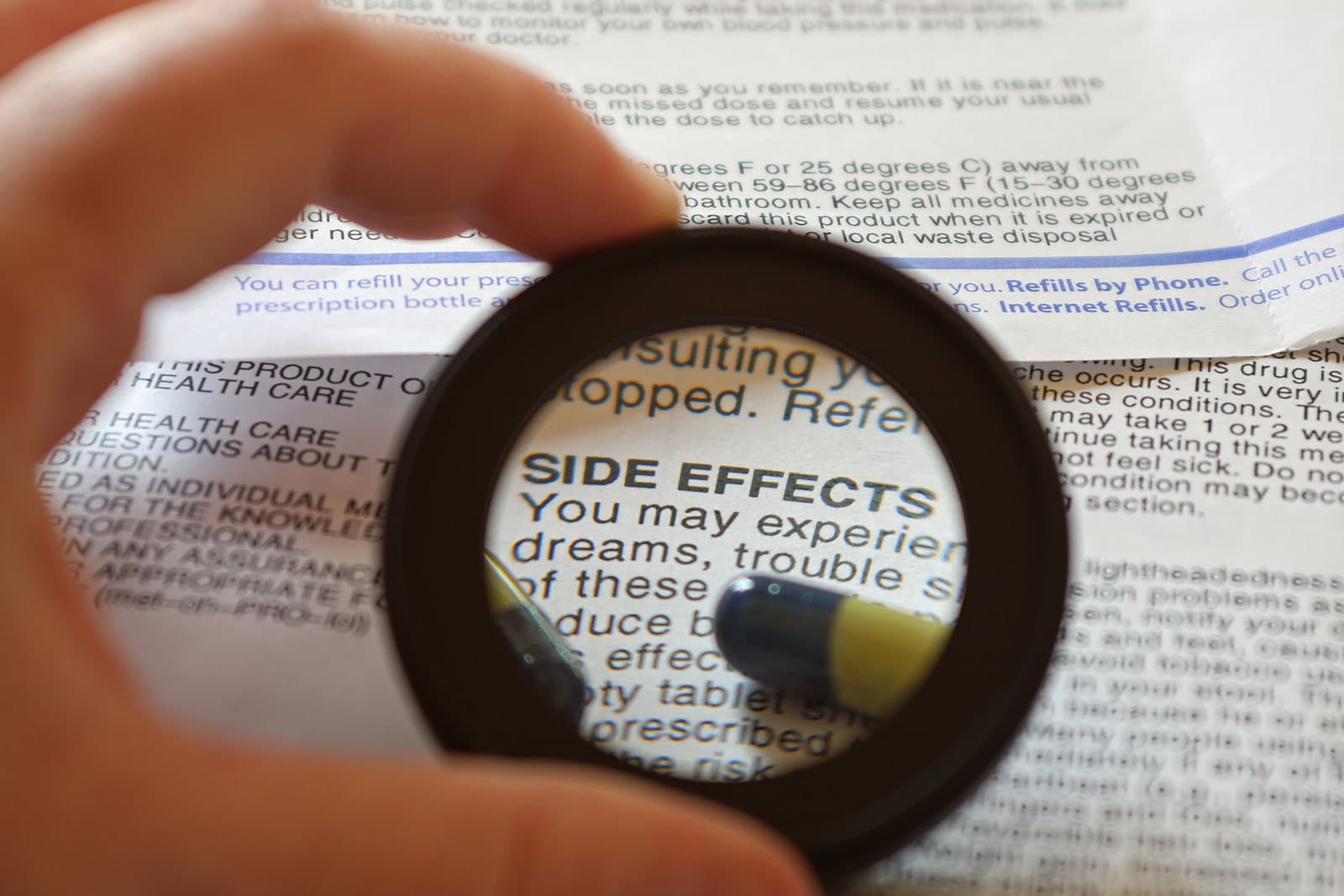
Do you pay attention to the side effects listed on any of those new drugs being advertised on TV? It may seem as if such medications could be a good solution for your health problem, but the long list of possible problems can be daunting. Before “asking your doctor if Drug X is right for you,” ask yourself this question: Has any healthcare professional—doctor, nurse practitioner, physician assistant, or pharmacist—ever told you how likely you are to experience a specific side effect? Not just that it might happen, but how often it actually does happen in the real world. This gap between warning and understanding is why the truth about drug side effects is so hard to grasp.
The Truth About Drug Side Effects Is Hard to Determine
For example:
- What percentage of people like you develop muscle pain while taking a statin?
- How many people experience diarrhea or nausea when using a GLP-1 drug such as Ozempic or Wegovy?
- How common is a chronic cough or swelling reaction with a blood pressure drug like lisinopril?
For most patients, the honest answer is: no one has ever told them.
Unfortunately, that makes it shockingly hard to answer the most important question of all:
How likely is this to happen to me?
Warned But Not Informed
Physicians or pharmacists may tell people that their blood pressure medicine might cause dizziness upon standing, but they rarely offer any context. Is this one person out of 100 (1%) or 30 out of 100 (30%)?
More than 20 million Americans take metformin to manage diabetes. Many have been warned that stomach upset or diarrhea are possible side effects. Chances are good that they are not given many details. But investigators report that gastrointestinal (GI) side effects associated with metformin can occur in up to 75% of those taking the medicine (Clinical Diabetes, April, 2021). Sometimes the GI complications sneak up somewhat surreptitiously, after many years without problems. Some people are surprised to learn about “late-onset diarrhea.”
Sertraline is one of the most prescribed antidepressants on the market. Over 9 million people take it regularly. Healthcare professionals are just like the rest of us. They can be shy about discussing sexual side effects. Even if they mention erectile dysfunction, lowered libido or inability to achieve orgasm, chances are good that patients won’t be told how often such side effects occur. If a health professional looks the data up in the official prescribing information, chances are even better that the incidence of such complications will be out of touch with reality (far lower than people actually report).
The theme of this article is that people are warned but not informed. That is why understanding the truth about drug side effects remains so elusive.
Drug Side Effects Without Context
Consider a television ad for a drug to treat bipolar disorder such as Vraylar (cariprazine). In the commercial, the medication helps calm the chaos in a woman’s life.
Then comes the warning: it isn’t appropriate for elderly people with dementia. Fine—that’s not you.
But what about “fever, stiff muscles or confusion, which may be life-threatening”? Or “uncontrolled muscle movements which may be permanent”? Or “high blood sugar, which can lead to coma or death”?
We are also told that certain side effects are common: “difficulty moving, tremors, slow or uncontrolled body movements, restlessness and feeling like you need to move, sleepiness, nausea, vomiting and indigestion.” What does any of that mean? Have you already zoned out after “uncontrolled body movements“?
If your doctor suggested that this drug might be appropriate, you could have a challenging time weighing the pros and cons. Being warned is not the same as being informed!
Where the “Truth” About Drug Side Effects Comes From
Physicians learn about drug risks from randomized controlled trials. Patients can find this information too, because the studies that led to FDA approval are often summarized at DailyMed.
Most drug entries list side effects under Section #6: Adverse Reactions.
Here’s where things get puzzling.
If you look up Vraylar, you’ll find the side effects mentioned in the commercial—and others that never made it into the ad. What you won’t see on television are numbers.
For example, headache is listed as affecting 13 percent of patients. Constipation has an incidence of 11 percent, though it isn’t mentioned in the commercial.
This gets us closer to the truth about drug side effects, but it still doesn’t tell the whole story.
Same Drug, Very Different Numbers
Even when percentages are provided, the data can be confusing.
Semaglutide is prescribed for diabetes and weight loss. It is available as a pill or an injection. All forms contain the same compound.
You might expect similar side effects from Ozempic, Rybelsus, and Wegovy. Remember, they are all semaglutide.
In reality, adverse reaction reports differ dramatically.
Nausea affects about 20 percent of people taking Ozempic or Rybelsus. With Wegovy, nausea rises to 44–46 percent. Diarrhea affects 9–10 percent of those on Ozempic or Rybelsus, but 17.6 percent of people taking oral Wegovy and 30 percent using the injectable form.
These numbers illustrate just how difficult it can be to interpret the truth about drug side effects.
When “Rare” Doesn’t Feel Rare: Lisinopril
ACE-inhibitor drugs like lisinopril are among the most commonly prescribed medications in the United States. Angioedema—dangerous swelling of the face, tongue, or airway—is considered rare. Yet we hear from many people whose experiences suggest otherwise.
JoAnn shared this troubling account:
“Two years ago my husband went to the emergency department with severe abdominal pain. He required emergency surgery for an intestinal blockage and lost part of his colon and small intestine. He became septic and had numerous complications. No cause was ever identified. He had been taking lisinopril for several years.
“Before the emergency, he had months of nausea, bloating, and diarrhea. We’ll never know for sure if there’s a connection, but this information raises important questions we plan to discuss with his surgeon.”
A pharmacist wrote to us:
“I experienced angioedema after taking lisinopril for over 15 years. By the time I reached the ER I couldn’t speak and was struggling to breathe. I believe this drug should carry a black-box warning, and patients should be warned verbally at every refill.”
Lisinopril Can Also Cause Cough
Frank told us:
“Lisinopril caused a deep, racking cough that became unbearable. My GP refused to believe it was related. My pulmonary specialist suggested treating sinus drip. Both sounded like they were repeating drug-rep talking points.”
Patricia, writing from Australia, discovered the truth only after years of suffering:
“I developed a dry cough so violent it caused nosebleeds and incontinence. No one ever connected it to lisinopril. I only figured it out after finding this website.”
Gabapentin: Widely Prescribed, Widely Underestimated
Pain management clinicians now prescribe gabapentin more frequently prescribed than any other pain medication in the United States. Experts rank it among the top 10 most prescribed drugs overall. Most American physicians are now afraid to prescribe opioids. Gabapentin has become their alternative pain medicine.
Yet many patients tell us they were never warned about psychiatric, neurological, or withdrawal effects. Gabapentin is being prescribed off-label for many other conditions. Doctors are prescribing it for conditions that the FDA has never reviewed or approved including migraine headaches, anxiety, restless legs syndrome, bipolar disorder, fibromyalgia, hot flashes, hiccups and pain.
Katie wrote:
“I was started on gabapentin for restless legs at a low dose. As the dose increased, I developed strange head sensations and profound depression. I stayed in bed. I had no life. I’ve struggled with depression before, but gabapentin made it far worse. I hate life.”
Les shared this experience:
“After less than a month on gabapentin, I developed heart palpitations, dizziness, headaches, and severe diarrhea. When I stopped the drug, I was told there were no withdrawal symptoms. That wasn’t true. I felt far worse than before I ever took it.”
Alex’s story was even more alarming:
“After months on gabapentin, I developed severe mood swings and suicidal thoughts. I was hospitalized. The psychiatrist immediately recognized the drug as the cause. No one had warned me this was possible.”
These stories may not fit neatly into prescribing tables—but they are undeniably part of the truth about drug side effects.
One more thing about gabapentin that we suspect is rarely, if ever, mentioned.
A study in the journal Regional Anesthesia and Pain Medicine (July 10, 2025) concludes:
“Gabapentin prescription in adults with chronic low back pain is associated with increased risk of dementia and cognitive impairment, particularly in non-elderly adults. Physicians should monitor cognitive outcomes in patients prescribed gabapentin.”
Why The Truth About Drug Side Effects Matters
When patients are warned but not informed, side effects may be dismissed, misdiagnosed, or endured far too long. Serious reactions can escalate into emergencies. Trust erodes when lived experience contradicts official assurances.
Understanding the truth about drug side effects is essential for informed consent.
One More Thing!
This article is all about the lack of transparency when it comes to side effects. But there is another elephant in the room! It has to do with drug effectiveness. How well will your medicine work to solve your health problem? I will not go into this in detail here. You can read much more about how the pharmaceutical industry misleads healthcare professionals and patients by emphasizing “relative risk reduction” over “absolute risk reduction” at this link.
Big Pharma’s Dirty Secret: How Its Math Misleads Doctors and Patients
Do you know how effective your medicine really is? Drug companies have a secret strategy: statistics! Their math misleads too many patients.
You now know that you can go to DailyMed to learn about the actual side effects uncovered in the clinical trials used to gain FDA approval.
How Many People Taking This Drug Actually Benefit?
Here is another insider’s website to learn about drug effectiveness. Go to TheNNT.com. This website explains the Number Needed to Treat (NNT). In other words, how many people have to take a given drug or class of medicines for one person to achieve benefit.
The NNT website provides an even more understandable number: percent! It will tell you what percentage of people get benefit from any given drug or class of medicines.
Search statins “For Heart Disease Prevention (Without Prior Heart Disease).” You will see that the number needed to treat to prevent a heart attack in this group was 104. In other words, 1 person out of 104 could prevent a heart attack according to the people who crunched the numbers. Click on the % sign and you get a more understandable number. According to these researchers, 0.96% of the individuals “without known heart disease” could prevent a heart attack after taking statins for 5 years. Call it 1%. That suggests that 99% of people “without known heart disease” would not prevent a heart attack by taking statins for 5 years, presumably because they wouldn’t suffer a heart attack regardless of medication.
What Will Your Prescriber Say?
Sadly, TheNNT.com does not provide details for every medicine on the market, but it does include enough to make it worth searching. While you are at it, here is a question to ask your prescriber: “If 100 people were to take this medicine you are prescribing, how many would experience benefit?”
This question will encourage your healthcare provider to do some homework and get back to you with the percentage of people who achieved the desired outcome. That will help you better understand the benefits of the medicine in a meaningful way.
You may get some pushback, though. Most healthcare professionals have not had to analyze the medicines they prescribe or dispense in analytical ways. They are not trained to think in terms of percentages: ie, how many people will benefit and how many people will be harmed out of 100? But if Consumer Reports can analyze toasters, computers and cars, why not medications? We think you deserve meaningful data before making decisions about your health.
What You Can Do
If a TV commercial or prescription raises concerns:
- Visit DailyMed
- Visit TheNNT.com
- Look up the drug in a database that offers actual numbers
- Scroll to Section #6: Adverse Reactions in DailyMed
The data are flawed and incomplete—but percentages are more meaningful than vague words like rare or common.
Then Ask Your Healthcare Provider for the Truth About Drug Side Effects
- How often does this happen in real-world use?
- Are there side effects that appear months or years later?
- Which symptoms should prompt immediate medical attention?
The Bottom Line
Drug labels tell us what was detected under artificial conditions—short trials, selected patients, and limited questions. Patients, by contrast, teach us what happens in real life: over months and years, at higher doses, and in bodies that don’t fit clinical trial templates. Here at The People’s Pharmacy we have been sharing patient stories for nearly 50 years through our nationally syndicated newspaper column and more recently on this website. Patients have reported unusual adverse reactions long before the FDA announced them to the healthcare community.
Too often, people are warned but not informed. They hear that a side effect might occur, but not how likely it is, how severe it can be, or how long it may take to appear. That lack of context leaves patients unprepared to recognize problems early—or to advocate for themselves when something feels wrong. Many health professionals look in their drug databases. If the patient’s complaints are not listed as common, they may be dismissed.
Understanding the truth about drug side effects doesn’t mean rejecting medication. It means asking better questions, demanding clearer answers, and recognizing that patient experience is a crucial part of drug safety knowledge.
Only by listening to both—clinical data and lived experience—can we move beyond being warned but not informed, and begin to truly understand the truth about drug side effects.
Help Us Please:
Have you ever experienced a drug side effect that your prescriber never mentioned? If so, please share it in the comment section below. Have you ever experienced a delayed side effect? In other words, did it take weeks, months or years for an adverse reaction to show up? Have you ever had difficulty trying to determine the actual benefits and risks of a medicine you were taking? We would love to learn about your experience.
If you think this article is helpful, please share it with friends and family members. The only way we can continue providing this kind of objective information is by growing our free newsletter. The more people you encourage to sign up for our newsletter, the longer we can keep providing this service. Here is a link. Your support and donations keep us going. Thank you so much.
Citations
- Subramaniam, K., et al, "A Common Drug Causing a Common Side Effect at an Uncommon Time: Metformin-Induced Chronic Diarrhea and Weight Loss After Years of Treatment," Clinical Diabetes, April, 2021, doi: 10.2337/cd20-0101
- Eghrari, N.B., et al, "Risk of dementia following gabapentin prescription in chronic low back pain patients," Regional Anesthesia and Pain Medicine, July 10, 2025, doi: 10.1136/rapm-2025-106577