Is your cholesterol a bit too high? That wouldn’t be surprising, since cardiologists keep making the criteria for acceptable cholesterol levels more stringent. Cholesterol can contribute to arterial plaques that increase the risk for heart disease. For total cholesterol, the guidelines suggest that healthy people aim for 200 or less, with LDL (“bad”) cholesterol at or below 100. People with heart disease may need to take medications to reduce their cholesterol levels even more. Physical activity and diet are the first steps for cholesterol control, but that isn’t always enough. If you are healthy, can you take supplements to lower cholesterol?
Are You a Pill Person?
As we noted, the first step for cholesterol control is staying active and following a diet high in soluble fiber and low in readily-digested highly processed foods. But some people just love taking pills. We get that. We live in a pill-popping society. You can hardly watch television for more than 15 minutes without seeing commercials for prescription drugs. Plenty of readers would prefer to avoid prescriptions, but they’d like to know more about supplements to lower cholesterol.
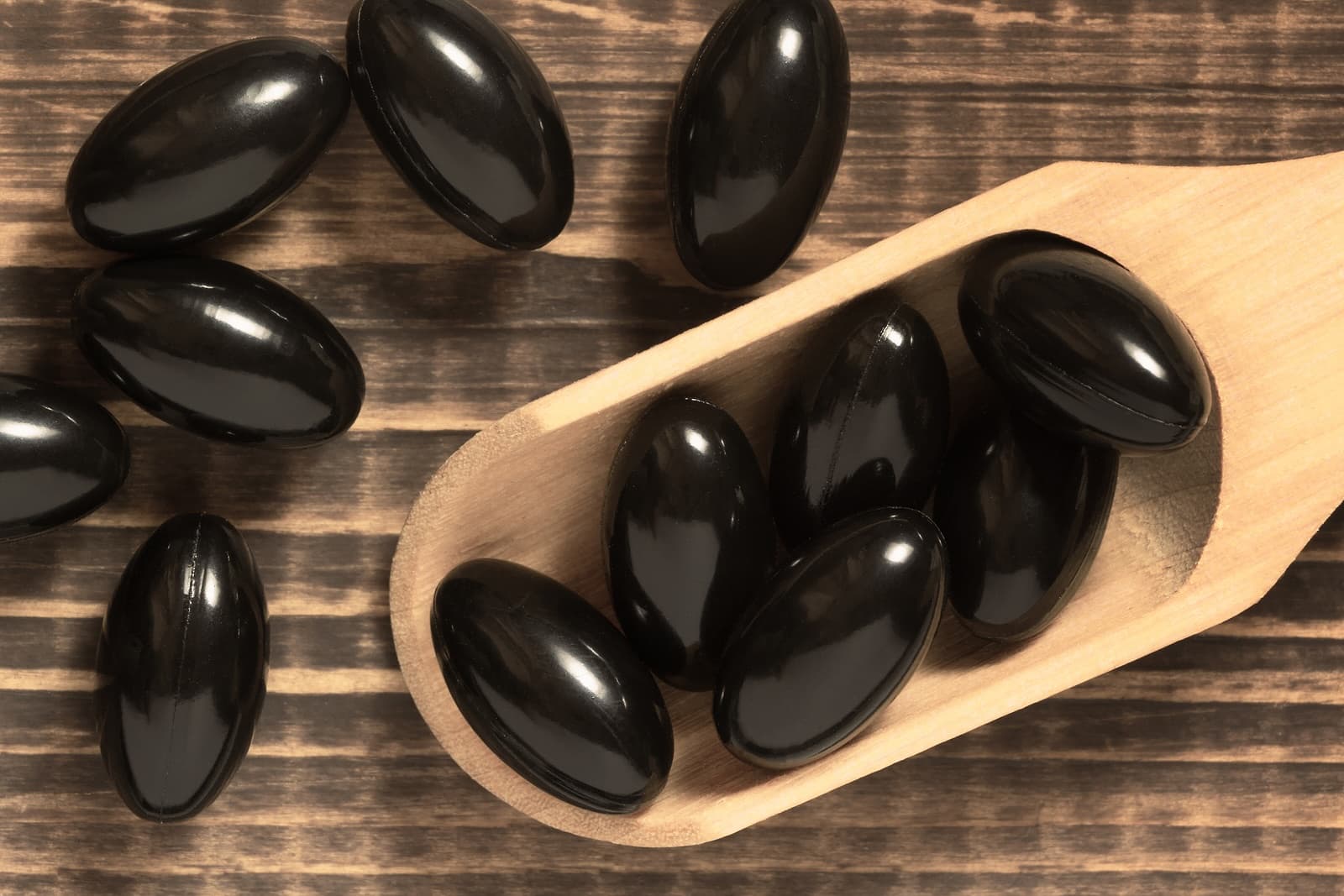
If you like to swallow a pill, you may want to consider red yeast rice. This product contains naturally produced statins that have been shown to lower cholesterol (Nutrition, Metabolism, and Cardiovascular Diseases, Jan. 2017).
A combination supplement (Armolipid Plus) with red yeast rice, policosanol, berberine, folic acid, astaxanthin and Coenzyme Q10 has been tested in randomized controlled trials (Atherosclerosis. Supplements, Feb. 2017). It lowers both total and LDL cholesterol.
You can learn more about this approach in our comprehensive article:
How Does Red Yeast Rice Compare to Statins?
Red yeast rice is probably the best known of the supplements to lower cholesterol, but it is not the only one.
Is Astaxanthin an Option?
Q. Someone in the medical field who is also very knowledgeable about pharmacology touted the many health benefits of astaxanthin. What are your thoughts on this and is there any downside?
A. Astaxanthin is a carotenoid derived from marine sources such as algae and the fish that eat it. Wild salmon, for example, owes its brilliant color to astaxanthin. Krill and shrimp also supply dietary astaxanthin.
While this compound is a powerful antioxidant, the claims marketers often make for its benefits are not strongly supported by clinical studies. Examine.com discusses studies of astaxanthin to improve skin quality and to counteract eye fatigue from digital display screens. Scientists have studied its potential to alleviate neurological disorders, but most of the research has been conducted in animals or tissue culture (Molecular Medicine Reports, Oct. 2022). In a study, astaxanthin supplements lowered both LDL and total cholesterol in people with prediabetes (Diabetes, Obesity & Metabolism, July 2023).
If you choose to take astaxanthin or other supplements to lower cholesterol, choose carefully. ConsumerLab.com has evaluated 11 brands of astaxanthin supplements for quality. Six of the seven products the testers reviewed passed muster. Accessing reports at ConsumerLab.com requires a subscription.
Some people taking astaxanthin supplements report more frequent bowel movements, occasionally with abdominal discomfort, and red-colored stool. We’d want to see more convincing data of clinical benefit before we’d start taking it as a supplement.
Could You Take Berberine Supplements to Lower Cholesterol?
Q. I’m not interested in taking a statin to lower my cholesterol. Someone said berberine could help, but I don’t know much about this supplement. What is it and is it worth taking? Does it have side effects?
A. A number of different plants make the natural compund berberine, including Oregon grape holly (Berberis aquifolium) and barberry (Berberis vulgaris). Such plants have long been used in Ayurvedic and traditional Chinese medicine.
A pilot study tested berberine supplements for three months. (Minerva Gastroenterology, Oct. 19, 2023). They lowered total cholesterol and increased HDL cholesterol significantly. Triglycerides dropped and CoQ10 levels were unchanged.
The volunteers did not report unpleasant side effects, but this study does not provide data on longer-term use of these tablets. A review of multiple trials concluded that berberine has no more adverse effects than statins (Frontiers in Pharmacology, Nov. 15, 2023).
The investigators used Sophy® tablets containing Berbevis™ berberine extract for this trial. that brand is available in Europe. American shoppers should be aware that many brands of berberine supplements tested by NOW Foods (and listed on the ConsumerLab.com website) do not contain the stated amount of berberine. Caveat emptor.
Regardless of which supplement you may consider, be sure to discuss your choice with your primary care provider. (If you have a cardiologist because you have heart disease, you probably should be on a prescription drug to lower cholesterol.) Some supplements may interact with other medications you are taking.
Citations
- Pirro M et al, "Joint position statement on "Nutraceuticals for the treatment of hypercholesterolemia" of the Italian Society of Diabetology (SID) and of the Italian Society for the Study of Arteriosclerosis (SISA)." Nutrition, Metabolism, and Cardiovascular Diseases, Jan. 2017. DOI: 10.1016/j.numecd.2016.11.122
- Barrios V et al, "A nutraceutical approach (Armolipid Plus) to reduce total and LDL cholesterol in individuals with mild to moderate dyslipidemia: Review of the clinical evidence." Atherosclerosis. Supplements, Feb. 2017. DOI: 10.1016/j.atherosclerosissup.2016.10.003
- Si P & Zhu C, "Biological and neurological activities of astaxanthin (Review)." Molecular Medicine Reports, Oct. 2022. DOI: 10.3892/mmr.2022.12816
- Ciaraldi TP et al, "Astaxanthin, a natural antioxidant, lowers cholesterol and markers of cardiovascular risk in individuals with prediabetes and dyslipidaemia." Diabetes, Obesity & Metabolism, July 2023. DOI: 10.1111/dom.15070
- Cesarone MR et al, "Borderline hyperlipidemia preventive management with Berberine PL in asymptomatic prevention of early atherosclerosis." Minerva Gastroenterology, Oct. 19, 2023. DOI: 10.23736/S2724-5985.23.03540-4
- Cai Y et al, "Efficacy and underlying mechanisms of berberine against lipid metabolic diseases: a review." Frontiers in Pharmacology, Nov. 15, 2023. DOI: 10.3389/fphar.2023.1283784