How Patients Are Using Technology to Heal Healthcare
How You Can Listen:
How Technology Is Transforming Healthcare:
How Patients Are Using Technology:
Patients Using Technology to Access Medical Knowledge:
Imbalances of Power and Attention:
Using Technology to Repurpose Old Drugs:
Online Prescribing and Dispensing:
This Week’s Guests:

Marschall Runge, MD, PhD
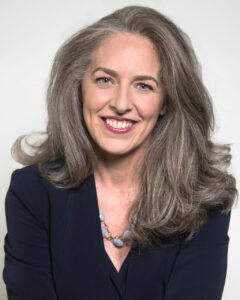
Susannah Fox, author of Rebel Health: A Field Guide to the Patient-Led Revolution in Medical Care
Listen to the Podcast:
Transcript of Show 1461:
A transcript of this show was created using automated speech-to-text software (AI-powered transcription), then carefully reviewed and edited for clarity. While we’ve done our best to ensure both readability and accuracy, please keep in mind that some mistakes may remain. If you have any questions regarding the content of this show, we encourage you to review the original audio recording. This transcript is copyrighted material, all rights reserved. No part of this transcript may be reproduced, distributed, or transmitted in any form without prior written permission.
Joe
00:00-00:01
I’m Joe Graedon.
Terry
00:01-00:05
And I’m Terry Graedon. Welcome to this podcast of The People’s Pharmacy.
Joe
00:06-00:26
You can find previous podcasts and more information on a range of health topics at peoplespharmacy.com. Medicine has changed tremendously over the last several decades. How has technology transformed health care? This is The People’s Pharmacy with Terry and Joe Graedon.
Terry
00:34-00:42
Clinicians can now care for patients at home and monitor them with sophisticated technology almost as well as if they were in the hospital.
Joe
00:42-00:51
Patients themselves now have access to far more information than ever before. They can look at the results of lab work on their patient portal.
Terry
00:52-01:01
Patients can also communicate online through thousands of support groups that are specific to health conditions. They’re also beginning to conduct research.
Joe
01:01-01:08
Coming up on The People’s Pharmacy, how patients are using technology to heal health care.
Terry
01:14-02:10
In The People’s Pharmacy Health Headlines:
We’re still in the middle of a serious flu season, and scientists have just published another reason to try to avoid coming down with influenza. Beyond the fever, congestion, aches, coughs, and general misery of flu, influenza A infections can harm the heart.
When the virus invades the heart, it can kill specialized heart muscle cells that control rhythmic pumping. People with pre-existing heart disease appear to be especially vulnerable. In some cases, white blood cells of a type called prodendritic cell 3 pick up the infection in the lungs and transfer it to the heart.
The interferon that these white cells produce damage the heart muscle cells. The scientists suggest that this new information could help doctors mitigate heart risk in people with influenza A.
Joe
02:11-03:16
A study published in Nature Communications demonstrates that the bacterium Chlamydia pneumoniae can lie dormant in the eye and brain for years. This respiratory pathogen can lead to sinus infections or pneumonia. It can also trigger infection-driven inflammation.
C. pneumoniae has been linked to hard-to-treat asthma and COPD. The latest research, however, suggests that this microbe might also be linked to Alzheimer disease. People with dementia had substantially greater amounts of C. pneumoniae in their retinas and brain tissues than people with normal cognitive ability.
The investigators report that infection-driven aggravation of neuroinflammation appears to lead to amyloid beta buildup in the brain and cognitive decline. This research opens up new opportunities. For one thing, it raises the possibility that patients with detectable C. pneumoniae bacteria might benefit from antibiotic-based treatment.
Terry
03:16-04:46
If you’re a coffee drinker, you may be helping your brain. That’s the conclusion of a new study published in JAMA. The title of the article is Coffee and Tea Intake, Dementia Risk and Cognitive Function. The investigators tracked 131,821 volunteers for up to four decades. These were participants in the Nurses’ Health Study and the Health Professionals’ Follow-Up Study.
The researchers were asking this question, is long-term intake of caffeinated and decaffeinated coffee associated with risk of dementia and cognitive outcomes? The authors answered that question this way.
In two large prospective cohorts, including U.S. female and male participants with repeated dietary assessments and extended follow-up, higher intake levels for caffeinated coffee, tea, and caffeine were associated with a reduced risk of dementia. The researchers also reported modestly better cognitive function in the caffeinated tea and coffee consumers.
Two or three cups of coffee, or one or two cups of tea, were enough to demonstrate cognitive benefits. People who drank decaffeinated coffee or tea did not seem to experience any advantage. The authors point out that their findings are consistent with other research reporting protective associations of caffeine and coffee intake with cognitive decline.
Joe
04:47-05:57
Lifelong learning is also associated with a reduced risk for Alzheimer’s disease. That’s the conclusion of research published in the journal Neurology. There were nearly 2,000 octogenarians without dementia who began the study. Follow-up lasted for about eight years.
The researchers questioned people about childhood learning experiences as well as current behavior. People who participated in intellectually stimulating activities such as learning a language, reading, or writing seemed to develop Alzheimer’s disease five years later than other people in the sample who had not embraced lifelong learning.
Those who developed mild cognitive impairment did so seven years later than those without lifelong learning. Those with higher lifetime enrichment showed less cognitive decline before death compared with those with less opportunity to learn.
The lead author noted, quote, Our findings are encouraging, suggesting that consistently engaging in a variety of mentally stimulating activities throughout life may make a difference in cognition.
And that’s the health news from the People’s Pharmacy this week.
Terry
06:14-06:17
Welcome to the People’s Pharmacy. I’m Terry Graedon.
Joe
06:17-06:32
And I’m Joe Graedon. Medicine has changed radically over our lifetimes. It’s hard to imagine that doctors once made house calls, but medical technology is revolutionizing how doctors diagnose and treat their patients.
Terry
06:32-06:40
Patients are also adopting technological advances to improve their knowledge and access to the most appropriate treatments.
Joe
06:40-07:08
To learn more about how doctors envision this revolution, we turn to Dr. Marschall Runge. He was the former executive vice president for Medical Affairs at the University of Michigan, Dean of the Medical School, and CEO of Michigan Medicine. Dr. Runge is the author of “The Great Healthcare Disruption: Big Tech, Bold Policy, and the Future of American Medicine.”
Terry
07:08-07:12
Welcome to the People’s Pharmacy, Dr. Marschall Runge.
Dr. Marschall Runge
07:13-07:16
It’s great to be with you today. Thank you very much, and I look forward to our conversation.
Joe
07:17-07:51
Dr. Runge, you come from a long line of health professionals. It’s my understanding that your grandfather was a doctor and your father was a doctor and you’re a cardiologist and you’re the head of Michigan Medicine at the very pinnacle of modern medicine in America.
So how has healthcare changed since when your dad was practicing cardiology, when your grandfather was a doctor? Would they even recognize what is going on today?
Dr. Marschall Runge
07:52-08:48
I don’t think they would. They’d say, ‘What is this?’ My grandfather was in an era where really everything about being a physician was talking to patients. The physical examination was critical.
There were very few tests, the electrocardiogram, he was one of the early people working on electrocardiograms. And that was about the only tool we had in x-rays. Fast forward to my father. My father was a cardiologist. I grew up in Austin, Texas. And he did cardiology and internal medicine. Cardiology was just an emerging field at that time.
And one of the things that was most fascinating, I would go around with him sometimes on hospital rounds. And he had a great way with people. He also did house calls, and he had gotten his car rigged up with a mobile headlight kind of thing that he could shine to see if he was at the right address. And I thought as a kid, that was so cool.
Terry
08:50-09:04
Well, the very idea of making house calls is, I think, probably completely foreign to most doctors today. The whole setup of medicine must have changed so much.
Dr. Marschall Runge
09:05-09:45
It has. And while there still are a few people, generally senior people, let’s call them, like myself, who would be willing to make house calls, very few people make house calls. Now, on the other hand, I think we’ll be seeing much more care in the home now and in coming years due to technology, where a person can get a very high level of care at home with what are essentially wearable devices and contact with health care providers.
In fact, I had one experience like that. And it is… so I think it’s the pendulum swings one way, it swings back the other way. But the overall practice of medicine is so different than it used to be.
Joe
09:45-10:09
Well, you know, we love the idea of home care, which brings up a very personal experience for you. You had a hip replacement surgery, and things did not go as anticipated, and you ended up being at home but receiving very high-quality care.
Can you tell us about that whole experience shortly, please?
Dr. Marschall Runge
10:10-12:31
I’m glad to. I needed a hip replacement. It’s usually a pretty routine procedure, you go home the same day. I did. But I had an unusual complication, which made me short of breath. It wasn’t a pulmonary embolism. It was little shards of fat from where they put in the implant.
And so I went to the hospital, went back to the hospital, went to the emergency room. My oxygen saturation was very low. They whipped me upstairs. And after a little while, I was in the ICU. And I’d been there about 24 hours, and I was feeling much better, but I was feeling much crazier. I just couldn’t stand it. I was getting checked on every 30 minutes; I couldn’t get any sleep.
And I knew we had a great home care program. So I said, how about if I go home? And they said, no, no, no, you don’t want to do that. And I said, why not? And they said, well, what if something happens? And I said, well, what do you tell other people who are you going to send to home care? And they said, yeah, but you’re different.
I think they were worried that I would have a bad experience. But they let me go, and I went home. And waiting for me, by the time I got home, were several sort of wearables. I had a pulse oximeter, I had a mobile blood pressure cuff, I had several other things. I had an incentive spirometer. And I had a nurse who went through all this with me, was available over the next several days, 24-7 if needed. And I had a physical therapist who came later that same day and had physical therapy every day.
And the fantastic part is I slept for about 12 hours the first night I was at home because I was just so exhausted. So I think, and my experience is very similar to others, that one of the ways that people can get better faster, have less expense, and a better outcome is to have home care.
We now know in our system, some people that would ordinarily go from either a phone call to their doctor or a visit in the clinic directly to the emergency room, there’s a group of those people who can get care at home. So we’re trying to figure out how can we best expand that kind of care. Because for those of you who have been in hospitals, it’s no walk in the roses. And I think that this is one of the many ways in which technology can actually improve the care of all of us.
Joe
12:32-13:13
Well, the thing that’s so fascinating to me is that there are so many devices now. I mean, you can monitor not just blood pressure, but blood glucose. You can measure respirations. You can measure temperature. And it’s even conceivable that you could have a video hookup so that a nurse back in Ann Arbor at the hospital could be monitoring you. And if there was an emergency, you could have two-way communication with a healthcare professional almost immediately.
So, you know, the idea of being able to sleep at home, wow, what an improvement over trying to sleep in the hospital.
Dr. Marschall Runge
13:15-14:11
You’re right. And, in fact, there is very high-level potential for monitoring, which is used in some more rural settings. And it’s, I won’t call it an ICU, but it’s not too far from an ICU with all the components you just mentioned.
And the care, it’s called a virtual CCU or a virtual emergency room. And the care can be excellent. Now, you have to have health care providers, doctors, nurses, and others who are enthusiastic about this and who understand how to use the technology. But I think we’ll see much, much more of it.
And for example, a day in the hospital is about $1,500 on a regular floor, more like over $2,000 in an ICU. And a day at home is about $200. And so we worry about the cost of health care. That’s one way we can make it better. But as you said, it’s much better for the person, for the patient.
Terry
14:13-14:56
Well, I know there are plenty of patients who are using, as you put it, wearables to improve their own health. And they’re going online to find other people with similar problems, similar health problems, so that they can all learn from each other.
I’m wondering now, how can patients and doctors work together to use, for example, artificial intelligence for diagnosis? When you’ve got something wrong with you and you don’t know what it is, how does that diagnostic process play out differently now or in the future with the access to artificial intelligence?
Dr. Marschall Runge
14:58-17:35
Well, on the one hand, I am a huge fan of artificial intelligence. And I think that one of the benefits it brings is the ability to analyze huge amounts of data, very large amounts of data that would be hard to do in any other way.
And I think that in the near future, we’ll see much more use of wearables. And today, it’s hard to connect the wearables to the electronic medical record, but that’s getting better. So that when you come in for a visit, or it can be done trans-telephonically, an awful lot of information can go to your doctor about what’s been going on in your life. And it can be cataloged in a way that allows it to suggest different potential early diseases or different potential approaches that might be used.
To give you a couple of examples, there are devices, both devices and telephones, which can, at a very early stage, pick up depression and allow it to be detected and dealt with far before it gets to impacting one’s life. In other examples, there are wearables that can show that how much variation you have in your heart rate is one of the markers for how heart healthy you are. And that can be measured. And that’s currently being able to be measured on wearables.
But once those download into your electronic medical record, I think that’ll be even much more powerful. To give you one little example of why I think AI has such promise, if you ask for your medical records these days, they’re so extensive, you get it on a CD or maybe on a USB drive, and you try to read it, and you could spend hours and hours and hours reading it. If you take that and put it on, make a PDF out of it and put it into your favorite AI engine, in about two minutes, you can get, if you say, I’d like a three-page summary of what my major medical problems are, what medications I’m currently taking, and what medications have not worked. You get it. You get it in about two minutes or less.
It’s that kind of technology and that kind of reach that AI has that I think will really change healthcare. I want to put in one negative about AI. I don’t think AI bots can replace human beings and human interaction. And I think that will come to be proven over and over again. It already has in some circumstances. So this idea that you’d have an AI bot instead of a doctor or a nurse or a therapist, I don’t see that happening.
Terry
17:36-17:41
Dr. Marschall Runge, thank you so much for talking with us on The People’s Pharmacy today.
Dr. Marschall Runge
17:42-17:44
Well, thank you both. It’s great to talk to you.
Terry
17:45-18:06
You’ve been listening to Dr. Marschall Runge. He’s a cardiologist and the former executive vice president for medical affairs at the University of Michigan, dean of the medical school and CEO of Michigan Medicine. Dr. Runge is the author of The Great Healthcare Disruption, Big Tech, Bold Policy, and the Future of American Medicine.
Joe
18:07-18:13
After the break, we’ll talk with Susannah Fox, a patient advocate who helps people navigate health and technology.
Terry
18:14-18:21
Dr. Tom Ferguson was a great proponent of how e-patients would help to heal healthcare itself. How is that vision holding up?
Joe
18:21-18:24
We’ll discuss patient-led research in a variety of forms.
Terry
18:25-18:28
The Internet and PubMed changed people’s access to medical knowledge.
Joe
18:29-18:35
Now people are using AI to help them understand medical articles and check on a differential diagnosis.
Terry
18:39-18:42
You’re listening to The People’s Pharmacy with Joe and Terry Graedon.
Joe
18:51-18:54
Welcome back to The People’s Pharmacy. I’m Joe Graedon.
Terry
18:54-19:08
And I’m Terry Graedon.
Terry
19:24-19:39
Today, we’re excited to be talking with someone we have known and admired for decades. Susannah Fox was with the Pew Research Center Internet Project when the three of us were participating in Dr. Tom Ferguson’s e-patient scholars group.
Joe
19:39-20:20
Our goal was to turn medicine upside down and empower patients through access to information and tools. Our organization was a precursor to the Society for Participatory Medicine.
We turn now to Susannah Fox, who helps people navigate health and technology. She served as Chief Technology Officer for the U.S. Department of Health and Human Services, where she led an open data and innovation lab. Prior to that, she was the Entrepreneur-in-Residence at the Robert Wood Johnson Foundation.
She’s the author of “Rebel Health: A Field Guide to the Patient-Led Revolution in Medical Care.”
Terry
20:20-20:24
Welcome back to The People’s Pharmacy, Susannah Fox.
Susannah Fox
20:24-20:25
Great to be here.
Joe
20:27-20:55
Susannah, our mutual friend, Dr. Tom Ferguson, died 20 years ago. He was a leading advocate in the world for medical self-care. He really spearheaded this vision. I wonder how that vision has changed, how it helped lead the patient revolution in health care that you have written about. How’s it fared over the last two decades?
Susannah Fox
20:56-22:13
I think Tom would be amazed at the progress that’s been made by patient survivors and caregivers who are demanding access to information, demanding access to data and tools to take care of themselves. He was a visionary. He foresaw how the internet was going to change healthcare.
And yet I think he would be surprised by how quickly it’s moved forward. For example, one of the great milestones to me in research is that a paper written for Nature, one of the preeminent scientific journals that was written primarily by patients, by people who live with the disease that they’re writing about, has now been downloaded almost 2 million times.
And that is a milestone that I think would make Tom so happy because he was an early advocate for people having access to information to help them make better decisions and to help clinicians and do their work better.
Terry
22:14-22:22
Absolutely. I think he would be thrilled at that. Can you tell us a little bit more about that paper? What were the patients writing about?
Susannah Fox
22:22-24:02
They were writing about long COVID. And as you might recall, during the early part of the pandemic, clinicians and scientists told everyone that if you got better in two or three weeks, you were through the woods. And COVID-19 was primarily a respiratory virus that if it didn’t kill you, that you would feel better.
And it was patients themselves who identified that it’s not only a respiratory virus. They started tracking the symptoms that they were experiencing. They were able to not only track those symptoms, but do a worldwide survey, publish that data, get the attention of the British government, of the government in the U.S., and eventually the scientific community adopted the name that patients themselves were using, which is long COVID.
And these patients, along with Eric Topol, decided to publish a paper that looked at the mechanisms and recommendations that they had for further study of long COVID. And it was led by the citizen scientists behind the patient-led research collaborative for long COVID. And it’s a milestone to see that they were, number one, able to publish it in Nature Microbiology, but now it is in the 99th percentile of most influential papers.
Terry
24:02-24:40
It really is a milestone. And the fact that it was, in fact, patient-led is still pretty unusual and pretty remarkable. Another hopeful sign that I have seen is that there are a couple of journals, I think they’re mostly British journals, that will, in their little summary of the research, will say, what input did patients have into the plan or the protocol of this study?
And unfortunately, most of them still say patients didn’t have any input, but at least they’re thinking that patients might have some input.
Susannah Fox
24:41-25:00
I love that. Yes, British Medical Journal [BMJ] and The Lancet Psychiatry are requiring that authors share how patients, how people with lived expertise contributed to the research. And by asking that question, they’re changing the default. I love that.
Joe
25:01-25:50
Susannah, you know, Dr. Tom Ferguson loved the idea that people would have access to information. And these days, people do have an extraordinary amount of access. For example, the National Medical Library in the U.S., PubMed, is available to people all over the world.
And yes, most of the journals only provide abstracts, but there are more and more full-text articles available on PubMed, which means that it’s not just doctors, it’s not just scientists and researchers who access this information, it’s everybody, and people are so much more literate, most of the time they can kind of figure out what those docs are talking about.
Susannah Fox
25:52-26:55
Yes, and what I also see spinning it forward is people using large language models like ChatGPT to feed those abstracts or full-text articles into essentially a translation app to say, can you put this into words for me? Or can you do a differential diagnosis based on my child’s symptoms and what we know from these latest articles?
And people are leveraging these tools. Another thing that I love is you can use ChatGPT to translate it into a different language to say, my mom only speaks Spanish. Can you please translate the science into Spanish? Or can you make this into a cartoon that makes it easy for everyone in my community to understand the basics of what’s going on?
That is the promise that I think Tom would be most excited about.
Terry
26:57-27:10
What sorts of precautions should patients be exercising if they’re using ChatGPT, for example, to try to see whether the diagnosis they’ve been given makes sense?
Susannah Fox
27:12-28:48
Well, here I look to the people who are shining a light on the path forward in terms of how patients are using AI effectively. I’m thinking of e-patient Dave DeBronckart, and I’m thinking of Hugo Campos. What they have written about is that ChatGPT and tools like it should be used to help us reason through a problem.
You can be in conversation with these tools, but it’s best not to ask for a diagnosis. It’s better to say, if you were teaching a medical school class on this topic, what are the most important things for you to teach medical students? And in that way, you’re asking the tool to teach you, maybe a lay reader, about these issues that you don’t yet understand.
What I really appreciate about this era that we’re in is that we are able to skip ahead from square one, where we may not even understand the diagnosis, and we have to make sure we’re spelling it correctly. And we can skip ahead three or four spaces on the game board so that we can understand the mechanisms of disease, what the latest research is, and then we can still go in and get the expert opinion based on our medical history with a clinician.
Joe
28:50-30:17
Susannah, what you’re talking about in terms of medical education is quite fascinating and using artificial intelligence like ChatGPT or Claude or whichever particular program you are comfortable with. But I’m wondering how medical education has adapted to patients all over the world communicating with one another in support groups or accessing medical information.
Because it seems to me, and I could be mistaken, that medical education hasn’t changed that radically in the last 20 years. It still seems like the old medical model that Tom was ranting about, that pyramid with the super specialists at the top and then the internists and then the family practice docs at the bottom and the geriatricians even below that, that it’s still the old medical model that patients, although they’ve got a lot of autonomy and a lot of access to information, that the medical system hasn’t changed that dramatically.
And we still have to wait for hours in the emergency departments, and there’s still an imbalance between doctors and patients. Help me understand better how the system has adapted to this revolution that you have talked about.
Susannah Fox
30:19-32:17
Well, first, I should say there are many systems, especially in the United States. And what we are observing in the research that I do and in talking with clinicians and patients is that you’re absolutely right. In areas of healthcare where people seem, whether it’s clinicians or patients, where something’s pretty well known, then they don’t seem to feel the need to look to people with lived expertise to contribute.
But if there is a problem that is particularly vexing, if there is an issue that has historically been invisible or ignored, or it’s rapidly emerging, as we saw in the case of long COVID, then specialists are more likely to listen to patients. The most extreme examples that I’ve studied are in communities of people living with rare diseases and life-changing diagnoses, where they’re really medical mysteries. It’s a genetic disease. It’s something where there’s very few people who live with the condition.
And so it is the communities who are pooling data, who are pooling resources, who deeply understand the mechanisms of disease. That’s when clinicians and scientists are very interested in learning from patients. And again, this could be something that is a genetic disease with a very small number of people or something more widespread like long COVID, that if there is a mystery that needs to be solved and patients, survivors, and caregivers can help solve it, that’s when companies and scientists are building those intake valves for that lived expertise.
Terry
32:18-32:33
Susannah, something you just said triggered my memory of a schematic you put in Rebel Health in terms of how well-known something is. It’s a four-part schematic. Can you describe it to us, explain it to us?
Susannah Fox
32:33-34:22
Sure. I came up with this as a way to try to explain why some issues are more ripe for the patient-led revolution and some are not. So if you can imagine a line right down the middle, and at the top is the word visible, and at the bottom is the word invisible, and then a line through the middle from left to right, and at the far left are the words needs not met, and at the right are the words needs met.
And what I mean by that is whether things are visible or invisible to mainstream healthcare and whether people’s needs are being met or not by mainstream healthcare. So the bottom left quadrant is where I spend a lot of my time as an anthropologist, spending time in communities of people whose needs are not being met and they are or feel invisible to mainstream healthcare.
At the opposite end of the spectrum are issues where people’s needs are being met and they are visible to mainstream healthcare. And here we might think of a typical pregnancy and childbirth or a cancer diagnosis. We, as an American healthcare system, we have invested a lot of money in cancer. And so people kind of know what they’re doing. It’s still really tough, but people really know what they’re doing in some areas. Whereas down in the quadrants where people’s needs are not being met, we might see a more rare genetic disease or an emerging diagnosis.
Terry
34:23-34:26
Thank you, that was helpful.
Joe
34:26-34:54
One of the challenges on those rare diseases, Susannah, is the cost. Because patients and specialists and researchers have teamed up to create some unbelievable treatments and in some cases cures.
But the cost, it can run half a million, a million, and in some cases over two million dollars.
Terry
34:54-35:08
Well, you can get that even in that upper right quadrant where your needs are theoretically being met and they’re visible. But if it’s going to cost a million dollars, I don’t think anybody would claim that it’s accessible.
Joe
35:08-35:25
So in the minute that we have left, the cost of some of these breakthroughs–and even in general, the cost of medicine and medical care–it seems like it’s breaking the bank for an awful lot of Americans.
Susannah Fox
35:26-35:49
It absolutely is breaking the bank. And we need to have a public conversation about where our research dollars go and where our health care delivery dollars go. What rare disease patients would say is that the breakthrough that they find for their rare disease may actually light a path forward for many diseases.
Joe
35:50-36:07
And do you see affordability as being a key factor going forward? Because the medical system as it exists now, it’s going to crack and crumble over the next couple of years.
Susannah Fox
36:10-36:43
That is particularly true in the U.S. When I was on my book tour with a book where the title is Rebel Health, people would come to my events and be angry that my book is not about the overthrow of the American healthcare system.
People are extremely angry about the cost and lack of access to healthcare. My book is about access to the tools of innovation and invention, but we need to talk about cost and access to care.
Terry
36:45-36:53
You’re listening to Susannah Fox, author of Rebel Health, a field guide to the patient-led revolution in medical care.
Joe
36:54-36:59
After the break, find out why patients’ lived experience is more important now than ever.
Terry
37:00-37:10
We’ll learn more about Dr. David Fajgenbaum and his Every Cure organization with patients and doctors finding novel ways to treat diseases with old drugs.
Joe
37:10-37:16
What do you think about online prescribing and dispensing? I used to think it’s a terrible idea.
Terry
37:16-37:19
If there were follow-up, though, it could be really helpful.
Joe
37:19-37:24
How will patients take more control of their care in the future?
Terry
37:39-37:42
You’re listening to The People’s Pharmacy with Joe and Terry Graedon.
Joe
37:52-37:55
Welcome back to The People’s Pharmacy. I’m Joe Graedon.
Terry
37:55-38:06
And I’m Terry Graedon. We’re talking about how new technologies have changed both the practice of medicine and the ways in which people approach being patients.
Joe
38:07-38:20
There was a time when physicians controlled all of the medical knowledge. That changed with the Internet. People can now interact with other patients all over the world with the same kinds of health conditions.
Terry
38:21-38:28
In some cases, patient support groups are even initiating research that addresses their most challenging concerns.
Joe
38:28-38:54
Our guest today is Susannah Fox. She helps people navigate health and technology. In the past, she was the entrepreneur in residence at the Robert Wood Johnson Foundation. She also directed the health portfolio at the Pew Research Center’s Internet Project. Susannah is the author of “Rebel Health: A Field Guide to the Patient-Led Revolution in Medical Care.”
Terry
38:56-39:02
Susannah, why are patients’ lived experiences more important now than ever before?
Susannah Fox
39:04-40:37
We are dealing with increasingly complex problems, increasingly complex treatments and decisions to be made, and we deserve to have everybody off the bench and on the field helping to solve those problems. If we do not include people with lived expertise, then we are not going to be able to recruit clinical trials that nobody wants to participate in because nobody thought to ask patients and caregivers about what are the endpoints that they care about or how to design a study that people really want to participate in and are able to participate in.
We also need to have public conversations about how in the past patients have revolutionized parts of our healthcare system. In some ways, this is not new. This is very ancient that we turn to each other for help. And in the modern system, we have access to all kinds of technology.
But let’s remember, peer support was revolutionized by Alcoholics Anonymous in the 1930s. When two people who are shut out of mainstream healthcare, they were dealing with alcohol use disorder, they turned to each other. That is one example of so many radical health movements of the past that we can draw inspiration from.
Joe
40:39-40:49
You know, one of the things that comes to mind when we talk about patient involvement was a medical student by the name of Fajgenbaum.
Terry
40:50-40:51
David Fajgenbaum.
Joe
40:51-41:42
David Fajgenbaum. He was at University of Pennsylvania, and he had some very mysterious medical crises in which he got very close to death. In fact, a priest had administered last rites, he was so close. His body was shutting down. But during a slight recovery, he was able to eventually kind of figure out what was going on with the help of one of his medical mentors.
And he eventually was able to, if not cure his condition, he was able to control it by using a medication that had been developed to prevent organ rejection when people got a transplanted kidney, for example. And that drug not only saved his life, but now many other people who have a condition called…?
Terry
41:42-41:43
Castleman’s.
Joe
41:43-42:21
Castleman’s disease. Bottom line, these off-label drugs have been coming to the rescue for a number of conditions, and Dr. Fajgenbaum is leading the charge now that he has become a physician. He has an organization called Every Cure, and we really love his approach because it brings, again, patients into the process. I’m wondering what your thought is about the idea of patients and physicians teaming up to come up with novel approaches, especially using old drugs.
Susannah Fox
42:22-44:20
I’m so glad that you bring up his work because Dr. Fajgenbaum is the perfect example of someone who embodies all four of the archetypes that I talk about in my book. When he was sick, he became a seeker. And not only was he a seeker of new information, he asked his friends and family. When he was too weak to sit up at the computer and do searches, his friends and family did so. He was a networker.
He found other patients and other clinician scientists who were focused on Castleman disease. He was a solver. He realized that by repurposing drugs that are already on the shelf, he could solve problems that were in that invisible needs not met quadrant that frankly, nobody was paying attention to.
One of the big wake up calls that he writes about in his book, “Chasing My Cure,” is that he really thought that people were working on every disease. And it’s not true. Sometimes you have to be the one to say, wait, people need to be focused on this disease because my kid has it or it’s affecting my community.
And then he became a champion. He became someone who uses his power as a clinician. He also went to business school, so he has an MBA. He was able to create the organization Every Cure and use these amazing large language models and artificial intelligence to try to match, again, the mechanisms of a rare disease with what a certain drug that’s already on the shelf can do. And he represents the full stack of the patient-led revolution.
Joe
44:22-45:40
Susannah, I’d like to change gears for a moment and talk about something that Dr. Tom Ferguson and I fought about bitterly. It was one of the few things that we just could not ever agree on.
Tom imagined a day when there would be online prescribing and online dispensing of medications. And I said, “Tom, these drugs are too complicated for somebody to have an online conversation with a health professional and then get their prescription filled and nobody follow up.” And he said, “No, no, no, no, no, follow up, that’s the secret. And that’s the magic sauce. You can follow up online daily, weekly, monthly. And doctors aren’t doing that right now.” And I was like, “Oh, well, that’s kind of interesting. I wonder if that’ll happen.”
Well, it has happened in the sense that now there’s online prescribing like crazy. And there are a lot of private companies that are selling drugs for sexual functioning and drugs to lose weight and drugs for anxiety, and drugs for depression, and you can talk, in quotes, to an “online prescriber.”
Terry
45:40-45:42
But we don’t know how good the follow-up is.
Joe
45:42-46:02
That’s the question. And so I’m wondering what you think about online prescribing and dispensing. Eli Lilly, for example, is doing it, I believe, with its online very successful weight loss drug called Zepbound. So give us a little feedback on Tom’s vision and how it’s actually been implemented.
Susannah Fox
46:02-48:35
Joe, I would have been in your camp up until about two years ago. I would have said, oh no, this is not a good idea.
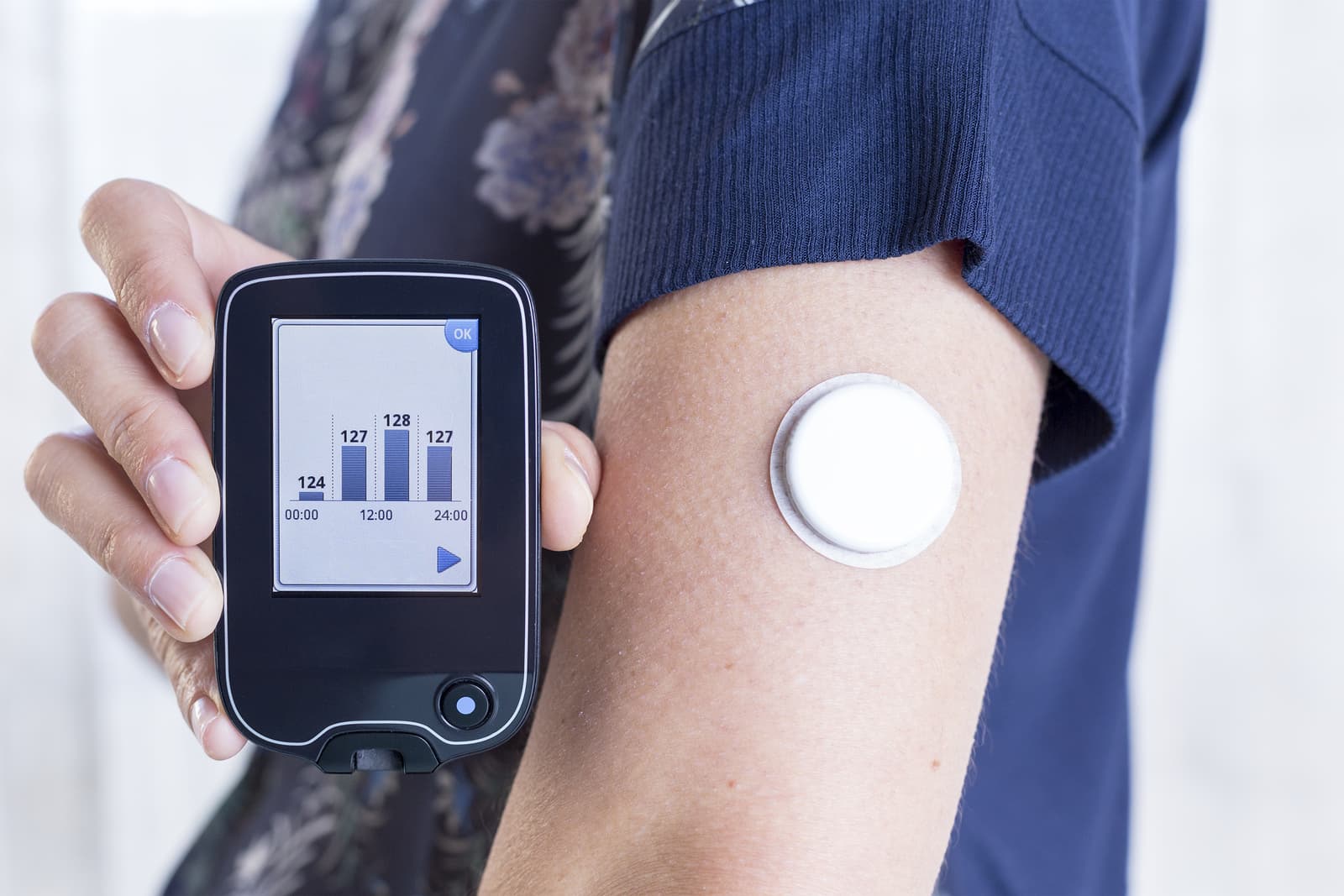
What has changed my mind is the sophistication of wearables so that we can instrument ourselves. We can wear a ring. We could wear something on our wrist. We could even have something very lightweight, a continuous glucose monitor, or any kind of lead that you could put on your chest. And that could create a real-time feed of how your body is reacting to the treatments that are prescribed by a clinician who you might not see in person. And they would have more sophisticated data to look at than they would have if you saw them twice a year in the clinic.
And so that to me is one area where I’m going to come down on the side of Tom and say, it’s the follow-up that you can do not only through a screen where you can talk to someone and they can see the context of your life, but also the wearables that they can have access to the data.
And this is something that the patient-led revolution has to create because it was in diabetes care that people demanded access to the data being generated by their own bodies by way of the continuous glucose monitor.
And now it’s the default that we have access to that data. I think we need to go further. I think it should not only be consumer devices, these Apple Watch or Google Pixel or the Oura Ring. I think we need to demand access to every type of medical device that’s collecting data about us so that it can be in a dashboard that we have access to as well as our clinicians.
Because guess what? Who’s going to look at it more often, the patient themselves, the people who love them. The clinician can check in and make sure that, yeah, okay, the dosing is correct on that. But self-management is going to be on steroids, to coin a phrase. And I’m excited about the future in that way.
Terry
48:36-48:47
Susannah, you’ve talked about wearables. And just for people who may not have encountered that idea before. You’ve given us a couple of examples. Can you give us a few more?
Susannah Fox
48:47-50:19
Sure. And I should disclose that I’m actually an advisor to Google and they gave me a Pixel Watch for free to try out their new AI coach that’s integrated with Fitbit. And it’s pretty amazing to, for example, wear something on your wrist that can not only track your heart rate, it can tell so much from the data that’s collected on your wrist. It can tell you the quality of your sleep. It can tell you the quality of the workouts that you’re doing.
And the real promise is in being able to engage in a conversation with the AI coach where that coach can look at your personal data, not generalized data, but your personal data and give you advice that is based on all of the academic research that is available about sleep or fitness.
And that to me is pretty incredible because a lot of us have access to fitness information, but very few of us have access to someone who’s actually a sleep specialist. So the democratization of access to that information, and as you know, sleep is incredibly important for brain health.
Terry
50:20-50:34
And that’s what I’m really excited about. Well, that actually feeds right into the next question that I wanted to ask you, which is what has you most excited about patients taking more control of their health care in the future?
Susannah Fox
50:37-51:24
I am not only excited about all the technology that we’ve talked about, whether it’s the AI or the wearable devices or the medical devices. I am very excited that people are starting to understand that they can take control of their health.
And also, no matter what they face, they are not alone. There are people who would love to help you if only they knew how to find you. And you can go online and find a community of people who are facing the same mysterious symptoms, and you can navigate it together. That is the real promise of the Internet.
Joe
51:26-52:03
Susannah, the idea that medicine has changed so dramatically and patients have so much more control and now they’re able to link up with other patients, other caregivers and other health professionals truly is the vision that Tom was offering us over 20, 30, 40 years ago.
Where does your crystal ball lead us in the future? What can you imagine with the technology and with the interactivity, the self-help groups from all over the world?
Susannah Fox
52:05-53:19
I foresee more citizen science. I see people who are frustrated by lack of access, formulating their own treatments, by the way, for good or for ill. And people using the tools that they have, ever more sophisticated tools to contribute to science. As, unfortunately, we watch people losing trust in institutions, people losing trust in government, in our healthcare system, people are turning to each other.
Now, that is a mega trend that we need to be cautious about. I think we need to include patients and survivors and caregivers in the design of any tool, of any intervention, so that we can rebuild trust, so that we can show people that they are included. And it is not a faceless institution making decisions.
That is what I hope will happen as we become ever more sophisticated in our own pursuit of health and well-being.
Terry
53:20-53:32
Susannah, in the last minute we’ve got, can you give us some ideas about how we all can successfully advocate for health for ourselves and our families?
Susannah Fox
53:35-54:16
I think it’s important to know what questions you’re asking. And you can use, for example, the data that you get from your own self-tracking, whether it’s on paper or wearables, or whether you hone your questions using Claude or ChatGPT.
Ask good questions. Every clinician that I’ve ever talked to appreciates a good question. And that’s something that Tom often talked about. Don’t come in with the answer, come in with a great question.
Terry
54:17-54:23
Susannah Fox, thank you so much for talking with us on The People’s Pharmacy today.
Susannah Fox
54:24-54:24
Thanks for having me.
Terry
54:26-55:13
You’ve been listening to Susannah Fox, a health and technology strategist. She’s a former chief technology officer for the U.S. Department of Health and Human Services, where she led an open data and innovation lab and launched InventHealth, an initiative focused on user-driven innovation for medical and assistive devices.
As an entrepreneur in residence at the Robert Wood Johnson Foundation, she built project teams to bring patient and caregiver insights into its work. For 14 years, she directed the health portfolio at the Pew Research Center’s Internet Project, where she coined the phrase peer-to-peer health care.
Her book is “Rebel Health: A Field Guide to the Patient-Led Revolution in Medical Care.”
Joe
55:13-55:22
Lyn Siegel produced today’s show, Al Wodarski engineered. Dave Graedon edits our interviews. B.J. Leiderman composed our theme music.
Terry
55:22-55:30
This show is a co-production of North Carolina Public Radio, WUNC, with the People’s Pharmacy.
Joe
55:30-55:45
Today’s show is number 1,461. You can find it online at peoplespharmacy.com. That’s where you can share your comments about this episode. You can also reach us through email, radio at peoplespharmacy.com.
Terry
55:45-56:28
Our interviews are available through your favorite podcast provider. You’ll find the podcast on our website on Monday morning. Here at the People’s Pharmacy, we encourage our listeners to take an active role in their own health care. There is a lot of information available on the web. Some of it’s excellent, and some is just okay, and some is misleading.
To help you find the latest medical research, we suggest going to PubMed. This is the National Medical Library, available online to anyone. It may be a little hard to interpret the “medicalese,” but now AI agents can help you translate.
Joe
56:28-56:49
At peoplespharmacy.com, you could sign up for our free online newsletter to get the latest news about important health stories. When you subscribe, you also have regular access to information about our weekly podcast.
We’d be grateful if you’d write a review of The People’s Pharmacy and post it to the podcast platform you prefer. In Durham, North Carolina, I’m Joe Graedon.
Terry
56:49-57:28
And I’m Terry Graedon. Thanks for listening. Please join us next week. Thank you for listening to the People’s Pharmacy podcast. It’s an honor and a pleasure to bring you our award-winning program week in and week out. But producing and distributing this show as a free podcast takes time and costs money.
Joe
57:29-57:38
If you like what we do and you’d like to help us continue to produce high-quality, independent healthcare journalism, please consider chipping in.
Terry
57:39-57:43
All you have to do is go to peoplespharmacy.com/donate.
Joe
57:43-57:57
Whether it’s just one time or a monthly donation, you can be part of the team that makes this show possible. Thank you for your continued loyalty and support. We couldn’t make our show without you.
Citations
- Davis HE et al, "Author Correction: Long COVID: major findings, mechanisms and recommendations." Nature Reviews Microbiology, April 17, 2023. https://doi.org/10.1038/s41579-023-00896-0
- Davis HE et al, "Long COVID: major findings, mechanisms and recommendations." Nature Reviews Microbiology, March 2023. DOI: 10.1038/s41579-022-00846-2