Most medical interventions are either pharmacological–prescribe a drug–or surgical–remove or repair the offending body part. If those approaches are inappropriate, doctors long for a different technology. In this episode, we discuss the development of a relatively new noninvasive technology, focused ultrasound. Doctors use it to treat conditions such as Parkinson disease or essential tremor. It may also be used for tumors in other parts of the body.
>
At The People’s Pharmacy, we strive to bring you up‑to‑date, rigorously researched insights and conversations about health, medicine, wellness and health policies and health systems. While these conversations intend to offer insight and perspective, the content is provided solely for informational and educational purposes. Please consult your healthcare provider before making any changes to your medical care or treatment.
How You Can Listen:
You could listen through your local public radio station or get the live stream at 7 am EST on Saturday, Feb. 21, 2026, through your computer or smart phone (wunc.org). Here is a link so you can find which stations carry our broadcast. If you can’t listen to the broadcast, you may wish to hear the podcast later. Subscribe through your favorite podcast provider, download the mp3 linked at the bottom of the page, or listen to the stream on this post starting on Feb. 23, 2026.
Using Focused Ultrasound:
Most people are familiar with ultrasound being used as a diagnostic tool. They also know about using a magnifying glass to focus a ray of sunlight. With the proper technique, this could light a small fire. In focused ultrasound, the surgeon uses an acoustic lens to target ultrasound waves very precisely inside the body. Dr. Neal Kassell, our guest expert in this episode, is a neurosurgeon. He has used focused ultrasound primarily to treat brain tumors. Treatments require from several hundred to several thousand ultrasound waves.
But doctors have used focused ultrasound to treat over 180 medical conditions. Regulatory authorities around the world have approved its use to treat 35 different conditions. The first to get such approval was uterine fibroids. This technology has been used to offer noninvasive interventions for 22 years. Now, people with Parkinson disease could choose focused ultrasound as an alternative to deep brain stimulation. There are approximately 250 sites in the US that are able to offer this technology to patients.
How Focused Ultrasound Works:
Dr. Kassell described how ultrasound works for problems as dissimilar as liver tumors or essential tremor. There are multiple mechanisms, but scientists have concentrated on three: First, the beams of ultrasound generate heat that can destroy tissue where they are focused. So, tumor or tissue destruction is the first mode of action.
Second, ultrasound involves the use of very tiny bubbles. These can be created to hold drugs. If a doctor were treating cancer, that might be a chemotherapeutic agent. But rather than exposing the entire body to the same level of medication, with focused ultrasound the microscopic bubbles trap the drug and release it only when exposed to the targeted beams. That means a high concentration of medicine where it is needed and very low concentrations elsewhere.
Third, focused ultrasound appears to have an impact on the immune system. As a result, patients being treated with immunotherapy such as Keytruda get a much better result when it is combined with focused ultrasound. This approach has been shown to improve the response rate.
Adopting Focused Ultrasound May Lag:
Doctors and healthcare systems have customary patterns of practice, referral and reimbursement. Introducing focused ultrasound into the mix may disrupt these. Insurance companies might save money over the long run if they covered this long-lasting intervention. Perhaps they will find before long that they get a better outcome for a lower cost.
Where focused ultrasound is finding more purchase is among veterinarians treating companion animals (dogs and cats) who also suffer from hard-to-treat malignancies. With the OneHealth approach, veterinary medicine shares what it learns from such treatments with healthcare providers treating humans.
One might not imagine essential tremor as responding to this type of treatment, but 25,000 patients have already been cured. This entails separate treatments on two different sides of the brain, with the sessions separated by six to nine months. The durability of the effect is very good.
Bobby Krause Describes His Patient Experience:
Bobby Krause was dismayed to be diagnosed with young-onset Parkinson disease at the age of 42. The drugs his doctors prescribed had intolerable side effects, and he felt depressed at not being the father he wanted to be for his young sons.
He was excited to learn that focused ultrasound treatments have been delivered to about 30,000 Parkinson disease patients around the world. At least 75 percent have experienced significant improvement that lasts at least five years. Although he was not eligible for the first clinical trial he heard about, he jumped at the chance to be treated a few years later at the University of Pennsylvania. In 2022, his doctors delivered three sonication treatments in one day. The results were amazing; among other visible effects, he regained an inch of height that had been compromised by the tight spasms of his back muscles. This is a story you will want to hear!
This Week’s Guests:
Neal F. Kassell, MD is the founder and chairman of the Focused Ultrasound Foundation. https://www.fusfoundation.org/ This is a unique medical research, education, and advocacy organization created as the catalyst to accelerate the development and adoption of focused ultrasound and thereby reduce death, disability, and suffering for patients. He was a Professor of Neurosurgery at the University of Virginia from 1984 until 2016 and the co-chairman of the department until 2006.
He has contributed more than 500 publications and book chapters to medical literature and is a member of numerous medical societies in the United States and abroad. In April 2016, Dr. Kassell was appointed by Vice President Joe Biden to the National Cancer Institute’s Cancer Moonshot Blue Ribbon Panel.
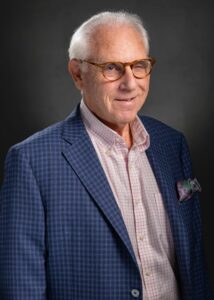
Dr. Neal Kassell, director of the Focused Ultrasound Foundation
Bobby Krause is the founder of the Be Still Foundation, a nonprofit dedicated to empowering patients and families affected by Essential Tremor and Parkinson’s disease. Inspired by his own journey with tremors, Bobby champions awareness, advocacy, and financial support for life-changing treatments like Focused Ultrasound, helping restore hope and dignity to those in need.
https://youtu.be/LWOEwfcmLzk?si=hsB78j1BixZXBplY
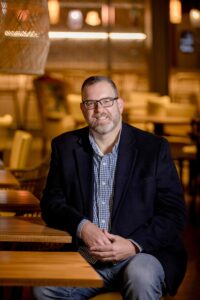
Bobby Krause, director of the BeStill Foundation
Listen to the Podcast:
The podcast of this program will be available Monday, Feb. 23, 2026, after broadcast on Feb. 21. You can stream the show from this site and download the podcast for free.