
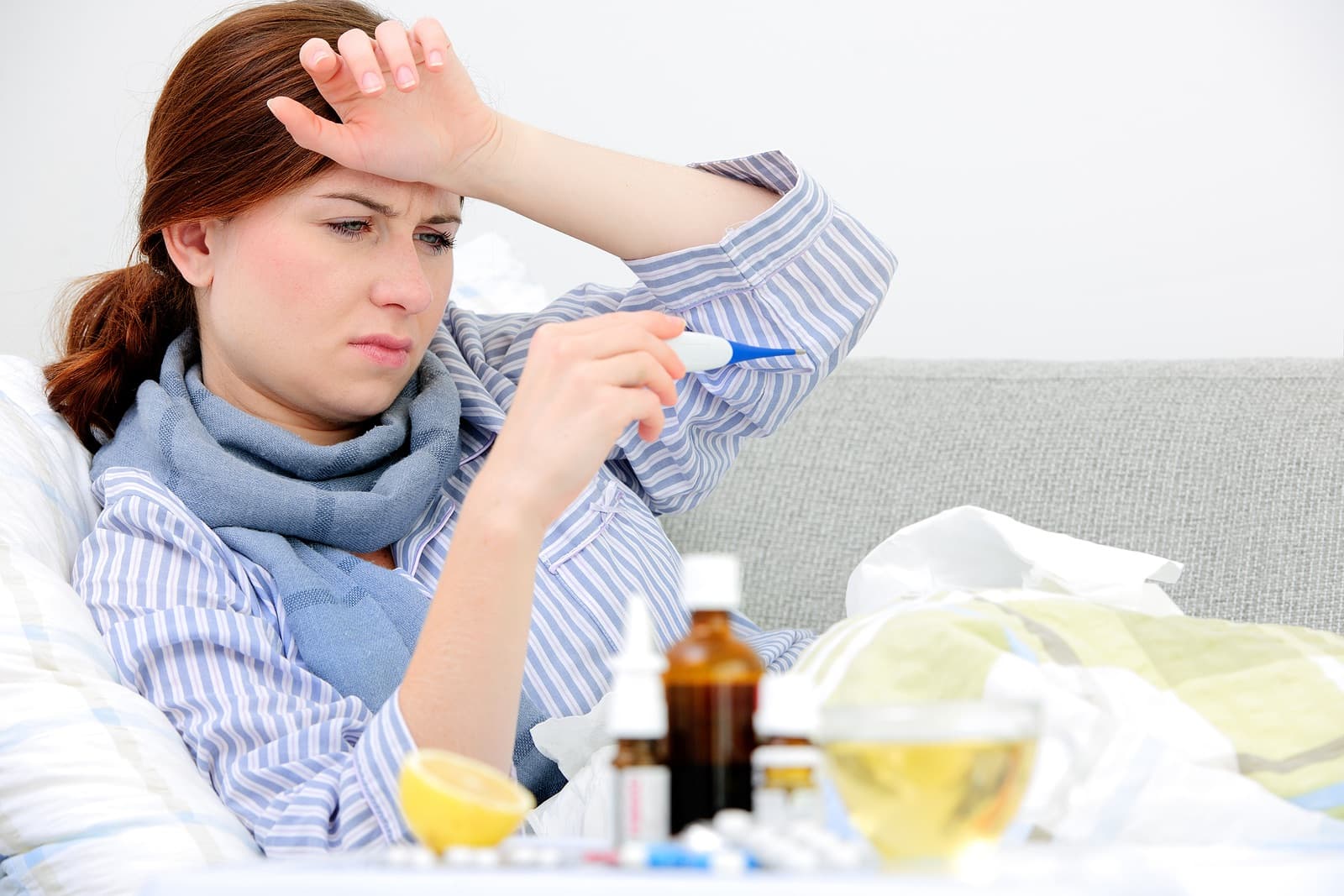
For thousands of years, the human body has responded to infection by turning up the heat. Fever is not an accident or a design flaw. It is part of an ancient defense system that evolved to help us fight invading microorganisms. Yet our understanding of fever and immunity has gradually taken a back seat to a much simpler modern strategy: lower the temperature and make the patient feel better.
First there was aspirin. Then came acetaminophen (Tylenol). And now we have NSAIDs (nonsteroidal anti-inflammatory drugs) such as ibuprofen (Advil) and naproxen (Aleve). They all help lower a fever when we catch an infection.
Today, drugstore shelves are filled with cold and flu remedies that contain fever reducers. Most of us have been conditioned to take one almost automatically when a cold or influenza sends our temperature climbing. Even if we don’t know precisely which pathogen is causing our infection and fever, the reflex is to pop a pill or swallow a liquid medicine that will soothe our various symptoms.
We are told that such products will:
- Calm the cough
- Control the congestion
- Stifle the sniffles and sneezes
- Stop the shivers
- Suppress the fever
- Manage mucus
- Minimize misery
But what if Mother Nature knew what she was doing?
And what if routinely suppressing a mild-to-moderate fever actually interferes with one of the body’s natural defenses against infection? That is one of the provocative questions pulmonary and critical care specialist Roger Seheult, MD, tackles in our latest video podcast:
The Winter Virus Survival Guide: What Actually Makes a Difference?
We had the pleasure of interviewing Dr. Seheult on our nationally syndicated public radio show, The People’s Pharmacy, on October 24, 2026. Show 1492 was titled What Really Works Against Winter Infections. It’s one thing to listen to a radio show or podcast. It is a completely different experience to watch it. Dr. Seheult is a master communicator!
Watch the complete interview here:
Before you watch the entire conversation, though, take a minute for one of the most intriguing excerpts:
Could Taking Tylenol for a Fever Backfire?
Almost everyone has done it. You start coughing. Your muscles ache. Your temperature rises. You reach for acetaminophen, ibuprofen, naproxen or a multi-symptom cold and flu product that contains a fever reducer.
Dr. Seheult thinks we should reconsider that reflex.
Watch: Could Taking Tylenol for a Fever Backfire?
Dr. Seheult explains that fever is part of the body’s coordinated response to infection. An elevated temperature can influence both viral replication and the immune system’s response to an invader. One particularly important player is interferon.
Viruses do not simply sit passively while the immune system attacks them. They have evolved sophisticated ways to hijack our cells and interfere with antiviral defenses. Some viruses suppress the interferon response that would otherwise help slow their reproduction.
Fever and Immunity Are Mother Nature’s Reaction to Pathogens
This is where the relationship between fever and immunity becomes especially interesting. Instead of viewing every rise in temperature as something that must be eliminated, perhaps we should ask a more basic question:
Why does the body deliberately raise its temperature during an infection in the first place?
Fever and Immunity: Is Mother Nature Smarter Than We Think?
Long before scientists understood interferon, cytokines or viral replication, healers recognized that heat and fever appeared to play a role in fighting disease. Mothers and grandmothers wrapped sick family members in blankets, offered warm liquids and allowed them to rest.
Physicians once took the therapeutic potential of fever much further. Dr. Seheult tells the remarkable story of Austrian physician Julius Wagner-Jauregg. He deliberately infected patients suffering from neurosyphilis with malaria. Why would any doctor do something so dangerous?
Because malaria produces intense fevers!
The approach sounds extraordinary today, but Wagner-Jauregg’s malaria therapy was considered such an important medical advance that he received the 1927 Nobel Prize in Physiology or Medicine. Once the fever had helped combat the syphilis infection, the malaria itself could be treated.
You can read more about malaria therapy and fever at this link:
Should You Lower a Fever or Leave It Alone?
We certainly aren’t advocating malaria therapy today. But the story illustrates how seriously physicians once regarded fever as a potentially useful biological response rather than simply an unpleasant symptom that needed to be eliminated.
Then Modern Medicine Started Fighting Fever
Modern medicine changed the way we thought about fever. Aspirin made it easy to lower temperature. Later came acetaminophen and NSAIDs such as ibuprofen and naproxen. Instead of using labor-intensive methods involving heat (hydrotherapy), a patient could simply swallow a pill. Convenience won. Eventually, lowering fever became almost automatic.
Today, physicians, pharmacists and parents commonly recommend acetaminophen or ibuprofen when someone develops a fever with a respiratory infection. Many multi-symptom cold and flu remedies almost always contain a fever reducer as well.
But there is an important distinction between treating a dangerously high fever or a seriously ill patient and automatically suppressing a mild-to-moderate fever simply because the thermometer shows an elevated number. That distinction is central to Dr. Seheult’s discussion of fever and immunity.
What Should You Do Instead?
Dr. Seheult doesn’t merely tell us what not to do. He offers practical suggestions about what people can do to help their bodies cope with winter infections. Some of them are remarkably simple. And some cost absolutely nothing.
Could Sunlight Help Your Immune System?
One of Dr. Seheult’s most intriguing recommendations is to go outside, preferably early in the day.
Even on a cloudy morning, outdoor illumination is dramatically brighter than typical indoor lighting. Morning light also helps synchronize our circadian clock, which influences sleep and many other physiological processes.
Dr. Seheult raises an intriguing question about why respiratory infections are so strongly seasonal.
Why Do We Catch Colds in the Winter?
We often hear that colds and flu flourish during winter because people gather indoors for Thanksgiving and Christmas. But Australians gather for Christmas and New Year’s too. Their holidays occur during summer.
Their major influenza season occurs during the Southern Hemisphere winter. That suggests that temperature, humidity and sunlight may deserve more attention than they usually receive.
Watch a Short Summary: Sunlight: A Secret Weapon Against the Flu
Dr. Seheult explains why spending so much of our lives indoors could have consequences for our ability to resist infection.
Sleep, Exercise, Heat and Cold
Sunlight is not the only tool in the toolbox.
Dr. Seheult also discusses:
- sleep
- regular exercise
- natural light
- heat exposure
- cold exposure
- good hand hygiene
- appropriate masking when exposure is unavoidable
- testing to identify the virus
- vaccination
- selected supplements
He is particularly interested in the physiological effects of heat followed by cooling. Traditional sauna bathing provides that combination, but most Americans don’t have a sauna at home. A hot shower followed by a cool rinse may offer a more practical alternative.
Watch this short video: How to Improve the Immune System Reaction
In this brief excerpt, Dr. Seheult discusses sleep, exercise, sunlight and hot-and-cold exposure as ways to support normal immune function.
Fever and Immunity Are Only Part of the Story
Another important lesson from the interview is that respiratory infections can look remarkably similar. Influenza, COVID-19 and other respiratory viruses may all cause symptoms such as:
- cough
- congestion
- runny nose
- fever
- body aches
- fatigue
In the hospital, Dr. Seheult and his colleagues do not simply guess which virus is responsible. They test!
Sophisticated hospital tests can identify numerous respiratory viruses quickly. Consumers can now purchase combination home tests that identify COVID-19 along with influenza A and influenza B. That information can matter because treatment depends upon the virus.
Oseltamivir (Tamiflu), for example, may help with some influenza infections, although Dr. Seheult cautions listeners not to expect miracles. On average, the improvement may amount to shortening an illness by roughly a day. But people who are especially vulnerable because of impaired immunity, lung disease or other chronic conditions may have more to gain from antiviral treatment.
For many respiratory viruses, there is no specific antiviral medicine that will make the infection disappear. That makes understanding the body’s own defenses especially important.
Why Roger Seheult Is Such a Remarkable Medical Explainer
Roger Seheult, MD, is quadruple board-certified in internal medicine, pulmonary disease, critical care medicine and sleep medicine. He is an Associate Clinical Professor at the University of California, Riverside School of Medicine and an Assistant Clinical Professor at Loma Linda University. He also practices pulmonary and critical care medicine and is co-founder and a principal presenter at MedCram.com.
Those credentials are impressive. But they aren’t the main reason we wanted him on The People’s Pharmacy. Dr. Seheult has an unusual gift.
He can take a complicated subject such as interferon signaling, circadian biology or fever and immunity and explain it so clearly that a nonscientist can follow the physiology without feeling that the science has been dumbed down. He doesn’t merely tell you what happens.
He explains why! And once you understand the “why,” some practices that we have accepted unquestioningly for decades suddenly deserve another look.
Watch the Complete Conversation
If the short videos above made you stop and think, don’t stop there.
Our complete video podcast with Dr. Roger Seheult is:
The Winter Virus Survival Guide: What Actually Makes a Difference?
We talk about fever, interferon, influenza, sunlight, circadian rhythms, sleep, exercise, sauna bathing, hot-and-cold exposure, coughing, nasal sprays, vitamin C, NAC, quercetin, vaccines, testing and much more.
Most important, Dr. Seheult addresses both sides of a question that doesn’t get asked often enough:
What should you do when you get a winter infection?
And perhaps even more important:
What should you NOT do?
Mother Nature has been fighting infections for a very long time. Before automatically reaching for Tylenol, ibuprofen or another fever reducer the next time your temperature rises modestly during a cold or the flu, you might want to hear what Dr. Seheult has to say.
If you find this video podcast helpful, please share it with friends and family. Chances are good that someone you know will come down with an upper respiratory infection and fever this winter. You can also subscribe to our YouTube channel and encourage others to do the same at this link.
Please share your own thoughts about fever and immunity in the comment section below.

