
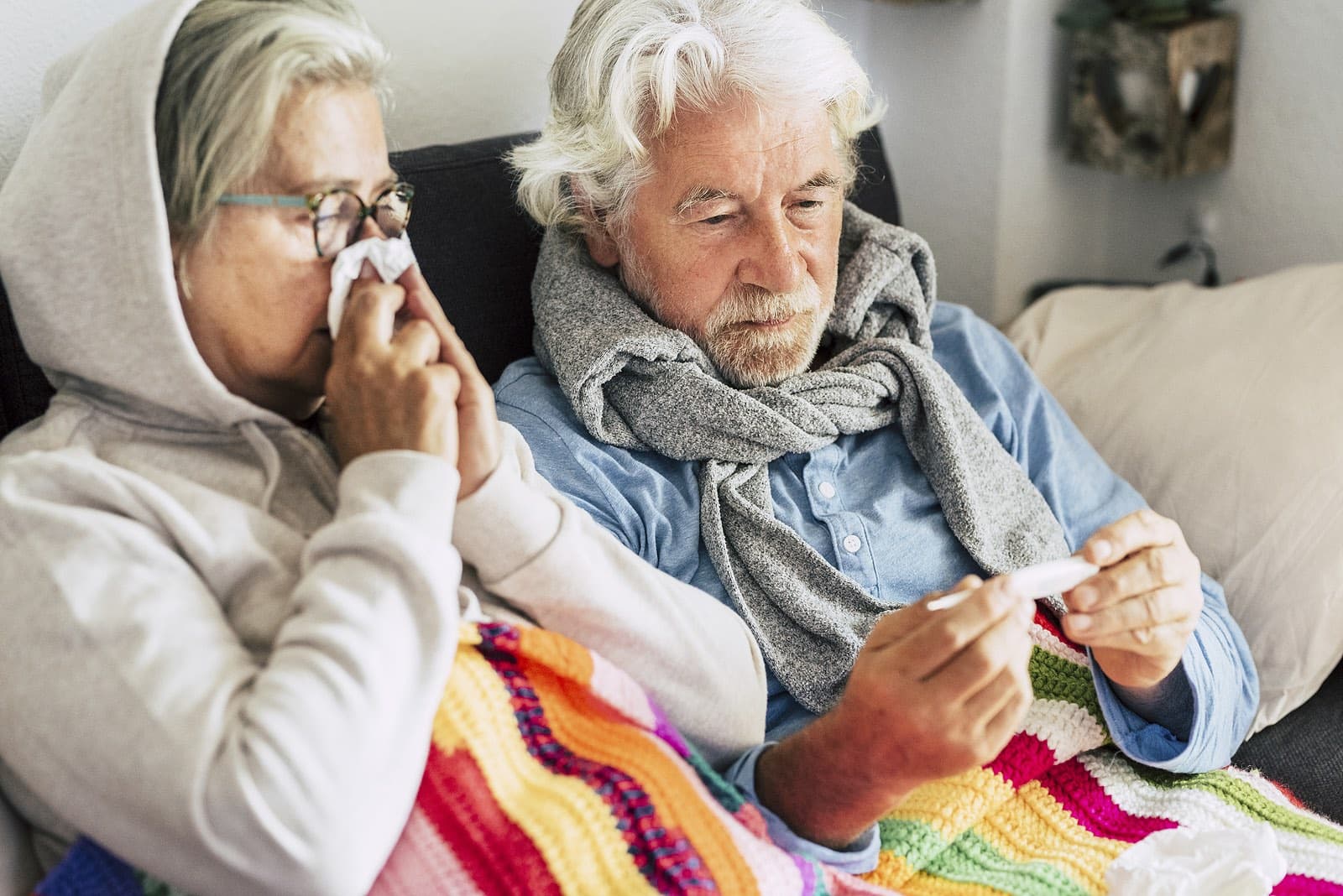
We are only about a month into fall, but flu season is already underway. Today we are considering the best actions to take against winter infections. First, however, we asked our guest expert about measles. There have been large outbreaks in so many places this year. Why is measles such a big deal? One reason is that measles induces “immune amnesia,” so that our bodies forget how to fight off infections they have previously overcome. The MMR vaccine for measles, which prevents infection extremely well, does not have the same deleterious effect on the immune system. Consequently, vaccinated people maintain their protection not only against measles but also against polio or diphtheria if they have gotten those immunizations.
At The People’s Pharmacy, we strive to bring you up‑to‑date, rigorously researched insights and conversations about health, medicine, wellness and health policies and health systems. While these conversations intend to offer insight and perspective, the content is provided solely for informational and educational purposes. Please consult your healthcare provider before making any changes to your medical care or treatment.
How You Can Listen
You could listen through your local public radio station or get the live stream at 7 am EST on Saturday, October 24, 2026, through your computer or smart phone (wunc.org). Here is a link so you can find which stations carry our broadcast. If you can’t listen to the broadcast, you may wish to hear the podcast later. You can subscribe through your favorite podcast provider, download the mp3 using the link at the bottom of the page, or listen to the stream on this post starting on Oct. 26, 2026.
What Really Works Against Winter Infections?
Our guest, Dr. Roger Seheult, is certified in pulmonary and critical care medicine, as well as internal medicine and sleep medicine. So he is eminently qualified to tell us how to prevent and treat respiratory infections that are so common in the wintertime. We asked him why these problems are so prevalent in winter. He suggested that lower levels of humidity, temperature and sunlight might all play a role. When we asked whether the phenomenon of people gathering from across the country for Thanksgiving and Christmas might be important, he pointed out that Australians also gather for Christmas and New Year’s. Yet their flu season does not coincide with those holidays, but rather with their wintertime in June and July. Limited sunlight might be far more relevant than most of us imagine. The immune system is more active when exposed to sunlight.
As with measles, where the immune amnesia is a serious lingering problem, the consequences of many winter infections can go far beyond coughing and sneezing. More people die from heart attacks during flu season than at other times of the year. In fact, there are more cardiac deaths than deaths from influenza. Other infections also have deleterious impacts on the rest of the body systems. As we learned during the pandemic, COVID-19 can trigger diabetes. Consequently, we ought not dismiss these infections lightly.
Testing for Winter Infections
In the hospital, when Dr. Seheult and his colleagues admit a patient, they test to see what type of infection has made the person so sick. Most of the usual infections produce similar symptoms: cough, congestion, runny nose, fever, wheezing and body aches. Body aches are more common with influenza than with colds, but there is a significant overlap in symptoms that makes it hard or impossible to diagnose based on clinical appearance alone. To treat inpatients, doctors first test them. The test will reveal quickly which of 13 different viruses have made the patient ill. Sometimes, more than infection is contributing to the misery. While we do not have access to such sophisticated tests at home, we can purchase tests that will identify COVID-19, influenza A and influenza B. Knowing what infection is causing trouble can help a doctor prescribe a treatment, if there is one.
Treating Respiratory Infections
Once the physicians have identified the cause of the infection, they can determine if there is a treatment. There are a few for influenza A. Perhaps the best known is oseltamivir (Tamiflu). However, while Tamiflu have been shown to shorten the duration of the flu, Dr. Seheult cautioned us not to expect too much. Taking Tamiflu can shorten the duration of the flu from about a week to roughly six days, on average.
For many other infections, we do not have effective treatments. Influenza B, for example, does not respond well to Tamiflu. There are no treatments for infections like human metapneumovirus either.
Tapping the Power of Fever
What people often do in such cases may be counterproductive. Very often parents give their children acetaminophen to bring a fever down. Adults may take an NSAID such as ibuprofen or naproxen, or perhaps they too will take acetaminophen. That is a mistake because fever is part of the body’s natural defense against infection. Instead of suppressing a fever–as long as it’s not too high–we should consider augmenting it.
In the 19th century, doctors prescribed balneotherapy, in which the patient is draped with hot wet towels or actually immersed in hot water. An early Nobel Prize went to a physician who cured neurosyphilis, a dangerous bacterial infection, by infecting patients with malaria, which produced a high fever. Once the syphilis had been eradicated, the malaria could be treated.
In the 1940s, medicine shifted from this labor-intensive approach to utilizing aspirin to lower fever and penicillin to fight bacterial infections. The motivation was not that aspirin is more effective. Rather, it is far more efficient for nurses to administer a medication than to spend half an hour heating up wet towels and applying them to a patient. You can do this at home if you are careful to avoid burning yourself or the patient. A hot bath or a sauna can boost the body’s defense against winter infections. Of course, if you are sneezing and coughing you will need to take care not to contaminate the air for anyone else who might be using the sauna. You should also take care that the hot water treatment does not lower blood pressure unexpectedly.
Calming a Cough
The cough that accompanies a cold or other infection can be very annoying, keeping the patient and anyone else in the vicinity awake all night. We asked what to do in this case. Dr. Seheult suggested checking if the cough is bringing up phlegm. If so, the doctor might need to check for a bacterial infection.
If the cough is not bringing up phlegm, it might be due to a post-nasal drip in the back of the throat. In that case, nose spray might be the best treatment. Fluticasone (Flonase) or azelastine (Astepro) are both available over the counter. Azelastine has the further distinction of being able to reduce the risk of contracting COVID-19. If neither of those works, the doctor may prescribe Tessalon Perles (benzonatate). These should be swallowed, not chewed or sucked. They contain an anesthetic that numbs the cough center and should offer relief.
Preventing Winter Infections
Step Outside
Considering the limitations on treatment of these nasty infections, we asked Dr. Seheult about prevention. The top of his list might be a surprise: spend 15 minutes outside early every day to get natural light. Even if the day is overcast or rainy, the amount of light available outside is far greater than what we can manage indoors. Moreover, following this practice early helps set the circadian rhythm for better sleep in the evening and a stronger immune defense throughout the day.
Healthy Hand Hygiene
Some infections are transmitted through droplets or even tiny aerosols that a person emits while coughing or sneezing. If you must be exposed to an infected person, wearing a high-quality mask with a tight fit such as an N95 would be prudent. But good hand hygiene always make sense. We discussed the touch screens that have become so common in public places including pharmacies. They may not be disinfected regularly, and many people touch them and leave their germs behind for you to pick up. Frequent, thorough hand washing after touching a screen, a doorknob or a shopping cart is a rational precaution.
Supplements to Maintain Good Health
Dr. Seheult takes n-acetylcysteine, also known as NAC, throughout the cold and flu season. He takes 600 mg twice a day. Another supplement he uses himself is quercetin. Of course, we also asked about vitamin C. He responded that he takes it only if he comes down with something. It works better to speed healing than to prevent infection.
Hot and Cold
Research on sauna bathing shows that exposure to heat and then abrupt cooling can strengthen the immune response. Most Americans don’t have ready access to a sauna bath. But we can mimic the effect by taking a hot shower and following it with a cold rinse.
Vaccine
You will not be surprised that vaccination is also on the list. There are no vaccines for many winter infections, including those we refer to as the “common cold.” But people who get vaccinated against influenza are also protecting themselves against cardiovascular complications and lowering their future risk for dementia. An additional motivation for some people is to protect the infants and toddlers in their lives. Babies do receive vaccines, but they spend a good part of their first year vulnerable to infections. Their immature immune systems cannot protect them, so it is important for family members and friends to get vaccinated so they don’t inadvertently expose the child to a potentially deadly condition.
This Week’s Guest
Dr. Roger Seheult is an Associate Clinical Professor at the University of California, Riverside School of Medicine. He is also an Assistant Clinical Professor at the School of Medicine and Allied Health at Loma Linda University. He is quadruple board-certified in Internal Medicine, Pulmonary Diseases, Critical Care Medicine, and Sleep Medicine through the American Board of Internal Medicine. His current practice is in Beaumont, California. He is a critical care physician, pulmonologist, and sleep physician at Optum California.
Dr. Seheult lectures routinely across the country at conferences and for medical, PA, and RT societies. He is the director of a sleep lab and the Medical Director for the Crafton Hills College Respiratory Care Program. He is co-founder and presenter for MedCram.com, a site that offers concise and easy-to-follow medical videos on a range of topics.

Roger Seheult, MD, MedCram, Loma Linda, UC-Riverside
Listen to the Podcast
The podcast of this program will be available Monday, October 26, 2026, after broadcast on Oct. 24. You can stream the show from this site and download the podcast for free. This week’s episode includes a discussion of the proper doses for vitamin C and quercetin.

