
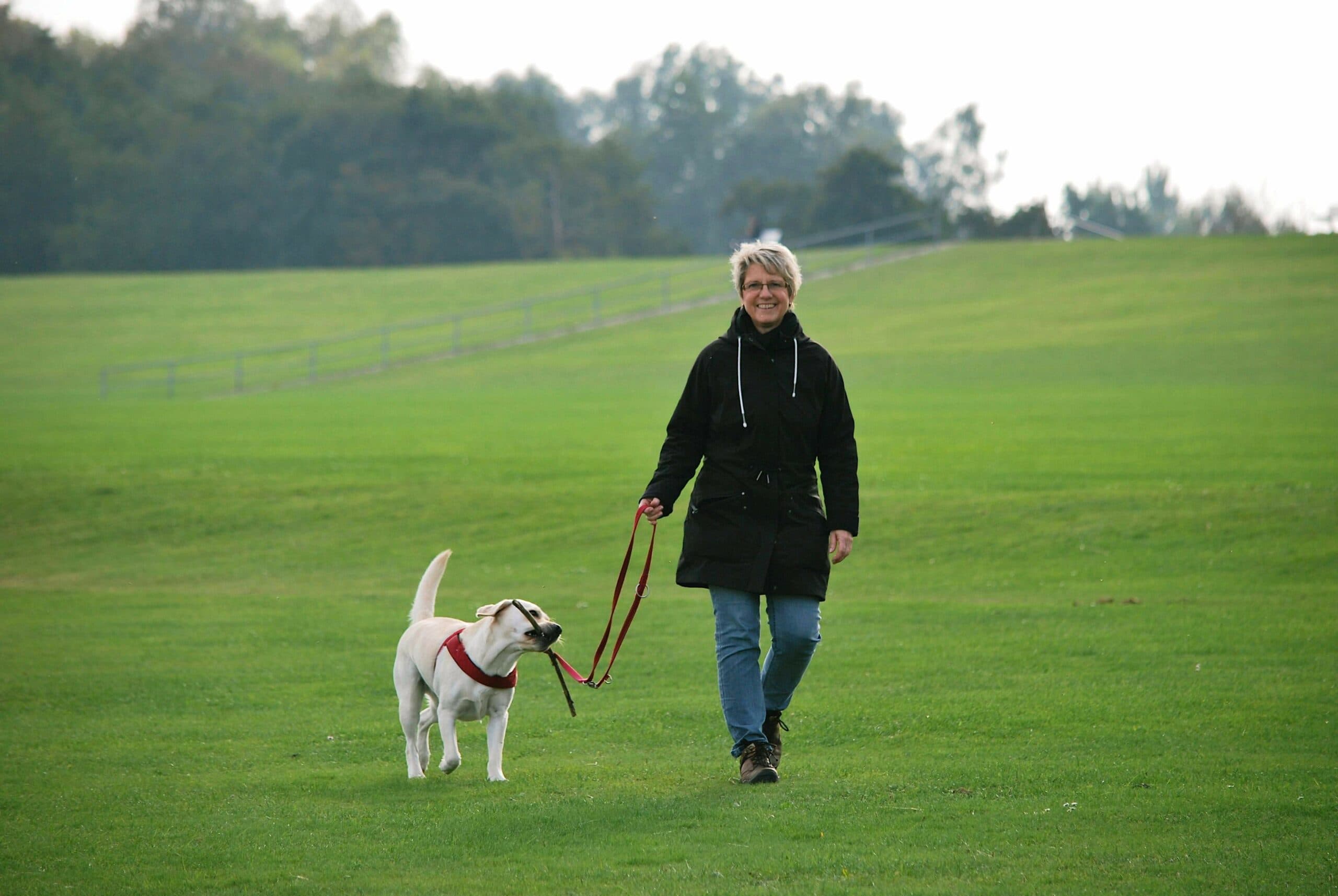
Walking is an elementary exercise for most people, though it definitely has significant benefits. People who walk regularly are more likely to overcome chronic back pain, for example. Now two new studies show walking speed may help predict how well a person is aging.
Walking Longer as a Sign of Health in Older People
In one study, researchers analyzed data from more than 33,000 older adults in the UK Biobank (Annals of Internal Medicine, Oct. 28, 2026). These people averaged less than 8,000 steps a day and had no cardiovascular disease at the start of the study. The investigators classified them by how long their spurts of walking usually lasted, from less than 5 minutes, through 5 to 10 minutes, 10 to 15 minutes and to over 15 minutes. Then they watched to see who developed cardiovascular problems or died during the next 10 years. 4.36% of people whose usual walking bouts were less than 5 minutes died during that time. In contrast, less than 1% of those whose usual walking bouts were over 15 minutes succumbed. Walking for a longer time, as well as taking more steps, seemed to be protective.
Walking Speed Also Matters
Walking faster may also protect seniors. Another study compared speed of walking estimated from a wearable sensor similar to a smart watch to timed walking observed in a clinic (JAMA Network Open, Oct. 23, 2026). The two measurements were comparable in identifying who was most likely to die over the next decade, although they didn’t necessarily agree well on speed.
The study included more than 4,000 British civil servants who participated in the Whitehall II trial. Their walking pace was measured in 2012. Those who walked faster were less likely to die during the following 12 years. Ten extra steps per minute was associated with a lower risk of mortality. The scientists point out that walking speed is a simple measure that may help doctors detect which of their aging patients need more attention to reduce their risk.
Earlier Research on Walking Speed
This is not the first time researchers have linked walking speed to a better shot at longevity. More than fifteen years ago, scientists at the University of Pittsburgh reviewed nine earlier studies of older people (JAMA, Jan. 5, 2010). The investigators specifically analyzed the link between speed of walking and longevity.
Differences were especially apparent among people over 75. Those who walked fastest, at roughly a yard per second, lived longer than expected based on actuarial predictions. The investigators speculate that this simple test that requires only a stopwatch and a walkway could help doctors determine which patients are good candidates for more intense interventions to improve quality of life over the long term.
Walking speed also appears to predict cognitive capacity to some extent. Research has established that walking speed can help doctors determine who might live longer. However, it is not clear whether healthcare providers have incorporated this information into their plans.
Citations
- Del Pozo Cruz B et al, "Step accumulation patterns and risk for cardiovascular events and mortality among suboptimally active adults." Annals of Internal Medicine, Oct. 28, 2026. DOI: 10.7326/ANNALS-25-01547
- Haddadj R et al, "Clinical walking speed, free-living walking cadence, and all-cause mortality." JAMA Network Open, Oct. 23, 2026. doi:10.1001/jamanetworkopen.2026.40122
- Studenski S et al, "Gait speed and survival in older adults." JAMA, Jan. 5, 2010. doi:10.1001/jama.2010.1923

