
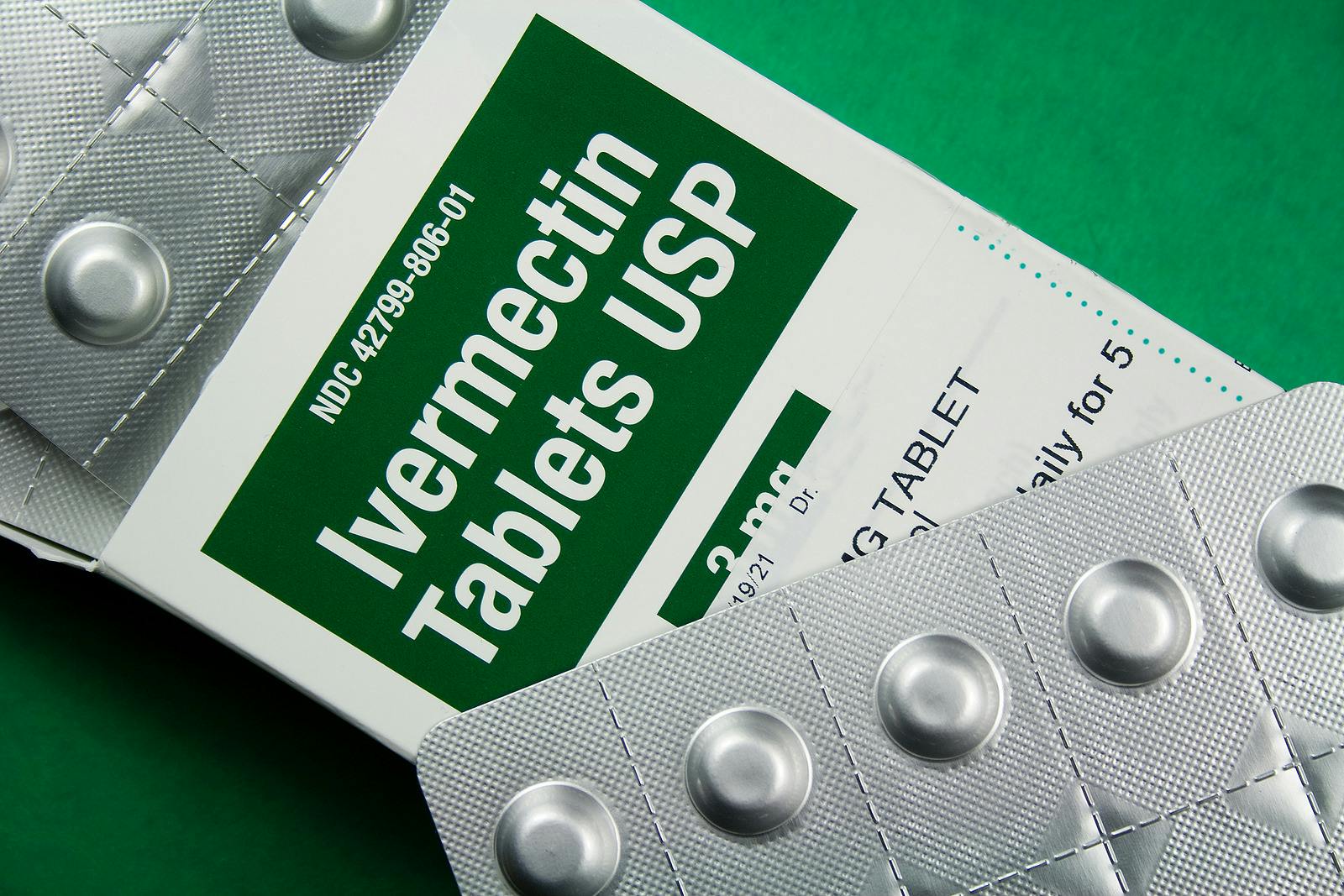
We have been fascinated by ivermectin for nearly 40 years. It is a remarkable medicine that has saved countless people from devastating parasitic diseases. But now ivermectin and cancer have become linked in a way we never anticipated. Cancer specialists tell us their patients are asking whether this inexpensive old drug can shrink tumors or even cure cancer. Social media is overflowing with testimonials. What does the science actually show?
We recently interviewed leading specialists in both prostate cancer and breast cancer. To our surprise, both told us that one of the questions they hear repeatedly from patients is some version of:
“What about ivermectin? Could it help my cancer?”
We shouldn’t have been so surprised. The internet is buzzing.
In fact, this very question showed up in our nationally syndicated People’s Pharmacy newspaper column running around the country this week:
Is There Evidence That Ivermectin Fights Cancer?
Q. The internet is full of references to ivermectin being used to fight or avert cancer. Is there any empirical evidence, or is it all hype and anecdotal?
I am a 20-year survivor of breast cancer. Four years ago, I had ovarian cancer treated with chemotherapy. Now my CA125 is rising, so any prophylactic measures would be welcome. Of course, that could be the reason for the hype appearing online, as many are in my position.
A. We spoke recently with experts in breast and prostate oncology. They both confirmed that patients frequently ask questions about ivermectin for their cancers.
This drug is an antiparasitic compound used to treat roundworm or river blindness in humans. It is also the active ingredient in Soolantra, a cream prescribed for rosacea, and Sklice, a lice-killing lotion.
A search of the medical literature shows some very intriguing preclinical research, but it is limited to cell cultures and animal models. As far as we can tell, there are not yet large well-controlled clinical trials supporting the use of ivermectin to treat cancer. That confirms what the oncology experts told us.
You can learn more about this topic at MedShadow.org in an article titled:
“Ivermectin Isn’t a Proven Cure. So Why Do So Many People Believe It Is?”
That reader is hardly alone.
People confronting cancer, especially recurrence or metastatic disease, have a powerful incentive to investigate every possibility. An inexpensive generic drug with an intriguing scientific backstory can sound particularly appealing.
But how did ivermectin and cancer become such a huge internet phenomenon?
Why Is There So Much Buzz About Ivermectin and Cancer?
This did not come out of nowhere. Researchers have been studying ivermectin against cancer cells for years. Laboratory experiments have reported effects on a variety of cancer cells and signaling pathways.
A review in (Drug Design, Development and Therapy, Jan. 21, 2020) described effects involving TCF, Hippo and Akt/mTOR signaling as well as apoptosis, mitochondrial dysfunction, oxidative stress and cancer stem-like cells. The title was provocative:
“Progress in Understanding the Molecular Mechanisms Underlying the Antitumour Effects of Ivermectin”
The authors concluded:
“Many studies have proven that ivermectin exerts antitumour effects and might thus benefit patients with cancer after sufficient clinical trials.”
That sounds exciting. And it is! But there is a giant difference between killing cancer cells in a laboratory dish and curing cancer in a human being.
Scientists have found many compounds that can kill or inhibit cancer cells in laboratory experiments. Most never become successful cancer treatments.
And the last few words of the conclusion are critical:
“after sufficient clinical trials.”
Prostate Cancer and Ivermectin:
One experiment published in the journal Cell Death & Disease (Sept. 1, 2022) found that ivermectin reduced androgen-receptor signaling, caused cell-cycle arrest and apoptosis in prostate cancer cells and suppressed growth of human prostate cancer xenografts in mice. The researchers identified FOXA1 and the DNA-repair proteins Ku70/Ku80 as possible molecular targets.
OK…I admit, that’s scientific gobbledygook. Here is how the researchers described the results of their investigation of ivermectin and cancer of the prostate:
“In this study, we reported that ivermectin, an antiparasitic drug, showed promising anticancer activity against prostate cancer progression. Ivermectin was primarily developed for the treatment of onchocerciasis caused by the parasite Onchocerca volvulus in poor populations around the tropics. Recently, research has shed light on the potential of ivermectin as an antibacterial, antiviral, and anticancer agent.
“In summary, our results indicate that ivermectin suppressed the AR [androgen receptor] and E2F signaling pathways and DNA damage repair capacity by targeting FOXA1 and Ku70/Ku80 to inhibit cell proliferation and promote cell apoptosis in prostate cancer. These findings provide insight into both the effects and mechanisms of ivermectin as an anticancer agent. This raises the possibility of broadening the clinical evaluation of ivermectin for the treatment of prostate cancer.”
Interesting? Absolutely. Proof that a man with prostate cancer should take ivermectin? Absolutely not. No patients with prostate cancer were treated in that experiment. The authors suggest that “clinical evaluation” would be worth considering. We agree! But it is far too early to conclude that ivermectin will help in the treatment of prostate cancer.
Ovarian Cancer and Ivermectin:
Researchers have also reported intriguing results in ovarian cancer cells and mice.
A study published in the American Journal of the Medical Sciences (Feb. 2020) found that ivermectin inhibited Akt/mTOR signaling and increased the anticancer activity of cisplatin [a powerful chemotherapy drug] in cultured ovarian cancer cells and a mouse xenograft model.
More gobbledygook…but again, quite intriguing.
The authors concluded:
“In combination with cisplatin, tumor growth was completely reversed over the entire duration of drug treatment without any toxicity. Furthermore, the concentrations of ivermectin used in our study are pharmacologically achievable.
“Our work suggests that ivermectin may be a useful addition to the treatment armamentarium for ovarian cancer and that targeting Akt/mTOR signaling is a therapeutic strategy to increase chemosensitivity in ovarian cancer.”
Again, however, this was preclinical research rather than a trial showing that women with ovarian cancer live longer when they take ivermectin. That distinction is especially important for readers like the woman who wrote to us about her rising CA125 level.
Breast Cancer and Ivermectin:
Breast cancer research has probably contributed more than anything else to the scientific enthusiasm for ivermectin. A widely cited study published in NPJ Breast Cancer (March 2, 2021) reported that ivermectin could make breast tumors in mice more susceptible to immune attack.
When ivermectin was combined with immune checkpoint blockade, the researchers reported enhanced antitumor activity.
Here are their conclusions:
“Since its discovery in the mid-1970s, ivermectin has been used safely by over 700 million people worldwide to treat river blindness and lymphatic filariasis; it is inexpensive and accessible. Our results demonstrate that treatment with ivermectin induces robust T cell infiltration into breast tumors via induction of ICD, thus turning “cold” tumors “hot”. Unlike conventional chemotherapy drugs, this agent has the added benefit of not suppressing host immune function, but rather has beneficial immunomodulatory effects—making it a promising and mechanistic partner for immune checkpoint blockade.”
That line of research helped inspire a human clinical trial. There is, however, an important new wrinkle.
On June 5, 2026, NPJ Breast Cancer published an Editorial Expression of Concern about the 2021 paper. Editors reported highly similar images in several experimental panels. The authors stated that the original data were no longer available, and:
“Readers are therefore advised to interpret these data with caution.”
That does not prove the biological hypothesis is wrong. It does mean that an influential piece of evidence supporting ivermectin-immunotherapy combinations deserves additional scrutiny.
Is Anyone Actually Testing Ivermectin and Cancer in People?
Yes. This is where the story gets even more interesting. Researchers at Cedars-Sinai are conducting a small clinical trial of ivermectin combined with immune-checkpoint therapy in patients with metastatic triple-negative breast cancer.
The investigators are not testing ivermectin as a miracle cure by itself. The study combines ivermectin with balstilimab or pembrolizumab and is designed to investigate safety, dosing and possible antitumor activity. As of the ClinicalTrials.gov update posted Aug. 5, 2026, the study was recruiting volunteers.
That is exactly how an intriguing laboratory observation should progress. First cells. Then animals. Then carefully monitored human trials. Only after convincing clinical trial results should anyone start talking about an effective cancer treatment.
The Evidence for Ivermectin and Cancer Is Still Thin:
An analysis published in Annals of Oncology (September, 2025) attempted to answer a very useful question: Are there convincing clinical data to support the use of ivermectin in the treatment of cancer?
The investigators found roughly 50 preclinical studies involving ivermectin and cancer but no completed clinical trials demonstrating that ivermectin improves cancer outcomes in people. They also documented the remarkable increase in internet interest surrounding ivermectin and cancer.
Their conclusions:
“Despite growing worldwide interest in evaluating the role of ivermectin in cancer since January 2025, there is no clinical evidence in humans supporting the role of this anti-parasitic drug in cancer. Although there are at least 50 pre-clinical studies suggestive of activity of ivermectin in several cancers, only one active trial is studying ivermectin in cancer.”
Why did interest suddenly become so intense? We think we know.
The Podcast That Sent Ivermectin and Cancer Into Orbit:
On January 9, 2025, actor Mel Gibson appeared on The Joe Rogan Experience. During the conversation, Gibson described three friends with advanced cancer who, he said, had done remarkably well after taking ivermectin and the veterinary antiparasitic drug fenbendazole.
Clips from that conversation went wildly viral! If you were to track social media views, tens of millions of people watched some portion of the interview. Not surprisingly, researchers subsequently found a dramatic increase in prescribing of these two drugs. In reality, fenbendazole is exclusively a veterinary medicine. It belongs to the benzimidazole-class of pharmaceuticals. The human equivalents are mebendazole or albendazole.
A study published in JAMA Network Open (May 12, 2026) found that among people with cancer, prescribing rates for ivermectin-benzimidazole regimens from January through July 2025 were more than 2½ times the rates during the same months in 2024.
The authors wrote:
“Ivermectin-benzimidazole prescribing rose rapidly following celebrity endorsement in January 2025, with disproportionate increases among male patients, White patients, residents of the US South, and individuals with cancer. The elevated prescribing observed among patients with cancer is particularly concerning; individuals facing life-threatening illness may delay or forgo conventional treatments in favor of unproven therapies, potentially allowing their disease to progress.”
They note that when patients lose trust in medical institutions, celebrity endorsements gain traction. It also helps explain why the breast and prostate cancer specialists we interviewed are suddenly hearing so many questions about ivermectin.
Anecdotes Are Powerful:
We understand why people with cancer pay attention to stories like these.
Imagine hearing:
Three people I know had stage IV cancer. They took ivermectin and now they are cancer-free
that is incredibly compelling. The problem is that we don’t know what else happened. Did those patients undergo surgery, chemotherapy, radiation, hormonal treatment, immunotherapy, or something else entirely? How long did they remain cancer-free? Six months, a year, a decade? Would they have improved without ivermectin?
Without carefully controlled clinical trials, it is impossible to know what deserves the credit. That same problem bedeviled ivermectin during the COVID-19 pandemic.
We Wanted Ivermectin to Work Against COVID
Longtime readers know that we were rooting for ivermectin during the COVID pandemic. Why wouldn’t we? The drug is inexpensive. Physicians have decades of experience with it. We were among the earliest health journalists to celebrate the drug’s extraordinary success against river blindness.
When laboratory experiments suggested that ivermectin might also inhibit SARS-CoV-2, we were fascinated. But laboratory results are only the beginning.
One of the strongest tests came from the ACTIV-6 randomized controlled trial (JAMA, Feb. 20, 2023). Over 1,400 outpatients with mild-to-moderate COVID-19 participated. Investigators deliberately tested a relatively high ivermectin dose—up to 600 micrograms/kg daily—for six days.
Conclusions and Relevance:
“Among outpatients with mild to moderate COVID-19, treatment with ivermectin, with a maximum targeted dose of 600 μg/kg daily for 6 days, compared with placebo did not improve time to sustained recovery. These findings do not support the use of ivermectin in patients with mild to moderate COVID-19.”
That was disappointing. It did not make ivermectin a bad drug. It demonstrated an important lesson: A wonderful drug for one disease is not automatically a wonderful drug for another.
I know that some people have criticized the protocol of the ACTIV-6 clinical trial and maintain that ivermectin is a miracle medicine against COVID. We won’t enter that fray in this article about ivermectin and cancer.
A Startling 2026 Cancer Study—and Then a Retraction:
The ivermectin-cancer story took another dramatic turn this year. A paper published in Anticancer Research (June 2026) described cancer patients who had been prescribed a combination of ivermectin and mebendazole. It reported remarkably favorable outcomes.
But the study had limitations. It was observational rather than randomized, involved a diverse group of cancer patients and relied heavily on patient-reported outcomes. Many patients were getting other treatments at the same time. The authors were careful to conclude:
“These findings are hypothesis-generating and support the need for randomized controlled trials.”
Then came an important development. After an Expression of Concern, additional post-publication review and independent expert assessments, the editor of Anticancer Research retracted the paper in October 2026 because of methodological and analytical problems. Consequently, the impressive outcomes originally reported in that article should not be treated as reliable evidence that ivermectin and mebendazole treat cancer. On the other hand, we cannot say that the combination is worthless either.
The episode demonstrates why dramatic medical claims require confirmation.
What Do Cancer Specialists Say About Ivermectin?
In June 2026, the American Society of Clinical Oncology issued a Clinical Notice because oncologists were encountering so many patients interested in ivermectin and fenbendazole.
ASCO cautioned that the drugs should not be used to treat cancer or as additions to established cancer treatment outside a properly designed clinical trial. The organization cited the absence of established clinical benefit as well as the possibility of toxicity and harmful drug interactions.
The American Cancer Society reached a similar conclusion. It points out that ivermectin has produced interesting results against cancer cells and in animals but has not been proven to treat cancer in humans.
The People’s Pharmacy Perspective on Ivermectin and Cancer
We don’t think the laboratory research should be ridiculed or dismissed. It should not be ignored. We think it should be tested in randomized controlled trials!
Ivermectin Really IS a Miracle Drug:
At this point you might think we are anti-ivermectin. Nothing could be further from the truth. We love this drug. We started writing about ivermectin almost four decades ago.
On November 9, 1987, we told readers of our syndicated newspaper column about an extraordinary decision by Merck to provide ivermectin, under the brand name Mectizan, without charge to combat onchocerciasis, better known as river blindness.
We had a special reason to care. Years earlier, while we were living and working in Oaxaca, Mexico, we encountered an extraordinarily talented blind street musician named Alfonso Cruz Jimenez. His children led him from café to café while he sang and played his guitar.
He had been blinded by onchocerciasis. That memory has stayed with us ever since. Then ivermectin came along.
Onchocerciasis is caused by the parasitic worm Onchocerca volvulus and transmitted by infected blackflies. It can cause terrible itching, skin disease, visual impairment and permanent blindness.
Ivermectin transformed efforts to control this scourge. The World Health Organization still describes population-based ivermectin treatment as the core strategy for eliminating onchocerciasis, and Merck continues donating Mectizan for this purpose. As far as I can tell, the drug company has donated almost 5 billion treatments over the last 4 decades.
William C. Campbell and Satoshi Ōmura shared half of the 2015 Nobel Prize in Physiology or Medicine for discoveries leading to therapies against infections caused by roundworm parasites. Dr. Ōmura discovered the strain of bacteria Streptomyces avermitilis in soil near a golf course in the south of Tokyo. Dr. William Campbell purified avermectin from bacterial cultures and proved it could attack roundworms. Ivermectin was developed from avermectin.
So please don’t tell us ivermectin is merely “horse medicine.” Ivermectin is an extraordinary medicine. But extraordinary does not mean it cures cancer.
Ivermectin Also Treats Strongyloidiasis:
Ivermectin is also a first-line treatment for strongyloidiasis, caused by the parasitic worm Strongyloides stercoralis. Chronic infection can persist for years. It can become especially dangerous when an infected person becomes immunosuppressed because overwhelming disseminated infection can develop.
The CDC lists ivermectin as first-line therapy for acute and chronic strongyloidiasis.
Ivermectin for Scabies:
Then there is scabies. These microscopic mites burrow into the skin and can produce ferocious itching. Although oral ivermectin is not FDA-approved for scabies in the United States, dermatologists have used it off label for years.
The CDC states that topical permethrin and oral ivermectin have similar efficacy for classic scabies. Because ivermectin has limited ability to kill mite eggs, two doses are generally recommended.
Ivermectin Against Head Lice
Ivermectin also has an impressive track record against head lice. A large randomized trial published in The New England Journal of Medicine (March 11, 2010) compared oral ivermectin with the topical pesticide malathion in difficult-to-treat infestations. Two doses of oral ivermectin seven days apart eliminated lice in 95.2% of patients compared with 85% receiving malathion.
Two studies involving hundreds of people found that a single 10-minute application of 0.5 percent ivermectin lotion was substantially more effective than the vehicle lotion (New England Journal of Medicine, Nov. 1, 2012). On day two, 94.9% of ivermectin-treated patients were louse-free compared with 31.3% of those receiving vehicle.
Ivermectin therefore has well-established uses against human parasites.
Rosacea and Ivermectin
There is another familiar application. Topical ivermectin is prescribed as Soolantra for inflammatory lesions of rosacea. Scientists believe its activity against Demodex mites may contribute to the benefit. Anti-inflammatory activity may also play a role.
Once again, this is a legitimate clinical application—not speculation based on laboratory cancer experiments.
Could Ivermectin Have Other Uses?
Absolutely! Drug repurposing is gaining enthusiastic support. One of our favorite guests on The People’s Pharmacy radio show is Dr. David Fajgenbaum.
He described a close call with death when he was a medical student because of Castleman disease. He has survived and flourished and dedicated his career to unlocking the lifesaving potential of old drugs. If you would like to hear his story, here is a link:
“Show 1401: Are Miracle Cures Hiding in Plain Sight? Unlocking the Lifesaving Potential of Old Drugs”
Researchers routinely investigate old medicines to see whether they have unexpected effects against completely different diseases.
Sadly, though, pharmaceutical companies have little incentive to develop new uses for old drugs. That’s because once a drug loses its patent the price usually drops dramatically. Unless the government pays for such research, repurposing old, inexpensive medicines is not affordable for most investigators.
If ivermectin truly interferes with cancer-cell metabolism, cancer stem cells, androgen signaling or the tumor immune environment at concentrations that can safely be achieved in humans, scientists should investigate it vigorously. We hope they do. An old, inexpensive generic cancer treatment would be wonderful.
But hope is not evidence.
There Can Be Risks to Experimenting on Your Own:
Ivermectin has a relatively good safety record when physicians prescribe appropriate doses for established indications. That does not mean unlimited amounts are harmless.
A disturbing case report published in 2026 describes a 73-year-old woman with metastatic breast cancer who began taking high-dose ivermectin after encountering cancer claims online (Postgraduate Medicine, May 2026). She developed altered mental status, generalized seizures and respiratory failure requiring mechanical ventilation.
Cancer patients may also be taking medicines that could interact with unconventional treatments. That is why anyone considering ivermectin, fenbendazole, mebendazole or any other unconventional cancer treatment should discuss it with the oncologist who knows the person’s diagnosis, medicines and medical history.
Most important, no one should substitute an unproven treatment for cancer therapy that has been demonstrated to improve survival.
Final Words on Ivermectin and Cancer:
We have been fans of ivermectin longer than almost anyone now promoting it online. We celebrated the drug when Merck made it available to combat river blindness. We have written about its usefulness against parasites, lice and scabies. We hoped it might work against COVID.
And we are genuinely intrigued by the laboratory research involving ivermectin and cancer. There are plausible biological mechanisms. There are cancer cells that respond to ivermectin in laboratory experiments. There are interesting animal studies. And there is now at least one small human clinical trial investigating ivermectin together with immunotherapy.
What we do not have is convincing evidence that taking ivermectin cures cancer, prolongs survival or improves cancer outcomes in people. Perhaps future clinical trials will surprise us. We would love that.
Until then, the right response is neither ridicule nor hype. It is good science.
Did you find this article intriguing? If so, please pass it along to friends and family. We do our best to provide balanced information based on up-to-date research. If you appreciate that kind of reporting, please consider supporting our work by going ad-free at this link. If you don’t mind the ads, but would just like to donate to The People’s Pharmacy mission, here is a link. Thank you so much.
Citations
- Benjamin, D.J. and Kalebasty, A. R., "2833P Ivermectin in cancer, 2025: Internet trends, scientific data, ongoing trials, and news coverage," Annals of Oncology, Sept. 2025, DOI: 10.1016/j.annonc.2025.08.3445
- Lv, S., et al, "Integrated analysis reveals FOXA1 and Ku70/Ku80 as targets of ivermectin in prostate cancer," Cell Death & Disease," Sept. 1, 2022, doi: 10.1038/s41419-022-05182-0
- Draganov, D., et al, "Ivermectin converts cold tumors hot and synergizes with immune checkpoint blockade for treatment of breast cancer," NPJ Breast Cancer, March 2, 2021, doi: 10.1038/s41523-021-00229-5
- Zhang, X., et al, "Ivermectin Augments the In Vitro and In Vivo Efficacy of Cisplatin in Epithelial Ovarian Cancer by Suppressing Akt/mTOR Signaling," American Journal of the Medical Sciences, Feb. 2020, DOI: 10.1016/j.amjms.2019.11.001
- Liu, J., et al, "Progress in Understanding the Molecular Mechanisms Underlying the Antitumour Effects of Ivermectin," Drug Design, Development and Therapy, Jan. 21, 2020, doi: 10.2147/DDDT.S237393

