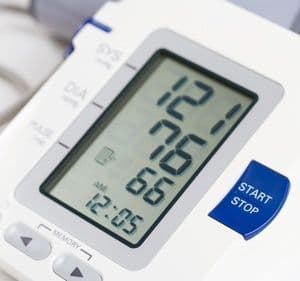
How low should your blood pressure go? That seems like such a simple question. There are many healthcare professionals who believe that intensive cholesterol and blood pressure (BP) control is highly desirable. In other words, the lower the better. I won’t get into the cholesterol challenge in this article. But the answer to the BP query is more complicated than you might imagine. A new “systematic review and meta-analysis” published in JAMA Cardiology (October 7, 2026) comes down firmly on the side of intensive BP lowering. But blood pressure treatment tradeoffs deserve a more nuanced interpretation in my opinion.
The authors of the new study conclude that “more intensive BP lowering reduced risk of cardiovascular events by 15% for each 10-mm Hg lower SBP [systolic blood pressure]…” They were specifically looking at people with and without chronic kidney disease (CKD).
Moving the needle 10 points on a blood pressure monitoring device is a lot. And many of the studies they examined were shooting for a systolic BP of 130 to 120. The guidelines now suggest that “normal” systolic blood pressure is under 120.
Qs from The People’s Pharmacy About Blood Pressure Treatment Tradeoffs:
We always like to ask some important questions when we read an article such as the one in JAMA Cardiology. Are there any treatment tradeoffs with intensive blood pressure lowering strategies? How many cardiovascular events are actually prevented? Relative risk reductions in percentages always seem impressive. We want to dig deeper.
What happens to kidney function with intensive BP treatment? You will learn that intensive BP management did not lead to an increase in kidney failure. What about kidney function?
What if getting BP numbers below 120/80 leads to dizziness, fainting, falls or broken bones? Is that an acceptable tradeoff?
A Challenging Balancing Act
Let me make one thing crystal clear right at the beginning. High blood pressure is dangerous. It contributes to heart attacks, strokes, kidney damage and premature death. People with substantial hypertension almost always need effective treatment, often including medication.
This article is not a recommendation to stop blood pressure medicine!
No one should discontinue, reduce or otherwise change a prescribed blood pressure medication without consulting the clinician who prescribed it. Stopping some blood pressure medicines suddenly can be dangerous, and poorly controlled hypertension can lead to a disabling or fatal stroke.
Why Blood Pressure Treatment Tradeoffs Matter
I am posing a few complex questions:
- How low should blood pressure go?
- How would we know if low is too low?
- What tradeoffs are not worth the price a patient has to pay?
For decades we have been told that hypertension is the “silent killer.” That has always seemed an apt description because high blood pressure often causes no symptoms. Blood vessels and organ systems can be damaged, but people may not be aware of the harm taking place. I completely understand why cardiologists and neurologists want blood pressure under control.
In recent years, however, the message has gradually shifted from “control high blood pressure” to something closer to “lower is better!”
The latest guidelines make it clear that “normal” is below 120/80. Some home BP monitors may create anxiety by labeling a reading of 123/81 as “Stage 1 Hypertension.” But some people could freak out when they see the label “hypertension.” Guidelines can become problematic when a population-wide recommendation is translated into a target for one particular person.
A healthy 55-year-old may tolerate a systolic pressure of 115 beautifully. An 85-year-old taking eight medications who becomes dizzy every time she stands up may be an entirely different story. That is where blood pressure treatment tradeoffs become critically important.
The Latest Study Suggests that Intensive Treatment Prevents Cardiovascular Events
The systematic review and meta-analysis in JAMA Cardiology (October 7, 2026) reviewed 27 randomized clinical trials involving 88,830 participants. The investigators wanted to know whether intensive blood pressure lowering reduced cardiovascular complications in people with and without chronic kidney disease.
People with chronic kidney disease are at higher risk for heart attacks, strokes and other cardiovascular complications. They may therefore have more to gain from aggressive blood pressure control. The investigators reported that for every additional 10-point reduction in systolic blood pressure, intensive treatment reduced the relative risk of major cardiovascular events by about 15%.
That sounds impressive. Headlines that proclaim a 15% reduction in cardiovascular events get readers’ attention. Physicians and patients are duly impressed. And I certainly am not going to dismiss that benefit. But relative risk reduction is only part of the story.
The absolute numbers provide a somewhat different perspective.
Among people with chronic kidney disease, intensive treatment was estimated to prevent about 4.3 cardiovascular events per 1,000 person-years.
Among people without chronic kidney disease, the reduction was about 2.7 cardiovascular events per 1,000 person-years.
Those are real benefits. But they are not gigantic benefits. This distinction between relative risk reduction and absolute risk reduction matters enormously in medicine.
Suppose a treatment cuts a risk from 20 percent to 10 percent. That is a 50 percent relative reduction and a 10 percentage-point absolute reduction.
Now imagine another treatment cuts a risk from 2 percent to 1 percent. That is also a 50 percent relative reduction, but the absolute reduction is only one percentage point.
Same impressive relative number. Very different real-world impact. If treatment prevents only one additional event for every 100 people treated, the headlines might be less enthusiastic. That is why we wish researchers, medical journals and news reports would routinely provide absolute numbers prominently rather than burying them in tables or statistical analyses.
Patients deserve to know not only whether a treatment works, but how much it helps!
Blood Pressure Treatment Tradeoffs and the Kidneys
The JAMA Cardiology (October 7, 2026) analysis offers reassuring news about one important outcome. More intensive blood pressure lowering did not significantly increase the risk of outright kidney failure. That is unquestionably good news.
But there is another part of the kidney story that deserves attention. Intensive blood pressure lowering was associated with a greater likelihood of sustained declines in estimated glomerular filtration rate, or eGFR. eGFR is one of the main measures doctors use to assess kidney function. The investigators reported that intensive treatment increased the risk of a sustained decline of 30 percent or more in eGFR by roughly 42 percent.
In other words, intensive BP lowering did not increase kidney failure, but it was associated with significant declines in eGFR, a key measure of kidney function. That may seem like a trivial issue, but ask nephrologists if reduced kidney function is a good thing and I am willing to bet that the answer would be no. The authors themselves recommend careful monitoring of blood pressure, kidney function and electrolytes when an intensive treatment strategy is used. That seems sensible to us.
Another Review Reached a Different Conclusion
Please hang in there with us because the whole issue of blood pressure treatment tradeoffs is about to get a tad more complicated. A Cochrane review published in 2024 looked specifically at people with hypertension and chronic kidney disease.
What, you may be asking, is a Cochrane review? To be precise, this comes from the Cochrane Database of Systematic Reviews. Most healthcare professionals recognize a Cochrane review as an international initiative of health experts that applies rigorous standards to the analysis of clinical trials. For many, it is a gold standard assessment of treatment outcomes.
In this Cochrane Database of Systematic Reviews (October 15, 2024) the title was:
“Blood pressure targets for hypertension in people with chronic renal disease”
The researchers analyzed six randomized controlled trials involving 7,348 participants who were followed for an average of 3.6 years. They compared lower blood pressure targets with more standard targets.
Their conclusion was far less enthusiastic:
“This Cochrane review addresses evidence from randomised controlled trials (RCTs) comparing two alternative strategies – standard blood pressure targets (≤ 140 to 160/90 to 100 mmHg) and lower blood pressure targets (≤ 130/80 mmHg) – for hypertension in people with chronic kidney disease (CKD).
“Lower blood pressure targets likely result in little to no difference in total mortality, serious adverse events, or cardiovascular events, compared to standard blood pressure targets. There may be little to no difference in cardiovascular mortality, the incidence of progression to end‐stage renal disease (ESRD), or in the total number of participants with a doubling of serum creatinine level or at least 50% reduction in glomerular filtration rate (GFR) by the end of the study, between lower versus standard blood pressure targets.”
Put simply, the authors reported that lower blood pressure targets made little, if any, difference in death rates, serious adverse events or cardiovascular complications.
How can two serious scientific reviews reach such different conclusions? Part of the answer is that the newer JAMA Cardiology analysis included a lot more data. Several major trials have been published since the Cochrane investigators completed their evidence review. The newer analysis also combined information from people with and without chronic kidney disease and standardized the results according to the actual difference in achieved systolic blood pressure.
Put simply, these are not identical analyses. Still, the contrast should remind us of something important: Science is a constantly evolving process. What seemed settled 20 years ago may be challenged by new evidence next year. Guidelines that seem written in stone can change when new data become available.
Many People Worry More About High BP than CKD
There is another wrinkle to this unfolding story. The latest research published in JAMA Cardiology (October 7, 2026) focuses heavily on the question of whether intensive blood pressure lowering works differently in people with and without chronic kidney disease. Most people reading this article are probably asking a simpler question:
“I have high blood pressure. How low should mine go?”
That is not quite the same question. Of course, kidney disease and hypertension often travel together. Kidney problems can cause high blood pressure, and high blood pressure can damage the kidneys. To make matters more complicated, chronic kidney disease can remain silent for years.
Many people do not realize they have diminished kidney function until routine blood tests reveal an abnormal eGFR or a urine test detects excess protein. You may want to take a few minutes and listen to our in-depth interview with Dr. Samir Parikh. He is Professor of Internal Medicine and Pharmacology and Chair of Internal Medicine at the University of Texas Southwestern. Samir M. Parikh, MD, FASH, holds the Donald W. Seldin Distinguished Chair in Internal Medicine and the Ruth W. and Milton P. Levy, Sr., Chair in Molecular Nephrology.
Show 1482: Are Your Kidneys in Trouble? Two Tests Could Tell You
It only takes two tests to tell you how healthy your kidneys are: creatinine in the blood and protein in the urine. Know your numbers!
We should be cautious about taking conclusions from a meta-analysis centered on kidney disease and automatically turning them into an identical treatment strategy for every person with mildly elevated blood pressure.
The Other Blood Pressure Treatment Tradeoffs: Dizziness, Fainting and Falls
This is the part of the discussion that worries us a lot, especially for older adults. Intensive lowering of blood pressure may come with tradeoffs. Blood pressure is what pushes blood through the arteries and delivers oxygen to the brain and other organs.
If pressure drops too far, especially when someone stands up suddenly, the brain may temporarily receive too little blood. The result can be lightheadedness, dizziness or fainting.
Doctors call a substantial drop in blood pressure after standing orthostatic hypotension.
For a young person, feeling briefly lightheaded may be unpleasant. For an 82-year-old with osteoporosis, poor balance and several medications on board, it can be disastrous. A fall may lead to a fractured hip, head injury, hospitalization, rehabilitation, loss of independence or even death.
That is not theoretical. Research over many years has linked antihypertensive drug treatment, particularly aggressive treatment in vulnerable older people, to hypotension, fainting and fall-related injuries. Hypotension is the flip side of hypertension.
The authors of the new JAMA Cardiology analysis acknowledge that other meta-analyses have found an increased risk of adverse events attributed to low blood pressure, including syncope and falls. Those complications deserve to be weighed against the absolute cardiovascular benefit.
A Fall Can Change a Life Forever
A fall can result in:
- A broken hip
- Vertebral fractures
- Head injury
- Internal bleeding
- Hospitalization
- Loss of independence
- Admission to a nursing facility
- Death
Those are not trivial adverse effects.
We have heard from many readers who discovered the hard way that blood pressure treatment can sometimes overshoot the mark.
One woman told us:
“A few years ago, my cardiologist put me on spironolactone to lower my blood pressure from 140/80. Shortly thereafter, I got up from bed for the bathroom. I blacked out in the bathroom, fell and fractured two vertebrae.”
She later fainted again, fell onto her walker and ended up spending weeks in rehabilitation. She told us that the fractures left her four inches shorter and changed her life forever.
A story like that does not suggest that spironolactone is a bad medicine. It isn’t. Many people can take this potassium-sparing diuretic without complications.
This case example does not mean people should give up on blood pressure treatment. It does illustrate something that statistical averages cannot convey:
Individual responses to medication matter.
A treatment that works beautifully for thousands of patients can still be completely wrong for one particular person. A medication that works beautifully for one person may make another person dizzy, weak or unstable. That is why we get nervous when medicine becomes too focused on hitting a numerical target.
One Blood Pressure Target Cannot Fit Everyone
Clinical guidelines are necessary. Doctors rely upon evidence-based starting points. But a guideline is not a human being. Age matters. Frailty matters. Kidney function matters. Other medications matter. Previous falls matter. Heart disease matters. Diabetes matters. Life expectancy matters.
How the patient actually feels matters!
An article in The American Journal of Medicine (October, 2022) summed up the dilemma nicely:
“As a generalization, the lower the pressure, the better. However, a corollary should be not at all costs and not necessarily to the same target in all patients.”
That is one of the most sensible statements we have encountered in the blood pressure literature.
Doctors Don’t Have a Crystal Ball
One of the dirty little secrets of hypertension treatment is that doctors cannot always predict which medicine will work best for a particular patient. There are many excellent blood pressure drugs.
- ACE inhibitors such as lisinopril work wonderfully for some people. Others develop a relentless cough.
- ARBs such as losartan or valsartan can be highly effective and well tolerated.
- Calcium channel blockers such as amlodipine may lower blood pressure beautifully but can cause swollen ankles in some people.
- Diuretics can be extremely useful but may alter sodium, potassium, magnesium or kidney function.
- Beta blockers are valuable for certain heart conditions but can sometimes cause fatigue, slow heart rate or dizziness. Some people with asthma or other reactive airway disease may develop breathing problems.
Physicians do have evidence-based recommendations about which drugs are most appropriate under various circumstances. But they cannot know with certainty how any individual patient will respond until treatment begins.
We dislike the phrase “trial and error.” Nevertheless, there is often an element of careful experimentation involved in finding the right medicine, the right dose and sometimes the right combination. That requires careful communication. A patient who feels dizzy, weak, faint or unsteady needs to tell the prescriber. A blood pressure reading that looks wonderful in the electronic medical record doesn’t tell the doctor that the patient nearly fell getting out of the shower that morning.
Finding the Blood Pressure Sweet Spot
We think the goal of treatment should be straightforward:
Obtain the greatest protection from heart attacks and strokes with the lowest reasonable risk of adverse effects.
That sounds obvious. Getting there is not. Some patients may tolerate a systolic blood pressure below 120 extremely well. Others may become miserable at 125. Still others may experience dizziness or fainting when their pressure falls much below 130. This is why we resist the idea of cookbook medicine. The goal should not be to make a computer screen happy. It should be to keep the patient healthy and functioning.
People taking blood pressure medicine should report symptoms such as:
- Dizziness when standing
- Lightheadedness
- Weakness
- Fainting or near-fainting
- Unsteadiness while walking
- Falls
A clinician may want to check blood pressure while the patient is lying down and again after standing. Kidney function and electrolytes may need monitoring. A dose may need to be adjusted periodically. A different medication may work better. And sometimes the target itself deserves reconsideration.
Blood Pressure Treatment Tradeoffs Require Communication
There is no doubt that controlling hypertension saves lives and prevents disability. We don’t want anyone to read this article and decide that high blood pressure is harmless. It is not.
But patients deserve more information than:
“Your number is too high. We need to get it lower.”
They should be able to ask:
- How much will lowering my blood pressure reduce my absolute risk of heart attack or stroke?
- What side effects should I watch for?
- Could my medicines make me dizzy or increase my risk of falling?
- Should my kidney function and electrolytes be monitored?
- What blood pressure target makes sense for me?
Those questions should not be considered a challenge to medical authority. They are the essence of shared decision-making.
PLEASE: Do Not Stop Your Blood Pressure Medicine!
We are going to say this again because it is so important.
Do NOT stop, skip, reduce or otherwise alter your blood pressure medication on your own!
Poorly controlled hypertension can cause a devastating stroke, heart attack or kidney damage. Some medications can also produce dangerous rebound effects if they are discontinued suddenly. If you suspect that your blood pressure medicine is causing dizziness, fainting, weakness or instability, contact your physician or other prescriber.
Ask for a medication review. Ask whether your blood pressure should be measured while lying down and standing. Ask whether your dose or combination of drugs needs adjustment. But please do not make such changes without medical supervision.
Final Words
We began this article by asking a simple question:
How low should your blood pressure go?
After decades of research, the answer is still:
It depends.
The new JAMA Cardiology analysis strengthens the evidence that more intensive blood pressure lowering can prevent cardiovascular complications. We take that finding seriously. But we also take the absolute benefit seriously. Roughly three fewer cardiovascular events per 1,000 person-years among people without chronic kidney disease sounds different from a 15 percent relative risk reduction, even though both descriptions refer to the same findings.
Kidney function deserves attention. So do dizziness, fainting, falls and fractures. And so does quality of life. The best blood pressure is not necessarily the lowest number that can be achieved by adding another medicine. It is the pressure that provides substantial protection against heart attacks and strokes without creating unacceptable risks for that particular patient. We encourage all healthcare providers to:
Treat the patient, not just the number.
Did you find this article helpful? If so, we would be grateful if you would share it with friends and family members. Your support keeps our newsletter and website moving forward. We would appreciate it if you could encourage people to sign up for our free newsletter at this link. You may also find our eGuide to Blood Pressure Solutions useful. This online resource can be found under our Health eGuides tab. Thank you for supporting our work.
Citations
- Iatridi, F., et al, "Intensive vs Standard Blood Pressure Lowering in People With and Without Chronic Kidney Disease: A Systematic Review and Meta-Analysis," JAMA Cardiology, Oct. 7, 2026, doi: 10.1001/jamacardio.2026.4445
- Erviti, J., et al, "Blood pressure targets for hypertension in people with chronic renal disease," Cochrane Database of Systematic Reviews," Oct. 15, 2024, doi: 10.1002/14651858.CD008564.pub3
- Filippone, E.J., et al, "Controversies in Hypertension II: The Optimal Target Blood Pressure," American Journal of Medicine, Oct. 2022, doi: 10.1016/j.amjmed.2022.05.009