
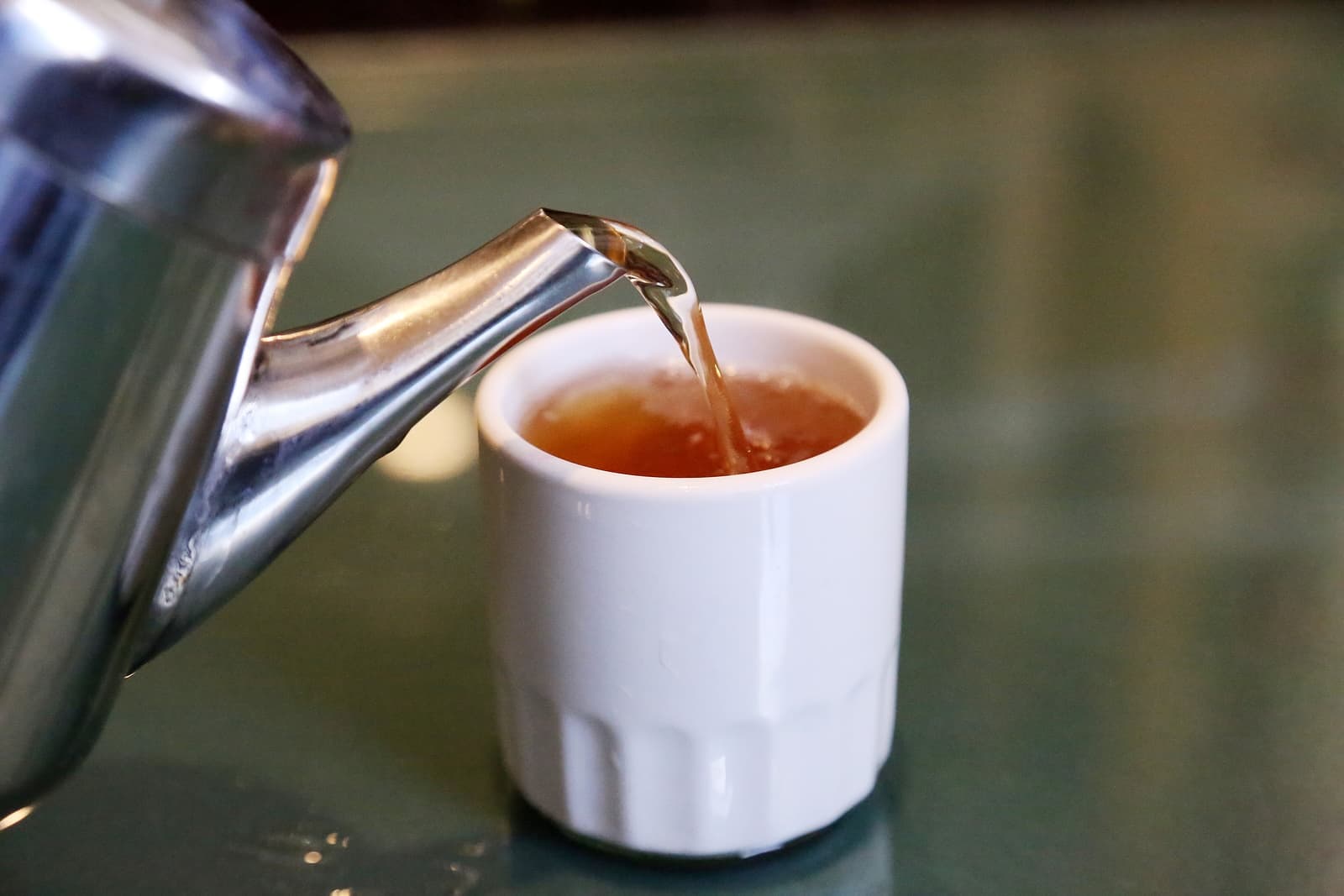
People often think of osteoporosis as a condition that affects elderly women, creeping up on them unannounced and making them as fragile as porcelain. While it is true that many people with osteoporosis are indeed older women, men and middle-aged women are also at risk for osteoporosis. Bones are living tissues, in which some cells are constantly breaking down weak points and others are building bone back. Scientists call this process remodeling. When the bone-destroying cells outpace the bone-building cells, the resulting bone is weaker, even somewhat porous. Many different factors affect the balance between breakdown and buildup; one that has received attention recently is tea.
Studying Tea in China
Researchers in China studied bone mineral density and bone mineral content in 1,708 older adults (American Journal of Clinical Nutrition, Oct. 2026). They took these measurements at four different times using dual-energy X-ray absorptiometry (DEXA) over the course of 13 years. This is the accepted standard for assessing bone density and is the technology doctors in the US use to diagnose osteoporosis.
Does Drinking Tea Increase the Risk for Osteoporosis?
In addition, the scientists collected information on how frequently the volunteers drank tea and they measured the levels of flavan-3-ols in participants’ blood. Tea is an important source of these natural compounds such as epicatechin and epigallocatechin gallate (EGCG). It is also an extremely popular beverage in China.
The analysis shows that people who drank tea moderately often had higher bone density scores for the spine and the hip (femoral neck) than those who rarely drank tea. In addition, they scored higher than those who were frequent tea consumers. Most of the time, people with higher levels of flavan-3-ols had better bone density as well.
According to the scientists,
“Moderate-frequency tea consumption and higher categories of selected circulating tea biomarkers were associated with more favorable bone mineral status.”
Should a High Risk for Osteoporosis Mean Giving Up Tea?
Many years ago, we received a question from a person who was concerned about osteoporosis. She wondered if she would need to give up the tea she enjoyed. [Many of the comments were posted in response to that original Q&A.]
Q. I am 49 and had a bone density scan done since osteoporosis runs on my mother’s side of the family. The results showed that I have borderline osteoporosis. I am now taking Fosamax, calcium supplements and estrogen. I am also trying to get more exercise, especially walking.
I read somewhere that there’s a substance in tea (perhaps tannic acid) that inhibits the body’s ability to absorb calcium. I am a tea drinker, but I will cut back on my tea consumption. I hate having to give up tea entirely and would like to indulge myself on the weekends.
What if I take calcium tablets in the morning and don’t drink tea until lunch? Basically, I want to time my tea consumption so it would not interfere with calcium absorption. Can you help me with this strategy?
Taking Alendronate for Osteoporosis
A. You are correct that tannins in tea can alter mineral absorption, but iron is affected more profoundly than calcium. If you take your calcium at breakfast and have tea at lunch or in the afternoon, there should be no problem.
Be aware, though, that you should not take calcium within 30 minutes of swallowing your Fosamax (alendronate). This medication must be taken on an empty stomach with 6 to 8 ounces of plain water at least 30 minutes before any other food, drink or supplement. You must not lie back down after taking your pills, as that could potentially lead to it getting stuck and damaging the esophagus.
What About Calcium?
When it comes to bone health, calcium may have a better reputation than it deserves. You should make sure to get enough (1000 to 1200 mg daily), preferably as much of that from food as possible (JAMA, Sep. 9, 2025). The research is contradictory as to whether calcium supplements will prevent osteoporosis or possibly increase the risk for heart attacks. More details here.
Our free Guide to Drug and Food Interactions puts the tea and calcium concern into perspective. We don’t think you need to give up tea. It is a healthful beverage that may reduce your risk of heart attack and cancer, and if you are moderate in your consumption, it might even benefit your bones and reduce your risk for osteoporosis.
Citations
- He S et al, "Relationship of tea consumption and its circulating biomarkers with longitudinal bone mineral changes: a prospective cohort study with repeated measurements." American Journal of Clinical Nutrition, Oct. 2026. DOI: 10.1016/j.ajcnut.2026.101466
- Morin SN et al, "Osteoporosis: A review." JAMA, Sep. 9, 2025. DOI: 10.1001/jama.2025.6003

