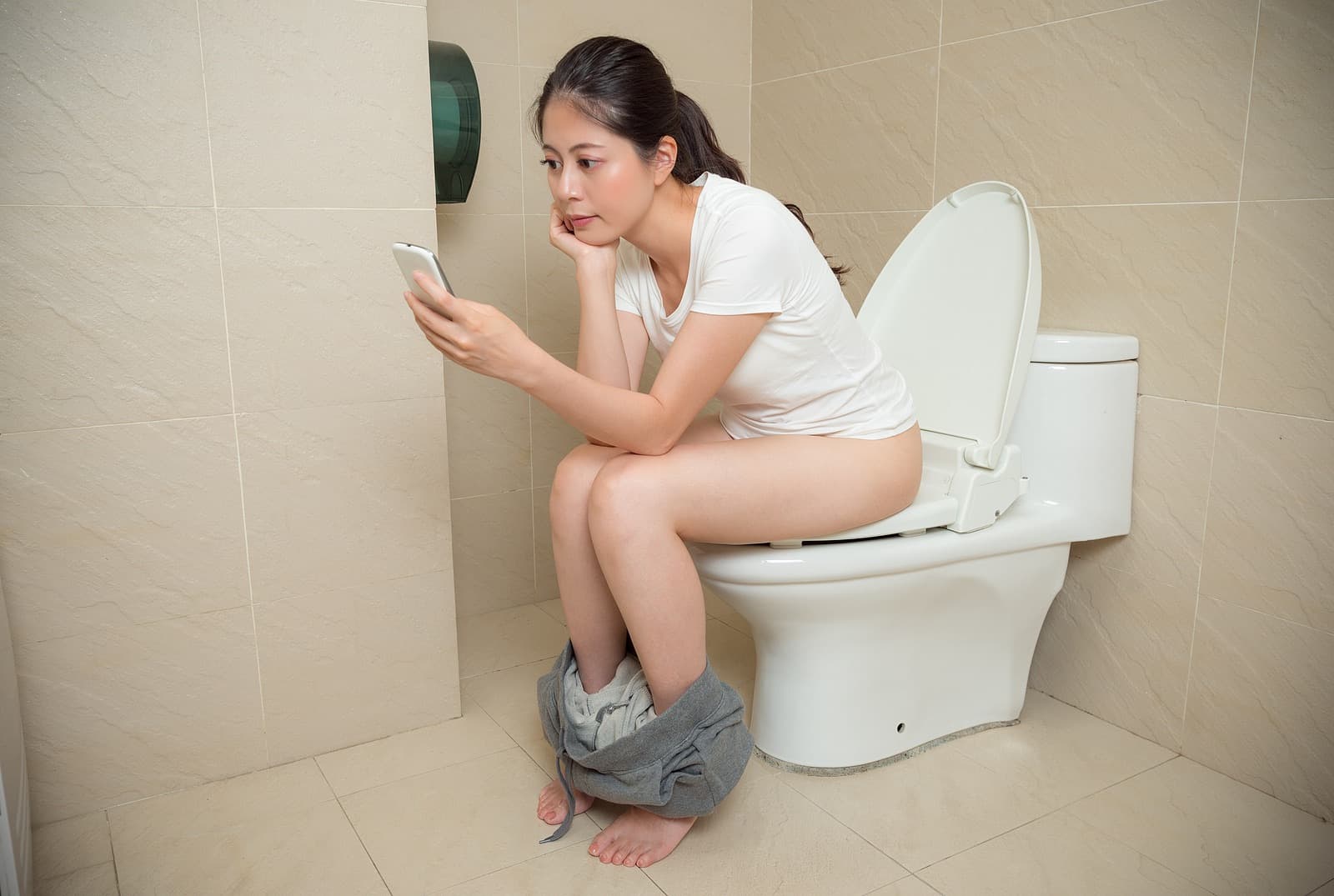
We never fail to be amazed at how worked up people get about public restrooms and toilet seats. A wet toilet seat grosses most people out. OK, I understand that plopping your bare bottom on a wet seat is unpleasant. A lot of people worry about germs. They frequently use disposable toilet seat covers to protect themselves from herpes or some other sexually transmitted disease. These same cautious individuals have absolutely no fear of using a touch screen at a supermarket, pharmacy, big-box store or bank. Those screens may be far more contaminated than the toilet seat in a public restroom.
Are Touch Screens the New Germ Magnets?
Before you reach for that toilet seat cover, you might want to think about what you touched before you reached the restroom. We routinely poke touch screens at supermarket checkout counters, pharmacies, restaurants, airports and banks without giving germs a second thought.
Perhaps we should. A study published in the Journal of Food Protection (September 2026) sampled touch screens and other frequently touched surfaces in grocery stores, convenience stores and restaurants in four states. Researchers tested 175 surfaces, including touch screens, credit card machines, ATMs, restroom door handles and employee cell phones.
Here’s the part that caught our attention: grocery store touch screens had significantly higher levels of coliform bacteria than restroom door handles. If you are not familiar with the term ‘coliform bacteria,’ they are a group of bacteria often used as an indicator of sanitary conditions. And things get even more unsettling when the investigators looked specifically for evidence of fecal contamination.
Yes, you read that correctly. The screen you touch to check out your groceries may deserve as much concern as the toilet seat in a public restroom. Even more startling, researchers detected a bacterium associated with human fecal contamination (Clostridium coccoides) on 88.9% of the touch screens sampled in convenience stores. Across all the surfaces tested, nearly half were positive for this fecal marker.
The authors report:
“It is worth noting that 13.0% (3/23) and 30.9% (17/55) of surfaces sampled from casual dining restaurants and quick service restaurants were positive for C. coccoides, respectively.”
Touch Screen Scenario
Here’s a scenario for you. You are at an airport restaurant where you can order pizza, burgers or salads with a touchscreen. Let’s say you order the pizza. Dozens, if not hundreds, of people have touched that screen before you. And the likelihood that someone has actually cleaned the screen carefully with some sort of antimicrobial sanitizer is slim, especially in the hours before you sat down for a quick lunch.
Your pizza arrives. You have to eat it with the fingers that touched the screen to order. If just one of the people before you had a cold, the flu or a stomach bug, you likely have those germs on your fingers as you eat your pizza. If you get sick several days later, you are not likely to attribute it to the restaurant at the airport.
A Diverse Geography
The authors of the recent study collected samples from grocery stores, convenience stores, quick-serve restaurants and casual dining establishments in Atlanta, Cleveland, Denver and Orange County, California. Here are more of the results.
Viruses also showed up. Adenovirus was detected on about 14% of the touch screens tested. Norovirus and human parainfluenza virus were found much less frequently, but they were present on some surfaces. Norovirus can cause horrific vomiting and diarrhea. You have heard it described as “cruise ship virus,” “stomach flu,” or the “winter vomiting bug.” To learn more about norovirus, here is a link.
Finding microbial genetic material on a surface does not prove that someone will become infected by touching it. Nevertheless, the researchers concluded that public touch screens can serve as reservoirs for microbes and recommended regular disinfection and good hand hygiene after using them. We interpret that to mean thorough hand washing with soap and water for at least 30 seconds or using a liberal amount of hand sanitizer and rubbing it around your hands for at least 30 seconds and letting it dry on your skin.
What About Pharmacy Touch Screens?
Pharmacies deserve special attention because many of the people passing through them are sick or are picking up medicine for someone who is. A recent HUFFPOST article by Monica Torres (October 4, 2026) interviewed microbiologist Jason Tetro, known as “The Germ Guy,” and gastroenterologist Supriya Rao, MD. They pointed out that sign-in screens, blood-pressure machines, door handles and payment terminals may be touched repeatedly by people with respiratory or gastrointestinal infections.
There is some scientific support for that concern. Researchers studying frequently touched surfaces at an airport in Finland during cold and flu season found respiratory-virus genetic material on several surfaces (BMC Infectious Diseases, Aug. 29, 2018). One of the two samples taken from the buttons of a pharmacy payment terminal contained both rhinovirus and a human coronavirus.
Again, detecting a virus on a surface doesn’t necessarily mean there was enough viable virus there to make someone sick. But it does remind us how easily our hands move from a public screen to our nose, mouth or eyes without our even noticing.
Your Cell Phone May Be Along for the Ride:
Then there is the touch screen you carry everywhere and touch continuously.
Think about where your phone goes during a typical day. You may handle it in the supermarket, the doctor’s office, a restaurant, the airport and perhaps even the bathroom. Then you bring it home, put it on the kitchen counter and hold it close to your face.
Scientists have been studying cell-phone contamination for years. One systematic review found that phones can harbor potentially pathogenic microorganisms, although researchers have not proved that contaminated phones actually cause infections. Another study comparing touch-screen devices with older keypad phones found microbial contamination on nearly all the devices tested, with larger touch screens carrying a greater microbial load.
Tablets, electronic restaurant menus, self-checkout stations, ATM keypads, airline kiosks, blood-pressure machines and credit-card terminals all share the same basic problem: lots of fingers touch them, but we rarely know how recently, or how well, they were cleaned.
Norovirus deserves particular respect. CDC researchers have reported that norovirus left on a surface can transfer via fingertips to other objects such as telephones, faucets and door handles. As mentioned, this highly contagious virus can cause miserable bouts of nausea, vomiting and diarrhea.
We don’t recommend becoming a germaphobe. You can’t disinfect the world, and most contact with ordinary microbes does not make us sick. But there is an easy precaution that makes sense: after using a public touch screen, avoid touching your eyes, nose or mouth until you can clean your hands.
Soap and water are especially important when norovirus is a concern. When a sink isn’t available, alcohol-based hand sanitizer is a convenient alternative for many other germs.
Perhaps we have been worrying about the wrong bathroom surface all along. A damp toilet seat may be disgusting, but that innocent-looking touch screen you used to pay for your groceries could deserve at least as much attention.
Nobody Wants a Damp Toilet Seat!
Q. I hate sitting on a damp toilet seat. People who leave public restrooms in this condition are selfish and thoughtless. They don’t want to sit down themselves, but don’t have the decency to clean up their own mess.
I have never been able to “hover” over the seat, so I’ve just put up with this unpleasantness. Fortunately, I’ve never caught anything this way.
A. There is actually a medical condition called toilet phobia. However, we know of no reason why people should worry about sitting down in a public restroom.
A disposable paper seat cover makes this more comfortable. While they are available for free in some restrooms, a concerned person could also carry a few in a handbag. Some people choose to clean the seat with a disposable alcohol wipe before using it. Again, this is strictly to reduce the “gross-out” factor.
According to Dr. Charles Gerba, microbiologist at the University of Arizona, toilets can spread germs all over the bathroom when they flush. That affects much more than the seat. As a result, people might want to carry their own soap or hand sanitizer if the dispensers in the restrooms they frequent aren’t always well stocked.
Denise shared her anger about wet seats:
“Women who pee on seats are doing so because they do not want their bare bottoms (mostly thighs, actually) to contact a surface – even a dry surface – that has been sat on – or peed on – by others. Perhaps they should go in the men’s room and use a urinal.
“When I unsuspectingly sit on a wet seat (rare now that I look first) I am not so much worried about germs as I am wet and uncomfortable and put out that I now have to dry off my entire backside before I’m done. The preceding offender should wipe off the seat so I don’t have to. Come on, people!”
What About Germs?
Then there’s the whole issue of germs. Some people are convinced that they caught “something” from a toilet seat. One older woman reported that her husband contracted herpes from the facilities at their gym. She was adamant that her husband did not “mess around.”
Dermatologists insisted that was impossible and that no one ever caught herpes (or any other STD) from a toilet seat. STD experts such as Dr. Ina Park agree. Nevertheless, some people are convinced that they caught herpes from gym equipment or bathrooms.
A nurse shared this experience:
“I was taught in nursing school that one could not get herpes from a toilet seat. I have contracted herpes and my husband of 36 years remains free of the disease. Since I have had only one partner in my 57 years and he remains clear, I must assume that I caught herpes from a toilet seat.
“Intact skin makes it hard for a person to catch this disease. But I get occasional splits in the skin near the base of the spine, and this is where my herpes has appeared. I do not have vaginal herpes.
“Those of us who have the disease and have not had sex with more than one person in our entire lives are devastated to learn that we are carriers. Thank goodness for a wonderful physician and an understanding husband.”
Flushing Toilets with the Lid Down
Q. Your discussion of germ contamination from flushing toilets should be a non-issue. All people have to do is close the lid before flushing. Of course, covers are not air tight, but I doubt if much airborne spray would get out and cause infections in a normal home.
A. At the risk of reigniting the great bathroom battle, we have to disagree. Dr. Chuck Gerba, a microbiologist at the University of Arizona, has singlehandedly reinforced America’s fear of public restrooms. He found that when a toilet is flushed, germs from the bowl are thrown into the air in a fine, invisible mist that eventually settles out on bathroom surfaces.
When we asked him the obvious question about closing the lid, he informed us that this would not solve the problem. The mist apparently lingers and the next person to lift the lid may get it in the face. One other problem…most public toilets do not have lids.
Of course in a normal home, where people are healthy, there is little risk of transmitting infection. But in a public restroom, flush handles, taps and door knobs may be contaminated with disease-causing bacteria. Readers have suggested using a paper towel when touching these surfaces after washing hands.
Other Sources of Bacterial Contamination
Without becoming paranoid, consider that toilet paper dispensers can be a source of nasty germs. So can cell phones, kitchen sponges, counter tops and cutting boards. Money is dirty. So are light switches, computer keyboards, remote controls for TVs (in hotels and hospitals) as well as shopping cart handles. The best advice: wash hands carefully!
Many visitors to this website say we should not worry about germs. But norovirus can spread easily and cause severe diarrhea. This viral infection is NOT restricted to cruise ships. The CDC estimates about 20 million people suffer gastroenteritis each year. Most cases are caused by norovirus (symptoms include severe nausea, vomiting and diarrhea) and occur on land.
What’s your opinion? Share your own bathroom experiences below by clicking on the green box that says “View Comments.” Then add your comment at the top of the column.
If you think the new information on touchscreens is important, please share this article with friends and family. I guarantee you that very few folks think about coliform bacteria on a restaurant touchscreen. We would also be grateful if you encourage your contacts to sign up for our free newsletter at this link. Where else do you get up-to-date information on such a diversity of health topics? While you are at it, might you be able to donate to support our efforts? Here is a link if you appreciate our work.
Citations
- Arbogast, J.W., et al, "Prevalence of Fecal Indicators and Viruses on Touchscreens and Other High-Touch Surfaces in Retail Food Establishments in the United States," Journal of Food Protection, Sept. 2026, doi: 10.1016/j.jfp.2026.100840
- Ikonen, N., et al, "Deposition of respiratory virus pathogens on frequently touched surfaces at airports," BMC Infectious Diseases, Aug. 29, 2018, doi: 10.1186/s12879-018-3150-5
- De Groote, P., et al, "Mobile phones as a vector for Healthcare-Associated Infection: A systematic review," Intensive & Critical Care Nursing, Oct. 2022, doi: 10.1016/j.iccn.2022.103266