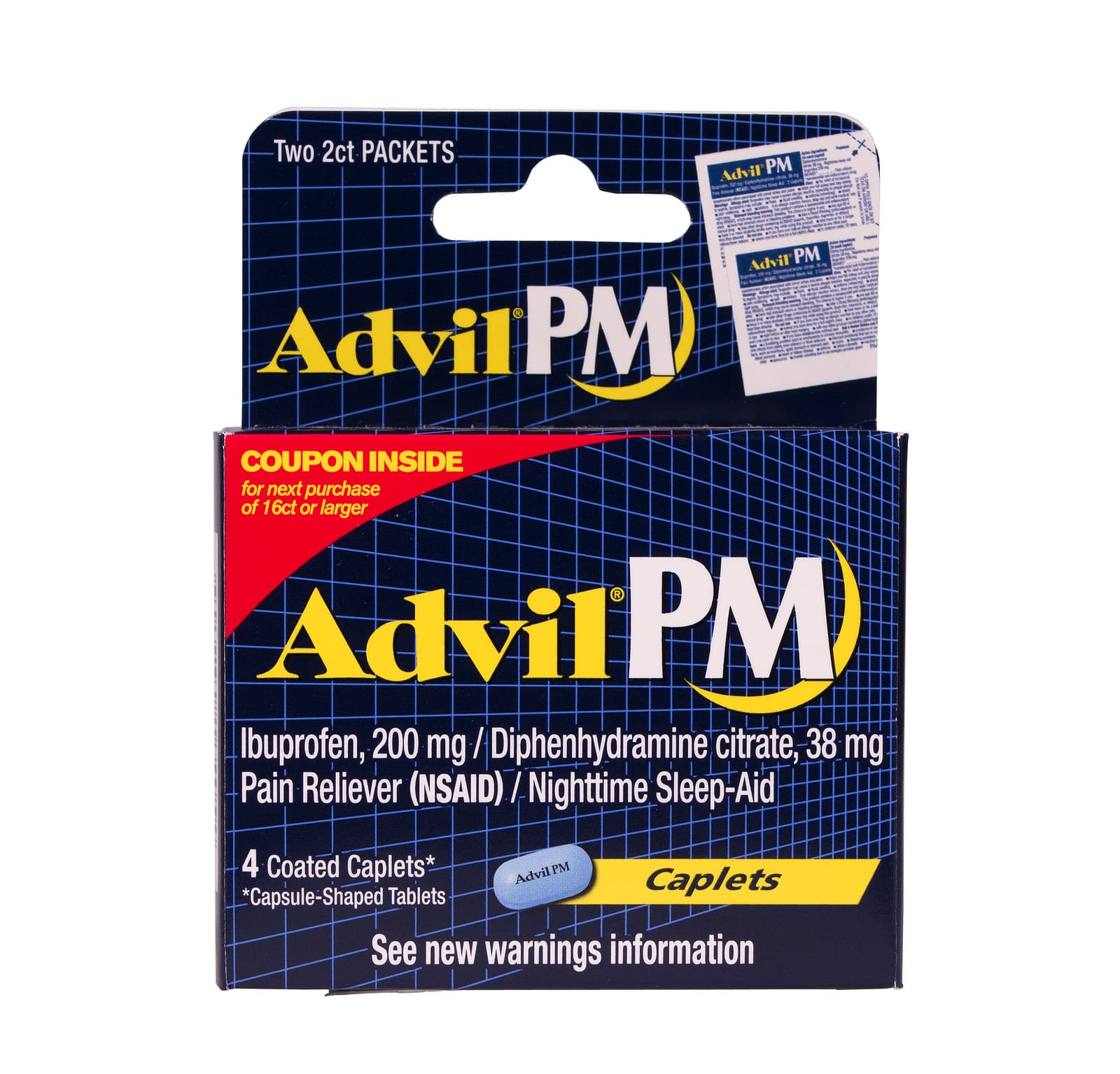
The very first prescription antihistamine approved in the United States by the FDA was diphenhydramine (DPH). The compound was created in 1943, and the Parke-Davis pharmaceutical company brought it to market in 1946 under the brand name Benadryl. It became doctors’ go-to treatment for allergies and was prescribed for hay fever, hives and many other histamine-related conditions. The FDA considered it so safe that the agency approved the sale of diphenhydramine without a prescription in 1982. These days, DPH is a key ingredient in “PM” pills for pain.
Familiar Brands Containing “PM” Pills:
If diphenhydramine does not come trippingly to the tongue, perhaps you will recognize some of the brand names that contain DPH:
- Advil PM
- ALEVE PM
- equate Pain Reliever PM
- EXCEDRIN PM HEADACHE
- Motrin PM
- Simply Sleep
- TYLENOL PM
- ZzzQuil
There are hundreds of generic formulations containing diphenhydramine. PM pills are marketed as an easy solution for nighttime pain, allergies, or insomnia. Millions of people reach for them believing that if a product is sold over the counter under a familiar brand name, it must be safe. Yet some people who rely on PM pills for pain wake up feeling foggy, unsteady, or mentally slowed. And those who take diphenhydramine during the day to treat allergies may be unsafe behind the wheel.
A warning on the label states: “be careful when driving a motor vehicle or operating machinery.” We would hope that everyone would always be careful when engaging in such activities. A viewpoint in JAMA Internal Medicine (January 20, 2026) is titled:
“Remove Oral Diphenhydramine From OTC—End the Status Quo“
The physician authors note that:
“Diphenhydramine causes somnolence [sleepiness], impairing alertness and daily functioning. Studies have linked its use to decreased workplace productivity, diminished academic performance, and an elevated risk of motor vehicle accidents. In a simulation study, diphenhydramine at the adult dose (50 mg) demonstrated more significant untoward effects during simulated driving than did an illegal blood alcohol level. The European Union has added diphenhydramine to its “do not drive” category due to its sedative potential. US aviation authorities forbid medical certification of pilots taking sedating antihistamines, whereas second-generation antihistamines, like fexofenadine and desloratadine, are permitted.”
Diphenhydramine has quietly shifted from an old familiar allergy remedy to one of the most widely used sleep aids in the country. Now, some physicians are asking whether this decades-old drug still belongs on open store shelves.
America’s First Antihistamine: From Breakthrough to Bedtime Staple
If you were to ask most people where histamine is found in the body they would probably point to the nose. That is where allergy symptoms such as sneezing, sniffling and stuffiness frequently show up. But there are histamine receptors throughout the body including the respiratory tract, blood vessels, gut, heart and central nervous system (Journal of Pediatric Pharmacology and Therapeutics, April 14, 2025).
When diphenhydramine was introduced, it represented a major advance in the treatment of allergies. Doctors prescribed it for hay fever, hives, itching, and other histamine-driven conditions. Over time, however, one side effect stood out: profound drowsiness. When people took DPH during the day to stifle sneezes and stuffiness, they often complained of spaciness and sleepiness. Some readers have described it as a head full of cotton.
By the 1980s, manufacturers began marketing that sedation rather than minimizing it. Diphenhydramine became the “PM” in PM pills. It was added to nighttime pain relievers and sold as a nonprescription sleep aid. Today, many people take it nightly without realizing they are using a powerful first-generation antihistamine that affects far more than nasal symptoms.
Why PM Pills Cause Brain Fog and Next-Day Impairment:
Unlike newer antihistamines, diphenhydramine readily crosses the blood–brain barrier. Once in the brain, it blocks not only histamine receptors but also acetylcholine, a neurotransmitter essential for alertness, learning, memory, and coordination.
The antihistaminic and anticholinergic activity may help explain why PM pills are sometimes linked to:
-
next-day brain fog
-
slowed reaction time
-
impaired concentration
-
poor balance
-
reduced driving performance
The authors of the article in JAMA Internal Medicine (Jan. 20, 2026) titled their article: “Remove Oral Diphenhydramine from OTC.” The same authors wrote in the World Allergy Organization Journal (Jan. 25, 2025):
“Diphenhydramine: It is time to say a final goodbye”
Put another way, perhaps it’s time to put DPH to sleep.
The physicians list some common complaints associated with both anticholinergic and antihistaminic effects:
- Urinary retention
- Constipation
- Blurred vision
- Dry eyes
- Dry mouth
- Irregular heart rhythms
The authors add this worrisome complication of diphenhydramine-containing PM Pills:
“When used as a sleep aide, its long elimination half-life is paradoxically associated with daytime sedation beyond the night of sleep, poor concentration and consequent poor attention, reduced memory, poor sensory-motor performance, and compromised school performance. Yet, patients are frequently unaware of the potential for these well-established effects. This scenario has resulted in vehicular accidents in patients who have underestimated their sedation after taking such medications.”
As mentioned, European regulators classify DPH as a “do not drive” medication. Here, though, Americans are told to “be careful” when driving. Come on, FDA!
Do PM Pills Produce Healthy Sleep?
Sedation is not the same as restorative sleep.
Sleep specialists emphasize that the brain uses sleep to consolidate memories, regulate emotions, and restore cognitive function. Drugs like diphenhydramine can disrupt normal sleep architecture, even if they help people fall asleep faster.
The American Academy of Sleep Medicine advises clinicians (Journal of Clinical Sleep Medicine, Feb. 15, 2017):
“We suggest that clinicians not use diphenhydramine as a treatment for sleep onset and sleep maintenance insomnia (versus no treatment) in adults.”
The Hidden Danger of Anticholinergic Burden:
Diphenhydramine’s anticholinergic effects do not occur in isolation. Many people unknowingly accumulate what researchers call anticholinergic burden by taking multiple medications that interfere with acetylcholine.
These include drugs for:
-
bladder control
-
depression
-
nausea
-
gastrointestinal disorders
-
respiratory conditions
Research shows that the higher the anticholinergic burden, the greater the risk of confusion, delirium, falls, and cognitive decline — especially in older adults. Large observational studies have linked long-term use of strong anticholinergic medications to an increased risk of mild cognitive impairment and dementia, with a clear dose-response relationship. Sadly, many healthcare professionals do not know how many different kinds of medications have anticholinergic activity.
Here is an article we wrote on anticholinergic drugs:
“Where Can I Find a List of Anticholinergic Drugs?”
People taking anticholinergic drugs over a long period of time may be at greater risk of developing dementia.
PM Pills, Drug Interactions, and Serious Safety Concerns:
PM pills can also interact dangerously with other medications.
Diphenhydramine may amplify serotonergic activity when combined with antidepressants such as SSRIs, raising the risk of serotonin syndrome — a potentially life-threatening condition marked by agitation, tremor, fever, seizures, and delirium.
It can also affect heart rhythm by prolonging the QT interval, increasing the risk of dangerous arrhythmias. Both intentional and accidental overdoses are well documented, and poison control centers report rising misuse among adolescents.
We fear that this is a drug interaction that could often go undetected because shoppers may not tell pharmacists what OTC drugs they are taking. Here is a link to an article we wrote on this critical topic:
Benadryl and SSRI Antidepressants
Many people don’t worry about mixing OTC meds and prescription drugs. It might be a bad idea to combine Benadryl with SSRI antidepressants.
Why Some Experts Are Calling for Change:
In recent years, some physicians have published forceful arguments that diphenhydramine has outlived its role as an unsupervised over-the-counter drug. They point out that second-generation antihistamines offer comparable allergy relief with far fewer cognitive and safety risks — and are already available OTC.
Dr. James Clark and his colleagues are now calling for the removal of DPH from over-the-counter medications:
“The FDA should eliminate diphenhydramine from the US OTC allergy market based on safety concerns and the existence of safer alternatives…Although requiring a prescription would limit patient choice for those who prefer diphenhydramine over second-generation antihistamines, we believe this impact is outweighed by the substantial public health benefits. The consequence of maintaining the status quo is no longer acceptable.”
Several countries have restricted access to first-generation antihistamines. Some experts argue that diphenhydramine should be removed from OTC allergy products altogether or placed behind the counter, allowing pharmacists to counsel patients about risks, interactions, and safer alternatives.
Critics counter that the drug has “stood the test of time.” But longevity alone does not equal safety, especially when decades of widespread use occurred before the cognitive effects of anticholinergic drugs were well understood.
The Bottom Line on PM Pills:
PM pills may look benign, but their sedating ingredient carries real and measurable risks, especially when used regularly or combined with other medications. Brain fog, impaired driving, falls, confusion, and possible long-term cognitive effects are not hypothetical concerns.
The real danger may be the assumption that “over-the-counter” means harmless. And brand names such as Advil PM, Aleve PM, Excedrin PM and Tylenol PM are reassuring.
As evidence mounts and safer alternatives exist, America’s first antihistamine is facing long-overdue scrutiny. Whether FDA regulators act remains to be seen, but consumers deserve to know what’s really behind the drowsiness.
One reader (Liz) asked this followup question:
“What to use instead of?
There are lots of strategies for dealing with insomnia. You could search this website for sleep and insomnia or check out our eGuide to Getting a Good Night’s Sleep. It is in the Health eGuides section of this website.
One small favor, please. If you know someone who is likely using a PM Pill for pain and/or insomnia, please pass this article along. You can do that by scrolling to the top of the page and clicking on email or social media. If you could encourage friends to sign up for our free newsletter at this link, we would be ever so grateful. Thank you for supporting our work. If you want to eliminate those pesky ads that pop up throughout our articles, please consider going ad-free at this link. The cost is $5/month. It makes using our website so much easier.
Citations
- Khan, W.N. and Tobias, J.D., "Diphenhydramine: A Review of Its Clinical Applications and Potential Adverse Effect Profile," Journal of Pediatric Pharmacology and Therapeutics, April 14, 2025, doi: 10.5863/1551-6776-30.2.182
- Clark, J.H., et al, "Remove Oral Diphenhydramine From OTC—End the Status Quo," JAMA Internal Medicine, Jan. 20, 2026, doi: 10.1001/jamainternmed.2025.7278
- Clark, J.H., et al, "Diphenhydramine: It is time to say a final goodbye," World Allergy Organization Journal, Jan. 25, 2025, doi: 10.1016/j.waojou.2025.101027
- Sateia, M.J., et al, "Clinical Practice Guideline for the Pharmacologic Treatment of Chronic Insomnia in Adults: An American Academy of Sleep Medicine Clinical Practice Guideline," Journal of Clinical Sleep Medicine, Feb. 15, 2017, doi: 10.5664/jcsm.6470