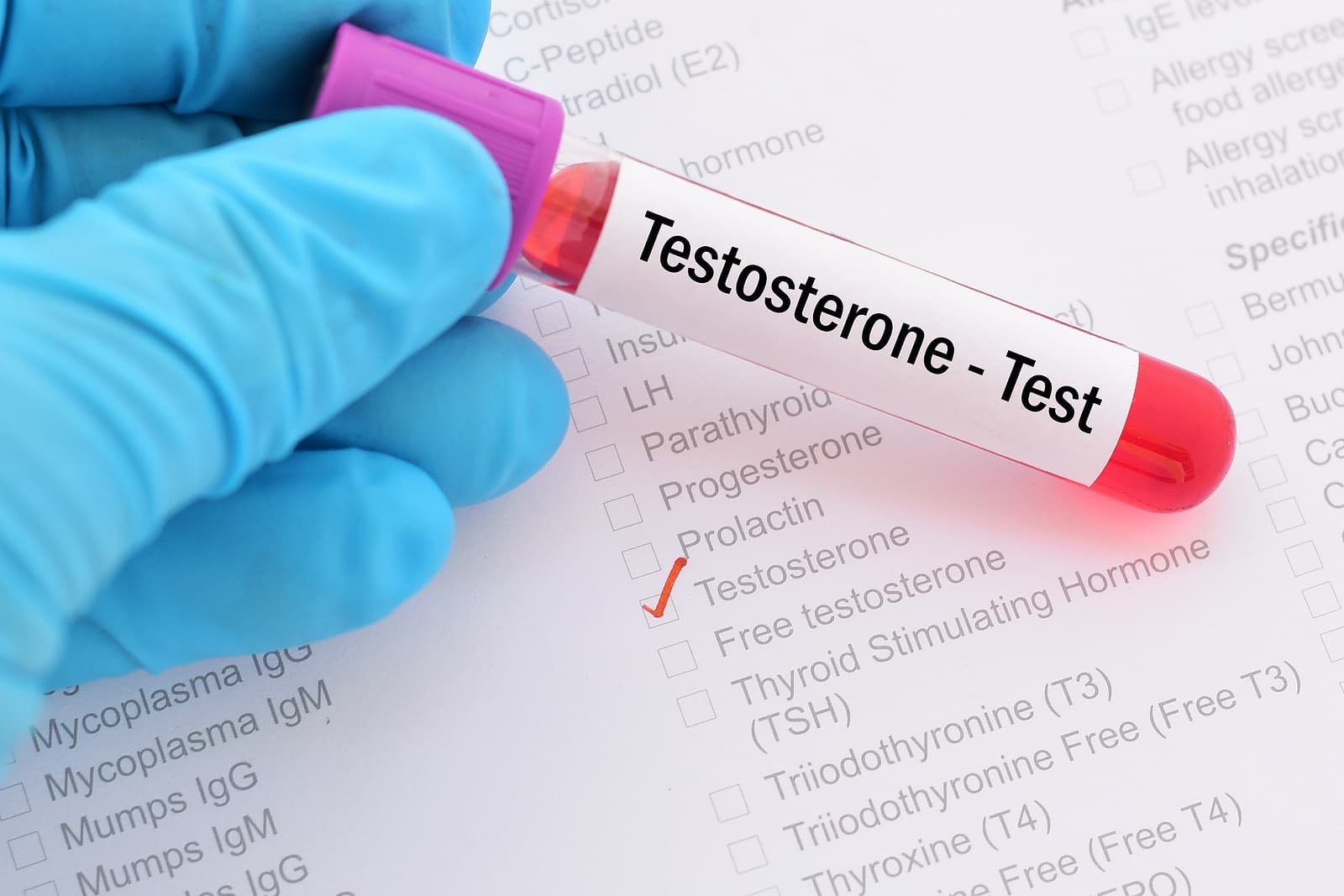
Do you know your LDL cholesterol level? How about your blood sugar, calcium or kidney function? Many people can recite at least some of those numbers. But do you know whether you have low testosterone? Chances are good that neither you nor your doctor has ever checked. Be honest now, when was the last time your primary care provider (PCP) ordered a hormone test for testosterone?
That might not seem surprising if you are a woman. Testosterone is widely regarded as a “male hormone.” That description is seriously misleading.
Women make testosterone too! Although they produce far less than men, this hormone participates in maintaining bones, muscles and sexual health. It is also one of the building blocks the body uses to make estradiol, the most active form of estrogen.
Men need estrogen as well. Women need testosterone. Human hormones stubbornly refuse to fit into the tidy pink-and-blue boxes we have created for them.
Low Testosterone Is Not Just About Sex
Mention testosterone and most people immediately think of libido. That connection is real, but testosterone does far more than influence sexual desire.
In both women and men, testosterone participates in:
- Maintaining bone
- Supporting muscle mass and strength
- Regulating sexual desire and responsiveness
- Influencing fat distribution
- Contributing to red blood cell production
- Supporting reproductive function
People with very low testosterone may experience diminished sexual interest, loss of muscle, weakness, reduced bone density or fatigue. Men may also develop erectile difficulties, fewer spontaneous erections, infertility, breast enlargement or loss of body hair.
Such symptoms are not specific to low testosterone, however. Fatigue, depression, weakness and loss of libido may also result from anemia, thyroid disorders, sleep apnea, diabetes, medication side effects, chronic illness, relationship problems or ordinary aging.
That is precisely why neither symptoms nor a single laboratory result should determine treatment.
Women Need Testosterone to Make Estrogen
Here is a fact that surprises many people: The body can convert testosterone into estradiol.
Estradiol is the main female hormone. It does the heavy lifting when it comes to reproductive health in women. An enzyme called aromatase accomplishes this transformation. It converts testosterone to estradiol and another androgen, androstenedione, into estrone. This process occurs in women and men and in tissues such as bone, fat and brain.
That does not mean all estrogen originates directly from circulating testosterone. Hormone production involves multiple pathways, precursors and tissues. Nevertheless, testosterone is not some irrelevant male chemical wandering around a woman’s body. It is part of her normal hormonal machinery. I suspect that fundamental fact has been left out of most conversations with healthcare professionals.
Women actually produce several times more testosterone than estradiol before menopause when measured by daily production, although circulating testosterone concentrations remain far below those found in men. You can read more about androgen production in women in this review from Fertility and Sterility (April, 2002):
The author concludes:
“Circulating levels of testosterone begin to decline in the mid-reproductive years, and the levels of adrenal androgenic steroids, namely adrostenedione and DHEA, decrease throughout postmenopausal life. Therefore, the circulating levels of these adrogenic steroids may serve an important role in the maintenance of local estrogen synthesis, for example, in the bone and brain where estrogen has a profound influence on the maintenance of mineralization on the one hand, and possible cognitive function on the other.”
Why Don’t Routine Blood Tests Check for Testosterone?
Most annual checkups include some combination of:
- A complete blood count
- Blood glucose
- Kidney and liver tests
- Electrolytes
- Calcium
- Cholesterol and triglycerides
Testosterone is rarely ordered. Why? Medical organizations do not recommend routinely screening every healthy adult for testosterone deficiency. I think that is an oversight.
Men and Testosterone:
For men, guidelines generally call for testing when symptoms or or some other issue suggest hypogonadism. That word kind of speaks for itself. It means that the testicles are producing little, if any, testosterone. There are lots of reasons for hypogonadism from chemotherapy or ADT (androgen deprivation therapy) to alcoholism or a genetic abnormality. A PCP should order early morning testosterone levels to help diagnose this condition. Symptoms also matter.
Women and Testosterone
For women, the numbers are even more confusing. Women normally have much less testosterone than men, so measuring it accurately can be tricky. Even the experts cannot agree on a single number that means a woman’s testosterone is “too low.”
That helps explain why doctors do not routinely add testosterone to the usual blood work. Cholesterol testing is used to estimate heart risk for nearly everyone. Testosterone testing is more often ordered when a patient has symptoms that raise a specific question.
That makes sense up to a point. The trouble is that testosterone may never come up at all. How would physicians realize that a man or a woman were experiencing low-testosterone symptoms if the appropriate questions were not asked?
A woman with unexplained bone loss, muscle weakness or distressing sexual symptoms may go from doctor to doctor without anyone mentioning testosterone. A man who is exhausted, losing strength or developing osteoporosis may simply be told, “You’re getting older.”
We are not suggesting that everyone needs a testosterone test. But when the symptoms fit, this important hormone should not be left out of the conversation.
Testosterone by the Numbers
Here is where things get challenging. One laboratory may list the normal testosterone range for an adult man as approximately 250 to 1,100 ng/dL. Another may use 264 to 916 ng/dL. Some laboratories provide age-adjusted ranges that extend much lower for older men.
Women’s reference ranges vary even more, in part because their concentrations are close to the lower limit that many conventional laboratory tests can measure accurately.
A reference range tells you what was found in the population a laboratory studied. It does not necessarily tell you what is ideal for a particular person. Nor does it prove that every result inside the range is healthy.
Readers do not need to memorize dozens of competing ranges. These are the three ideas we think matter most.
- For Men, Below 300 ng/dL Deserves Attention
The American Urological Association (AUA) considers total testosterone below 300 ng/dL a reasonable cutoff supporting a diagnosis of testosterone deficiency.
That does not mean every man with a level of 299 needs testosterone. The AUA recommends making the diagnosis only after two separate early-morning measurements and the presence of compatible symptoms or signs.
The full AUA guideline is available at this link:
“Evaluation and Management of Testosterone Deficiency (2024)“
The Endocrine Society has cited a harmonized reference range of 264 to 916 ng/dL, based on healthy, nonobese men between 19 and 39 years old whose laboratory results were standardized. It also emphasizes that diagnosis requires symptoms plus unequivocally and consistently low results.
You can read about that reference range here:
“Landmark Study Defines Normal Ranges for Testosterone Levels“
What About Age?
Age complicates the picture. Testosterone tends to decline as men grow older. But describing an extremely low level as “normal for age” may conceal obesity, diabetes, sleep apnea, medication effects or pituitary or testicular disease.
A younger man with a testosterone level slightly above 300 ng/dL may also be unusually low compared with healthy men his age. A study in The Journal of Urology (Dec. 2022) found that typical testosterone values differed substantially among men in their 20s, 30s and early 40s.
The memorable message for men: A morning testosterone result below 300 ng/dL, especially when accompanied by symptoms, deserves discussion with a knowledgeable health professional. The test should normally be repeated before anyone makes a diagnosis or prescribes treatment.
- A Male Level Below 200 ng/dL Should Not Be Shrugged Off
A repeated morning testosterone level below 200 ng/dL is substantially low by nearly every commonly used adult male standard. That does not automatically mean a man should begin testosterone therapy. It means someone should ask why the level is so low.
Possible contributors include:
- Obesity
- Type 2 diabetes
- Sleep apnea or chronic sleep deprivation
- Serious acute or chronic illness
- Pituitary or testicular disorders
- Long-term opioid treatment
- Corticosteroids
- Previous anabolic steroid use
- Chemotherapy, ADT or radiation
- Severe nutritional deficiency
Depending upon the circumstances, a clinician may repeat total testosterone and check free testosterone, sex hormone-binding globulin, luteinizing hormone, follicle-stimulating hormone or prolactin.
Very low testosterone might be more than a quality-of-life issue. A meta-analysis published in the Annals of Internal Medicine (June 2024) reviewed 11 studies involving more than 24,000 men. Total testosterone below approximately 213 ng/dL was associated with a higher risk of death from any cause. Cardiovascular mortality was higher when testosterone fell below approximately 153 ng/dL.
This was an observational analysis. It does not prove that low testosterone caused the deaths or that testosterone treatment would have prevented them. Low testosterone may sometimes be a marker for poor health rather than its direct cause.
Think of it as a warning light on the dashboard. The light deserves attention, but replacing the bulb is not necessarily the same as repairing the engine.
The Memorable Message
A repeated male testosterone level below 200 ng/dL should not be casually dismissed as an inevitable consequence of aging. It calls for a thoughtful medical evaluation.
- Women Have No Universally Accepted Low-Testosterone Cutoff
This is one of the most frustrating facts in hormone medicine.
Some laboratories list “normal” female total testosterone levels as approximately 15 to 70 ng/dL before menopause. Other sensitive assays use ranges such as 2 to 45 ng/dL for adult women or roughly 7 to 40 ng/dL after menopause.
Those ranges are not interchangeable. They vary according to age, menopausal status, laboratory method and the population used to establish them.
At the low concentrations found in women, ordinary testosterone immunoassays may not be sufficiently accurate. Highly sensitive testing, such as liquid chromatography-tandem mass spectrometry (LC-MS/MS), is generally preferable. There is also total testosterone and sex-hormone-binding globulin (SHBG). The average person cannot be expected to know what would be the ideal testosterone testing procedure for women of a certain age. That should be up to a knowledgeable healthcare provider.
More important, international experts have concluded that there is no blood-test cutoff that reliably distinguishes women with sexual dysfunction from those without it. The Global Consensus Position Statement on Testosterone Therapy for Women is available at this link.
A woman whose testosterone falls below the female reference range printed on a reliable laboratory report may have good reason to ask questions, especially if she has distressing symptoms, has had both ovaries removed or has a pituitary, adrenal or ovarian disorder. But no responsible clinician should prescribe testosterone merely to push her laboratory result toward the high end of the range.
A memorable message for women
There is no universally accepted numerical testosterone cutoff. A result below the laboratory’s age-appropriate female range deserves discussion when symptoms or medical circumstances raise concern, but the number alone does not establish a need for treatment. Osteopenia, osteoporosis, low libido, low energy, depression and several other symptoms should also be considered.
Total Testosterone May Not Tell the Whole Story
Most circulating testosterone is attached to proteins. One of the most important is sex hormone-binding globulin, usually abbreviated SHBG. Total testosterone counts both bound and unbound hormone. Free testosterone represents the small fraction that is not tightly bound and is more readily available to tissues.
A person may have an apparently normal total testosterone level but relatively little free testosterone because SHBG is high. The reverse can also occur. Oral estrogen, birth control pills, thyroid status, liver disease, obesity, insulin resistance and certain medications may alter SHBG.
Depending upon the clinical question, a knowledgeable clinician may consider:
- Total testosterone
- SHBG
- Calculated free testosterone
- Estradiol
- LH and FSH
- Prolactin
- Thyroid function
Ordering every possible hormone indiscriminately is not the answer. But interpreting total testosterone in isolation may provide an incomplete picture as well.
Low Testosterone and Fragile Bones
Bone loss is one of the most compelling reasons to take testosterone seriously. Millions of women have osteopenia or osteoporosis. Men also suffer fractures, although osteoporosis in men receives far less attention. Doctors may prescribe bisphosphonates such as alendronate or risedronate, the RANKL inhibitor denosumab or other osteoporosis medicines. Such treatments can be valuable and sometimes lifesaving. But they often come with side effects.
Why isn’t the possible cause of bone loss investigated?
Testosterone is important to the skeleton directly and because some of it is converted to estradiol. In men, severe testosterone deficiency is a recognized contributor to osteoporosis. Treating true hypogonadism can increase bone density.
That does not mean testosterone is a substitute for proven osteoporosis treatment. Nor does it demonstrate that giving testosterone to postmenopausal women will prevent fractures. You can read my recent article on this topic at this link:
Testosterone for Osteoporosis: Could Low T Be Weakening Bones?
Doctors rarely consider testosterone for osteoporosis, but low testosterone levels may affect bone and muscle strength in both women and men
What Has Testosterone Been Proven to Do for Women?
The strongest evidence for testosterone treatment in women involves postmenopausal women suffering from hypoactive sexual desire disorder. This is not merely occasional disinterest. It is persistent loss of desire that causes personal distress.
A systematic review and meta-analysis of 36 randomized controlled trials involving more than 8,000 women found that testosterone improved several aspects of sexual function, including desire, arousal, orgasm, pleasure, responsiveness and the frequency of satisfying sexual experiences.
The analysis was published in Lancet Diabetes & Endocrinology, Oct. 2019. International medical societies subsequently concluded that hypoactive sexual desire disorder in postmenopausal women is the only indication for which evidence clearly supports testosterone therapy. I personally think that is nonsense. Just because there have not been large, well-controlled clinical trials does not mean testosterone is ineffective. There is an old saying in medicine:
“Absence of evidence is not evidence of absence.”
In other words, just because you cannot find proof of something does not mean it doesn’t exist. A lot of doctors have dismissed people with symptoms of chronic fatigue syndrome (CFS). They couldn’t find evidence of a specific pathogen or problem. And yet today, especially after long COVID was identified, there is little doubt that the condition exists.
No one can prove that testosterone:
- Treats depression
- Improves general well-being
- Prevents dementia
- Builds substantial muscle
- Prevents fractures
- Reduces heart attacks
- Extends life
And I am not suggesting that testosterone supplementation can do any of those things. But we do need decent clinical trials to determine whether providing testosterone to people with low T can actually help with these kind of problems.
Some women report dramatic improvements in energy, mood, strength or overall vitality. Those experiences deserve to be heard. But personal experience is not the same as proof from a randomized controlled trial.
The research gap itself is part of the story. Women have been using testosterone off label for decades, yet there is still no FDA-approved testosterone product formulated specifically for them.
Men Can Get Testosterone. Why Not Women?
More than a decade ago, the Food and Drug Administration warned doctors not to prescribe testosterone merely because an otherwise healthy man had “low T.” Treatment remained available for men with recognized medical causes of hypogonadism.
The agency was concerned that testosterone treatment might increase the risk of heart attack, stroke or death.
Then came the TRAVERSE trial. More than 5,000 middle-aged and older men with symptoms of hypogonadism, low testosterone and cardiovascular disease or elevated cardiovascular risk received testosterone gel or placebo.
Testosterone did not increase the overall rate of heart attacks, strokes or cardiovascular deaths compared with placebo. The trial did identify more atrial fibrillation, acute kidney injury and pulmonary embolism in the testosterone group, however. It should not be interpreted as proof that treatment is risk-free.
The TRAVERSE trial was published in the New England Journal of Medicine, July 13, 2023. In February 2025, the FDA removed the boxed cardiovascular warning from prescription testosterone products after reviewing TRAVERSE and related evidence. At the same time, it required or strengthened warnings that testosterone can raise blood pressure. The increase was modest, though, 0.3 mm of mercury. That’s less than the increase many men would experience climbing a flight of stairs.
A Change in the Prescribing Advice
I wrote about this change of heart at this link:
FDA Testosterone Reversal: Were Men Misled for a Decade?
After years of frightening warnings, the FDA Testosterone Reversal plan reshapes heart, prostate and Low-T treatment advice.
On June 18, 2026, the Department of Health and Human Services announced that the FDA had requested additional changes to testosterone product labeling, including removal of the limitation discouraging use for age-related low testosterone and revisions to prostate warnings.
Men may eventually find it easier to obtain testosterone, if their blood tests and clinical experience warrant such treatment.
Women remain in regulatory limbo. The FDA has not approved a testosterone formulation for women, even though expert groups recognize an evidence-based use for carefully selected postmenopausal patients with distressing loss of sexual desire. That is a striking double standard.
Experiences of People’s Pharmacy Readers
Many readers have told us that testosterone changed their lives.
One woman says:
“It seems we are overlooked when it comes to low T, yet we could benefit just as much as men from testosterone therapy.”
Another offers this experience:
“I have been using estrogen and testosterone for 18 years. I’m able to get both compounded into creams at a local pharmacy. All of my health indicators are great. I have no hot flashes, and I have a sex drive again.”
This woman is under careful medical supervision:
“I had a post-menopausal decade of depression, low energy, no libido and creeping osteopenia [thinning bones]. Two weeks after starting bioidentical hormone replacement therapy—testosterone and estradiol pellets, plus a progesterone capsule—the sun came out.
“My doctor does blood work before every pellet refresh, about every 4 or 5 months, to make needed adjustments. She also takes into account how I’m feeling. My bones are now normal, sex drive is good, and I haven’t had a problem with testosterone side effects. I’ve been taking bioidentical HRT for 11 years and am 73 years old. To hell with the FDA! I’ll stop it when I’m dead.”
Such accounts are compelling. They should prompt research, not replace it.
When one treatment includes estradiol, progesterone and testosterone, it is impossible to know which hormone produced which benefit. Better sleep, relief from hot flashes and improved mood may be due partly or primarily to estrogen.
Readers’ stories tell us what questions urgently need answers. They do not settle those questions.
Is “Bioidentical” Testosterone Safer?
The word “bioidentical” sounds reassuring, but it is often misunderstood. Testosterone itself may be chemically identical to the hormone the body makes, whether it appears in an FDA-approved product or a compounded preparation.
The concern is not necessarily the hormone molecule. It is the formulation, dose, consistency and quality control. Because the FDA has not approved a testosterone product designed specifically or women, clinicians sometimes prescribe a carefully reduced amount of a male transdermal product. Others rely on compounding pharmacies.
Compounded medicines can be useful when no suitable commercial product exists. But they are not reviewed by the FDA for safety, effectiveness, dose uniformity and manufacturing quality in the same manner as approved products.
Pellets deserve special caution. Once implanted, they cannot easily be removed. They may also produce testosterone concentrations above the normal female range. Major consensus guidelines discourage preparations that result in supraphysiologic levels. “Natural,” “customized” and “bioidentical” are not synonyms for “proven safer.”
Too Much Testosterone Is Not a Good Thing
Testosterone should not be treated like a fountain-of-youth supplement.
Women receiving excessive doses may experience:
- Acne or oily skin
- Increased facial or body hair
- Thinning scalp hair
- Weight gain
- Enlargement of the clitoris
- Lowering of the voice
- Mood or behavioral changes
Some changes, particularly voice deepening or clitoral enlargement, may not be completely reversible.
This woman shared an unpleasant experience with testosterone:
“At age 29, I had to have a hysterectomy that included my ovaries. After the fat-stored estrogen left my body (producing horrid hot flashes), I complained to my ObGyn about my missing libido. He wrote me a prescription for an estrogen and testosterone mix.
“I began taking the pills, but I had strange changes in my body. I developed acne, facial hair, body hair and a low voice. I even began to walk differently. It helped some with sex drive, but I felt less and less feminine and more masculine. I hated it. I don’t think testosterone is worth the worry, even for women without ovaries.”
The long-term effects of testosterone on breast health, cardiovascular disease and cancer remain uncertain because most clinical trials have not lasted beyond about two years. Men also require monitoring. Testosterone can increase red blood cell concentration and hematocrit, suppress sperm production, shrink the testicles, worsen acne and raise blood pressure.
Men with prostate disease, untreated sleep apnea, elevated hematocrit, recent cardiovascular events or a desire to preserve fertility require especially careful assessment. More testosterone is not necessarily better. The goal should be a physiologic level—not a bodybuilder’s number or an anti-aging clinic’s promise of eternal youth.
What Does a Low Testosterone Level Mean?
I am not suggesting that every person demand a testosterone panel during every annual checkup. Testing may be worth discussing when symptoms or medical history raise a reasonable question.
A man might ask about testing if he has:
- Markedly diminished libido
- Erectile problems or fewer spontaneous erections
- Unexplained loss of muscle or strength
- Osteoporosis or an unexpected fracture
- Infertility
- Breast enlargement
- Unexplained anemia
- Symptoms after pituitary disease, chemotherapy or testicular injury
- Long-term opioid or corticosteroid use
A woman might discuss hormone testing when she has:
- Persistent loss of sexual desire that causes distress
- Symptoms after surgical removal of both ovaries
- Possible adrenal, ovarian or pituitary disease
- Signs of excessive androgen, such as new facial hair, severe acne or scalp hair loss
- Menstrual disruption or possible polycystic ovary syndrome
- Unexplained bone loss that warrants broader hormonal investigation
Fatigue alone is not a specific sign of testosterone deficiency. Neither is ordinary aging.
Can You Order a Testosterone Test Yourself?
In many states, consumers can purchase laboratory testing without first visiting their regular physician.
Labcorp OnDemand offers direct-purchase testosterone testing. Its comprehensive test includes total testosterone, free testosterone, SHBG and albumin:
Quest Health also offers consumer-initiated laboratory testing, although available tests and state restrictions vary:
Direct-access testing may provide useful information, especially when a clinician refuses even to discuss a reasonable concern.
But there are traps:
- A single result may be misleading.
- Timing matters, particularly for men.
- Different laboratories use different methods and reference ranges.
- Acute illness may temporarily suppress testosterone.
- Oral estrogen and birth control pills may alter SHBG.
- An abnormal level does not reveal the cause.
- A “normal” number does not prove hormones are unrelated to symptoms.
- Testing should not lead automatically to treatment.
Anyone obtaining a surprising result should discuss it with a knowledgeable healthcare professional and, when appropriate, confirm it.
Finding a Knowledgeable Health Professional to Discuss Low Testosterone
Not every primary care physician is deeply familiar with sex-hormone testing. On the other hand, not every clinician advertising “hormone optimization” practices evidence-based medicine.
Depending upon the problem, an appropriate specialist might be:
- An endocrinologist
- A urologist experienced in male hypogonadism
- A gynecologist or menopause specialist familiar with female sexual medicine
- A reproductive endocrinologist
- A clinician experienced in metabolic bone disease
A good clinician should be willing to investigate why a result is low, rather than merely prescribe enough hormone to push the number upward.
Be wary of anyone who:
- Diagnoses deficiency from one test
- Promises rejuvenation or longer life
- Insists everyone should reach the top of the laboratory range
- Dismisses potential risks
- Prescribes pellets without discussing alternatives
- Does not monitor symptoms and laboratory results
- Continues treatment when it provides no meaningful benefit
Questions to Ask Before Starting Testosterone
Before accepting a testosterone prescription, ask:
- What diagnosis are we treating?
- Is the proposed use supported by good evidence?
- Was the laboratory result confirmed?
- Are we measuring total testosterone, free testosterone or both?
- Could medications, sleep problems or illness explain the result?
- Should other hormones be checked?
- What formulation and dose will be used?
- What range are we aiming for?
- How soon will levels be rechecked?
- What side effects should prompt a call?
- What will we do if there is no meaningful improvement?
- How will blood pressure, blood count and other relevant measures be monitored?
A clinician should not prescribe testosterone simply because a patient is tired or because a commercial clinic has declared an age-adjusted result “suboptimal.”
Final Words
Testosterone is not “just” a sex hormone, and it is certainly not exclusively male. It participates in maintaining bones, muscles, sexual function and normal physiology in women as well as men. It also supplies material the body can convert into estrogen.
“Low T” should not become the next cholesterol—an isolated laboratory number that everyone is encouraged to chase with medication.
The crucial questions are:
Do you have symptoms that could plausibly reflect a hormonal problem? Is the laboratory result reliable and repeatable? Has the cause been investigated? Is there good evidence that treatment will help the problem you are trying to solve?
For men with true hypogonadism, testosterone can be highly beneficial. Postmenopausal women with distressing loss of sexual desire and other symptoms, may also benefit from carefully monitored transdermal testosterone. On the other hand, promises of stronger bones, better mood, sharper thinking, fewer heart attacks or longer life in women have raced ahead of the proof. We desperately need large, well-controlled clinical trials!
Medicine monitors cholesterol, glucose, calcium and dozens of other measurements. When a patient has unexplained bone loss, muscle weakness, sexual symptoms or other clues, perhaps it is time to stop treating testosterone as a hormone that matters only to young men.
Things to Consider
- Women make and need testosterone.
- Testosterone can be converted to estradiol in women and men.
- For men, a repeated morning result below 300 ng/dL, together with symptoms, deserves evaluation.
- A repeated male level below 200 ng/dL should not be dismissed as normal aging.
- There is no universally accepted low-testosterone cutoff for women.
- A female result below the laboratory’s age-appropriate range deserves discussion when symptoms or medical circumstances raise concern.
- Total testosterone may not tell the whole story; SHBG and free testosterone sometimes matter.
- Low testosterone may be a clue to an underlying medical problem.
- Treatment should address a defined condition rather than merely chase a number.
- Excess testosterone can cause serious and sometimes irreversible side effects.
Have you ever had your testosterone level measured? Did your clinician explain total testosterone, free testosterone or SHBG? Were you told that an unusually low result was simply “normal for your age”? Please share your experience in the comment section below.
If you think this article is comprehensive and might help someone you know, please share it with friends or family members. Thank you for supporting our work.
Citations
- Simpson, E.R., "Aromatization of androgens in women: current concepts and findings," Fertility and Sterility, April, 2002, doi: 10.1016/s0015-0282(02)02984-9
- Zhu, A., et al, "What Is a Normal Testosterone Level for Young Men? Rethinking the 300 ng/dL Cutoff for Testosterone Deficiency in Men 20-44 Years Old," Journal of Urology, Dec. 2022, doi: 10.1097/JU.0000000000002928
- Yeap, B.B., et al, "Associations of Testosterone and Related Hormones With All-Cause and Cardiovascular Mortality and Incident Cardiovascular Disease in Men : Individual Participant Data Meta-analyses," Annals of Internal Medicine, June, 2024, doi: 10.7326/M23-2781
- Islam, R.M., et al, "Safety and efficacy of testosterone for women: a systematic review and meta-analysis of randomised controlled trial data," Lancet Diabetes & Endocrinology," Oct. 2019, doi: 10.1016/S2213-8587(19)30189-5
- Lincoff, A.M., et al, "Cardiovascular Safety of Testosterone-Replacement Therapy," New England Journal of Medicine, July 13, 2023, doi: 10.1056/NEJMoa2215025