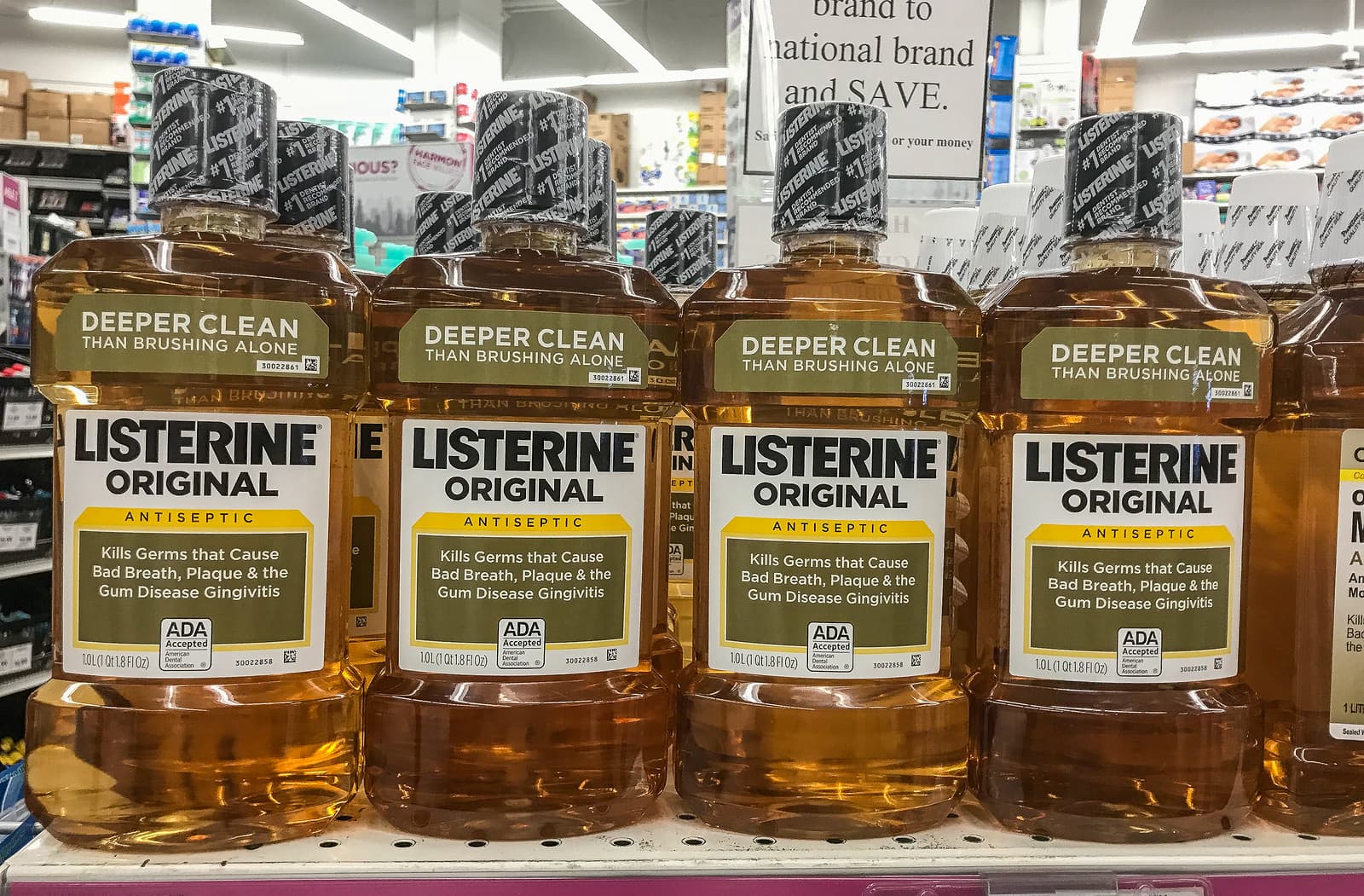
Most people don’t think of the bathroom as a place where alcohol abuse begins—or returns. Mouthwash seems harmless, even health‑promoting. But for some people, especially those struggling with alcohol use disorder or in recovery, high‑alcohol mouthwash can become a hidden and dangerous substitute for liquor. Over the years, we have heard from well over 100 readers who have written to us about loved ones (or themselves) who secretly drank products like original amber Listerine. They have described the hidden dangers of drinking Listerine.
Listerine: A Surprising Source of Alcohol
Original‑formula Listerine contains 26.9 percent alcohol. That is roughly twice the alcohol concentration of wine and far more than beer. When swallowed rather than swished and spit out, it delivers a significant dose of ethanol—along with other ingredients never intended for consumption.
Families often miss the warning signs because mouthwash is legal, relatively inexpensive, and easy to explain away. A bottle in the bathroom doesn’t raise the same red flags as hidden vodka or wine. Several readers have told us that they unknowingly purchased bottle after bottle for a loved one, assuming it was for oral hygiene.
Readers Describe the Dangers of Drinking Listerine
Here is one reader’s description of this problem:
Q. My dad is a good man. He is also an alcoholic. He has been in recovery for seven years. Today he admitted to my family that he has been getting drunk from Listerine!
A. Good people can become addicted to alcohol. We have heard from a surprising number of readers about the dangers of drinking high alcohol-content mouthwash. Some brands, like Listerine, contain as much as 26.9 percent alcohol.
Relapse and Loss:
Other readers have revealed the dangers of drinking Listerine:
- Severe liver and kidney damage
- Hospitalizations and detox admissions
- Relapse after years of sobriety
- Deaths linked to chronic ingestion of alcohol‑containing products
In one especially troubling account, a woman describes her mother who drank Listerine for decades:
“My elderly mother was drinking Listerine. She had me and my sisters all getting it for her, and none of us was the wiser for a while. Now we have figured it out, so I told her I will no longer get it for her.
“She is going blind, and I am wondering if this is what caused her loss of eyesight. They say she has macular degeneration and glaucoma. Nothing more can be done for her eyes. She has drunk Listerine all her life and now she’s 94.”
Why High-Alcohol Mouthwash Might Appeal to People With Alcohol Use Disorder:
Why would anyone drink high-alcohol mouthwash?
- It is readily available in grocery and drug stores
- It is relatively affordable
- It is less socially stigmatized than alcoholic beverages
- It can be consumed secretly
- It may be used during periods when alcoholic beverages are otherwise restricted
What Are the Dangers of Drinking Listerine?
Regular consumption of alcohol can do damage to many organ systems. Liver and brain are obvious targets of excessive alcohol intake. You have probably heard of cirrhosis of the liver. There is also something called fatty liver disease and hepatitis. They too can be caused by too much alcohol.
The brain is also vulnerable to excess alcohol consumption. For one thing, heavy drinking can cause brain atrophy (shrinkage). That’s not a good thing! I learned in grad school that long-term alcohol abuse can lead to Wernicke-Korsakoff syndrome or thiamine (vitamin B1) deficiency. Symptoms can include confusion, disorientation, memory problems and dementia.
Let’s not forget the heart! Over time alcohol can cause a number of heart problems from cardiomyopathy to irregular heart rhythms. Cardiomyopathy means that the heart cannot pump blood efficiently. Heavy drinking can also lead to hypertension.
The pancreas is also susceptible to excess alcohol. Inflammation of this organ (pancreatitis) can be severe and life-threatening.
Overlooked Dangers of Drinking Listerine
It is not just high-alcohol mouthwash that worries us. There are other ingredients in such products. For example, original amber-colored Listerine contains eucalyptol, menthol, methyl salicylate, and thymol. These are fascinating natural compounds. Methyl salicylate is also known as oil of wintergreen. When Listerine is used as directed as a mouthwash, there is no problem. But swallowing these ingredients along with alcohol worries us a lot.
This reader took us to task for not warning strongly enough about the dangers of drinking high-alcohol containing mouthwash:
Q. You had a question from parents concerned about their son using more than three big bottles of mouthwash in a week. Shame on you for soft-pedaling the use of Listerine.
My dad dried out and then restarted on mouthwash. Alcoholics lie and deny. The son is drinking a half-bottle of 50-proof mouthwash a day and your wishy-washy response is not helping the clueless parents.
A. Thanks for your concern. The parents were convinced their son was ingesting mouthwash, since he had already gone through detox once. They wanted to know the dangers of drinking Listerine.
Original formula Listerine contains 26.9 percent alcohol. Clearly, anyone drinking 5 liters of Listerine in eight days needs professional help.
It’s Not Just Mouthwash! What About Hand Sanitizer?
A few years ago we heard from a man who discovered that his wife was drinking mouthwash. Once she was discovered, she switched to hand sanitizer. You can read about this tale of woe and intrigue at this link:
Don’t Drink Mouthwash or Hand Sanitizer
The alcohol in mouthwash or hand sanitizer is not meant for drinking. Anyone consuming such products needs serious help to fight the addiction.
Let me say this as clearly as possible. The alcohol in hand sanitizers could be ethyl alcohol (ethanol) or isopropyl alcohol (rubbing alcohol). But there have been cases when manufacturers have used methanol (aka wood alcohol). It is highly toxic. Other ingredients in hand sanitizers could include glycerin and fragrance. Drinking hand sanitizer could be extremely hazardous!
What Can Family Members Do About the Dangers of Drinking Listerine?
If you suspect someone is drinking mouthwash:
- Check the label for alcohol content
- Switch to alcohol‑free mouthwash (widely available)
- Limit access if appropriate and safe
- Have a direct but compassionate conversation
Blame and shame rarely help. Concern, clarity, and support matter more.
Help for Alcohol Use Disorder
Effective treatments are available. Medications such as naltrexone or acamprosate can reduce cravings and support recovery. Counseling, mutual‑support groups such as AA, and medical supervision can make a life‑saving difference.
If mouthwash or other non‑beverage alcohol sources are part of the problem, it’s important for health professionals to know. Honest disclosure helps clinicians provide safer, more effective care.
The Bottom Line
Mouthwash is not benign when alcohol is the addiction. When consumed orally, high‑alcohol products can fuel relapse, cause serious organ damage, and delay lifesaving treatment. If this issue has touched your life or your family, you are not alone. Many readers have walked this painful path—and help is available.
One final note. We actually love old-fashioned “original” amber Listerine when used as a home remedy. We have written dozens of articles about unique uses for Listerine from treating dandruff and curing nail fungus to killing lice and treating acne. These are all topical applications that have not been approved by the FDA or currently advertised by the company. If you are interested, here are some links:
Listerine Cured Infectious Dandruff
Is there such a thing as infectious dandruff? Can you get rid of itchiness and flaking with an old-fashioned mouthwash like amber Listerine?
Listerine, Vicks & Vinegar Curing Nail Fungus
Common drugstore items like Vicks and Listerine are the key ingredients to home remedies that may prove helpful for getting rid of nasty nail fungus.
Can You Cure Athlete’s Foot With Listerine & Vinegar Soaks?
Have you ever suffered with athlete’s foot? Who hasn’t? Lots of folks say home remedies cure athlete’s foot inexpensively. What’s your experience?
Listerine Used to Fight Head Lice
Lice have started developing resistance to drugstore cures. Many tell us that original amber Listerine is a great home remedy for fighting lice.
Did you find this article of interest? If so, we would be very grateful if you would share it with friends and family. Your help goes a long way towards keeping this newsletter and website going strong. Thank you for your support.
Editor’s note: This article has been updated with new reader experiences and information from our nationally syndicated People’s Pharmacy newspaper column. That is why you will see messages going back over a decade.