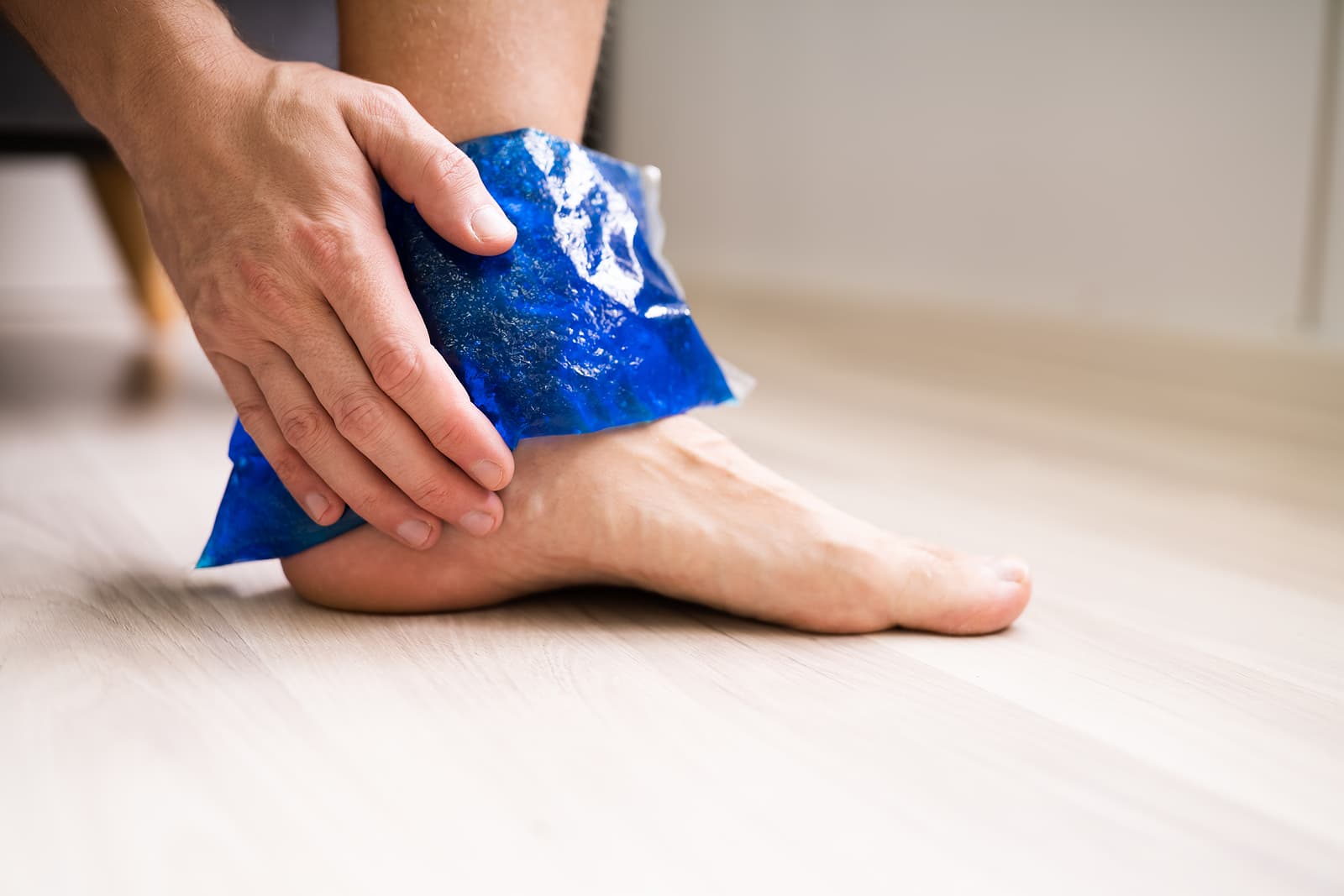
For decades, athletes and weekend warriors have been told to treat a sprain or strain with RICE: Rest, Ice, Compression and Elevation. Add a couple of ibuprofen tablets, and you have what many physicians, athletic trainers and physical therapists consider the gold standard for recovering from an injury. But could such a regimen be a misguided effort to fool Mother Nature?
Some of my tennis partners follow this ritual religiously. The moment the match is over, out come the ice packs. Knees, elbows and shoulders are wrapped up like leftovers headed for the refrigerator. If they didn’t take ibuprofen (“vitamin I“) before the match, they almost certainly take it afterwards.
But what if icing an injury and suppressing inflammation interfere with the body’s repair crew? What if trying to “fix” or fool Mother Nature sometimes slows healing instead? That question extends far beyond the tennis court.
Modern Medicine Has Tried Hard To Fool Mother Nature
The pharmaceutical industry has developed extraordinarily powerful ways to calm inflammation, block stomach acid, subdue immune reactions, reduce a fever, quiet a cough and diminish countless other natural body reactions.
Don’t get me wrong, such treatments can relieve suffering and save lives. A shot of epinephrine during a severe allergic reaction can reverse anaphylaxis and truly save someone’s life! But the body rarely does anything without a reason. When we switch off one of its ancient protective systems, we may eventually discover that it was performing jobs we did not fully appreciate.
Is RICE Trying to Fool Mother Nature?
Rest, ice, compression and elevation have been the mainstay for treatment of sprains and strains for almost 50 years. As best I can tell, the term RICE was coined by the sports medicine physician Gabe Mirkin, MD, and his coauthor, Marshall Hoffman. Their 1978 publication, “The Sportsmedicine Book” became a best seller.
Jane Brody was a famous New York Times health journalist for decades. In her 1983 article for the NYT titled “PERSONAL HEALTH; SPRAINS, STRAINS AND OTHER MOTION AILMENTS,” she describes the goal of Dr. Mirkin’s advice:
“THERE is a simple mnemonic device to help you remember what to do immediately after suffering an injury to a muscle, tendon, ligament, bone or joint: RICE. It stands for Rest, Ice, Compression and Elevation.
“The goal of this first aid therapy is to limit the extent of the injury, keep swelling to a minimum, relieve pain and promote healing. The sooner you start this regimen, preferably within the first few minutes, the better.”
The RICE Advice Flip-Flop: Don’t Fool Mother Nature
Although the RICE advice has been widely embraced for a very long time, Dr. Mirkin apparently reversed himself in 2014.
Alex Fielding wrote an article titled: “The Doctor Who Changed His Mind About Icing” (April 6, 2026)
According to Alex Fielding:
“Sometime around 2014, a physician in his mid-eighties sat down and wrote a blog post that quietly contradicted something he had told the world nearly four decades earlier. There was no press conference. No journal retraction. Just Dr Gabe Mirkin, the sports medicine physician who coined the term RICE, writing on his personal website that the protocol bearing his name appeared to be wrong. ‘Coaches have used my ‘RICE’ guideline for decades,’ he wrote, ‘but now it appears that both Ice and complete Rest may delay healing, instead of helping.’”
Fast Forward to July 1, 2026
Gretchen Reynolds has written a splendid article for The Washington Post titled:
“There’s a new way to treat sprains and strains. Hint: Ice is out.”
She spoke at length with Keith Baar, PhD. He is a Professor of Neurobiology, Physiology, Behavior Physiology and Membrane Biology at the University of California, Davis, School of Medicine. He heads the FMBLab there. It stands for Functional Molecular Biology Laboratory. He is a heavy hitter in the world of tissue repair and sports medicine.
In her article, Gretchen Reynolds describes why the RICE Advice might have boomeranged:
“But there’s growing evidence from Baar’s lab and others’ that the full RICE approach may, in fact, impede recovery, not speed it.
“Instead, newer research about the microscopic environment inside sore, injured joints and tissues suggests moving and exercising in the right ways is key to recovery.”
A number of experts are quoted. They appear to suggest that icing could interfere with the inflammatory process and actually inhibit healing after an injury. Ditto for ibuprofen or other nonsteroidal anti-inflammatory drugs (NSAIDs).
Gretchen Reynolds quotes Dr. Baar about gentle exercise:
“‘Movement is important’ for healing after an injury, Baar said, and the sooner, the better. But it needs to be the right kind of movement.
“‘You need low-load, long-duration’ exercise, Baar said, that doesn’t place too much tension on the injury but gets some force moving through the entire affected tissues. By slightly activating muscles in the injured area, gentle movement helps initiate healing there and avoid scarring, which can permanently weaken damaged tissue.”
The Bottom Line About the RICE Advice:
According to the original author of the RICE advice, Dr. Gabe Mirkin, he was wrong! Today’s cutting-edge researchers seem to agree. They are saying that appropriate movement should begin relatively early rather than leaving the injured body part completely immobilized and iced. And NSAIDs do not appear to be beneficial.
That does not mean you should run on a badly sprained ankle or ignore a possible fracture. An injured joint may need protection for a day or two. Ice may also be useful when pain is intense. But the old assumption that every trace of inflammation should be stamped out immediately is beginning to look overly simplistic.
Dr. Baar told Gretchen Reynolds:
“By slightly activating muscles in the injured area, gentle movement helps initiate healing there and avoid scarring, which can permanently weaken damaged tissue.
“Sketch, for instance, the alphabet in the air with your foot after an ankle sprain, he said. Start as soon as possible after the injury, preferably within hours or even minutes, if you can. Repeat frequently that day and the next.”
We believe it would be wise to find a sports-medicine specialist or physical therapist who does not want to fool mother nature. If that person is up to speed on Dr. Baar’s research and modern thinking, it would be excellent.
Other Ways Modern Medicine Has Tried to Fool Mother Nature
Gastroenterologists once promoted a memorable slogan:
“No acid, no ulcer.”
The logic seemed irrefutable. Stomach acid can irritate an ulcer. Therefore, eliminating acid should allow the ulcer to heal.
Drug companies eventually developed proton pump inhibitors (PPIs) such as omeprazole (Prilosec), esomeprazole (Nexium), lansoprazole (Prevacid) and pantoprazole (Protonix). These drugs suppress stomach acid extremely well.
They can heal ulcers, treat severe acid reflux and protect some people who must take medicines that damage the digestive tract. But stomach acid was not Mother Nature’s design flaw.
Humans, sharks, cows, crocodiles, bears, honey badgers, sea lions and salamanders manufacture hydrochloric acid in their stomachs. This ancient system helps break down food, release certain nutrients and discourage swallowed microbes from colonizing the digestive tract.
When stomach acid is suppressed for months or years, there may be unintended consequences. PPI prescribing information warns about risks that can include intestinal infections, low magnesium levels and fractures associated with high-dose or long-term treatment.
OTC proton pump inhibitors are not intended to be taken continuously without medical supervision. The FDA advises that nonprescription PPIs are generally intended for a 14-day course and no more than three such courses per year.
Long-term acid suppression may also alter the collection of microorganisms living in the digestive tract, termed the “microbiome”.
Then there is “rebound” acid hypersecretion. After someone stops a PPI, the stomach may temporarily produce extra acid. The resulting heartburn can last for a surprisingly long time and convince people that they cannot live without the medicine, even though withdrawal from the drug could be causing the heartburn symptoms.
That does not mean people should abruptly discontinue a prescribed PPI. Those with Barrett’s esophagus, severe esophagitis, bleeding ulcers or certain other medical conditions may need long-term acid suppression.
But taking a proton pump inhibitor for years to treat occasional heartburn poses risks. Stopping suddenly can also make rebound symptoms especially troublesome. We have written about this phenomenon at this link:
Getting Off Omeprazole Can Be Challenging!
Before trying to fool Mother Nature by eliminating stomach acid, it makes sense to ask why the acid is there and whether it needs to be suppressed continuously.
Why Would Vinegar Help Heartburn?
For years, readers of The People’s Pharmacy have reported easing heartburn with apple cider vinegar, pickle juice, yellow mustard or another sour remedy. Here is just one such article:
Will Apple Cider Vinegar Cure Your Heartburn?
Here is just one anecdote from a loyal People’s Pharmacy reader:
“We started taking a tablespoon of apple cider vinegar daily to try to reduce my husband’s acid reflux. He has had reflux for 35 years and has been on various meds throughout the years. Typically, he had to get out of bed around 2 am several days a week to keep from throwing up. He actually threw up once or twice a week.
“While taking vinegar, he no longer needs any meds and has NO reflux. He has not thrown up since he started! We take it with about 4 oz. of water and drink it through a straw to protect our teeth.”
At first glance, this seems ridiculous. Why would something acidic relieve a problem blamed on too much acid?
We do not have a satisfying scientific explanation. Vinegar could make heartburn worse for some people, and frequent exposure may damage tooth enamel. Persistent or severe heartburn also deserves medical attention because it can signal inflammation or injury of the esophagus.
Nevertheless, the reports raise a fascinating possibility: heartburn is not always as simple as an overflowing tank of stomach acid. Digestion depends upon nerves, muscles, sphincters, stomach emptying, food composition and chemical feedback signals. A weak lower esophageal sphincter or slow stomach emptying may contribute to reflux even when acid production itself is normal.
Perhaps something acidic occasionally stimulates a digestive response that differs from permanently suppressing acid. We are not proposing vinegar as a treatment for ulcers or severe reflux disease. But the experience of readers reminds us that biology is usually more complicated than a catchy medical slogan such as “no acid, no ulcer.”
Can We Fool Mother Nature by Blocking Inflammation?
Inflammation has become one of the most reviled words in medicine. Drug commercials depict it as an enemy hiding in the skin, joints or intestines, waiting to make people miserable.
There is truth behind that portrayal. Excessive or misdirected inflammation contributes to rheumatoid arthritis, psoriasis, atopic dermatitis, Crohn’s disease, ulcerative colitis and many other serious illnesses. New biologic medicines can block remarkably specific components of the immune system, including chemical messengers called interleukins.
These drugs have transformed the lives of people who were previously tormented by swollen joints, relentless itching, disfiguring plaques or debilitating digestive symptoms. You have doubtless seen the commercials for such drugs on television. They are seemingly advertised nonstop and such medications are often quite pricey.
But interleukins were not invented by pharmaceutical companies. They are part of the immune system’s communication network. Blocking them can calm a destructive immune attack. It may also make it harder for the body to respond to certain infections.
For example, the FDA has approved secukinumab (Cosentyx) to treat plaque psoriasis, psoriatic arthritis, ankylosing spondylitis and hidradenitis supporativa among other inflammatory conditions. The drug blocks interleukin-17A. The prescribing information warns about serious infections. The company cautions patients to “tell your doctor if you:”
-
are being treated for an infection
-
have an infection that does not go away or that keeps coming back
-
have TB or have been in close contact with someone with TB
-
have or have had Hepatitis B
-
think you have an infection or have symptoms of an infection such as: fevers, sweats, or chills; muscle aches; cough; shortness of breath; blood in your phlegm; weight loss; warm, red, or painful skin or sores on your body; diarrhea or stomach pain; burning when you urinate or urinate more often than normal
But wait, why not watch the commercial for yourself:
Other biologic drugs carry different warnings. Depending upon which immune pathway is blocked, concerns may include tuberculosis, bacterial infections, invasive fungal infections, shingles or cancer.
The risks should not be lumped together, because these drugs work in different ways and have different safety profiles. Nor should patients stop taking a biologic medicine because of an article like this. For many people, the benefits are enormous and may greatly outweigh the hazards.
The broader lesson is that suppressing the immune system involves a tradeoff. We may successfully calm one part of Mother Nature while weakening another.
Can We Fool Mother Nature by Stopping Bone Turnover?
Bone may look solid and permanent, but it is constantly changing. Specialized cells break down old or damaged bone. Other cells replace it with fresh material. This remodeling system helps repair the microscopic wear and tear that accumulates during everyday life.
Bisphosphonate drugs such as alendronate (Fosamax), risedronate (Actonel) and zoledronic acid (Reclast) slow the cells that break down bone. For people at high risk of osteoporosis-related fractures, this can be extremely beneficial. Hip and spinal fractures can cause disability, loss of independence and even premature death.
But bone breakdown is not entirely bad. It is one half of the maintenance cycle. When bone remodeling is suppressed for a very long time, rare atypical fractures of the thighbone may occur. Someone taking a bisphosphonate who develops unexplained pain in the thigh or groin should bring it promptly to a prescriber’s attention. Here is a link to more information about this surprising adverse reaction.
These unusual fractures are uncommon, and bisphosphonates prevent far more fractures than they cause when prescribed appropriately. Nevertheless, this is another example of the same biological principle. A process labeled “bone loss” also participates in renewal and repair. Suppress it strongly enough and long enough, and a different problem may occasionally emerge.
Is Treating Every Fever Another Way to Fool Mother Nature?
Parents understandably become frightened when a child develops a fever. Adults often reach for acetaminophen or ibuprofen as soon as the thermometer starts to rise. But fever is not merely evidence that an infection has taken control. Raising body temperature is one of the immune system’s oldest defenses.
Some microbes reproduce less effectively at higher temperatures. Certain immune responses may also function more vigorously during a fever. That does not mean a high or persistent fever should be ignored. Very young infants, frail older adults and anyone experiencing confusion, breathing difficulty, a stiff neck, dehydration, seizures or other alarming symptoms need prompt medical attention.
Treating a fever for comfort can also be reasonable. A sick person who is miserable, unable to sleep or unwilling to drink fluids may benefit from fever reduction. The point is that the number on the thermometer is not the disease. Automatically trying to force every mild fever back to 98.6 degrees may confuse a protective response with the underlying threat.
One of our favorite People’s Pharmacy radio show guests is Dr. Roger Seheult. He is a brilliant communicator. You will find this interview especially relevant to the idea of “using heat to fight flu.” Dr. Seheult explains why a fever can be helpful during an upper respiratory tract infection. You can listen at this link.
Show 1457: How to Strengthen Your Immune System for Cold and Flu Season
Mother Nature Is Not Always Nice
We should not romanticize Mother Nature as a kindly grandmother who always knows best. Nature gave us appendicitis, autoimmune diseases, anaphylaxis, sickle cell disease, cancer and arteries that can clog. The immune system sometimes attacks the body it is supposed to protect. Inflammation can destroy joints and organs. Fever can become dangerous or even life threatening. Stomach acid can damage the esophagus.
Doctors sometimes have to interrupt natural processes decisively. Antibiotics cure infections that once killed millions. Insulin keeps people with type 1 diabetes alive. Epinephrine reverses life-threatening allergic reactions. Surgery repairs damage the body cannot fix on its own.
The danger lies at the opposite extreme: assuming that every symptom or biological response is a mistake that should be completely abolished. Pain can help protect an injured joint. Coughing clears the airways. Stomach acid aids digestion and deters nasty microbes. Inflammation starts healing. Bone remodeling repairs accumulated damage. Immune messengers help defend against infection and cancer.
Any of these processes can become excessive, misdirected or destructive. Treatment may be essential.
But before we block a biological pathway, perhaps we should ask two questions:
- What useful job is this process performing?
- What might happen if we switch it off for months or years?
Medicine is often at its best when it works with the body rather than simply overpowering it.
As the old commercial used to warn, “It’s not nice to fool Mother Nature!”
She may have had a point.
What Do You Think?
Have you ever been told to adhere to the RICE advice for a strain or sprain? Almost everyone has. Please share your story below. We would also like to learn about your experience with medications. Did it sometimes seem as if you were trying to fool Mother Nature with a medicine? How else have you treated common ailments? Please share your story.
If you think a friend or family member might benefit from this article we would be very grateful if you would share it via social media or email. We would also appreciate it if you could encourage acquaintances to sign up for our free newsletter at this link.
This was a long article, which means you probably encountered a lot of ads. They can interrupt the flow of a post like this. You could go ad-free and eliminate such pesky ads by contributing $5/month at this link. Such contributions help keep The People’s Pharmacy moving forward. Thank you for your support.