For decades, we at The People’s Pharmacy have encouraged readers and listeners to check their blood pressure at home. The advice wasn’t casual and it wasn’t trendy. It was rooted in solid science. Home blood pressure monitoring often provides more accurate readings than measurements taken in a medical office. It can reveal patterns that a single snapshot in a clinic misses. Most importantly, it can help prevent heart attacks, strokes, heart failure, and kidney damage. In theory, home blood pressure monitoring should save lives!
Theory and Real Life Don’t Always Come Together
Many of us are busy. Some of us are overwhelmed. And for people already worried about their health, watching blood pressure numbers creep upward can be frustrating, frightening, or downright discouraging. For some, those numbers feel like a judgment rather than useful information. Avoiding home blood pressure monitoring may offer short-term relief—even if it comes at a long-term cost.
A new study published in JAMA Cardiology (January 21, 2026) underscores just how difficult sustained home monitoring can be, even under ideal conditions. Researchers recruited 3,390 people with uncontrolled high blood pressure and gave them every possible advantage: free home blood pressure monitors, electronic data transmission, reminders, and personalized coaching. Despite this support, about one-third of participants never took a single home reading. Only about one-third managed to meet the researchers’ goal of regular weekly measurements.
The authors were from Harvard and Brigham and Women’s Hospital in Boston. They introduced their study this way:
“Accurate and repeated blood pressure (BP) monitoring is the cornerstone of hypertension management. Because clinic BP readings offer a limited snapshot, contemporary guidelines emphasize out-of-office BP measurement for diagnosis and medication titration. Home BP monitoring (HBPM) is a widely recommended and accessible complementary strategy to enhance office BP measurement. Guidelines recommend a consistent schedule of twice-daily duplicate measurements for 1 week, with a minimum of 12 readings considered necessary for reliable assessment.”
In a word, the study was a big flop! The researchers used the word “suboptimal” for the results. I would call it an abject failure. Here is their conclusion:
“Patient engagement with home BP monitoring is low, revealing a critical disconnect between guideline recommendations and real-world measurements, which highlights the need for more accessible, less burdensome monitoring solutions.”
Remember, the participants got free home blood pressure monitoring devices that automatically submitted the readings to the research team. And the researchers provided “robust support.”
Why Home Blood Pressure Still Matters
We have been advocating home blood pressure measurements for more than 45 years. Because of all the mistakes that can be made in the clinic we think regular home readings may be more reliable. They may also lead to better blood pressure control (Lancet, March 10, 2018).
For more information on the proper technique for measurement as well as nondrug strategies for controlling BP, we offer this link:
“Why Lower Your Blood Pressure If It Was Measured Incorrectly?”
Before giving up on home blood pressure monitoring, it’s important to remember why it has been recommended so strongly in the first place.
Blood pressure readings taken in clinics are often unreliable. Patients may be rushed from the waiting room to the exam table. They may be anxious, in pain, or distracted. Cuffs are frequently the wrong size. People are measured while talking, with their feet dangling, backs unsupported, or arms held too low or too high. Sometimes blood pressure is taken over clothing. Sometimes it’s taken just once, even though guidelines recommend multiple readings.
All of these factors can lead to inaccurate numbers. “White-coat hypertension” (elevated blood pressure caused by the stress of being in a medical setting) is well documented. So is the opposite problem: dangerously high blood pressure that goes undetected because a single clinic reading looks acceptable.
Home monitoring, when done correctly, avoids many of these pitfalls. It allows people to measure blood pressure when they are rested, seated properly, and in familiar surroundings. It provides trends over time, not just one isolated number. That information helps clinicians make better decisions. It also helps patients understand how lifestyle, stress, sleep, diet, and medications affect their health.
African Americans Get Extra Benefit from Home Blood Pressure Measurement:
While this practice can be helpful for anyone, the Dallas Heart Study has found it is especially useful for African-American adults (Hypertension, Sept 16, 2019). In this study, blood pressure measurements made at home were more accurate than those made in the clinic. In particular, blood pressure readings obtained by research associates out of the office were better for predicting a serious complication.
The condition, left ventricular hypertrophy, occurs when the lower left chamber of the heart develops thickened walls. This is probably a result of the heart muscle having to work harder against the resistance of high blood pressure. In a normal muscle, this extra exercise might produce additional strength. That could be a good thing. However, overdeveloped muscle in the heart means that a person is at higher risk for strokes or heart attacks.
The authors conclude:
“Our results underscore the importance of hypertension management programs outside the medical office to prevent hypertensive heart disease, especially in high-risk black adults.”
Why Is It So Hard to Stick With?
The new study forces us to confront an uncomfortable truth: even motivated people struggle to sustain home blood pressure monitoring.
This isn’t about laziness or indifference. It’s about human nature.
Checking blood pressure requires time, consistency, and emotional resilience. It means facing numbers that may not improve as quickly as hoped. It means confronting the reality of chronic disease. For some, it adds stress instead of reducing it. For others, daily life simply gets in the way.
Recognizing these barriers doesn’t mean abandoning home monitoring. It means reframing it.
A Better Way to Think About Home Blood Pressure
Blood pressure readings are information, not a verdict.
They are not a moral scorecard. They are not a reflection of effort or worth. They are simply data—data that can help guide decisions and reduce risk.
If daily measurements feel overwhelming, less frequent monitoring may be more realistic. Many experts suggest checking blood pressure a few times a week or doing “measurement weeks” before medical appointments rather than daily readings forever. The goal is useful information, not perfection.
It also helps to remember that blood pressure is modifiable. Medications matter, but they are not the only tools. Regular physical activity, weight loss when appropriate, better sleep, stress management, reducing excess salt, increasing potassium-rich foods, limiting alcohol, and addressing sleep apnea can all make a meaningful difference. Often, small changes add up.
How to Measure Blood Pressure Correctly at Home
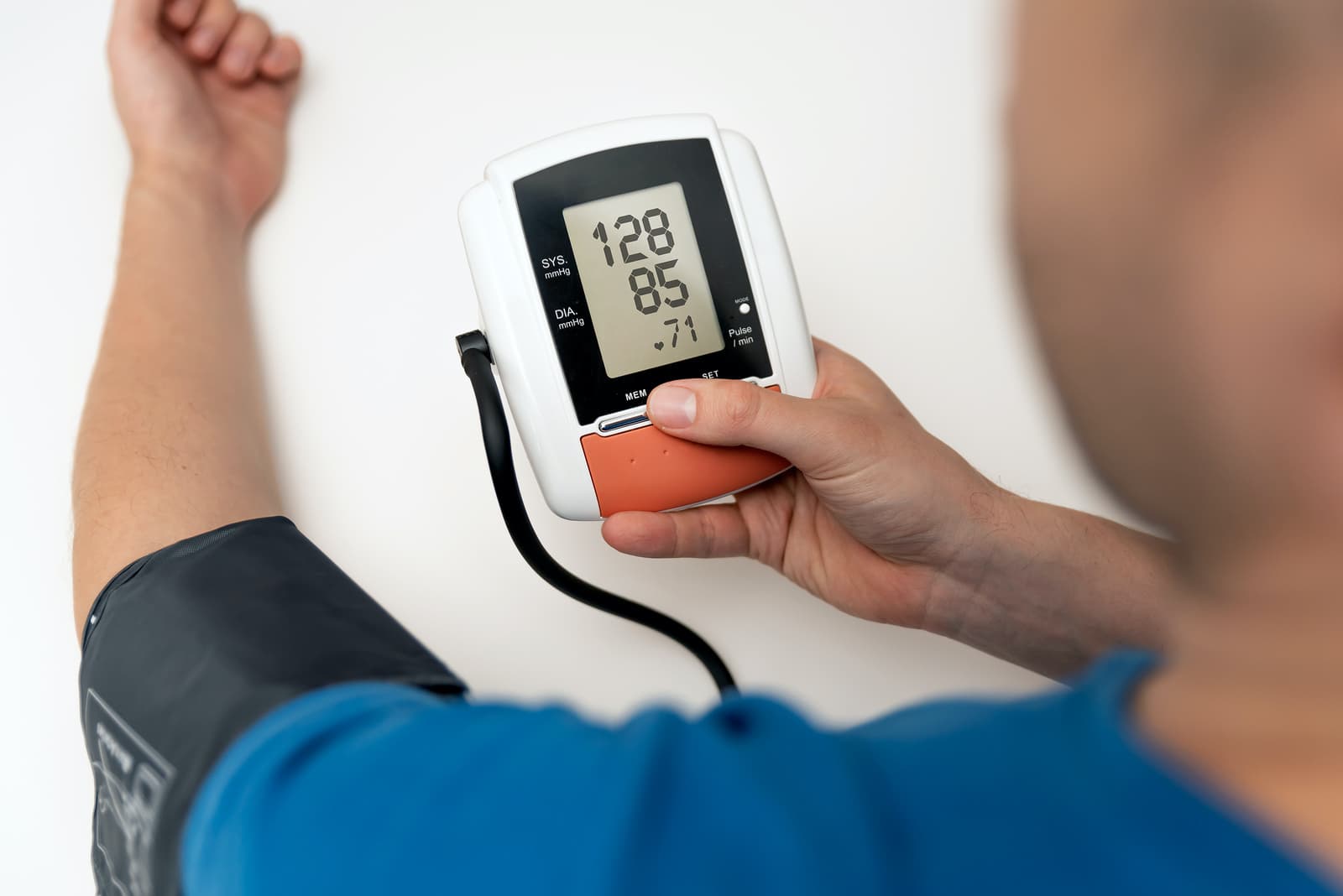
If home blood pressure monitoring is going to help rather than frustrate you, how you measure matters. Small details can make a big difference in the numbers—and mistakes are common. The good news is that accurate readings don’t require perfection, just a few consistent habits:
-
Rest before you measure.
Go to the bathroom before getting out the monitor! Sit quietly for at least five minutes before taking a reading. Avoid exercise, caffeine, nicotine, or rushing around beforehand. Blood pressure taken on the fly is often higher than your true resting level. -
Sit properly and get comfortable.
Sit in a chair with your back supported and both feet flat on the floor. Don’t cross your legs. Rest your arm on a table so the cuff is at heart level. Relax your shoulders and keep your hand open. -
Use the right cuff on bare skin.
A cuff that is too small can falsely elevate readings. Wrap the cuff snugly around your upper arm on bare skin, not over clothing. Most modern home monitors make this easy—but size still matters. -
Stay still and silent.
Talking, texting, or watching something engaging while the cuff inflates can raise blood pressure. Sit quietly and breathe normally until the measurement is complete. -
Take more than one reading.
One number is just a snapshot. Take two readings a few minutes apart and average them. This gives a more reliable picture of what’s really going on. -
Focus on trends, not single numbers.
Blood pressure naturally fluctuates. A single higher reading doesn’t mean failure or danger. What matters most are patterns over time, which you can share with your health care provider.
Three Bad Mistakes to Avoid When Measuring Blood Pressure:
This reader of our nationally syndicated newspaper column shared a common complaint:
Q. The instructions for my home blood pressure machine make it clear that you should be sitting for five minutes at least, with your arm supported at just below heart height.
In the doctor’s office, you hop off the scale, climb on a stool or an exam table and seat yourself with your legs dangling. Then the nurse or tech takes your BP with your arm hanging down, nowhere near the level of your heart. How can that be accurate?
A. We too have been shocked to observe how often blood pressure measurements in the clinic are performed incorrectly. We do not understand why the people who are charged with measuring blood pressure are not instructed in the guidelines.
The Bottom Line on Home Blood Pressure Monitoring:
Measuring your blood pressure at home remains one of the most powerful tools we have for managing hypertension. The science supporting it hasn’t changed. What the new research reveals is not that the advice was wrong—but that it’s harder to follow than many of us realized.
Instead of scolding people for falling short, we need approaches that respect real lives, real emotions, and real limitations. Encouragement works better than guilt. Flexibility works better than rigid rules. And understanding works better than blame.
If you’ve been avoiding the blood pressure cuff, you’re not alone. But your health is worth another try—on terms that work for you.
For readers who want more guidance, we’ve created an easy-to-follow eGuide to Blood Pressure Solutions that walks through proper measurement step by step and explains what the numbers mean—and what they don’t. Used correctly, home blood pressure monitoring can be empowering rather than intimidating.
The eGuide also describes a number of nondrug approaches for helping control hypertension. And let’s not forget medications when necessary. What are the pros and cons of most medicines? You will find answers in our eGuide to Blood Pressure Solutions. It can be found in the Health eGuides section of this website.
Did you find this new research of interest? Perhaps you know someone with elevated blood pressure. If so, they may find this article helpful. We would be grateful if you would pass it on. You can do so by scrolling to the top of the page and clicking on the email icon or one of the social media links. Thank you for supporting our work.
Citations
- Rader F et al, "Superiority of out-of-office blood pressure for predicting hypertensive heart disease in non-Hispanic black adults." Hypertension, Sept 16, 2019. https://doi.org/10.1161/HYPERTENSIONAHA.119.13542
- Unlu, O., et al, "Patient Engagement With Home Blood Pressure Monitoring," JAMA Cardiology, Jan. 21, 2026, doi: 10.1001/jamacardio.2025.5196
- McManus, R.J., et al, "Efficacy of self-monitored blood pressure, with or without telemonitoring, for titration of antihypertensive medication (TASMINH4): an unmasked randomised controlled trial," Lancet, March 10, 2018, doi: 10.1016/S0140-6736(18)30309-X