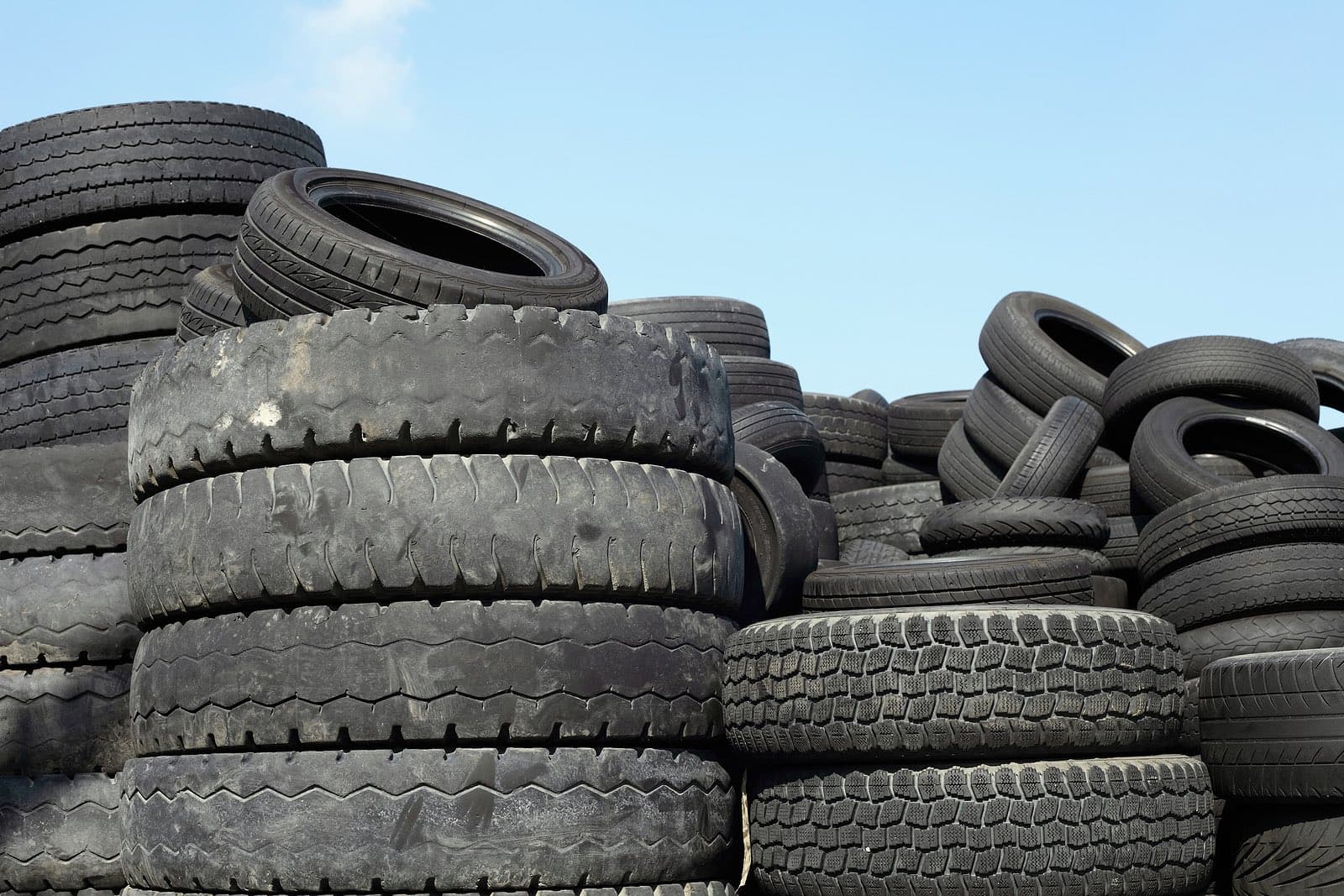
We rarely stop to wonder where a tire goes as its tread gradually wears away. Hidden hazards are easy to overlook when they are built into familiar products and disappear one microscopic particle at a time. But tire tread does not really disappear. It is ground into tiny particles that enter the air, settle in soil and wash off streets into streams, rivers and drinking-water sources. Some of those particles contain chemicals that were added to make tires stronger, safer and longer-lasting.
That sounds like a good thing. Unfortunately, the law of unintended consequences has a way of catching up with us.
Hidden Hazards Where the Rubber Meets the Road
For thousands of years, humans lived with minimal exposure to manmade chemicals. Today, we are surrounded by tens of thousands of compounds in products we use every day.
For decades, many people assumed that pesticides put on fruits and vegetables simply disappeared, especially if the produce was rinsed. Most individuals did not worry about plasticizers in intravenous tubing, food packaging or beverage containers. The idea that hormone-disrupting chemicals might be absorbed into the body seemed far-fetched.
Today, however, there is general recognition that PFAS “forever chemicals” are building up in the environment and in people. Microplastic particles have been reported in blood, arterial plaque, kidneys, liver, reproductive tissues and the brain.
Although scientists are still debating the consequences of many of these exposures, the discoveries raise an uncomfortable question: What else have we been taking for granted?
Vehicle Tires Provide a Striking Example
There are almost 300 million cars, trucks, SUVs, buses, motorcycles, bicycles and recreational vehicles in the United States. Every one of them depends on tires that gradually lose tread and eventually must be replaced. For years we have been asking what happens to vehicle tires as they wear out.
Where does all that “rubber” go?
There was a time when tires were made primarily from natural rubber. Modern tires are far more complicated. They are composites containing natural and synthetic rubber, reinforcing materials, oils, sulfur compounds, antioxidants, antiozonants and many other ingredients.
One chemical in particular is attracting attention. It is called 6PPD.
Manufacturers use 6PPD to prevent premature tire breakdown. It moves through the tire to the surface and reacts with ozone. This prevents ozone from attacking the tire polymers and causing structural cracks. That helps the tire last longer. But the reaction creates another compound called 6PPD-quinone, or 6PPD-Q.
As tires wear down, particles containing these chemicals are released onto roads. Rain carries particles of tire tread into storm drains, streams and other bodies of water. Wind spreads 6PPD-Q and other chemicals from tires into the air.
The Environmental Protection Agency now describes 6PPD-Q as a contaminant of emerging concern and is investigating its environmental and possible health effects. The danger to some fish is already clear. Research has shown that 6PPD-Q is extremely toxic to coho salmon. EPA scientists are also investigating its effects on other aquatic species and the ways tire pollution moves through the environment.
Could Tire Chemicals Reach the Human Brain?
6PPD-Q is not confined to roads, streams and air. Investigators have detected it in human urine, blood and cerebrospinal fluid. That does not prove that it is making people sick. Detecting a chemical in the body is not the same as demonstrating that it causes disease. That can be a time-consuming process.
Nevertheless, the finding deserves attention. New research published in Open Medicine on June 24, 2026, examined possible connections between 6PPD-Q and biological pathways involved in Alzheimer disease. The researchers used genetic databases, transcriptomic information, machine learning and computer modeling to identify genes and proteins that might interact with the tire-derived chemical.
The study did not prove that tire dust causes Alzheimer disease. It was largely a computational investigation, not a clinical trial or a long-term study of exposed people. What it did uncover were plausible molecular pathways involving oxidative stress, inflammation and cellular signaling. That should be considered a warning flare rather than a final verdict.
Other research has raised questions about Parkinson disease. In laboratory experiments, 6PPD-Q disrupted mitochondrial function in nerve cells and worsened the accumulation of abnormal alpha-synuclein structures. Mitochondria are the tiny energy-producing structures within cells, while alpha-synuclein is the protein that accumulates abnormally in Parkinson disease.
Again, this does not establish that tire pollution causes Parkinson disease. It does demonstrate why the chemical deserves more than a shrug. Neurodegenerative diseases often take decades to develop. By the time scientists can prove that a particular exposure contributes to such an illness, millions of people may already have encountered it.
Lead Was Once an Invisible Hidden Hazard on Highways
The history of lead should make us cautious about dismissing hidden chemical hazards merely because the evidence is incomplete. A century ago, the automotive industry began adding tetraethyl lead to gasoline. It reduced engine knock and improved performance. Lead was also used widely in paint, insecticides, plumbing and other products.
Scientists already knew lead was poisonous. Refinery workers became seriously ill during the 1920s. Nevertheless, the public was repeatedly reassured by credible scientists and physicians that the concentrations most people encountered had not been proved dangerous.
That argument shaped American chemical policy for generations: do not restrict a profitable substance until critics can prove precisely how much harm it causes and at what dose. By the time lead was removed from most gasoline, it had contaminated air, soil, houses and human bodies on an enormous scale.
Blood lead levels dropped dramatically after leaded gasoline was phased out. But the legacy remains. Scientists now associate even relatively low lead exposure with high blood pressure, cardiovascular disease, neurological damage and impaired childhood development.
We explored this history with environmental health researcher Dr. Bruce Lanphear in our radio show:
Show 1432: Lead, Lies and Lasting Harm: The Chemical Roots of Chronic Disease
Lead teaches a painful lesson. Waiting for absolute certainty can itself be a decision, and sometimes a disastrous one.
The Precautionary Principle Turns the Question Around
An old scientific warning states: “Absence of evidence is not evidence of absence.”
In plain English, failing to prove that something is dangerous does not establish that it is safe. Perhaps the right study has not been conducted. Or maybe the harm takes 30 years to emerge. In some cases, only certain people might be highly susceptible. Perhaps scientists are studying one chemical at a time while people are exposed to hundreds simultaneously.
The precautionary principle says that when a chemical poses a credible threat of serious or irreversible harm, society should not always wait for complete scientific certainty before taking reasonable protective action.
The European Union formally recognizes this principle. Its chemical-control system, known as REACH, places greater responsibility on manufacturers to identify hazards and supply safety information. European law permits precautionary action when reasonable concerns exist but scientific uncertainty remains.
The American tradition has often leaned in the opposite direction. A compound may remain in widespread use until government scientists or independent researchers assemble enough evidence to prove that it poses an “unreasonable risk.” That can take years or decades. We have seen the Environmental Protection Agency lose funding, staffing and enforcement authority.
The contrast is not absolute. European regulation has gaps, and American agencies sometimes act cautiously. But the underlying question is different.
Should the public have to prove that a chemical is dangerous after exposure has become widespread? Or should manufacturers have to demonstrate reasonable safety before introducing massive quantities into commerce?
Hidden Chemical Hazards Inside the Home
Tire dust is surprising because almost no one watches tread disappear and thinks about chemical exposure. But it is far from the only everyday source.
PFAS compounds have been used to make products resistant to grease, stains and water. They may be found in certain food wrappers, carpets, cosmetics, waterproof clothing and boots, firefighting foam and industrial materials.
Their durability is what made them so useful. It is also why they have been nicknamed “forever chemicals.”
If you want to know more about these compounds, why not take a few minutes to listen to our radio show/podcast interview with Linda Birnbaum, Ph.D., D.A.B.T., A.T.S.? She is a scientist emerita (Retired) and former Director of the National Institute of Environmental Health Sciences and the National Toxicology Program. In addition, Dr. Birnbaum served previously as president of the Society of Toxicology.
Show 1212: Should You Worry About Forever Chemicals?
PFAS compounds called forever chemicals persist in soil and water for decades. The EPA says even low levels found in water are dangerous!
Some PFAS compounds have been associated with immune-system changes, elevated cholesterol, thyroid problems, pregnancy-induced hypertension and certain cancers. There are thousands of chemicals in this family, and replacing one notorious PFAS with a less-studied cousin does not necessarily solve the problem.
Other Hidden Hazards: PLASTICS!
Plastics pose another challenge.
You have to be of a certain age to remember the 1967 movie, “The Graduate.” Dustin Hoffman played Benjamin Braddock, who was having an affair with Mrs. Robinson (played by Anne Bancroft).
Here is a memorable scene between Ben and Mr. McGuire:
“Mr. McGuire: I just want to say one word to you–just one word.
“Ben: Yes, sir.
“Mr. McGuire: Are you listening?
“Ben: Yes, I am.
“Mr. McGuire: ‘Plastics.’
“Ben: Exactly how do you mean?
“Mr. McGuire: There’s a great future in plastics. Think about it. Will you think about it?
“Ben: Yes I will.”
Mr. McGuire correctly predicted the future. Plastic containers are now used for just about everything in the supermarket, including water, milk, juice, ketchup, mustard, vinegar, soy sauce and most other products. It’s hard to find liquids that are not in plastic.
And now microplastics are ubiquitous. And they are in us!
Bisphenols and phthalates can migrate out of food containers and packaging. Heat may speed that migration. A container labeled “BPA-free” might contain another bisphenol that has been studied far less thoroughly.
Flame Retardants Seemed Like Such a Good Idea
Flame retardants provide another example. These chemicals were added to furniture, mattresses and foam products in the name of fire safety. Some have since been restricted or abandoned because of concerns about cancer, hormone disruption and neurological effects.
Yet flame-retardant chemicals are still found inside many vehicles. A study of passenger compartments detected the organophosphate flame retardant TCIPP in nearly every vehicle tested. Concentrations were substantially higher during warm weather, presumably because heat promotes the escape of chemicals from foam and other materials.
Our article on this unexpected source of exposure is available here:
Is Your Car Seat More Dangerous Than You Think?
Your car seat may be contributing to air pollution inside your vehicle. What can you do to reduce exposure to flame retardants and PFAS?
We have also written about volatile organic compounds in cleaners, degreasers, detergents, shampoos, hair sprays, nail products, paints and other consumer goods. An analysis based on California product data identified formaldehyde, methanol, methylene chloride, styrene and several other compounds of concern.
Which Toxic Chemicals Are Hiding in Household Products?
Many consumer products, including personal care items like acne treatments, contain toxic chemicals such as benzene.
No one product necessarily creates a catastrophe. The larger concern is the cumulative exposure from air, dust, water, food, packaging, furniture, cosmetics, medications, pesticides and traffic pollution.
Scientists sometimes call this lifetime total the “exposome.” It is the environmental counterpart to the genome.
What About Mercury and Aluminum?
Some chemical controversies remain bitterly disputed. Dental amalgam contains mercury. Dentists and public health authorities have long debated whether the small amounts released from fillings pose a meaningful long-term threat to most patients.
Aluminum has also been debated for decades. Researchers agree that sufficiently high aluminum exposure can be neurotoxic. They do not agree on whether ordinary exposure from food, water, medicines, cookware, cosmetics or other products contributes to Alzheimer disease.
We do not think uncertainty should be exaggerated into certainty. It would be irresponsible to tell readers that amalgam fillings or ordinary aluminum exposure have been proved to cause dementia. But uncertainty should not be twisted into reassurance either.
For individuals who can conveniently reduce unnecessary exposure without creating a new health risk, precaution may be reasonable. The practical goal is not panic. It is thoughtful reduction of exposures that are avoidable.
How Can You Reduce Exposure to Hidden Hazards?
No one can live in a chemical-free bubble. Trying to eliminate every synthetic compound would be impossible, expensive and anxiety-producing. A better approach is to identify the exposures that are largest, most frequent or easiest to change.
Start With Your Water
Ask your local water utility for its annual Consumer Confidence Report. This report describes regulated contaminants detected in the municipal water supply.
Remember, however, that lead may enter water from the service line or plumbing inside an individual house or apartment building. A citywide report cannot tell you exactly what is coming from your kitchen faucet.
People who live in an older home, rely on a private well or have reason to suspect contamination may want to have their water tested by a certified laboratory.
Choose a filter based on the contaminant you need to remove. Do not assume that every pitcher or refrigerator filter removes lead, PFAS, arsenic or other hazardous compounds.
Look for independent certification and a specific contaminant-reduction claim. NSF/ANSI Standard 53 applies to filters certified for certain health-related contaminants, including lead in qualifying products. NSF/ANSI Standard 58 applies to reverse-osmosis systems.
Reverse osmosis can remove a broad range of contaminants, including many PFAS compounds, lead and arsenic, depending on the system and its certification. Activated carbon and ion-exchange filters can also be effective for particular contaminants. Whatever system you choose, replace the cartridges on schedule. A neglected filter may stop working effectively.
Keep Hot Food Away From Plastic
Do not microwave food in plastic, even when the container is labeled microwave-safe. “Microwave-safe” may simply mean that the container will not melt or deform. It does not necessarily establish that no chemicals will migrate into the food.
Transfer food to glass or ceramic before heating it. Avoid pouring boiling liquids into plastic cups or containers. Do not leave plastic water bottles baking in a hot car. Replace badly scratched or clouded plastic food-storage containers.
Glass, stainless steel and ceramic are useful alternatives, especially for hot or fatty foods.
Ventilate Your Car
When a vehicle has been sitting in the summer sun, open the doors or windows for a few minutes before settling in. Bring in outside air rather than relying continuously on the recirculation setting.
Park in the shade when possible and use a windshield sunshade. Heat can increase the release of volatile chemicals from foam, plastics, adhesives and interior treatments. Changing the cabin air filter on schedule may also reduce particles, although it will not eliminate all gaseous contaminants.
Reduce Dust
Household dust is a collection point for flame retardants, PFAS, plasticizers, pesticides, lead and other contaminants. Wet-mop hard floors instead of dry sweeping. Use a vacuum equipped with an effective HEPA filter. Wash hands before eating, especially after working around soil, roads, garages or older painted surfaces.
These steps are particularly important in homes with small children, who spend time on the floor and frequently put their hands in their mouths.
Pay Attention to Products You Use Frequently
An occasional exposure may matter less than something you inhale, swallow or rub on your skin every day. Fragrance-free cleaners and personal-care products may contain fewer volatile ingredients, although “natural” is not a guarantee of safety. Avoid aerosol products when a pump or solid version will work.
Store gasoline, solvents, pesticides, paint and lawn chemicals in a detached, well-ventilated area rather than an attached garage whenever feasible. Do not combine cleaning products. Bleach mixed with ammonia or acids can produce dangerous gases immediately. That is not a subtle long-term risk. It is an emergency.
Be Strategic About Food
Wash fruits and vegetables under running water. Purchasing organic versions of foods you eat frequently may reduce exposure to some pesticides, though organic food is not pesticide-free. Do not use soap, detergent or bleach on produce.
Varying the foods you eat may also reduce repeated exposure to a contaminant concentrated in one particular food. For example, rice can contain arsenic. Rinsing rice thoroughly and cooking it in excess water that is poured off can reduce inorganic arsenic, though this method may also remove some nutrients.
Reduce Tire Pollution Where You Can
Individual drivers cannot reformulate tires, but they can reduce unnecessary wear. Keep tires properly inflated. Avoid abrupt acceleration and hard braking. Maintain wheel alignment. Drive more slowly when practical and combine errands to reduce mileage.
Heavier vehicles generally place greater stress on tires. Electric vehicles eliminate tailpipe exhaust, but their weight and rapid acceleration can contribute to tire wear. Cleaner transportation policy must address tire and brake pollution as well as exhaust.
Communities can also install rain gardens, bioswales and other stormwater systems that trap roadway particles before they reach streams. EPA researchers are studying how well such approaches reduce 6PPD-Q and other tire contaminants.
Do Not Let the Perfect Defeat the Practical
People can become overwhelmed when they hear that questionable chemicals may be present in tires, water, dust, cookware, cosmetics, furniture, clothing, food packaging and car seats. That reaction is understandable. But helplessness is not the only option.
Filter the water you drink if testing or local reports indicate a problem. Do not heat food in plastic. Ventilate hot cars. Reduce household dust. Store solvents and pesticides away from living areas. Choose simpler products when they work just as well. Support regulations that require manufacturers to disclose ingredients and develop safer substitutes.
Most important, do not blame yourself for exposures you cannot control. An individual consumer cannot investigate thousands of chemicals or prevent tire particles from washing off every highway.
That is why regulation matters.
Manufacturers and government agencies have far more power than individual families to test chemicals, redesign products, control industrial releases and prevent contamination before it becomes universal.
A Practical Guide to Everyday Toxins
For readers who would like a manageable plan rather than a frightening catalog of contaminants, we recommend our interview with rheumatologist and environmental health specialist Dr. Aly Cohen.
Show 1440: Protecting Your Immune System from Everyday Toxins
Dr. Aly Cohen, a specialist in rheumatology and integrative medicine, describes how to reduce our exposure to everyday toxins.
Dr. Cohen explains how to evaluate the most important exposures in your own environment and prioritize changes involving water, food containers, plastics, pesticides and personal-care products.
Her guiding philosophy is sensible: start with the exposures that occur most often and make the changes that offer the greatest benefit for the least disruption.
Hidden Hazards Require a New Approach
The story of disappearing tire tread is much bigger than tires. It is about the chemicals built into ordinary products to solve one problem without enough attention to the new problems they may create. Then, too, there are substances released invisibly over many years. Scientists may find themselves studying one compound at a time even though humans experience complicated mixtures.
Above all, it is about who bears the burden of uncertainty.
Lead was useful. PFAS chemicals are useful. Flame retardants, plasticizers and tire antiozonants are useful. Usefulness does not guarantee safety. We should not have to wait until a chemical has entered nearly every home, river and human body before asking whether it belongs there.
The tread on your tires may seem to vanish. It does not!
Perhaps the same can be said for many of the chemicals we have ignored. They do not disappear merely because we stop thinking about them. In addition to environmental pollutants, we are exposed to medications, cosmetics, household products and food containing a range of additives. How they affect our long-term health has yet to be determined.
Final Words:
Did you find this article thought-provoking? Had you ever wondered what happened to the disappearing tread on your automobile tires? You would not be alone. Most people do not consider the invisible chemicals in our environment.
Did this article provide new insights? If so, we would love to read your thoughts in the comment section below. What are your thoughts about the precautionary principle?
If you found the information in this article of value, we would be ever so grateful if you would share it with friends and family. Please encourage acquaintances to sign up for our free newsletter at this link.
If you could go ad-free and eliminate the ads you see in this very long article, it would help us enormously. The cost is $5/month, about as much as you might spend on a cup of coffee. Here is a link to go ad-free. Perhaps you just want to donate to help us keep The People’s Pharmacy going strong. If so, here is a way to support our work. Thank you!
Citations
- Zhang, C. and Zhang, J., "6PPD-quinone exposure and Alzheimer’s disease: insights from integrative network pharmacology, transcriptomics, machine learning, and molecular docking," Open Medicine, June 24, 2026, doi: 10.1515/med-2026-1477
- Liggio, P.C., et al, "Atmospheric aging of tire rubber antioxidants forms complex mixtures that trigger inflammation in human macrophages," Environment International, June, 2026, doi: 10.1016/j.envint.2026.110307
- Wan, X., et al, "Potential human health risk of the emerging environmental contaminant 6-PPD quinone," The Science of the Total Environment," Nov. 1, 2024, doi: 10.1016/j.scitotenv.2024.175057
- Fang, J., et al, "6PPD-quinone exposure induces neuronal mitochondrial dysfunction to exacerbate Lewy neurites formation induced by α-synuclein preformed fibrils seeding," Journal of Hazardous Materials, March 5, 2024, doi: 10.1016/j.jhazmat.2023.133312
- Yi, J., et al, "Environmental fate, toxicity, and mitigation of 6PPD and 6PPD-Quinone: Current understanding and future directions," Environmental Pollution, June 15, 2025, doi: 10.1016/j.envpol.2025.126352