Tossing and turning for hours is a frustrating experience. Not only are you unable to sleep; you are no doubt aware that sleeplessness can result in diminished performance over the next day or two. Unfortunately, fretting about defeating insomnia doesn’t seem to help. Instead, it might just make the situation worse.
Should You Worry About Insomnia?
An occasional sleepless night is not likely to have a major impact on your health. Trouble sleeping night after night for months on end qualifies as insomnia, and that can be a problem. Difficulty falling asleep or waking part-way through your sleep time and being unable to fall back to sleep are both forms of insomnia. After a while, people who don’t sleep well notice daytime problems such as forgetfulness, delayed reaction times, nervousness, weight gain, high blood pressure or impaired immune response. That’s why persistent insomnia deserves attention.
The Insomniac’s Dilemma:
One reason insomnia is so distressing is that the solutions are not always reliable nor desirable. There are, of course, non-drug approaches that can be helpful, such as spending part of the day being active outside. Sunlight can help re-set the body’s circadian clock.
The gold standard treatment is cognitive behavioral therapy for insomnia (Minerva Medica, Aug. 2025). This is nonpharmacological and often effective, but therapists trained to offer CBT-I are not always available. Online training can also be effective, though not everyone has access to that, either (JAMA Psychiatry, Jan. 1, 2019). As a result, healthcare providers often turn to a prescription for a sleeping pill such as zolpidem (Ambien) or eszopiclone (Lunesta) as the easiest solution for defeating insomnia.
The Pitfalls of Sleeping Pills:
It should come as no surprise that sleeping pills have side effects. Benzodiazepines such as alprazolam or lorazepam were once popular as prescription sleep aids, but they can results in morning “hangover” feelings or daytime anxiety. In addition, regular use can lead to dependence, so doctors don’t usually want to prescribe them on a regular basis.
The obvious alternative is one of the Z drugs mentioned above, along with zaleplon (Sonata). The FDA has approved all of them for treating insomnia, particularly in the short term. They certainly can be helpful for that. However, in addition to side effects such as headache, these medications can trigger “complex sleep behaviors” such as sleep-walking, sleep-driving or sleep-eating. Some readers have reported terrible accidents because they got out of bed while asleep and went for a spin without being awake.
Defeating Insomnia Without Medications:
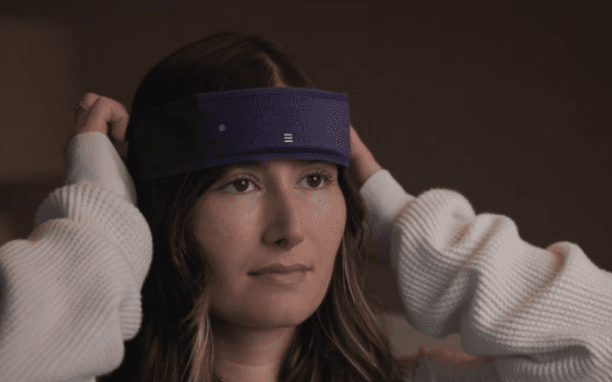
Given the drawbacks of such sleeping medicines, you can understand why we are excited to learn about a different non-drug approach that is effective for defeating insomnia. It is called spatial acoustic resonance therapy and is delivered through a device that looks like a headband connected wirelessly to a smartphone app. This device delivers tones of different frequencies to each ear (Journal of Sleep Medicine, April 30, 2025). The device delivers frequencies customized based on the shape of the user’s face and skull, scanned with the smartphone camera and analyzed by the app.
A small study of 20 volunteers with chronic insomnia found that regular use of this device for a month resulted in a very significant reduction in the Insomnia Severity Index. In fact, three fourths of them didn’t qualify as having insomnia at all! In addition, participants did not report side effects.
SpatialSleep for Acoustic Resonance Therapy:
The company that developed and tested this device has named it SpatialSleep. We are pleased that they reached out to us for help in spreading the word about its potential. You can try it risk-free for 30 days. Learn more at SpatialSleep.com and see if this could be your path to defeating insomnia without medications.
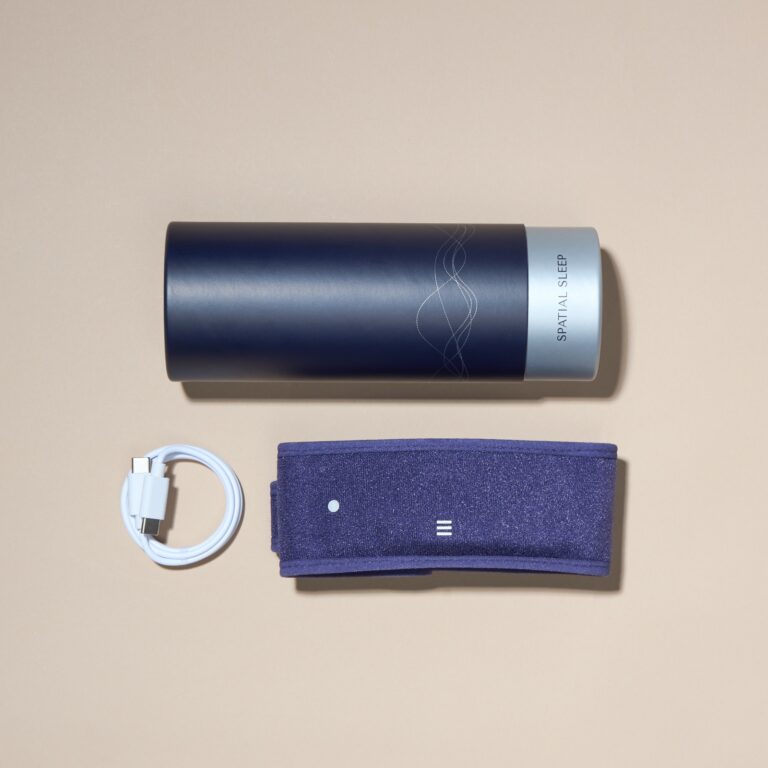
SpatialSleep headband for insomnia
Learn More:
We offer valuable information about sleep in several of our podcasts. Start with Show 1333: Overcoming Insomnia Without Medication or Show 1393: How to Get the Sleep You Need. You may also wish to consult our eGuide to Getting a Good Night’s Sleep.
Citations
- Ferini-Strambi L, "Insomnia disorder." Minerva Medica, Aug. 2025. DOI: 10.23736/S0026-4806.25.09690-9
- Espie CA et al, "Effect of digital Cognitive Behavioral Therapy for Insomnia on health, psychological well-being, and sleep-related Quality of Life: A randomized clinical trial." JAMA Psychiatry, Jan. 1, 2019. DOI: 10.1001/jamapsychiatry.2018.2745
- Lin K, et al, "Use of customized binaural beats for the treatment of chronic insomnia." Journal of Sleep Medicine, April 30, 2025. DOI: https://doi.org/10.13078/jsm.250006