 The People's Perspective on Medicine
Show 1488: What Can Near-Death Experiences Teach Us About Consciousness?
Description
After years of dementia, many people have reduced their communication to minimal levels. Sometimes, they don’t say anything at all, and family members may be tempted to assume that memories have disappeared along with cognitive function. Occasionally, such a person will become surprisingly coherent and able to discuss aspects of their lives for a few minutes or even hours. Because they often die within days of such an episode, researchers have termed the phenomenon “terminal lucidity.” Our guest, Dr. Marjorie Woollacott, suggests that the more inclusive term “paradoxical lucidity” might be more appropriate. What do these unexpected events have in common with near-death experiences? Can they teach us about consciousness?
At The People’s Pharmacy, we strive to bring you up to date, rigorously researched insights and conversations about health, medicine, wellness and health policies and health systems. While these conversations intend to offer insight and perspective, the content is provided solely for informational and educational purposes. Please consult your healthcare provider before making any changes to your medical care or treatment.
What Is Terminal Lucidity?
An article by Billy Brennan in the New York Times Magazine (July 15, 2026) was titled, “Why Do Some Dementia Patients ‘Return’ Just Before They Die?” The subtitle explained, “As they near death, some dementia patients recover mental faculties assumed to be long lost. Researchers want to know why.”
We were fascinated by the story Mr. Brennan shares about a conversation with a grandmother a few days before her death. It reminded us of an experience a friend of ours had shared about his own mother. She had dementia and had not communicated much with anyone for a long time. When the nursing home called him and told him she had broken her hip, he expected she would be even more incoherent because of the opioids she would be administered for the pain. So when he arrived at the hospital to find her oriented to time and place and aware of the situation, he was astonished. In this instance, her unexplained clarity continued for a few weeks. We can’t call it “terminal” lucidity, though, as she survived several more years.
Such tales suggest that even a disordered brain is not completely lacking in consciousness. But what do we mean by consciousness?
A Stroke of Insight to Teach Us About Consciousness
Neuroscientists usually assume that the brain creates consciousness, although they haven’t explained exactly how it does so. Some philosophers postulate that consciousness is a fundamental property of the universe. In this view, our brains act as filters so that we don’t become entirely overwhelmed and unable to function. Many years ago, we interviewed Dr. Jill Bolte Taylor, a neuroanatomist, about her brilliant book, My Stroke of Insight. In it, she recounts her own experience and perceptions as she suffered a massive hemorrhagic stroke that affected the left side of her brain. She observed as her brain circuits went offline, one by one. In particular, she was struck by a sense of joy and unity with the entire universe. Our guest for this episode, Dr. Marjorie Woollacott, suggests that during this time, Dr. Bolte Taylor’s stroke removed the usual filters that our brain puts on our consciousness.
How Else Might People Have a Different Access to Consciousness?
Dr. Woollacott is a meditator as well as a neuroscientist, and she describes her initiation into meditation. To her, it felt as though she were participating in a larger consciousness. Meditation might facilitate a lowering of the filters that usually limit our awareness of a broader consciousness. Dr. Woollacott describes this as a spiritual awakening. Sometimes people describe an experience under the influence of psilocybin in similar terms.
Many people who have died and then been revived have described their feelings about such a near-death experience. Dr. Sam Parnia and Dr. Bruce Greyson have both discussed these phenomena for People’s Pharmacy listeners. In such situations, people often describe accurately describe events that occurred while they were unconscious or technically dead. Most people who have survived a near-death experience consider it a spiritual awakening. They may change their lives from there on.
Near Death in a Healthcare Setting
Not everyone who undergoes a near-death experience is in a healthcare setting where heart rate (or lack of heart beat), brain activity, respiration and so forth can be observed and recorded. In one instance, a woman named Pamela Reynolds required surgery on a brain aneurysm. It was a very delicate operation, and to conduct it properly, the surgical team chilled her body and drained the blood from her brain. She told us about leaving her body and observing the operation from above. The descriptions she gave of the surgical drill and the music the team was playing have been corroborated by the people involved, although Ms. Reynolds had no visual or auditory input and should have had absolutely no consciousness whatsoever.
Dr. Bettina Peyton Comes Back
Dr. Woollacott described another, more recent incident in which a patient who should have had no awareness described watching her own resuscitation. Bettina Peyton, a physician, needed a C-section to deliver her third baby, but the operation went badly and she started to hemorrhage. She described accessing a much broader consciousness and then being commanded to live. When she revived, she was able to relate the events that had occurred in the delivery room although she had not been able to see or hear them. Could we use such case histories to teach us about consciousness?
Do Nonverbal Children Participate in Nonlocal Consciousness?
Dr. Woollacott has been interacting with parents and family members of certain children with autism who do not speak. They do communicate through other means. Some of these youngsters describe meeting and communing with other autistic kids on The Hill. They describe it in remarkably similar terms, even though they have not met face to face. Dr. Woollacott believes that these young people may have reduced neural filters. Perhaps that explains why they seem to be more skilled at telepathy than the rest of us. Although it is foreign to our materialist world view, we may need to take the idea of nonlocal consciousness seriously.
This Week's Guest
Marjorie Woollacott, PhD, is an Emeritus Professor of Human Physiology and member of the Institute of Neuroscience at the University of Oregon. She is Research Director for the International Association of Near-Death Studies and President of the Academy for the Advancement of Postmaterialist Sciences. Dr. Woollacott has published more than 200 scientific articles and written or co-edited eight books, including Infinite Awareness: The Awakening of a Scientific Mind.
The People’s Pharmacy is reader supported. When you buy through links in this post, we may earn a small affiliate commission (at no cost to you).
[caption id="attachment_141585" align="alignnone" width="513"]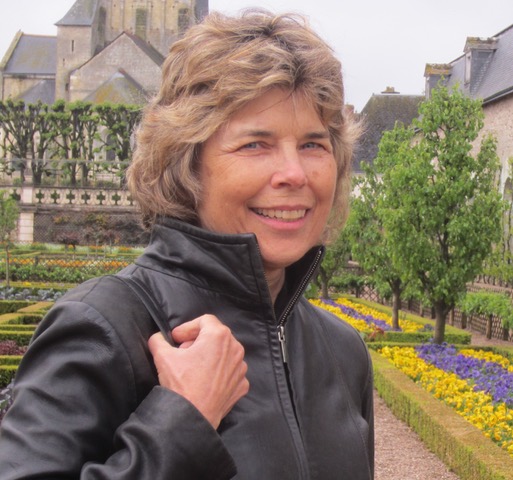 Marjorie Woollacott, PhD, author of Infinite Awareness/caption]
Confidence
Thank you for sharing your thoughts about one of our products! Please focus on the product performance and quality. Please read our Privacy Policy and Terms of Use for more information about the review process.
The People's Perspective on Medicine© 2026 The People's Pharmacy
All Rights Reserved