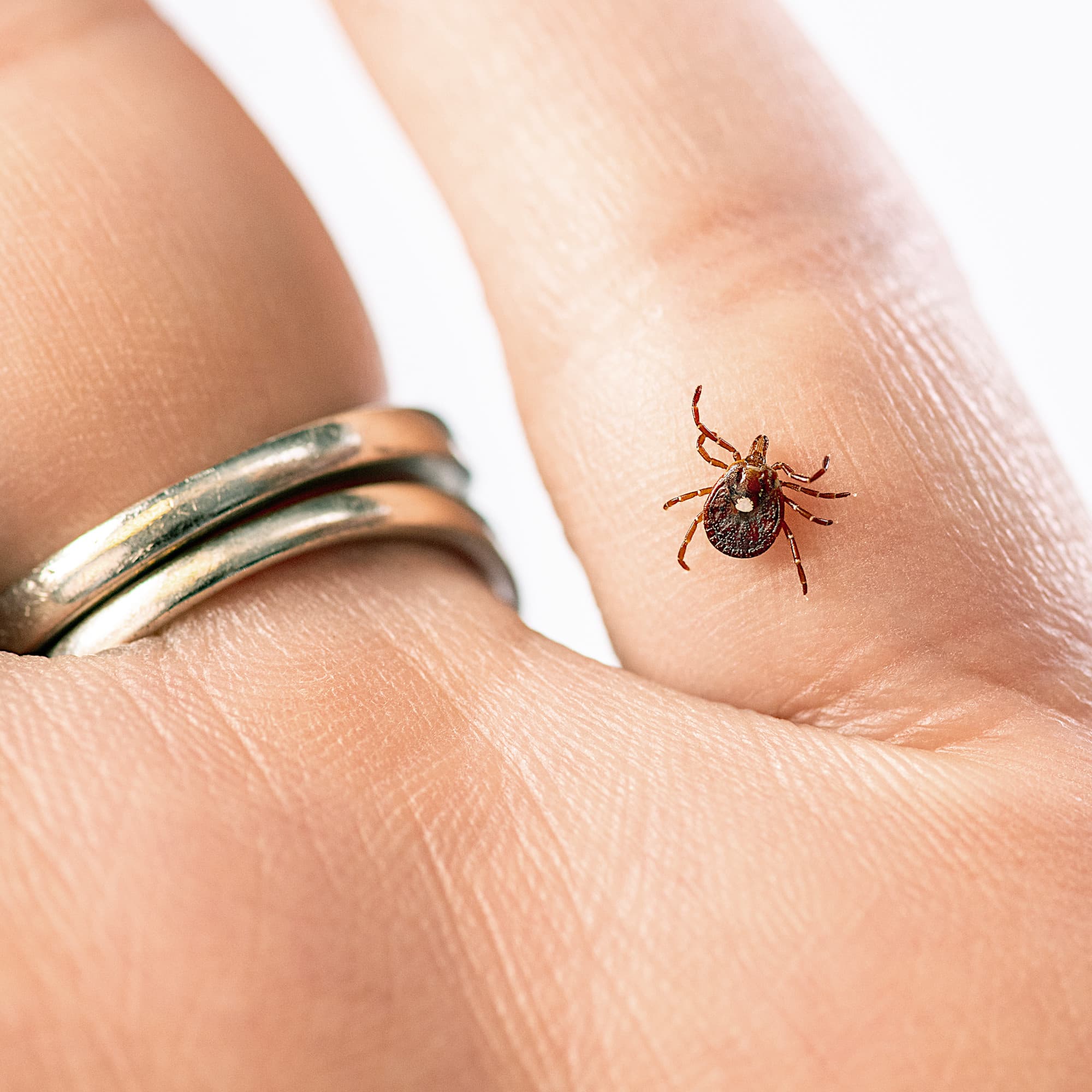
Imagine eating a hamburger or pork chop for dinner, going to bed at 11 pm feeling perfectly fine and awakening at 4 am covered in hives and itching like crazy. In addition, you may have to run to the bathroom with nausea, a terrible bellyache and diarrhea. No, it is not food poisoning! Rather it could be an allergic reaction to a tick bite. Certain tick bites can reprogram the immune system so that meat, dairy products, gelatin or even some medications provoke a dangerous delayed allergic reaction.
This mysterious condition is called alpha-gal syndrome (AGS), alpha-gal allergy or “red meat allergy.” For years, the lone star tick was considered the primary U.S. trigger. New research suggests that at least two other ticks may occasionally cause this unusual allergy as well. In other countries there are several ticks that are suspected of causing AGS.
The Ticks That Can Cause Alpha-Gal Syndrome:
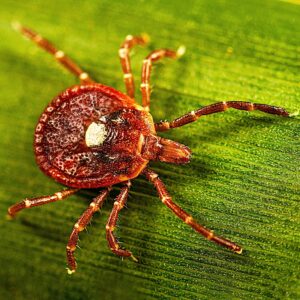
An adult lone star tick crawling on a blade of grass. Photo credit: Lauren Bishop.
The lone star tick (Amblyomma americanum) remains the primary cause of alpha-gal syndrome in the United States. However, CDC investigators have now reported convincing cases following bites from the blacklegged or deer tick (Ixodes scapularis) and the western blacklegged tick (Ixodes pacificus).
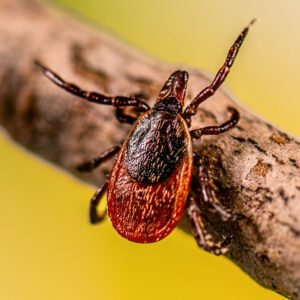
An adult black legged tick (Ixodes scapularis). Photo Credit: Lauren Bishop.
What Other Ticks Can Cause Alpha-Gal Allergy?
- In Australia the Australian paralysis tick (Ixodes holocyclus) causes AGS.
- In Europe it’s the sheep tick (castor bean tick) (Ixodes ricinus)
- In Asia (Japan, Korea, China) it is the longhorned tick (Haemaphysalis longicornis)
There may be other tick species that are capable of sensitizing people to meat. One such could be the cayenne tick, aka (Amblyomma sculptum) in Brazil. You can read all about such nasties in the journal Open Forum Infectious Diseases (July 21, 2025).
The authors note:
“Many clinicians remain unaware of this illness. A 2022 survey of 1500 general practitioners revealed that 42% were not aware of AGS, and among those who were aware, 35% lacked confidence in their ability to diagnose and manage AGS. One study found that most patients first propose the diagnosis themselves, without input from a healthcare provider. Some patients may wait over 10 years before they are diagnosed and may undergo unnecessary procedures such as radiologic imaging and endoscopies.”
You can learn much more about this rapidly spreading condition at this link:
Ticked Off! How Alpha-Gal Allergy Turns a Meal Into a Medical Crisis
What Is Alpha-Gal Allergy?
Alpha-gal is short for galactose-alpha-1,3-galactose. That is a sugar molecule found in the tissues of most mammals, but not in people or other primates.
When a tick bite triggers an immune reaction to alpha-gal, the body may later react to mammalian meat such as beef, pork, lamb, venison, rabbit or goat. Some people also react to dairy products, gelatin, animal-derived ingredients in medicines or medical products.
Fish and poultry do not contain alpha-gal in the same way, so chicken, turkey and seafood are usually well tolerated.
How Long Have Scientists Known About Alpha-Gal Allergy?
This is not brand-new, but it took a long time for the medical world to put the puzzle pieces together.
There were early reports of people developing meat allergy after tick bites decades ago. The modern scientific detective story took off after Dr. Thomas Platts-Mills and colleagues began studying severe reactions to the cancer drug cetuximab (Erbitux). It was published in the New England Journal of Medicine, March 13, 2008.
A year later, medical detective, Dr. Platts-Mills and colleagues published a landmark study in the Journal of Allergy and Clinical Immunology, Feb. 2009.
Their conclusion:
“We report a novel and severe food allergy related to IgE antibodies to the carbohydrate epitope alpha-gal. These patients experience delayed symptoms of anaphylaxis, angioedema, or urticaria associated with eating beef, pork, or lamb.”
We were among the first to interview Dr. Platts-Mills on our radio show # 830, October 1, 2011. Until then, few people had ever heard of AGS.
Dr. Thomas Platts-Mills and colleagues helped explain why this allergy is so confusing. Unlike most food allergies, alpha-gal reactions often occur three to seven hours after eating. A person may enjoy a steak dinner at 6 p.m. and wake up at 1 a.m. with hives, nausea, diarrhea, dizziness or anaphylaxis.
That time lag can fool patients, doctors and emergency room staff.
What Does Alpha-Gal Allergy Feel Like?
Alpha-Gal Could Be Deadly:
One visitor to our website recounted this terrifying experience:
“I have alpha-gal allergy after being bitten by about 30 seed or nymph ticks three years ago. About 10 days later, six hours after eating a steak, I had complete cardiac arrest as a result of severe anaphylaxis. I almost died.
“A year later I ate pasta sauce that I didn’t know had beef stock in it, and five hours later I had complete respiratory collapse. As a result, I almost died three times in one hour. My blood pressure dropped to 60 over 40.
“I am now allergic to milk, cheese, whey and other dairy products as well as gelatin and any mammalian meat or by-product. I need to check all food and medications carefully before eating or taking them. The casing on many capsules is gelatin and could send me into anaphylaxis.”
Diagnosing Alpha-Gal Allergy:
The history of tick bites and later a delayed allergic reaction to eating meat is a tip-off. There is also a blood test that can help with diagnosis of alpha-gal allergy. Initially, many doctors were unfamiliar with this allergy and didn’t know how to make the diagnosis.
Another reader shared his frustration at having been ignored for years:
“I have had serious allergic reactions for almost 20 years and have almost died three times. Despite this, doctors told me that my allergies (to beef, pork or lamb) were all in my head.
“When I needed open-heart surgery, I mentioned my allergies. The surgeon sent my blood to the University of Virginia, and I was diagnosed with alpha-gal allergy.”
The only known solution to this unusual and potentially deadly reaction is to carefully avoid all meat from mammals. That means no burgers, hot dogs, bacon, steak, lamb chops, ribs or other common cookout fare. Chicken and fish are fine, however.
Can Alpha-Gal Allergy Fade Over Time?
Here is a new question we recently received from a reader whose alpha-gal allergy eventually faded.
Q. I contracted alpha-gal meat allergy while living in Long Island, NY, over a decade ago. An observant PCP diagnosed me and sent me to an allergist for confirmation.
When I moved to North Carolina, my new doctor requested further testing. The lab had no idea what tests to run.
I eventually grew out of the allergy over four years. Since 2021 I have been able to eat meat again.
Your recent column on alpha-gal allergy did not address the fact that many people grow out of the allergy. Fortunately, my allergic reaction to eating meat was only hives. Nevertheless, I was instructed to carry an EpiPen with me just in case.
When I go to doctors’ offices now, most nurses have never heard of this allergy. They ask me to explain to them what the alpha-gal allergy is, so thank you for your column that shed some light on a little-known ailment.
A. Alpha-gal allergy can be challenging to diagnose because the reaction is often delayed for several hours after eating meat (beef, pork, lamb, etc.). People typically experience hives or digestive distress. Some people develop airway swelling or anaphylaxis, a life-threatening allergic reaction. That’s why you were told to keep an EpiPen on hand.
This allergy is triggered by a tick bite. Like you, some people lose their reactivity to eating meat over time. Others may retain this sensitivity indefinitely. They may also react to gelatin capsules or medicines that contain animal products.
Alpha-Gal Is Not Just About Red Meat
The nickname “red meat allergy” is memorable but incomplete.
Some people with alpha-gal syndrome also react to:
- Milk, cheese, cream or other high-fat dairy foods
- Gelatin in desserts, marshmallows, supplements or medicine capsules
- Beef or pork broth hidden in sauces and soups
- Lard, tallow or mammalian fat
- Medicines or vaccines containing gelatin or other mammal-derived ingredients
- The blood thinner heparin
- Heart valves or other medical products made from pigs or cows
- Certain monoclonal antibody medicines
Sensitivity varies enormously. Many people tolerate dairy products and ordinary pills without difficulty, while highly sensitive patients may need help from an allergist, pharmacist or compounding pharmacy. We have even heard about people who were so vulnerable that just breathing in the smoke from a barbecue triggered a bad reaction.
Why Doctors Still Miss Alpha-Gal Allergy
Your experience is not unusual. Many health professionals still have limited familiarity with alpha-gal syndrome. That is especially troubling because the symptoms can be dramatic and dangerous.
A delayed reaction after eating meat should raise suspicion. So should unexplained hives, nighttime anaphylaxis, recurring digestive distress or allergic reactions that seem to come out of nowhere.
The history of tick bites is an important clue, but many people never notice the bite. Seed ticks or nymph ticks can be tiny. Some people remember a tick bite that itched intensely or lingered for weeks. Others have no memory of being bitten.
Final Words:
Preventing tick bites whenever possible with protective clothing and careful inspections is the first step in avoiding alpha-gal allergy. To avoid tick bites, why not listen to our radio show/podcast:
Show 1380: Avoiding Lyme and Other Tick-Borne Diseases
Half a million people may suffer symptoms of Lyme disease this year. Learn about avoiding Lyme and other tick-borne diseases.
The next step is to be aware that a delayed reaction to meat could be a signal of a serious problem.
If you think this article would be helpful for a friend, family member or colleague, please share it. Our free newsletter can only continue if you help us spread the word. Subscribers keep The People’s Pharmacy moving forward. Thank you for supporting our work. Here is a link to help people join you in getting practical, up-to-date health information. While you are at it, why not sign up for our free podcast here:
You can find The People’s Pharmacy podcast in theApple Podcasts, on Spotify, Youtube as well as on theRSS Feed.
Citations
- Shishido, A. and Wormser, G.P., "A Review of Alpha-Gal Syndrome for the Infectious Diseases Practitioner," Open Forum Infectious Diseases, July 21, 2025, doi: 10.1093/ofid/ofaf430
- Chung, C.H., et al, "Cetuximab-induced anaphylaxis and IgE specific for galactose-alpha-1,3-galactose," New England Journal of Medicine, March 13, 2008, doi: 10.1056/NEJMoa074943
- Commins, S.P., et al, "Delayed anaphylaxis, angioedema, or urticaria after consumption of red meat in patients with IgE antibodies specific for galactose-alpha-1,3-galactose," Journal of Allergy and Clinical Immunology, Feb. 2009, DOI: 10.1016/j.jaci.2008.10.052