
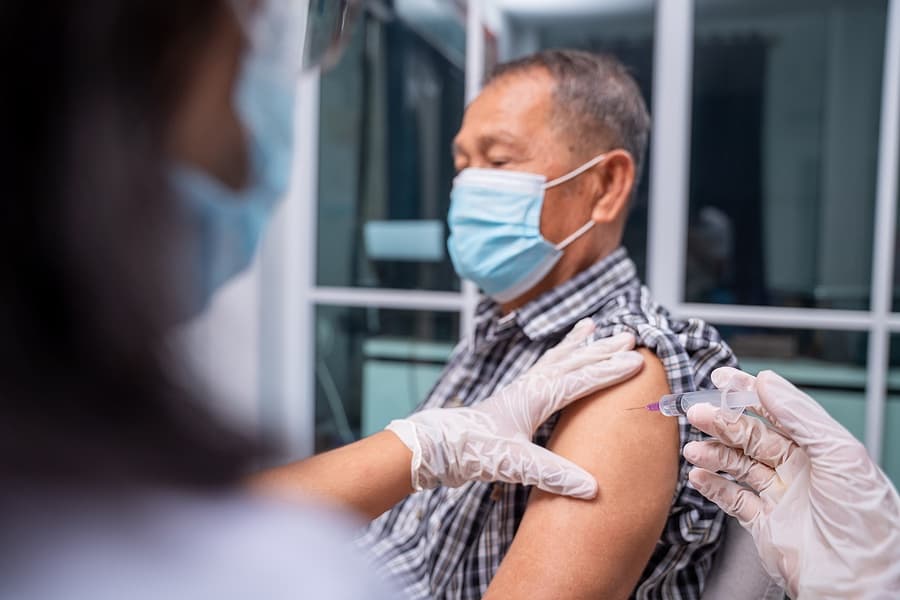
Flu season has not yet started but we are beginning to see a slight increase in cases across the country. As the summer COVID peak fades, public health authorities expect influenza to start rising. What will the coming flu season be like? There may be hopeful news from Australia, which is just wrapping up the winter. The season there was mild to moderate. North America often follows a similar pattern.
When Should You Get Your Flu Shot?
Is it too early to get a flu shot? Normally, influenza takes off around the holidays, peaking between December and February. We recognize that some people will opt out of a flu shot, but others want to be protected. When should Americans get their flu shots? According to influenza expert Dr. William Schaffner of Vanderbilt University School of Medicine, the immunization requires about two weeks to build up protection in the body. That lasts for approximately six months. Consequently, the best time to get the jab would be late September or early October. That way protection should last throughout the season.
The CDC has not issued final guidelines for flu vaccine this year, so several physicians groups have collaborated on filling the gap. (You can find CDC’s interim guidance here.) Cooperating physician groups recommend a flu vaccine for everyone over 6 months of age, with a high-dose shot for seniors and those with weakened immune systems. People who live with or care for those at high risk of complications should also make sure they are vaccinated so as not to expose their vulnerable loved ones.
Avoiding the Flu
Flu Shots
We have written about influenza vaccination here and here. Public health officials assert that getting vaccinated is the best protection against the coming flu season. They also urge people to be super-conscientious about hand-washing. That’s good advice, but neither tactic is guaranteed to prevent an influenza infection.
Vaccine manufacturers have updated the vaccinations that doctors will use this year to protect against the influenza A (H3N2) subclade K strain that caused a lot of illness last year. In addition, flu shots should also protect against influenza A/Missouri (H1N1), influenza A/Darwin (H3N2) and influenza B/Tokyo (Victoria). We don’t know if Darwin refers to the 19th century scientist or to the north Australian city, but rather suspect the latter.
Recombinant vaccines such as the Moderna mRNA shot protect against B/Pennsylvania (Victoria) rather than B/Tokyo. Presumably that is due to the quicker turn-around time for producing mRNA immunizations compared to the old-fashioned egg-based vaccines.
Antiviral Medicine
There are antiviral medicines such as oseltamivir (Tamiflu) that can shorten the amount of time a person suffers from flu symptoms. These drugs can also prevent the flu if someone else in the household has become ill.
Vitamin D
Sometimes scientists recommend vitamin D supplements to help prevent influenza. Although not all studies have found that vitamin D supplements are protective, a meta-analysis of 10 trials covering nearly 5,000 volunteers concluded that vitamin D supplements can be helpful (Frontiers in Nutrition, Jan. 7, 2022). Scientists at Penn State have determined that vitamin D deficiency increases the severity of lung infections, while sufficiency reduces inflammation (Nutrients, July 26, 2022).
Zinc
Don’t become deficient in zinc, either. When mice are deficient in zinc, they are much more likely to develop a secondary bacterial infection after influenza (Physiological Reports, Jan. 2024).
A Few Last Thoughts
Unfortunately, most institutions have not embraced adequate indoor ventilation to protect people against respiratory viruses. Until we notice that supermarkets, offices, churches, airports and other places where many people gather together have cleaned up their air, we will be wearing masks in those places. We will be among a very tiny minority doing so, but we expect that to help us protect ourselves more fully during the coming flu season.
You can share your thoughts in the comment section.
Citations
- Zhu Z et al, "Association between vitamin D and influenza: Meta-analysis and systematic review of randomized controlled trials." Frontiers in Nutrition, Jan. 7, 2022. DOI: 10.3389/fnut.2021.799709
- Arora J et al, "Vitamin D and the ability to produce 1,25(OH)2D are critical for protection from viral infection of the lungs." Nutrients, July 26, 2022. DOI: 10.3390/nu14153061
- Gopal R et al, "Zinc deficiency enhances sensitivity to influenza A associated bacterial pneumonia in mice." Physiological Reports, Jan. 2024. DOI: 10.14814/phy2.15902

