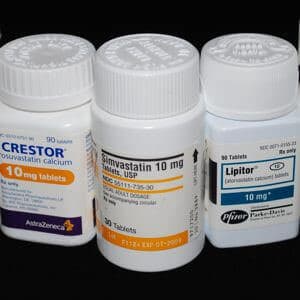
When someone has a heart attack, there is a very good chance he will be put on a statin-type cholesterol-lowering medicine. This is called secondary prevention because the goal is to avoid a second heart attack. But not everyone can tolerate a statin. That is where the category of medications called PCSK9 inhibitors may be helpful. Drugs like alirocumab (Praluent), evolocumab (Repatha) and enlicitide (Lipfendra) are now available. What’s the story?
Praluent Instead of Crestor (Rosuvastatin):
Some people are so sensitive to statins that even a relatively small dose makes them miserable.
That was the case with Matt:
“I had a heart attack in 2007. After a stent was placed in an artery I was put on 40 mg of Crestor (rosuvastatin).
“About 3 weeks later I was having a low grade ache in my hips, pelvis and lower back. I saw my physician who never acknowledged that the pain could be a result of the statin. Instead he sent me on a long, costly journey of nuclear medicine studies-MRI’S, CT scans, physical therapy, back specialists, nerve blocks, neurologist consults and more.
“Eventually the pain reached intolerable levels and I was in and out of emergency rooms. It got so bad I had intravenous Dilaudid to bring me a little relief. [Dilaudid is a very powerful opioid narcotic]
“Because I had a heart attack I was told I had to take a statin. I took myself off just to see if I improved and I did. I agreed to a lower dose of a statin but the pain returned like clockwork about three weeks into treatment.
“Here’s what I have taken and the result:
40 mg Crestor (rosuvastatin) led to an ER visit
20 mg Lipitor (atorvastatin) led to an ER visit
10 mg Vytorin (simvastatin plus ezetimibe) led to an ER visit
2 mg Livalo (pitavastatin) every third day led to extreme pain but I coped without an ER visit“On the bright side, I now take a cholesterol drug that is injected once every two weeks. It is called Praluent (alirocumab). It has reduced my LDL to 39 with no side effects. There are no long-term studies on the drug, so the doctors would like me to still take 1mg Livalo every third day, but I can’t cope with any amount of statin. My message to people who cannot stand statins: I understand your pain and suffering.”
Thank you for sharing your story, Matt. We know that there are some cardiologists who believe that almost everyone should be on a statin. They may insist that everyone who has had a heart attack absolutely must take such drugs. But there are people like you who cannot tolerate statins, even in low doses. Although the actual numbers are controversial, some researchers believe that anywhere from 5 to 20% of patients may experience muscle pain. Some, like you, find the pain unbearable.
Another Praluent Success Story:
Q. I think Praluent has been a life saver in my case. My dad had a stroke, and with plaque in my carotid arteries, I feared I was headed for one.
My vascular doctor has done sonograms and the plaque is less now since I started taking Praluent. I couldn’t take statins because of side effects. And even though I don’t like needles, I don’t have any problem using the Praluent pens
A. Thanks for sharing your experience. We’ll never know whether you would have had a stroke, but reducing plaque in the carotid arteries seems like a helpful step. A meta-analysis shows that when 319 people take alirocumab (Praluent) for a year and a half, one of them will be able to prevent a stroke (Frontiers in Cardiovascular Medicine, Dec. 2, 2022).
The new pill enlicitide (Lipfendra) works on the same PCSK9 pathway as Praluent (alirocumab). There are not yet clinical trial data to show if or how well it may prevent strokes or heart attacks. You can learn more about Lipfendra at this link.
For a deeper dive into many risk factors that lead to heart disease and various ways to treat these challenges, why not check out our eGuide to Cholesterol Control & Heart Health? You will find it under the Health eGuides tab.
How Good Are Statins At Prolonging Life?
Interestingly, statins may not prolong life as long as many health professionals seem to think. We asked some physician friends how good statins are at extending life. The answers ranged from about two years to over five years.
These health professionals were totally amazed when we told them the results of a study titled “The Effect of Statins on Average Survival in Randomized Trials” published in the journal BMJ Open (Sept. 24, 2015). These investigators found that death was postponed between 10 and 27 days in secondary prevention trials.
In one of the best trials (the “4S” study), where high-risk people were taking simvastatin for nearly six years, death was postponed by less than a month. The authors of the BMJ Open study noted that, “The median postponement of death for primary and secondary prevention trials were 3.2 and 4.1 days, respectively.”
Perhaps more important, these researchers noted that if patients experience the kind of pain our first correspondent went through as a result of statins that “physicians should not be too insistent on the patient continuing them. Also, for patients whose life expectancy is short, the benefit of statin therapy in terms of survival gain may be quite limited.”
Time Gained After Lipid-Lowering Therapy
A more recent analysis by Dutch researchers (American Journal of Cardiovascular Drugs, Aug. 14, 2024) looked at the current guidelines that emphasize “intensive lipid-lowering therapy.”
Conclusion:
“Intensive lipid-lowering therapy during 2 or 5 years did not lead to fewer deaths or lifetime gained, and the effects on MI [heart attack] and stroke were negligible. The largest effect was that MACE [major adverse cardiovascular events] did not occur in two of 100 patients and was postponed 3–4 weeks after 5 years of intensive treatment. Given the small effect, patients should receive this information as part of shared decision making.”
Cardiologists Dislike Such Stats!
Cardiologists we have talked to find such statistics aggravating. They much prefer relative risk reduction (RR) to absolute risk reduction (AR). Drug companies also find relative risk much more compelling.
Here is how two number crunchers explain this seemingly complex topic in their article in Cureus, May 1, 2023:
“The manner in which clinical trial investigators present their findings to healthcare providers and the public can have a substantial influence on their impact. For example, if a heart attack occurs in 2% of those in the placebo group and in 1% of those in the drug-treated group, the benefit to the treated population is only one percentage point better than no treatment. This finding is unlikely to generate much enthusiasm from the study sponsors and in the reporting of the findings to the public. Instead, trial directors can amplify the magnitude of the appearance of the treatment benefit by using the relative risk (RR) value of a 50% reduction of the risk of a heart attack, since one is 50% of two. By using the RR type of data analysis, clinical trial directors can promote the outcome of their trial in their publication and to the media as highly successful while minimizing or disregarding entirely the absolute risk (AR) reduction of only one percentage point.”
What About Praluent (alirocumab) and Repatha (evolocumab)?
In the summer of 2015, the FDA approved both Praluent and Repatha to lower cholesterol. These injectable medications belong to a new class of medications and are being prescribed to people like Matt who cannot tolerate statins. They are antibodies (hence the suffix “mab”) that inhibit an enzyme (PCSK9) that controls levels of LDL cholesterol.
The two number crunchers we cited above (Cureus, May 1, 2023) also analyzed data for evolocumab (Repatha) that was published in the FOURIER clinical trial. Repatha was amazingly effective at helping lower LDL cholesterol: 59% reduction. The authors point out that the relative risk reduction in cardiovascular death, MI [heart attack] or stroke was 20% after evolocumab.
They go on to provide the absolute risk (AR) reduction:
“The impact of the FOURIER findings may have been less impressive had the reduction in the risk of the composite of cardiovascular death, MI, or stroke been expressed as the AR, which was only a 1.5 percentage point difference between treatment and placebo (5.9% versus 7.4%).”
Side Effects of Praluent and Repatha:
According to the FDA, the most common side effects of Praluent include “itching, swelling, pain, or bruising where injection is given.” Some people also experience inflammation of the nose and throat (sinusitis) and flu-like symptoms. Occasionally, patients develop a severe allergic reaction that may manifest as a skin rash or purple-colored spots. The early reports are that Praluent is well tolerated, though there were some cases of muscle pain and spasms. These were considered uncommon. Liver enzyme elevations have also been noted in some subjects.
Repatha side effects are similar to those of Praluent in that there are injection-site reactions (redness, pain and bruising). People reported flu-like symptoms including nasal inflammation, sinusitis and cough. Subjects also complained of muscle pain, back pain, dizziness, diarrhea and headache.
No one should ever stop taking any medicine without discussing benefits and risks with the prescriber!
The People’s Pharmacy Bottom Line:
When people cannot tolerate statins it is important for doctors to consider the advice mentioned in the BMJ Open article above: “physicians should not be too insistent on the patient continuing them…”
If statin-induced pain is so great that a patient cannot exercise or get a good night’s sleep, the benefits may not outweigh the risks. Exercise and sleep are essential for good health.
Praluent may be a very good option for someone like Matt, but it will take a while before we know if lowering LDL cholesterol with this new class of medications actually leads to the outcomes that matter to people, i.e., substantially longer, healthier lives.
What has been your experience with statins? Do you tolerate them well or have you experienced side effects. Please comment below and vote on this article at the top of the page. Should you wish to learn more about other ways to reduce the risk of a heart attack you may find our Guide to Cholesterol Control and Heart Health of some interest.
Citations
- van Bruggen, F.H., et al, "Time Gained to Cardiovascular Disease by Intensive Lipid-Lowering Therapy: Results of Individual Placebo-Controlled Trials and Pooled Effects," American Journal of Cardiovascular Drugs, Aug. 14, 2024, doi: 10.1007/s40256-024-00668-y
- Diamon, D.M. and Leaverton, P.E., "Historical Review of the Use of Relative Risk Statistics in the Portrayal of the Purported Hazards of High LDL Cholesterol and the Benefits of Lipid-Lowering Therapy," Cureus, May 1, 2023, DOI: 10.7759/cureus.38391