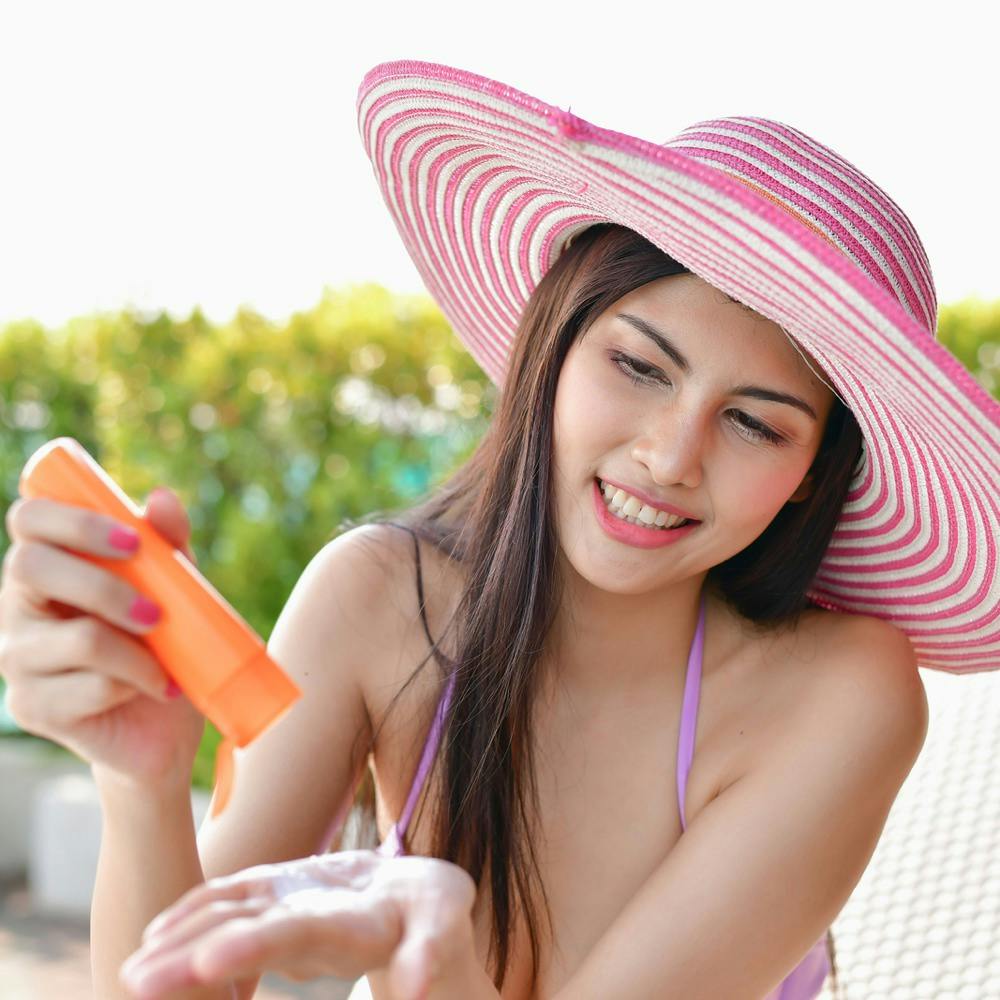
If you spend time outside in the summertime, you’ll probably reach for the insect repellent. After all, you don’t want to feed bloodsuckers like ticks or mosquitoes. In addition, sunscreen can keep your skin from burning if you are out for more than a short while. But can you safely use sunscreen and bug repellent together? What are the risks?
A Reader Asks About Sunscreen and Bug Repellent:
Q. I have to use sunblock (rated 70) whenever I go outside here in Southern California. That doesn’t inhibit mosquitoes.
If I use a separate mosquito repellent, would that interfere with the sunblock?
A. Applying insect repellent at the same time as sunscreen can significantly decrease the effectiveness of the sunscreen (Parasites & Vectors, March 4, 2025). The insect repellent used in this study contained IR3535. DEET apparently has a similar impact on sunscreen effectiveness.
The CDC recommends applying sunscreen first and insect repellent second if both are needed. Consumer Reports (CR) suggests waiting until the sunscreen is completely dry before applying bug repellent. CR also reminds us to reapply sun protection every two hours. The organization advises avoiding products that combine both repellent and sunblock.
Using Sunscreen and Bug Repellent Together:
Q. It’s summer and the “wear sunscreen” drumbeat is loud and clear.
I live in the south where local ponds and open storm drains make mosquitoes a big problem. I am more concerned about Zika, West Nile virus, and chikungunya than wrinkles and skin cancer. So DEET is my skin application of choice.
Do we know anything about the combination of sunscreens and DEET? Is there reason to suspect that using both makes either less effective or more harmful?
DEET May Boost Absorption of Sunscreen Ingredients:
A. Dermatologists have found that applying the insect repellent DEET together with sunscreen results in greater absorption of both compounds (Journal of Dermatological Treatment, Jan. 2016). According to these scientists, picaridin would be a better choice for repelling insects if you also need sunscreen (which you mostly do during the day).
Although DEET is the gold standard, picaridin is about as effective and appears less likely to cause side effects. When you use sunscreen and bug repellent containing picaridin, you absorb less of both the repellent and sunscreen ingredients such as oxybenzone. Sunscreens based on titanium dioxide or zinc oxide are not absorbed and not affected by insect repellent.
Looking for Picaridin:
You’ll find picaridin in several commercially available insect repellents. They include Sawyer Picaridin Insect Repellent, Natrapel 12-hour Insect Repellent, Repel Tick Defense and Ranger Ready Picaridin 20 Percent.
A new insect repellent ingredient was recently approved. We do not know whether or to what extent repellents made with nootkatone will interact with sunscreen compounds.
Citations
- Charrasse, S., et al, "Computational histology reveals that concomitant application of insect repellent with sunscreen impairs UV protection in an ex vivo human skin model," Parasites & Vectors, March 4, 2025, doi: 10.1186/s13071-025-06712-3
- Rodriguez J & Maibach HI, "Percutaneous penetration and pharmacodynamics: Wash-in and wash-off of sunscreen and insect repellent." Journal of Dermatological Treatment, Jan. 2016. DOI: 10.3109/09546634.2015.1050350