
Beyond the Label
Do you know someone who has struggled for years to meet deadlines or manage their time? Perhaps you have a smart friend who just never did well in school (or possibly at work) because they couldn’t seem to turn papers (or reports) in on time. Such people might find a diagnosis of attention deficit hyperactivity is a relief. Could it free them to find new and hopeful ways to cope with challenges? In this episode, we explore the transformative power of diagnosis.
At The People’s Pharmacy, we strive to bring you up to date, rigorously researched insights and conversations about health, medicine, wellness and health policies and health systems. While these conversations intend to offer insight and perspective, the content is provided solely for informational and educational purposes. Please consult your healthcare provider before making any changes to your medical care or treatment.
How You Can Listen:
You could listen through your local public radio station or get the live stream at 7 am EST on Saturday, Dec. 20, 2025, through your computer or smart phone (wunc.org). Here is a link so you can find which stations carry our broadcast. If you can’t listen to the broadcast, you may wish to hear the podcast later. You can subscribe through your favorite podcast provider, download the mp3 using the link at the bottom of the page, or listen to the stream on this post starting on Dec. 22, 2025.
The Transformative Power of Diagnosis:
Our first interview on this topic is with psychiatrist Awais Aftab. Dr. Aftab has written about “the Rumpelstiltskin effect,” so we asked him to explain it to us (BJPsych Bulletin, Aug. 22, 2025). He describes the relief and even therapeutic effect some people experience when their symptoms can be categorized by a diagnosis rather than as a character defect. This Rumpelstiltskin effect can be found in the folktales of a wide range of cultures as well as science fiction and fantasy. The idea that esoteric knowledge, even if it is only a name, can help offer a measure of control exemplifies the transformative power of diagnosis. The ritual of receiving a diagnosis may also give people relief from cognitive ambiguity.
Some people find that a clinical diagnosis offers validation of their lived experience. In addition, getting a diagnosis may give them an avenue to connecting with others whose experience may be similar. Supportive communities have grown up around the diagnoses of autism spectrum disorder or Asberger’s syndrome. Dr. Aftab views the transformative power of diagnosis alone, regardless of any treatment available, as similar to the power of placebo.
Potential Downsides of a Diagnosis:
Just as a placebo may relieve symptoms and also cause side effects, the transformative power of a diagnosis may sometimes work against a person. If the patient getting the diagnosis finds that it helps clarify new steps toward managing his or her discomfort, it is a benefit. But if instead it becomes an invitation to succumb to symptoms, then it could be harmful. Stepping into the sick role can become maladaptive.
A Second View:
We discussed this idea with another psychiatrist, Dr. Robert Waldinger. He pointed out that a person’s previous experience and their family’s expectations could have a significant impact on whether the transformative power of diagnosis works for good or for ill. One example might be hypertension. One person receiving that diagnosis might remember that his father had hypertension and took his blood pressure medicine conscientiously and lived to a ripe old age. Another person might get the same diagnosis and freak out because a grandfather with hypertension died of a stroke.
Helping People Manage without a Diagnosis:
When life is hard, people may become anxious or despondent without a clinical mental disorder. They still need support. How can we help people talk about their uncomfortable feelings? Even mental health professionals may need practice to feel comfortable actually talking about a person’s authentic feelings. They may be frightened that the person will reveal despair that they don’t know how to alleviate.
Dr. Waldinger reminds us that we don’t have to fix another person’s feelings, but truly listening can itself help. Authentic communication is the heart of connection. As with the transformative power of diagnosis, simply being heard and acknowledged may make a person feel better. Dr. Waldinger is fond of this quote: “Attention is the most basic form of love.” Relationships can help us in hard times. They also bring us joy.
We also remind listeners of the crisis hotline 988 for those who are considering suicide.
This Week’s Guests:
M. Awais Aftab, MD is a Clinical Associate Professor of Psychiatry at Case Western Reserve University.
Psychiatry at the Margins is Dr. Aftab’s Substack newsletter about exploring critical, philosophical, and scientific debates in psychiatric practice and the scientific study of psychology.

Dr. Awais Aftab, Case Western Reserve University
Robert Waldinger, MD, is a professor of psychiatry at Harvard Medical School, director of the Harvard Study of Adult Development at Massachusetts General Hospital, and cofounder of the Lifespan Research Foundation. Along with being a practicing psychiatrist and psychoanalyst, Dr. Waldinger is also a Zen master (Roshi) and teaches meditation in New England and around the world. Dr. Waldinger, with co-author Marc Schulz, PhD, is the author of The Good Life: Lessons From the World’s Longest Scientific Study on Happiness.
The People’s Pharmacy is reader supported. When you buy through links in this post, we may earn a small affiliate commission (at no cost to you).
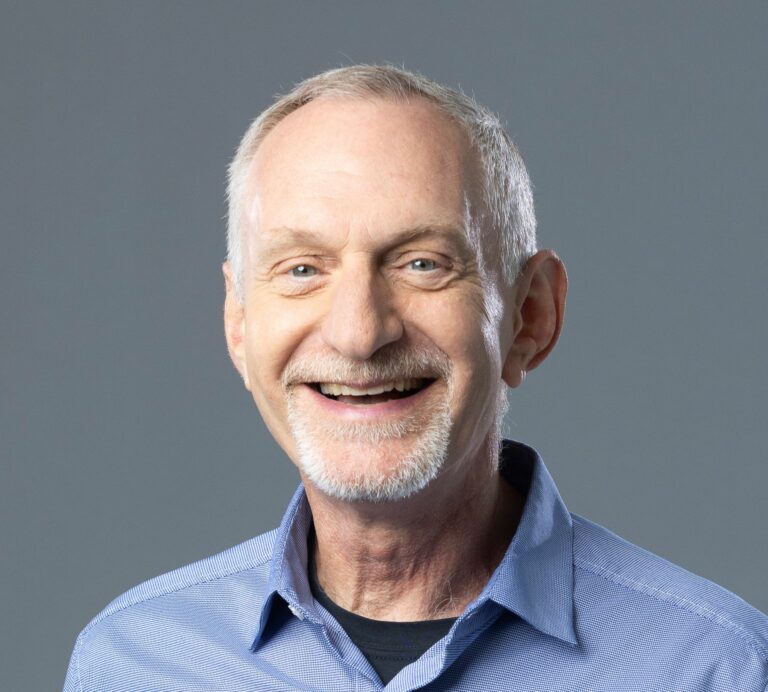
Robert Waldinger, MD, author of The Good Life
Listen to the Podcast:
The podcast of this program will be available Monday, Dec. 22, 2025, after broadcast on Dec. 20. You can stream the show from this site and download the podcast for free. In this week’s episode, Joe describes his experience with aphantasia and his relief at discovering there is a name for it.
In the podcast, Dr. Waldinger discusses gratitude and how we can cultivate it, when it seems so easy to fall back on anger. One approach is the subtraction idea: we may feel irritated with our partner because of the way they load the dishwasher. But when we imagine what it would be like without them, we can experience gratitude that they are in our lives. We also consider the pain of estrangement and the difficulty of rebuilding relationships. Dr. Waldinger shares his personal story of estrangement and how it feels to make peace at last.
Download the mp3, or listen to the podcast on Apple Podcasts or Spotify.
Transcript of Show 1456:
A transcript of this show was created using automated speech-to-text software (AI-powered transcription), then carefully reviewed and edited for clarity. While we’ve done our best to ensure both readability and accuracy, please keep in mind that some mistakes may remain. If you have any questions regarding the content of this show, we encourage you to review the original audio recording. This transcript is copyrighted material, all rights reserved. No part of this transcript may be reproduced, distributed, or transmitted in any form without prior written permission.
Joe
00:00-00:01
I’m Joe Graedon.
Terry
00:01-00:05
And I’m Terry Graedon. Welcome to this podcast of The People’s Pharmacy.
Joe
00:06-00:26
You can find previous podcasts and more information on a range of health topics at peoplespharmacy.com. Many people struggle for years with time management and deadlines. Could a proper diagnosis be liberating? This is The People’s Pharmacy with Terry and Joe Graedon.
Terry
00:34-00:45
Some people find that a diagnosis of attention deficit hyperactivity disorder could explain a lot about their behavior. It may come as a relief to know why deadlines are so difficult.
Joe
00:46-00:51
When you experience the world differently from others, it can help to know why.
Terry
00:52-01:02
How can we really connect with people to find out how they’re feeling beyond the usual question, how are you? Why do relationships matter?
Joe
01:03-01:09
Coming up on The People’s Pharmacy, relationships and the transformative power of diagnosis.
Terry
01:14-02:25
In The People’s Pharmacy Health Headlines: Cases of influenza are starting to rise. If the UK is any indicator, we could be in for a bad flu season. That’s because British health authorities are reporting a wave of super flu infections. Hospitalizations for flu are up 50% there over last week, straining facilities.
Presumably, some of the increasing cases is due to the mutation in influenza A last summer that created subclade K. That happened after the strains for vaccinations this year had already been selected. In the UK, the medical director for the National Health Service said, the numbers of patients in hospital with flu is extremely high for this time of year. The head of the Children’s Hospital of Eastern Ontario in Canada reports an early and intense start to flu season that has stretched capacity to the limit in pediatric emergency departments.
That’s not yet the case in the US, where rates of flu are in line with last year’s influenza outbreak. Keep in mind, though, that last year’s flu season was nasty.
Joe
02:26-03:22
Researchers are beginning to get a better understanding of the cellular pathways contributing to long COVID. A new research paper published in the journal Nature Immunology found that people with long COVID had persistently high inflammatory markers. The SARS-CoV-2 virus seemingly triggered an immune reaction that did not fade as most reactions normally do. This leads to a chronic inflammatory condition that causes extreme fatigue, brain fog, heart palpitations, dizziness, and exhaustion after modest exercise.
The investigators are testing a biologic drug called abrocitinib that targets one inflammatory pathway and is used to treat eczema. If this research holds up, it may provide clinicians new tools for easing the devastating symptoms of long COVID.
Terry
03:23-04:10
This is the time of year that a lot of people are bundled up against frigid temperatures. But some people crave sunshine. Often they turn to tanning beds for ultraviolet exposure. A new study, published in the journal Science Advances, reveals that tanning bed use increases the risk of melanoma, the most dangerous form of skin cancer.
What’s surprising about this data is the location of the melanomas. They often occur in body sites that don’t get much sun. The researchers hypothesized that during tanning sessions, people expose places on their bodies such as the lower back and buttocks that aren’t usually out in the sun. Tanning beds could lead to more mutations and a three times higher risk of cancer.
Joe
04:11-05:04
Back in 2015, the FDA approved a pill called flibanserin for premenopausal women who complained of low sexual desire. The brand name is Addyi. Now, the agency has approved it for use by post-menopausal women. This certainly increases the number of women who might get a prescription, as low sexual interest is a relatively common complaint during and after menopause.
Oddly, the data that FDA relied on for this approval came from the same trials that supported approval for pre-menopausal women back in 2015. Side effects include dizziness, fatigue, nausea, sleep disturbances, and dry mouth. Fainting is rare, but taking the pill in combination with alcohol increases the risk. That could have an important impact on date night.
Terry
05:05-06:17
The sexually transmitted disease, gonorrhea, has become more difficult to control. The pathogens that cause it have become resistant to many antibiotics. So it’s good news that the FDA has just approved two new antibiotics against gonorrhea. They’re both in the same new class of drugs.
Zoliflodacin will be sold as brand-name Nuzolvence. It was developed through a public-private partnership. The FDA also approved a new indication for gepotidacin, sold as Blujepa. Its previous approval was for uncomplicated urinary tract infections. Now it’s also used for uncomplicated gonorrhea.
And that’s the health news from the People’s Pharmacy this week.
Welcome to the People’s Pharmacy. I’m Terry Graedon.
Joe
06:17-06:36
And I’m Joe Graedon. Could getting an accurate diagnosis be transformative? I, for one, can attest to the power of learning why my experience is so different from nearly everyone else in the world. That’s because I have a rare neurological quirk called aphantasia.
Terry
06:37-07:04
Some people have found that receiving a correct diagnosis of, for example, attention deficit hyperactivity disorder is a relief. It helps explain that they’re not lazy or stupid. Instead, their brains work differently. Dr. Ned Hallowell once described ADHD as having a Ferrari brain with bicycle brakes. To get the most out of it, you really have to learn how to use it skillfully.
Joe
07:04-07:37
Today, we are exploring the transformative power of a correct diagnosis. Later, we’ll be talking with Dr. Robert Waldinger, Professor of Psychiatry at Harvard Medical School and Director of the Harvard Study of Adult Development at Mass General Hospital.
First, though, we turn to Dr. Awais Aftab. He is a Clinical Associate Professor of Psychiatry at Case Western Reserve University. His Substack newsletter is “Psychiatry at the Margins.”
Terry
07:37-07:40
Welcome to the People’s Pharmacy, Dr. Awais Aftab.
Dr. Awais Aftab
07:41-07:42
Good to be here.
Joe
07:43-08:08
Dr. Aftab, I wonder if you could tell our listeners the story of Rumpelstiltskin. I remember hearing this Grimm’s fairy tale when I was a kid, but I suspect that a lot of listeners have kind of forgotten what this folktale was about. So if you tell us the story and also why it illustrates the importance of getting a correct diagnosis.
Dr. Awais Aftab
08:09-09:59
Yeah, certainly. So in the classic Grimm’s folktale, Rumpelstiltskin, a young woman promises her firstborn child to a little man in exchange for the ability to spin straw into gold. And when he comes to collect, she begs for mercy and he offers her a way out. She must guess his name.
Now, at this point, she’s a queen, and she… the woman runs through every name in the German language that she can think of, every colloquial nickname. Nothing works.
Finally, her servant discovers the little man’s highly esoteric name, Rumpelstiltskin, and she says the name and she’s released from the obligation. Now, this illustrates a number of more important things. You know, the source of [the] queen’s distress, it does not have a familiar name and she can’t really substitute it with a layperson description either. She can’t say “funny-little-man” that won’t do the job. In fact, so what is needed is esoteric knowledge. And that knowledge kind of gives her control over what ails her over her problem.
And as soon as she knows the name, the problem takes care of itself. This kind of folktale exists in many numerous cultures. It exists in modern sci-fi. It exists in fantasy where kind of knowing certain esoteric words gives you [the] ability to control magic, gives you [the] ability to do things.
And we suspect, me and my co-author, Dr. Ellen Levinovitz, that something similar is going on in medical settings where official medical diagnosis serves as providing that esoteric knowledge. And when people’s distress and their difficult experiences are conceptualized using medical terminology, it offers them a kind of relief that they would not get from just the layperson description of their problems.
Terry
10:00-10:29
Dr. Aftab, you suggested that some patients who get a diagnosis, and the article that you’ve written, it’s about psychiatric diagnoses, feel better just because they have some kind of explanation. And presumably, it’s because that makes them feel like they have a little more control. Could you tell us at least one and maybe even two stories about people who had this experience?
Dr. Awais Aftab
10:30-13:02
Yes. So the article focuses on mental health disorders, but we believe that the phenomena itself exists across medicine and we see it play out in many areas such as, you know, headache, chronic fatigue, restless leg syndrome, irritable bowel syndrome, etc.
But it is more prominent and more vivid when it comes to mental health problems. A good example of this, for example, is ADHD, especially when the diagnosis is given in adulthood. And when people who are in their 30s and 40s, when they have lived with these difficulties in focus and attention and impulse control for much of their life, and they have negative self-esteem because of that, they have had work issues, relationship issues.
And when they finally, in the middle age, learned that they qualify for a diagnosis of ADHD, they often describe a profound emotional relief. People sometimes cry. They say things like, you know, I know I’m not crazy now. I know I wasn’t broken or I wasn’t a failure. I wasn’t lazy, but rather I had this medical condition that I had been struggling with my whole life.
I think another good example is autism, where people who have lived with undiagnosed autism, when they learn that they qualify for that medical diagnosis, it changes their self-conception and it gives them a kind of psychological relief about their difficulties that they didn’t have.
The curious thing about these diagnoses is that they are descriptive in nature. They are describing their symptoms and they’re describing their difficult experiences. They don’t tell us what the cause is. We, for example, don’t know what the biological and psychological mechanisms of ADHD or autism are.
So even though these diagnoses are a complicated and somewhat fancy way of repackaging the emotional difficulties and behavioral difficulties in medical language, just kind of having that medical language accessible provides a tremendous amount of relief.
A similar kind of thing happened a few decades ago when there wasn’t a lot of awareness about postpartum depression. And women used to struggle with kind of that phase of their life. And when the idea of postpartum depression became more widespread and women started learning that this exists as a medical condition, they often found tremendous relief in having access to that vocabulary and that concept.
Joe
13:02-13:41
Well, I can imagine someone who is disorganized and always late and has difficulty completing tasks. And we could run down a whole bunch of other examples of someone who might have ADHD, but just always gets criticized by coworkers or the boss or a partner.
And then all of a sudden somebody says, well, hey, you might have ADHD and there’s something that you could do about it, that that would be this huge flood of relief. Oh, now I know why I can’t get tasks completed on time. Is that what you’re suggesting?
Dr. Awais Aftab
13:41-15:55
Yes. Yeah. And I think a similar kind of thing is going on. Now, there are a number of different mechanisms through which this relief and benefit from a diagnosis can happen. And in the paper we published, we discussed these different mechanisms.
One is this idea of switching from an everyday lens of understanding to a clinical lens of understanding or a medical lens of understanding. Our everyday language often characterizes problems as personal inadequacies and personal deficiencies. And when people switch from that kind of, you know, everyday language to our medical language, which often focuses on kind of mechanisms and causes and treatments, and has a less direct relationship with agency, that can be really helpful. And sometimes just having the words to talk about experiences can be helpful.
The other possible mechanisms are that, you know, what happens in medicine is a type of ritual. It’s a very powerful ritual, the same kind of ritual that healers and shamans and other things have engaged in throughout history. And participating in that process of going through a medical evaluation, you know, answering a set of questions, doing biological tests or psychological tests. And then, you know, by virtue of getting the diagnosis, you know, being seen as having a sick role in certain situations, that itself can bring relief, that can bring positive associations.
In general, in many cases, when we get diagnosed with a medical condition, some form of treatment or help is available. So there is this learned association that if a medical diagnosis is made or offered, then something can be done about it. And even if treatment is not available, there is this idea that the medical community is researching it and studying it and working towards finding something that helped.
And one final thing I’ll say is that there’s also this sense of relief from cognitive ambiguity. I think a lot of people lived with unexplained and puzzling experiences, and the diagnostic label can provide them a way of making sense of those puzzling experiences.
Terry
15:55-15:59
I’m wondering why you have compared it to the placebo effect.
Dr. Awais Aftab
16:00-17:21
So there’s a good reason for that. You know, if you think about what happens with medical treatments, think of medication treatment, people take medications and, you know, they get better. You know, there are positive effects or benefit from that.
But a curious thing is that even when people take inactive medications, if they take, let’s say, you know, a sugar pill that doesn’t have the active medication ingredient, they still get better from that. And the reasons for that are complicated. Some of them have to do with expectancy. You know, people are expecting to get better and they receive a medication, they do that.
But it’s also the, you know, the process of participating in medical ritual and clinical trial and getting the help. So we wanted to create that analogy that just as an inactive medication can create positive benefits, we can have a situation where a diagnosis that does not tell us what the cause is, you know, for example, ADHD doesn’t tell us what the cause is, or a situation where we don’t have effective treatments for something.
So autism, for example, we don’t have effective medical treatments. You know, even in those cases, just as an inactive pill can be helpful, this kind of descriptive inactive diagnosis can be very helpful for psychological reasons. So that was the basis of the analogy between the placebo effect and the Rumpelstiltskin effect.
Terry
17:22-17:35
You’re listening to Dr. Awais Aftab, Clinical Associate Professor of Psychiatry at Case Western Reserve University. He writes a substack newsletter called Psychiatry at the Margins.
Joe
17:35-17:55
Terry, I really love the idea of the Rumpelstiltskin effect because it really does describe liberation when you really know what the name is. Well, after the break, we’ll hear about the possibility that getting a diagnosis might have downsides as well as benefits.
Terry
17:55-17:59
Could offering some people a label actually make their problems worse?
Joe
18:00-18:10
We’ll also talk with Dr. Bob Waldinger about the tricky business of diagnoses. How might a diagnosis of ADHD be helpful and how might it be harmful?
Terry
18:11-18:19
How can family and friends support people who are having a hard time, regardless of whether anyone knows a diagnosis or not?
Joe
18:20-18:27
Really paying attention to a person’s concerns can sometimes be helpful, even if you don’t have any wise advice to offer.
Terry
18:39-18:42
You’re listening to The People’s Pharmacy with Joe and Terry Graedon.
Joe
18:51-18:54
Welcome back to The People’s Pharmacy. I’m Joe Graedon.
Terry
18:54-19:09
And I’m Terry Graedon.
Joe
19:10-19:20
Getting a correct diagnosis after years of struggle can help some people feel less like they are deficient and perhaps more understanding of their differences.
Terry
19:20-19:29
People may feel validated and vindicated, but could there be a downside to being labeled? Could it lead some people to feel handicapped?
Joe
19:29-19:44
To find out, we’re talking with Dr. Awais Aftab. He is a clinical associate professor of psychiatry at Case Western Reserve University. His substack newsletter is “Psychiatry at the Margins.”
Terry
19:45-20:04
Dr. Aftab, a placebo-we were just talking about placebos can have benefits-but some placebos can also cause side effects. I’m wondering if the analogy with a diagnosis reaches that far. Could a diagnosis be harmful?
Joe
20:04-20:53
And let me give you an example. There was an Australian study of high blood pressure some time ago in which patients were labeled high normal. And that actually led to increased worry and risk perceptions and increased negative emotions such as depression and anxiety, because they compared the patients who were labeled kind of high normal blood pressure to people who were not labeled.
And they found that labeling low-risk people hypertensive may be more likely to harm than to benefit. So could labeling something or diagnosing something make some people worse?
Dr. Awais Aftab
20:53-23:30
Yes, this is a genuine risk and a genuine concern. So, um, you know, just as we know that inactive medications or placebos can cause side effects, you know, we see that in clinical trials and we call that a placebo effect. Similarly, we know from existing research on medical diagnoses that people sometimes have negative experiences and, you know, what we might even call iatrogenic harm from them.
A diagnosis can threaten and devalue a person’s self-identity. It can lead to stigmatization. It can lead to social alienation. And what happens is that due to the medical diagnosis, patients can interpret their moods, thoughts, and actions through the lens of that diagnostic category in a manner that’s too expansive and unwarranted. And it can trap them in a self-fulfilling prophecy of sorts.
So for example, think of someone who has mild difficulties with anxiety, if they are given a diagnosis of an anxiety disorder, it might lead them to think that they have this permanent deficits, that they’re going to struggle with social interactions, they’re going to struggle with stressful situations, and mistakenly believing that they’ll be overwhelmed, they can start avoiding situations that make them anxious. But anxiety feeds on avoidance, and the more they avoid things that stress them or make them anxious, this will create a vicious cycle of persisting anxiety that may not have happened had they not thought of themselves as having an anxiety disorder.
Similarly, people who have mild difficulties with social interactions, they’re awkward, so to speak, if they start thinking of themselves as being on the autism spectrum, they might think that their social difficulties are permanent and fixed and cannot be changed versus in reality, if they were to engage in efforts to improve their social communication and social interactions, they might be able to make progress in that regard.
So there is this interaction and this feedback loop between a diagnostic label and a person’s behavior. And, you know, usually when medicine does this job right, we see positive effects. But in some cases, the narratives we offer around diagnosis can be unhelpful, and they can keep people entrenched in behaviors that worsen their problems and, you know, take away hope instead of making things better.
Joe
23:31-23:52
Dr. Aftab, I have a personal story to share with you, and I’d love your interpretation. So I have lived with a rare, I’ll call it psychological condition my entire life. And I only learned about it, I’d say what, Terry, about 10 or 15 years ago?
Terry
23:53-23:55
At least 15, maybe 20.
Joe
23:55-25:30
Maybe 20. It’s called aphantasia. I don’t know if you’ve ever heard of it, but what it represents is about 3% to 4% of the population has this condition in which I cannot see things when I close my eyes. In other words, when I close my eyes, it’s dark, it’s black. There’s nothing there. And when people talk about their mind’s eye or they can imagine something, literally they can see it even if their eyes are closed. I’m astonished. I’m amazed. I’m puzzled because I just can’t conceive of such a thing.
And there’s also the condition where people complain about an earworm, where they get a song stuck in their head and they can hear that song. And I go, what are you talking about? Because I cannot imagine such a thing. So for most of my life, I’ve suffered from this thing called aphantasia. And it’s not been paralyzing. It’s not like a terrible handicap.
But I’ve not been able to understand how the rest of the world imagines things like when they close their eyes. So it was sort of a relief to learn, yeah, that I have this different wiring in my brain from most people.
Terry
25:31-25:35
I think what was the biggest relief was finding out that you’re not the only person in the world like that.
Joe
25:36-25:50
Right. That there are other people like me. But it sort of makes me sad because I can’t visualize anything in my mind and people have a hard time understanding what I’m describing.
Dr. Awais Aftab
25:51-28:20
Yeah, thank you for sharing that experience. It’s a fascinating phenomena, and we have only started paying attention to it in recent years. I myself learned about aphantasia, I think, about probably two or three years ago, so relatively recently. And I think it’s a good reminder that there’s a tremendous amount of richness and complexity in our mental lives and psychological lives. And a lot of it is still unexplored or under-explored, and we’re still identifying and naming many of these phenomena.
Now, we do have to distinguish between different kinds of psychological conditions that are present relatively commonly, and they don’t cause a lot of impairment or disability, so to speak. With the conditions that cause significant impairment and that we usually refer to as mental disorders.
And so even in the realm of mental disorders, we’re still discovering new phenomena and giving names to new conditions. But even outside of it, kind of things like aphantasia, we are researching. And I just don’t want readers to think that just because a psychological condition has been named, it means that it is necessarily abnormal or defective in some way.
And I think another similar kind of example would be a condition called misophonia, where there are some people, they are really sensitive to certain kinds of sounds. For example, sounds of other people chewing. And it drives them, it makes them really irritated and they can barely tolerate it. And this phenomenon also was very poorly understood and very poorly studied until it was formally named. And when people realized, you know, who do experience that kind of irritation with a certain kind of sound, they were like, oh, finally, you know, I can talk about what I have. And I realize I’m not the only one.
And once you have a name for something like that, people across the world, they can connect on the basis of that name. And so new forms of new communities open up and people get together and they share their experiences. And I think that’s the social bar of having, you know, names like this for different facets of our psychological life.
Joe
28:21-28:52
Well, I do know that once aphantasia was actually described, and it’s relatively recently, that people from all over the world connected with one another, just as you describe, through self-help groups or through online chats. And they went, oh, I’m not alone. There are other people out there, and that’s a very kind of reinforcing and validating process. So thank you so much for sharing with us.
Dr. Awais Aftab
28:53-29:30
Yeah, I would say a similar kind of thing happened in the 90s with Asperger’s syndrome and autism, where this was traditionally believed to be a very uncommon and rare condition. But once Asperger’s syndrome, which refers to high-functioning autism, it was named, you know, these were also the early days of the internet.
And people who kind of related to that description, they started kind of connecting online. And a very vibrant Asperger’s community arose. And the clinicians realized that the diagnosis is much more common than had been traditionally believed.
Terry
29:31-29:37
Dr. Awais Aftab, thank you so much for talking with us on The People’s Pharmacy today.
Dr. Awais Aftab
29:38-29:39
Thanks for having me.
Terry
29:40-29:53
You’ve been listening to Dr. Awais Aftab, Clinical Associate Professor of Psychiatry at Case Western Reserve University. He writes a substack newsletter called “Psychiatry at the Margins.”
Joe
29:53-30:23
We turn now to Dr. Robert Waldinger, Professor of Psychiatry at Harvard Medical School, Director of the Harvard Study of Adult Development at Mass General Hospital, and co-founder of the Lifespan Research Foundation. Dr. Waldinger directs a psychotherapy teaching program for Harvard psychiatry residents. He’s the co-author with Dr. Mark Schultz of the book, “The Good Life: Lessons From the World’s Longest Scientific Study on Happiness.”
Terry
30:24-30:28
Welcome back to The People’s Pharmacy, Dr. Bob Waldinger.
Dr. Robert Waldinger
30:29-30:30
It’s great to be here again.
Joe
30:31-32:06
Dr. Waldinger, we’ve been talking about the benefits of getting a diagnosis so we can better understand what’s going on inside our brains, our situation. For example, I have a really rare condition called aphantasia. And I didn’t learn about that until maybe about five or 10 years ago.
So most of my life, I’ve had aphantasia and I didn’t know why I was different from most other people. I cannot visualize anything. When I close my eyes, it’s black. There’s nothing there. And I also can’t hear music in my head. And so the idea that somebody could actually hear a song astonished me. And when I had a name for what I have, aphantasia, it was a great relief because all of a sudden I could understand better about myself and I could understand why I was different. And I could better understand how other people could do things that I can’t do.
So I guess the question is: how can a diagnosis like aphantasia in my case, or ADHD, or somebody being on the spectrum, [how] might [that] be helpful for them, for their family, for their employer, for everybody around them? Why is diagnosis beneficial?
Dr. Robert Waldinger
32:08-33:55
Well, diagnosis is really a shorthand. It’s a label for a condition, right? Often it’s a set of symptoms or it’s a way you operate. Like in your case, it’s the way your brain works. And it’s different from the way many other people’s brains work. And so to have that as a way to understand what is happening to you can be an enormous relief, enormous relief.
In fact, it’s interesting because my younger son has a rare condition that makes his walk funny. He has a funny walk. He has a gait disturbance that was increasing as he got into young adulthood. And we kept saying, this is really something you ought to check out. And other people kept saying, why do you have this funny walk? And so he searched for months. Actually, it got into years, went to different doctors and physical therapists.
And finally, one doctor saw him at a specialty clinic and said, I know exactly what you have. Here’s what it is. Here’s how it works. This is what you’ve been experiencing. And my son started to cry. This grown man in his 30s started to cry because it was such a relief to have an explanation for these baffling symptoms that nobody understood.
So I understand the quality of relief that many people experience when they get this kind of explanatory framework at last after searching.
Joe
33:56-34:20
And I guess for people with, let’s say, ADHD, getting a name for why their brains are a little different than everybody else is not only helpful for them, but also for the people around them who may become frustrated because they may not finish tasks [in] a timely fashion that they were expecting.
Dr. Robert Waldinger
34:20-35:44
Absolutely. I mean, I work in psychotherapy with a number of people who had ADHD as kids, but it wasn’t diagnosed. In fact, it really wasn’t known about.
So the generation of people who are now, say, in their 60s, 70s, grew up with difficulties reading, difficulties doing math, not being able to learn a language, learning disabilities. And people would say to them, you’re perfectly bright. You’re just not working hard enough. Your study habits are not good. You need to sit after school. You can’t go out to play because you’re not reading, right?
And what it does is it engenders this feeling of I’m defective. Everybody else can do this. Everybody else is learning to read in the first grade. Why can’t I? Right? And so what you take in is not just, “I’m having trouble with reading,” as a child, you often take in, “I’m defective. There’s something wrong with me as a human being.”
And other people can give you that feeling without meaning to so that you can emerge as an adult feeling defective as a human being, not just, oh, I’m reading problems, right?
Terry
35:45-36:04
And as I think back, people who are now in their 60s and 70s, other people could easily have given them that feeling, not necessarily without meaning to. Some people just did that because they weren’t thinking.
Dr. Robert Waldinger
36:04-36:32
Right. Also, let’s say you come from a family that really prizes education, you know, and the thing you want the most is for your kids to do well in school, then you are personally more disappointed if your kids have it in trouble reading. And so depending on the families we are born into, the particular problems we have may be more or less acceptable.
Terry
36:32-36:48
Exactly. That makes a huge difference. Let me ask you also, is there a downside to getting a diagnosis, especially considering this idea of the families that we’re born into may have different reactions?
Dr. Robert Waldinger
36:49-38:56
Oh, yeah, of course. And again, that depends on the families we’re born into sometimes. So let’s say that you had an uncle with depression, who had depression, who suffered from it, and your uncle killed himself. And you start to have symptoms that might be depression. The last thing you want to believe is, “Oh my gosh, I’m just like my uncle.”
So a diagnosis that your family has some experience with can make you afraid that you’re going to end up just like Uncle Joe, right? When most of the time that doesn’t happen. Most of the time someone gets a depression and depression is not most of the time lethal at all and very treatable. But you can be afraid based on what you’ve known in your family of someone with similar difficulties. So that’s one way that a diagnosis can be scary, can make people turn away and not want to know anything about it.
Another is if you feel like it sentences you to a life that you don’t want. So let’s say I’m a person with ADHD, and that means there are certain jobs I can’t do. I don’t know what they might be. Maybe it’s being an airline pilot. I don’t know. I’m making this up. But let’s say you really want to do something with your life, and a diagnosis suggests you won’t be able to do that. That’s another way.
Now, diagnoses are just labels, and they are imprecise labels. No two people show up the same way with the same diagnostic issue, right? We’re all different. And so no two people have the same ADHD. No two people have the same depression. But those labels can make us think that it’s a certain thing with a certain outcome and there’s no escaping it. And that’s where diagnosis can be scary.
Joe
38:57-39:04
I’d like to talk about your area of expertise, Dr. Waldinger, and that is mental health issues.
Dr. Robert Waldinger
39:04-39:04
Sure.
Joe
39:05-39:45
Because these days, there just aren’t enough mental health experts available. And so a lot of times people will go to their family practice physician or maybe even a psychiatrist such as yourself. And they say, oh, I’m feeling so anxious, Dr. Waldinger. I’m a little depressed. I mean, times are tough.
And because there’s so little time, out comes the prescription pad, or these days, of course, it’s an electronic prescription. And here’s an antidepressant. Here’s an anti-anxiety agent. You’ve had 10 minutes of my time. Good luck and goodbye, and I’ll see you in six months or maybe a year.
Dr. Robert Waldinger
39:47-39:47
Yeah.
Joe
39:47-40:11
And we haven’t dealt with the issues that are causing the anxiety or, in some cases, the depression. How can people, families, friends help someone who is feeling anxious or perhaps a little depressed, these are tough times, without necessarily immediately going to a prescription?
Dr. Robert Waldinger
40:12-42:08
That’s such an important question because we’re trained to recognize certain things and then we’re trained to do what we do about them. So if all you have is a hammer, everything looks like a nail. If all you’re trained in is prescribing medication for mental health issues, then that’s what you go to. It’s natural. It’s not that these are bad doctors. It’s just that’s naturally what they see they have at the ready. And medications really help, by the way. So let me lay that out there. I’m so glad that medications are there in the world for me to use, even though I’m primarily psychotherapist in the practice that I do.
And I think that the question is: how do you help someone talk about what they’re feeling? Because psychiatrists have this problem too. I have to train… I teach young psychiatrists. I lead a program in psychotherapy at Mass General Hospital in Boston. And one of the things that we know is that people are afraid, even psychiatrists are afraid to talk about the nitty gritty of someone’s anxiety or someone’s depression, because they’re afraid they won’t know what to do with the answers to their questions.
So if I ask you, oh, “Tell me about the anxiety,” or “Tell me you’re saying you’re really depressed, are you thinking you might be better off dead?” Well, what do I do with the answer is yes.
And so a lot of the training that we need to give our young psychiatrists and young doctors and nurses is what do you do with the answer, including an answer that scares you. There are ways to know what to do with that so you’re not afraid to ask the questions in the first place.
Terry
42:09-42:40
You’re listening to Dr. Bob Waldinger, professor of psychiatry at Harvard Medical School and director of the Harvard Study of Adult Development at Massachusetts General Hospital. He is co-founder of the Lifespan Research Foundation and co-author with Dr. Mark Schultz of the book The Good Life. Dr. Waldinger directs a psychotherapy teaching program for Harvard psychiatry residents. And as a Zen master, he also teaches meditation.
Joe
42:41-42:48
After the break, we’ll learn how trained mental health professionals can help people who are in crisis.
Terry
42:49-43:01
And we should mention here that if you are in crisis or if you know someone else who is, you can call 988 for support. That’s 988 for the crisis line.
Joe
43:02-43:06
How do you go beyond a casual, “How are you doing?”
Terry
43:07-43:14
As we pay more attention to our relationships, we should be teaching our children how to be a friend. That’s how you have a friend.
Joe
43:15-43:25
Dr. Waldinger will give us some ideas on how to turn down the noise from social media and pay attention to real live humans.
Terry
43:41-43:44
You’re listening to The People’s Pharmacy with Joe and Terry Graedon.
Joe
43:53-43:56
Welcome back to The People’s Pharmacy. I’m Joe Graedon.
Terry
43:56-44:12
And I’m Terry Graedon.
Joe
44:12-44:21
How can you support friends and family who may be having a hard time? The holidays can be especially challenging for a lot of people.
Terry
44:22-44:29
When everyone around you seems to be feeling festive and you’re feeling overwhelmed, it can be hard to cope.
Joe
44:29-44:57
To learn more about how to support friends and family and the importance of relationships, we’re talking with Dr. Bob Waldinger. He’s a professor of psychiatry at Harvard Medical School, director of the Harvard Study of Adult Development at Mass General Hospital, and co-founder of the Lifespan Research Foundation. His book is “The Good Life: Lessons From the World’s Longest Scientific Study on Happiness.”
Terry
44:59-45:35
Dr. Waldinger, you have just described how a trained mental health professional can support and assist a person who is feeling pretty desperate. What about the rest of us who have not had that kind of training? Family members, friends, even acquaintances. How do we approach supporting a person we may know? How do we ask the appropriate question?
Joe
45:35-45:47
How do we not freak out? How do we get past how you doing? Yeah, yeah. And then not really want to get an answer that’s honest.
Dr. Robert Waldinger
45:47-47:13
Right, right, right. Please just say fine and let’s move on, right? Don’t tell me how you’re really doing.
Right, so I think the first thing is to start with what you can see. So sometimes it’s helpful to say, you know, you look kind of down. How are you feeling? Just to notice. And someone is free to say, no, I’m really not feeling down. Okay. But at least you’ve noticed, right? Or you seem kind of sad or you don’t seem to have your usual energy or your usual sense of humor. What’s going on? That, that, it doesn’t pull for the… because “How are you?” pulls for the automatic “fine.”
And actually, when someone asks me, how am I, I have to stop. Am I going to answer anything but fine? It’s a disturbance in the field almost. So I don’t ask that question. I will try to ask something else that invites a less automatic answer, including if I can notice something. Because people really appreciate when you notice them, and any of us can do that.
The other thing is that it could be very helpful to ask that kind of question. Like, you’re looking down, how are you feeling? Don’t ask it at the dinner table in front of a lot of people.
Terry
47:14-47:15
Ah, right. Good point.
Dr. Robert Waldinger
47:15-47:44
Right? Ask it. Say, you know, do you want to take a walk, right? After Thanksgiving dinner or after a holiday meal? Do you want to, you know, let’s go out for a chat or let’s just, you know, and then ask. Ask when you’re sort of alone, just the two of you. And if someone wants to admit that they’re feeling bad, they can do that without a whole audience involved.
Joe
47:44-48:48
Dr. Waldinger, I think of you as the relationship doctor. The person who really, really emphasizes the importance of relationship. We are in anxious times. I don’t care whether it’s political or whether it’s work or whatever it is. We are, I think, a nation that’s kind of freaking out over all of the social media and all of the news and all of the input just never, never stops.
And I wonder if at this time of year you can tell us about why relationships are so important and how we can reestablish relationships, sometimes with perhaps a family member who we’ve been distant from for not just a few weeks or months, but maybe years, how we can reconnect with old friends. Give us that DNA of relationships and why it’s so critical.
Dr. Robert Waldinger
48:48-52:19
Hmm. Right. The why. Well, one of the things we know from really good research, and I bet all of your listeners know this, is that relationships help us with the slings and arrows of life. Relationships help us through hard times. Something upsetting happens during the day. If you have somebody you can talk to about it, you can feel yourself calm down. You can feel yourself lighten.
And so we know that relationships help us through hard times, including literally like I’ll loan you my truck when you’re stuck and you need to go somewhere. I’ll drive you to the doctor when nobody else can take you. All those things. Relationships matter. But they also bring joy. One of the things that we know is that having a good conversation, an authentic conversation with another person makes us feel more connected. And it gives us more of a sense of kind of belonging and warmth that we matter.
And so both on the upside and the downside of life, relationships amplify the upside and they help soften the downside of life. So we know they work. And then you’re asking, well, then how do you work with relationships to allow them to give us this kind of help.
And certainly with the relationships we already have, no relationship is without difficulty. If it’s an important relationship, you’re going to have disagreements. You’re going to annoy each other. That’s just the truth of it. But I think what we can do is spend more time reminding ourselves of what we appreciate about the other person.
It’s so easy to dwell on what we don’t like. And it’s really hard to remember, oh my gosh, but yeah, I don’t like the way my wife loads the dishwasher, but my God, what if she weren’t in my life? What if I didn’t have her? I mean, when you do that kind of gratitude practice, it becomes really clear why these people matter. And it really makes you feel different about the relationship. So that’s one way to work with it.
Another is to spend more time staying connected. A friend just sent me an email today saying, you know, it’s been a while since we got together. Do you want to take a walk this weekend? And I realized, oh my gosh, I haven’t been paying attention to that relationship. He’s absolutely right. So I wrote him right back and said, yeah, let’s take a walk on Sunday. We could do that.
It’s small actions that keep us connected to each other. And one more thing I could think of for people we care about, let’s say you’re going to be at holiday gatherings. Maybe you could think in advance, there’s this one niece or there’s this one cousin or there’s this one friend who I don’t get to see. Maybe I could make it a point to spend time at this holiday party with that person and really reconnect. That’s an intention you could set before you even go.
Terry
52:20-52:41
I like that idea. And as we started talking about relationships just now, I was thinking, is anyone these days teaching kids that to have a friend, you have to be a friend? I mean, it seems totally obvious, but I don’t know how well we’re modeling that for the young people in our lives.
Joe
52:41-52:43
Where’s Mr. Rogers when we need him?
Dr. Robert Waldinger
52:44-53:39
Oh, you’re right. You’re right. Where is he when we need him? But yeah, to be a friend, which means, I think, really paying attention to the other person. What’s this person going through? What’s happening in their life? And maybe how could I help?
So I will say my wife is the best person at this. She’ll say, so-and-so’s surgery is next Wednesday. So I want to be sure to call and find out how they’re doing. So-and-so, I wonder if they need a meal because they’re recovering from something. She holds other people’s lives in her mind. She holds what’s happening to them in her mind.
I think that’s something we can all get better at. I wish I were as good as my wife is at doing that, but I really admire her capacity to do that. I think we can all do it if we try.
Joe
53:39-54:03
One of the things that you have told us about in the past is when you give a talk, you sometimes suggest that the audience text a friend that they haven’t been in touch with for a long time and then see by the end of the talk how many folks actually respond. Tell us a little bit about that process.
Dr. Robert Waldinger
54:05-55:30
It’s fun. I did it last week. I gave a talk. The process is really to help people see that this idea of tending to our relationships is not as much of a heavy lift as you could imagine. Because when you hear me talk about the importance of relationships, you could think, oh my God, I have so much going on in my life. Now I’m supposed to spend hours each day taking care of my friends and family and those relationships? It can feel overwhelming.
And so by doing this, I say to people, think of somebody you miss or you’d like to connect with and just take out your phone and send them a little text saying, hi, I’m just thinking of you and wanted to connect. And it takes all of one to two minutes during my talk. And then during the Q&A, I will ask, did anybody get anything back? And all these hands shoot up. You know, people say, oh, my friend was so glad I reached out and we made a dinner date for next Tuesday. Right.
You know, it’s like people get these little hits of joy because they realize, oh, yeah, this person is happy to hear from me. And and actually we’re going to reconnect. So that’s that’s what I do. And it’s a way to demonstrate that this is not difficult. It just requires paying attention to it.
Terry
55:32-56:11
One of the things that we tend to pay more attention to these days are the social media feeds, the headlines, the this, the that, which are actually designed to make us feel anxious or scared or something. Well, do you have some suggestions as to how we can turn down the noise and address our lives without that constant buzz of what’s going to happen to everything?
Joe
56:11-56:33
Well, I don’t know that our listeners realize that you, in addition to being a psychoanalyst, a professor of psychiatry, you are also a Zen master. So could you give us a little Zen insight into all of the overwhelming messages we get on a not just daily basis, but a minute by minute basis?
Dr. Robert Waldinger
56:35-58:40
Okay, I’ll go back to my Zen teacher, John Tarrant, who said something I come back to all the time. He said, attention is the most basic form of love. Let me repeat it. Attention is the most basic form of love. Because, you know, if you think about it, giving another person our undivided attention is probably the greatest gift we’ve got to offer.
Now, in this era when social media compete for our attention, right, because it makes them money. If they grab our attention and hold on to it and don’t let us go, they make more money. They sell more ads. We are less able to give our undivided attention to each other in real time.
And that’s why you’ll see teenagers sitting around a table at a restaurant, all looking at their phones, sometimes texting each other, but not looking at each other, not really giving each other their full attention. And we as adults do this too, of course. So what I would say is that, first of all, know that when we go down the rabbit hole of clicking on all these clickbaits, right, that we are letting the social media companies train our brains. We’re letting them win for their own profit.
And that what we can do instead is be very mindful and curated about it. We can say, okay, I’m going to be on my social media feed for 10 minutes a day or 20 minutes a day, and then I’m turning it off. Or I’m going to take a holiday from the social media feeds and see how I feel. That it requires being really intentional about where we’re deploying our attention, because otherwise our attention is going to get hijacked all day long.
Joe
58:43-59:00
Dr. Waldinger, we have just a minute and a half left. And I want to tell you personally how grateful we are for your role in our lives. We only get to talk to you every once in a while, but your message.
Dr. Robert Waldinger
59:00-59:03
I love talking to you guys. You guys are the best.
Joe
59:03-59:13
Your messaging, your books, your work has just been such an inspiration. In the minute we have left, can you tell us the importance of gratitude in our lives?
Dr. Robert Waldinger
59:15-01:00:04
Sure. So gratitude is almost like a corrective for what our brains are wired to do. Our brains are wired to pay attention to what’s wrong because we think we evolved to look for threats on the horizon because it helps us survive, but it doesn’t help us be happy.
So we’re more likely to pay attention to those negative headlines than we are to what’s positive in the world. What gratitude practice does is it says, let’s reverse this. Let’s stop and think about the good stuff in our lives, the things we are so glad we have, and that it is literally a corrective for the ways that our brains evolved maybe to help us survive better, but they evolved to make us less happy.
Joe
01:00:06-01:00:52
Dr. Waldinger, you have emphasized the importance of relationships and gratitude. We can reach out to friends, family members, acquaintances that we haven’t been close to.
How do we practice gratitude? How do we make that a part of our lives when it’s so easy to fall back on anger, disappointment, being upset? Oh, the trains aren’t running on time. The plane is delayed. My friend is not responding in a way I would hope. Help us really get some concrete steps down the path of gratitude.
Dr. Robert Waldinger
01:00:53-01:01:56
Sure. So gratitude actually is a feeling. And so in some ways, it’s not a great label for the practice because we can’t make ourselves feel gratitude, but we can set ourselves up to make it likely we’re going to feel gratitude. And so it’s a fine distinction, but the practice is not to fake it till you make it, it’s really not. It’s sometimes called a subtraction practice.
So let’s say, okay, the train is late and you can be really annoyed and yeah, I’m going to be late to work or my friend’s going to be waiting for me. All right. But then do the subtraction practice. Think to yourself, what would it be like if there were no trains? What would it be like if I couldn’t, you know, in 20 minutes go all this distance and to be able to see people and to do things that I want to do in my life. So you’re not dwelling then on the late train this morning, you’re dwelling on the very existence of trains.
Terry
01:01:56-01:02:05
So it’s, yeah. So it’s a little bit like the angel talking to Bailey in It’s a Wonderful Life.
Dr. Robert Waldinger
01:02:05-01:02:46
Exactly. Exactly. Exactly. That is it. It’s a wonderful life. It’s a movie that brings me to tears. And it’s just because that angel gets George Bailey to do the gratitude practice, where he looks at what life would have been like if George Bailey had never lived, right, in this town.
And, you know, I think about this, boy, I think about this with my wife all the time when I get annoyed. And, you know, because I get annoyed with my wife and she gets annoyed with me because we lived together for 40 years. But, you know, but boy, when I do that, when I like, what if she was never in my life? Whoa, the gratitude just kind of comes rushing in.
Joe
01:02:46-01:03:07
Well, I think about the airplane that’s delayed by half an hour or an hour, you know, oh man, I’m going to be late. Oh, that’s terrible. What’s the matter with this airline? And then all of a sudden, if you stop and think, well, how would I get from Boston to San Francisco if there were no airplanes?
Dr. Robert Waldinger
01:03:07-01:03:21
Exactly. Exactly. And how often would you ever be able to do that, right? You know, it would be a major trip.
Terry
1:03:17-1:03:18]
Oh, exactly.
Dr. Robert Waldinger
01:03:19-01:03:21
Yeah. That most people would never make in their lives.
Joe
01:03:24-01:04:08
Dr. Waldinger, I think one of the most painful experiences that people can go through in life is estrangement from a family member or a friend. Because here is an important relationship that has somehow fallen on really hard times.
And I suspect in many cases, both parties would like to solve the problem, but they just don’t know how to communicate anymore. Do you have any thoughts about estrangement and how people can rebuild relationships that have ended up on the shoals?
Dr. Robert Waldinger
01:04:10-01:06:43
Yes, because estrangements, as you say, are really common in families. Some families more than others, because some families, just the tradition is if you have a big disagreement, you just don’t talk to that person again. Well, one of the things that we can ask listeners to tune into is, is there somebody you’re estranged from or you’re just so mad at you’re just not going to deal with anymore? How much space does that take up in your mind? Right? How much energy does it sap from you?
So I’ll tell you, I was estranged, actually from one of my former teachers, a very important teacher, and we had a falling out. And this was unusual, fortunately for me, but it was terrible. I was estranged and I kept thinking about it. I couldn’t let it go. And it was a source of pain because we knew people in common. And it was just kind of there, this thing that sat on the sidelines, sapping my energy.
And at one point, we both ended up at the same gathering. And we looked at each other. And I walked over. And she said to me, could we start over? And we both just hugged each other. And it was like that metaphor of the weight being lifted off your shoulders. I almost could literally feel weight coming off my shoulders. It was like, and now we’re not the best of friends again, but we’re in regular touch. And we both say, oh my God, it is so great that we’re no longer mad at each other, right? That we’re no longer holding this grudge.
And so what I would say is do it for yourself. If you have the courage to reach out to the person you’re having a feud with, do it for yourself. Say, I would love to talk with you. I’d love to find a way for us to make peace, to be okay with each other again. Just offer that. And offer some of how you think you’ve played a role in it. Not assuming, well, you have to apologize to me. But really know that in every feud, there are two sides, multiple sides, if you will. And that when each person acknowledges more of how they have contributed, it really makes a difference toward healing those rifts.
Terry
01:06:44-01:06:50
Dr. Bob Waldinger, thank you so much for talking with us on The People’s Pharmacy today.
Dr. Robert Waldinger
01:06:51-01:06:53
Oh, this was my pleasure.
Terry
01:06:54-01:07:20
You’ve been listening to Dr. Bob Waldinger, Professor of Psychiatry at Harvard Medical School, Director of the Harvard Study of Adult Development at Massachusetts General Hospital. Dr. Waldinger directs a psychotherapy teaching program for Harvard psychiatry residents. His book is “The Good Life: Lessons From the World’s Longest Scientific Study on Happiness.”
Joe
01:07:20-01:07:35
We spoke earlier with Dr. Awais Aftab, Clinical Associate Professor of Psychiatry at Case Western Reserve University. He writes a substack newsletter called Psychiatry at the Margins.
Terry
01:07:36-01:07:53
Remember, the crisis number, if you need it, is 988 anywhere in the country. Lyn Siegel produced today’s show. Al Wodarski engineered. Dave Graedon edits our interviews. B.J. Leiderman composed our theme music.
Joe
01:07:53-01:08:01
This show is a co-production of North Carolina Public Radio, WUNC, with the People’s Pharmacy.
Terry
01:08:01-01:08:19
Today’s show is number 1,456. You can find it online at peoplespharmacy.com. That’s where you can share your comments about this episode. You could also reach us through email, radio at peoplespharmacy.com.
Joe
01:08:20-01:08:34
Our interviews are available through your favorite podcast provider. You’ll find the podcast on our website on Monday morning. This week, the podcast has video. How about that, Terry?
Terry
01:08:34-01:08:40
Well, not if you’re listening on your podcast platform, but if you go to the website, there will be video.
Joe
01:08:40–01:09:03
Video, and it’s also on YouTube. You’ll hear about supportive communities that have formed around certain diagnoses. In addition, we talk about the pain of estrangement from someone near and dear to you. Reestablishing contact can be challenging, but Dr. Waldinger offers some interesting ideas about how to do that.
Terry
01:09:04-01:09:32
You can find that at peoplespharmacy.com and you could sign up for our free online newsletter and get the latest news about important health stories. When you subscribe, you also get regular access to information about the weekly podcast. We’d be grateful if you’d consider writing a review of The People’s Pharmacy and posting it to the podcast platform you prefer. If you find our topics interesting, please do share them with friends and family.
Joe
01:09:33-01:09:35
In Durham, North Carolina, I’m Joe Graedon.
Terry
01:09:35-01:10:08
And I’m Terry Graedon. Thanks for listening. Please join us again next week. Thank you for listening to the People’s Pharmacy Podcast. It’s an honor and a pleasure to bring you our award-winning program week in and week out. But producing and distributing this show as a free podcast takes time and costs money.
Joe
01:10:09-01:10:18
If you like what we do and you’d like to help us continue to produce high-quality, independent healthcare journalism, please consider chipping in.
Terry
01:10:19-01:10:23
All you have to do is go to peoplespharmacy.com/donate.
Joe
01:10:24-01:10:37
Whether it’s just one time or a monthly donation, you can be part of the team that makes this show possible. Thank you for your continued loyalty and support. We couldn’t make our show without you.
Citations
- Levinovitz A & Aftab A, "The Rumpelstiltskin effect: therapeutic repercussions of clinical diagnosis." BJPsych Bulletin, Aug. 22, 2025. DOI: 10.1192/bjb.2025.10137