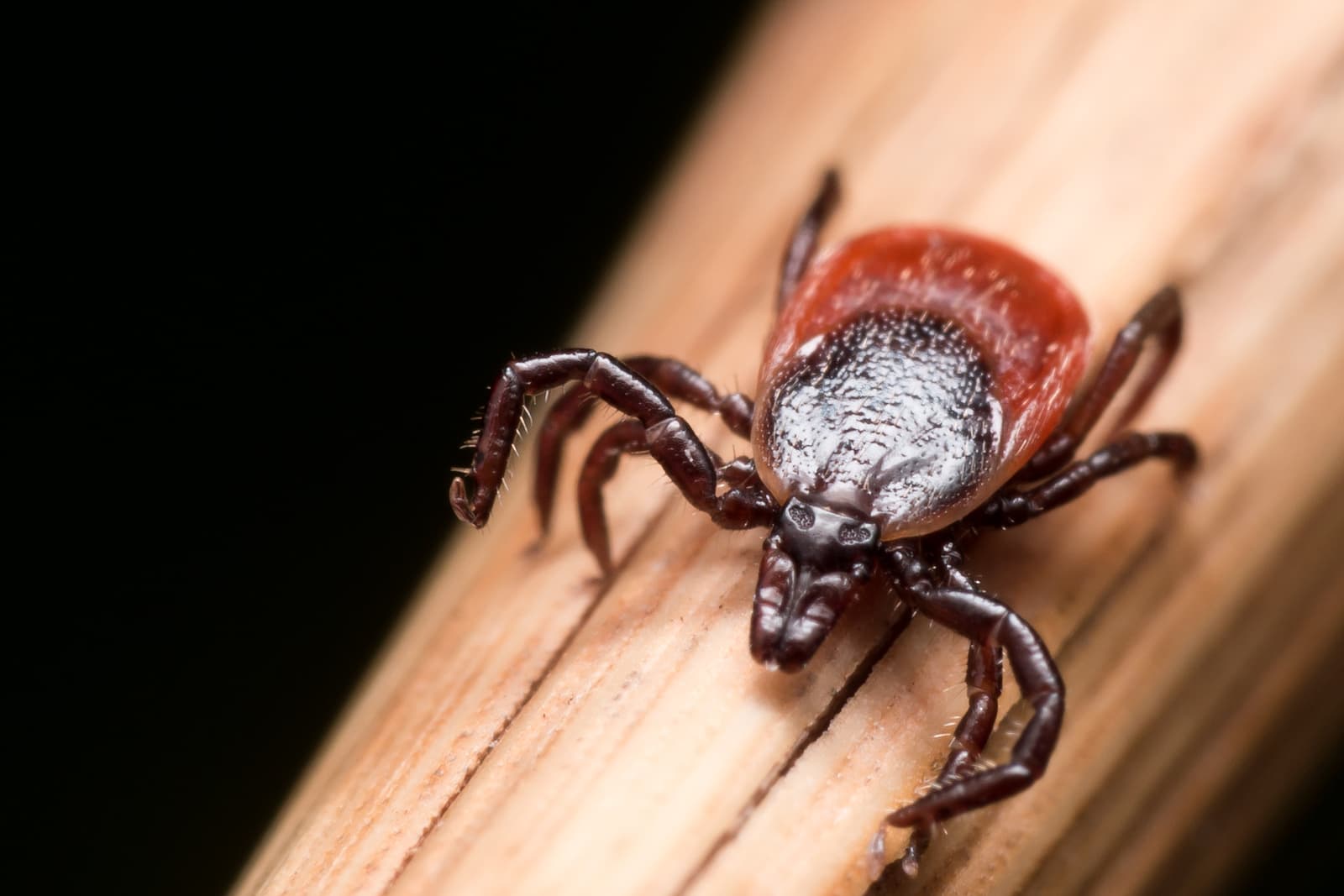
Preventing tick bites has always been important. These days it may be more urgent than ever. An infected blacklegged tick can transmit a potentially deadly virus in as little as 15 minutes. That means a tick picked up during a nice long walk in the woods or an afternoon in the garden might cause serious harm before you even realize it is there.
Ticks are not merely disgusting little hitchhikers. Their bites can cause disability and even death.
The Powassan Virus Raises the Stakes
Most people have heard of Lyme disease and Rocky Mountain Spotted Fever (RMSF). Both are bacterial infections, and they can cause a lot of harm. These tick-borne infections should be treated with antibiotics such as doxycycline when they are recognized promptly. But some people still suffer after what seemed like the correct treatment. More about that shortly.
Powassan virus is different.
There is no antibiotic for it. There is no antiviral medicine approved to treat it. There is no vaccine to prevent it.
Although Powassan virus disease remains relatively uncommon, the Centers for Disease Control and Prevention (CDC) reports that cases have been increasing. Most US cases occur in the Northeast and Great Lakes regions from late spring through mid-fall.
If you look at the CDC’s map, you may think that you have nothing to worry about. But tick-borne diseases have a nasty habit of spreading. We have seen that with Lyme disease and other tick-borne infections.
Reports from the field suggest that cases of Powassan infection are increasing, perhaps because temperatures have been rising. That allows ticks to keep migrating. The virus can be carried by blacklegged ticks, also known as deer ticks, as well as groundhog and squirrel ticks.
What makes Powassan especially frightening is speed. Lyme disease bacteria generally take much longer to move from an attached tick into a person. Powassan virus, however, can be transmitted in as little as 15 minutes after a tick attaches. That does not leave much time for a tick check to save the day.
How Would You Know It’s Powassan?
Initial symptoms may include fever, headache, vomiting and muscle weakness. Those are nonspecific symptoms and could represent a number of tick-borne infections. But if the Powassan virus invades the central nervous system, it can cause meningitis or encephalitis (inflammation of the brain). Severe symptoms may include confusion, loss of coordination, difficulty speaking, memory loss, partial paralysis and seizures.
Roughly 10 to 15 percent of reported patients with neuroinvasive Powassan disease die. About half of those who survive severe disease are left with long-lasting neurological problems such as recurring headaches, weakness, paralysis or memory difficulties.
Doctors can provide supportive hospital care, but there is no medicine that treats or eliminates the virus. That is why preventing tick bites in the first place is so essential. More about that momentarily!
Ticks Can Transmit Many Dangerous Infections
We know too many people who have experienced bouts of Rocky Mountain spotted fever or Lyme disease. A dear friend and extraordinary medical researcher, Dr. Neil Spector, died because of complications of Lyme disease. For us, such infections are personal.
Other tick-borne illnesses include:
- Anaplasmosis
- Babesiosis
- Borrelia miyamotoi disease
- Colorado tick fever
- Ehrlichiosis
- Heartland virus disease
- Powassan virus disease
- Southern tick-associated rash illness, or STARI
- Tick-borne relapsing fever
- Tularemia
- Pacific Coast tick fever
Ticks can also trigger alpha-gal syndrome, a potentially serious allergy to red meat and other mammalian products.
You definitely want to avoid these conditions by preventing tick bites.
How to Avoid Rocky Mountain Spotted Fever By Preventing Tick Bites
Q. Last summer I got Rocky Mountain spotted fever from a tick bite while working in my yard under the pine trees. I don’t remember seeing any spots, but I felt lethargic and ached all over.
That’s why I went to an urgent care clinic. They drew a blood sample and later called to tell me I tested positive for RMSF. I took the prescribed antibiotic, but that fever really took the starch out of me for the rest of the summer.
I’ve read that permethrin-treated clothing can discourage ticks. How good is it? I’d rather be proactive than reactive.
A. Tick-borne diseases can sometimes be hard to diagnose. Even blood tests are not always accurate early in an illness. That is why prevention is so critical at this time of year.
Wearing permethrin-treated clothing can significantly reduce the likelihood of tick bites. One study found that people wearing treated clothing received about one-third as many tick bites as those wearing untreated clothing. Other research involving outdoor workers has also found substantial protection from factory-treated garments.
Preventing tick bites is the best way to avoid infections such as Rocky Mountain spotted fever. Treating shoes, socks, pants and wearing gaiters with permethrin can be especially helpful because many ticks first make contact below the knee.
It is also important to do a careful tick check whenever you come in from outside. Rocky Mountain spotted fever can be life-threatening if it is not treated promptly.
The Death of Dr. Neil Spector
Our hearts broke when Neil Spector, MD, passed away on June 14, 2020, at the age of 63. Dr. Spector was a giant in the medical community and a dear friend of the Lyme community.
Our interviews with Dr. Spector reveal the challenges of getting an accurate Lyme disease diagnosis. To learn about this cancer researcher and Lyme disease victim, please read his obituary at this link.
The Importance of Preventing Tick Bites
This reader felt cooped up during the COVID-19 pandemic. He wanted to get outdoors, but did not want to get too close to other people. He asked how he could avoid picking up ticks while walking outside.
Q. I can’t stand staying inside all the time, but I don’t like walking on a path with lots of other people. That means I have to step into the underbrush or go hiking in the woods.
I am concerned about ticks. A friend had Lyme disease and it was devastating. What’s the best way to avoid tick bites?
A. Even when it is hot, wear long pants. Tuck the pants into your socks so ticks cannot crawl underneath the cuffs. Light-colored clothing may make crawling ticks easier to spot.
Use an EPA-registered tick repellent on exposed skin according to the label. Options may include DEET, picaridin, IR3535, oil of lemon eucalyptus, para-menthane-diol or 2-undecanone.
Permethrin is different from ordinary skin repellents. It is intended for clothing and gear, not direct application to the skin. It can repel or kill ticks that crawl onto treated fabric.
Preventing Tick Bites With Gaiters
An alternative to tucking pants into socks is to wear gaiters. These are fabric coverings that wrap around the ankles and lower legs. Depending on their design, they may extend from the top of the shoe to the ankle, mid-calf or knee. Terry and I wear knee-length gaiters whenever we go walking in the woods, which we try to do almost every day. We also spray permethrin on our hiking shoes.
Hikers often use gaiters to keep stones, mud, water and debris out of their shoes. Properly fitted gaiters can also make it harder for ticks to crawl inside pant legs.
For tick protection, look for gaiters that:
- Fit snugly around the shoe or boot
- Cover the gap between shoes and pants
- Close securely without leaving openings (we like Velcro for this)
- Reach far enough up the leg to overlap the pants
- Are light enough to wear comfortably in hot weather
- Have been factory treated with permethrin or can be safely treated according to a permethrin product label
We use Outdoor Research Bugout Rocky Mountain High Gaiters. We have no relationship with the company.
Here are some other options for preventing tick bites:
Tick Gaiters and Lymeez Tick Gear are examples of products specifically designed with ticks in mind. Product availability and designs may change, so shoppers should verify that the gaiters provide complete ankle coverage and determine whether the permethrin treatment is built in or must be applied at home.
Gaiters should normally be worn over the bottom of the pants and over the tops of shoes or boots. The goal is to remove the easy openings that let ticks crawl under clothing.
Permethrin-treated gaiters may be especially useful because ticks frequently wait on low vegetation and latch onto shoes, socks or lower pant legs as a person passes. When ticks encounter treated material, they may become irritated, lose their footing or die.
Gaiters are not magical force fields, however. They protect only the areas they cover. Ticks can also reach people from brush, shrubs, pets, clothing or gear. That is why gaiters work best as one part of a broader strategy.
A Layered Strategy for Preventing Tick Bites
No single precaution is perfect. We favor a belt-and-suspenders approach:
- Avoid tick habitat when possible. Walk near the center of trails and stay away from tall grass, leaf litter and dense brush.
- Wear protective clothing. Choose closed shoes, long pants and long sleeves when practical. Tuck pants into socks or cover the cuffs with well-fitted gaiters.
- Treat clothing and gear. Apply permethrin only to items listed on the product label. Shoes, socks, gaiters and pants are especially important. Let treated items dry completely before wearing them.
- Use repellent on exposed skin. Follow the label instructions carefully. Do not assume that a natural-sounding product will provide adequate protection.
- Check yourself frequently. Because Powassan virus may be transmitted so quickly, do not wait until bedtime. During a long hike or gardening session, stop periodically to inspect shoes, gaiters, pants and exposed skin.
- Check again when you get home. Examine the scalp, hairline, ears, armpits, waist, groin, backs of the knees and between the toes. A mirror or a partner can help locate ticks in hard-to-see places.
- Shower promptly. Showering may wash away ticks that have not yet attached and provides another opportunity to inspect the skin.
- Deal with clothing immediately. Do not toss hiking clothes onto a bed or upholstered chair. CDC has advised using a hot dryer to kill ticks on dry clothing. Washing alone may not reliably kill them, particularly in cool or warm water.
- Check children and pets. Ticks can hitch a ride indoors on dogs, backpacks and outdoor equipment before moving to a person.
Do Not Apply Permethrin to Your Skin
This bears repeating: permethrin products intended for treating clothing should not be sprayed directly onto the skin.
Always follow the label regarding:
- Which fabrics or equipment may be treated
- How heavily to spray
- How long the item must dry
- How many washings the treatment lasts
- When it should be reapplied
Factory-treated clothing may retain protection through many washings. Home-applied products often require more frequent retreatment. The label, not guesswork, should determine when another application is needed.
Keep wet permethrin away from cats. Cats are especially sensitive to concentrated liquid permethrin before it has dried. Once treated clothing is completely dry, risk is greatly reduced, but the product directions should always take precedence.
Other Approaches to Preventing Tick Bites
Bill shared this “home remedy” for preventing tick bites from his youth:
“When I was growing up in Alabama in the 1940s and ’50s, we spent a lot of time in the woods. Our mother used to make us wear long sleeves and pants and tightened the cuffs with rubber bands. Then she sprinkled sulfur powder around our wrists and ankles before we went out. I don’t ever remember having a tick on any of us. I wish I knew if there was any scientific reason behind this.”
Sulfur has a long history as a pesticide and tick repellent, but we have not found strong modern clinical evidence establishing that this particular practice reliably prevents tick-borne disease. Sulfur powder can also irritate the skin, eyes or lungs. We would rely first on EPA-registered repellents and permethrin-treated clothing. But Bill is not the first reader to tout the benefits of sulfur powder on shoes and socks.
Don offers this intriguing approach for preventing tick bites:
“I read somewhere that wearing pantyhose as an additional undergarment while walking in woods or fields provides another layer of protection against ticks. I haven’t tried it myself, but perhaps other readers have.”
A tightly woven extra layer might make it more difficult for ticks to reach the skin, but pantyhose should not substitute for repellents, treated outer clothing or careful tick checks.
Jill points out that it is impossible to prevent 100 percent of tick bites:
“If you are worried about tick bites, I suggest reading two books, Healing Lyme and Unlocking Lyme. Both are written by doctors who have Lyme. No matter what you use, it is impossible to prevent 100 percent of tick bites. And all it takes is one bite to get sick. Add to your arsenal the weapons to fight off an infection if you do get bit!”
We would add Dr. Neil Spector’s book:
You may also want to listen to our podcast:
Show 1380: Avoiding Lyme and Other Tick-Borne Diseases.
Readers Offer More Advice About Preventing Tick Bites:
Lillian describes the precautions she takes:
“I live in the woods in Virginia and we have lots of deer. I wear Lymeez gaiters, socks and boots. I strip after spending time outside, which I do every day, throw clothing in the wash and scrub down in the shower right away. I have found ticks but get them off right away. This method works. I have been bitten even by a Lone Star tick, but in 20 years I have never contracted a tick-borne disease.
“Chiggers are more of a problem since you can’t see them, but the same method gets rid of them.”
We admire Lillian’s vigilance. We would make one adjustment to her routine: put dry outdoor clothing in a hot dryer before washing it, if the fabric allows. Heat is more reliable than washing for killing ticks hiding in clothing.
Lillian is correct that Lyme disease is usually not transmitted immediately after a blacklegged tick attaches. Powassan virus changes the equation, however. Because transmission can occur much faster, removing a tick promptly remains important, but preventing attachment is even better.
Jan warns that gaiters cannot protect every part of the body:
“I don’t care what the specialists claim. Ticks do climb trees. I’m always picking them off my head. I get them standing on my tree-lined sidewalk.”
Ticks do not normally leap or fly from trees onto passing people. Most species climb grasses, weeds, shrubs or low vegetation and wait with their front legs extended—a behavior known as “questing.”
Nevertheless, Jan’s experience makes an essential point: ticks can end up on the upper body. They may crawl upward after contacting clothing, fall from pets or gear, or be encountered while someone brushes against vegetation. Hats, treated clothing and a head-to-toe inspection are important even when gaiters are worn.
What Should You Do If You Find an Attached Tick?
Use fine-tipped tweezers to grasp the tick as close to the skin as possible. Pull upward with steady, even pressure. Do not twist, jerk, burn, smother or coat the tick with petroleum jelly.
After removal, clean the bite area and your hands. A dab of alcohol is not a bad idea. Note the date and, if possible, save the tick in a sealed container or take a clear photograph for identification.
Contact a healthcare professional if you develop fever, headache, rash, unusual fatigue, muscle aches, weakness, facial drooping, confusion, difficulty speaking, loss of coordination or other neurological symptoms after a possible tick exposure.
Do not assume that the absence of a bull’s-eye rash rules out a tick-borne disease. Many infections do not cause that classic rash, and many people never notice the tick that bit them.
Confusion, seizures, trouble speaking, severe weakness or loss of coordination require immediate medical attention.
Two Physicians Describe What It Is Like to Have Lyme Disease
Preventing tick bites is the first step to avoiding Lyme disease and other tick-borne illnesses. Getting a proper diagnosis and prompt treatment if you do become sick is critical.
Preventing tick bites is the first step to avoiding Lyme disease or other tick-borne illnesses. Getting a proper diagnosis and prompt treatment if you end up with a tick-borne illness is critical.
If you would like to listen to two powerful People’s Pharmacy interviews with Dr. Spector, here are the links.
Show 996: Mystery and Lyme Disease Misdiagnosis
Dr. Spector describes his misdiagnosis with Lyme disease and shares the reason he wrote the book: Gone in a Heartbeat: A Physician’s Search for True Healing.
Show 1081: What Do You Need to Know About Lyme Disease:
Lyme disease isn’t always easy to diagnose, and it can cause serious long-lasting damage. How can you be alert for this tick-borne infection?
Why This Matters
People often think the solution to ticks is simple: come home, take a shower and perform a careful inspection.
That is still excellent advice, but Powassan virus has changed the stakes. When an infected tick may transmit a dangerous virus within 15 minutes, finding it several hours later may not be soon enough.
You do not need to stay indoors all summer. You do need to respect ticks.
Wear protective clothing. Consider permethrin-treated pants, socks and gaiters. Apply an effective repellent to exposed skin. Check yourself while you are still outside, not just when the day is over.
Ticks are tiny. The harm they cause can be enormous.
Please Share Your Approach to Preventing Tick Bites
Please share your own experience with ticks in the comment section below. Do you wear gaiters or permethrin-treated clothing? What strategies have worked best for preventing tick bites?
Did you find this article helpful? Were you aware of Powassan virus and the 15 minute concerns? What about gaiters? Was that information useful? If your answer to any of these questions was yes, please share this article with friends and family. You can help keep The People’s Pharmacy moving forward by spreading the word. Thank you for your support.
Citations
- Mitchell C et al, "Protective effectiveness of long-lasting permethrin impregnated clothing against tick bites in an endemic Lyme Disease setting: A randomized control trial among outdoor workers." Journal of Medical Entomology, Sept. 1, 2020. DOI: 10.1093/jme/tjaa061