by Suzanne Robotti, MedShadow Foundation
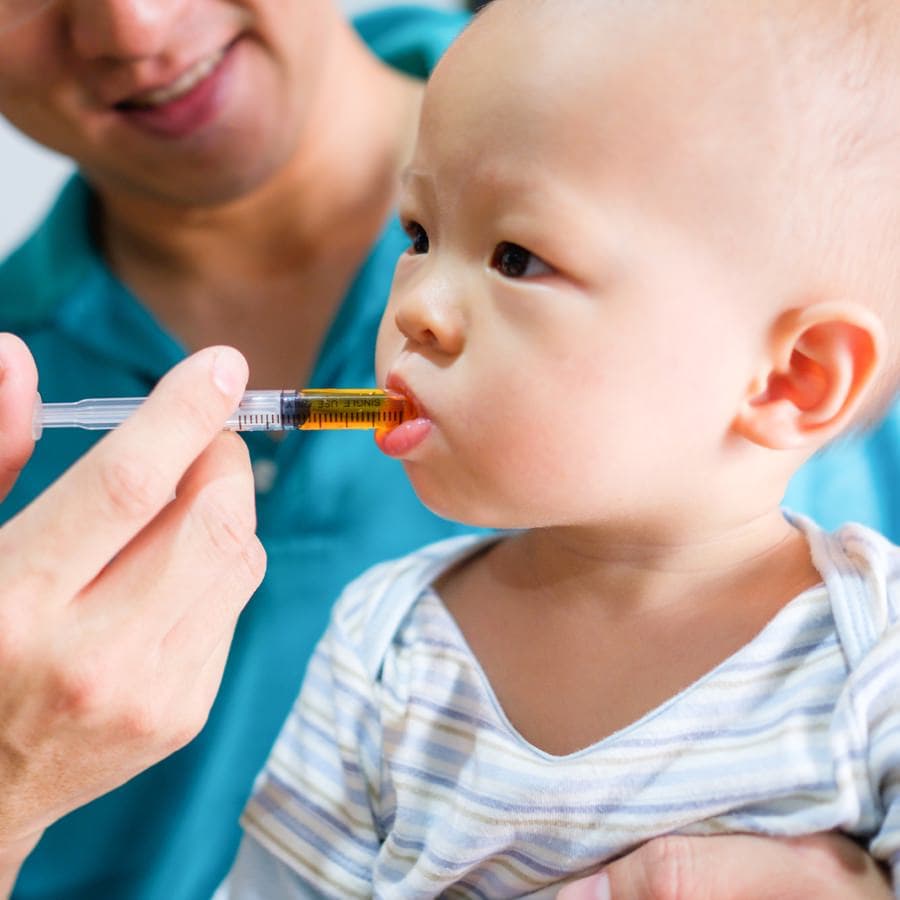
The American Academy of Pediatrics (AAP) released a policy statement this week on the bioequivalency of generic drugs to brand name drugs. Their conclusion states that generics should be trusted and prescribed. This completely overlooks the overwhelming scientific and government data demonstrating that due to the lack of oversight and enforcement by the woefully underfunded and underpowered Food and Drug Administration (FDA), the quality of generic drug manufacturing — regardless of countries of origin — cannot be assured of bioequivalent quality to branded drugs.
Meanwhile, 92% of the drugs Americans take are generic.
Problems with Generic Drugs
At the nonprofit I founded, MedShadow, we have teamed with several other independent health sources, including the People’s Pharmacy, to report on the growing body of evidence that all is not well with the generic drug manufacturing process.
For decades, the FDA has assured the bioequivalency of generic drugs to the branded drugs they replicate. The generics that the FDA approves are supposed to be essentially identical to the brand-name drug, but have the advantage of being less expensive. This lowers the cost of disease care for patients and insurance companies and helps avoid drug shortages.
What Is the Evidence on Generic Drugs?
But the government’s claims have fallen apart in recent years:
•The FDA’s own studies have identified problems, such as major fraud in a testing facility in India that resulted in the loss of bioequivalency status for all generic drugs approved for marketing by the FDA based on testing that came from that Indian facility for the previous two-year period. The status of about 400 drugs changed to nonbioequivalent in the industry reference database called the “Orange Book.” The Orange Book lists the status of generic drugs according to the FDA. Drugs are listed as bioequivalent or not bioequivalent in this difficult-to-use and little-known reference site. Most egregiously, the FDA continued to allow distribution of those drugs in the U.S. with no direct notification to prescribers or patients.
•A series of studies by drug testing company Valisure, several in partnership with the U.S. Department of Defense, have consistently identified serious manufacturing defects, including lack of bioequivalency, in 10% or more of generic drugs tested. You can watch Valisure’s founder, David Light, Joe Graedon, and author Katherine Eban discuss these issues and findings at length in this webinar, Investigating Generics: How Poor Drug Quality Generics Cause Harm.
•The bipartisan U.S. Senate Committee on Aging has held five public hearings on drug safety in the past two years, including one this Wednesday, June 3, titled “Poisoned Pills: The Human Cost of Dangerous Foreign Drugs.” The co-chairs are Senators Rick Scott (R–Fla.) and Kirsten Gillibrand (D–N.Y.). The committee’s recent focus has been on making drug labels more transparent and useful for consumers and healthcare providers.
•Two New York Times-bestselling books have documented widespread problems in India and China manufacturing: Bottle of Lies by Katherine Eban and China Rx by Rosemary Gibson.
What is the AAP (American Academy of Pediatrics) thinking? How can they overlook all of this data from the government, investigative journalists, and respected scientists?
As Joe and Terry Graedon note in their coverage of generic drug failures,
“Equally alarming has been the absence of a reaction from organizations that are supposed to support patients: The American Association of Retired Persons (AARP), the National Consumers League (NCL), the Consumer Federation of American (CFA) and Consumer Reports (CR). Where is the outrage?”
Pediatric drugs have not been studied as a group, but many of the drugs studied are prescribed by pediatricians and family practitioners. MedShadow has deeply studied the problem and has hosted webinars and published interviews with leading scientists in this field. The possibility that the AAP is somehow unaware of this controversy is mind-boggling.
The sad fact is generic drug bioequivalency cannot be assured and certainly not guaranteed. But, isn’t that what the children of America deserve?
About the Author
Suzanne Robotti founded the MedShadow Foundation in 2013, a nonprofit that helps people understand the risks and benefits of medicines. She writes and speaks extensively on known and lesser known side effects, interactions, and supply chain issues related to OTC and prescription drugs. As a patient safety advocate, Robotti served on the FDA Advisory Committee on Drug Safety and Risk Management as the only consumer representative alongside doctors and pharmacists from 2017-2024. Read her full bio and subscribe to the newsletter at medshadow.org.