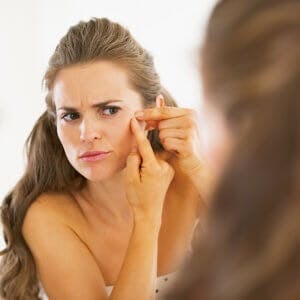
Many people think of acne as a particularly adolescent affliction. While it is true that many teenagers suffer with the zits and blemishes of acne vulgaris, grown-ups are not immune to this condition. Multiple factors contribute to acne, including inflammation, hormonal imbalances, bacterial overgrowth and overproduction of skin oils (sebum) in the hair follicles. Addressing any of these, or better yet, several at a time, could help with both adolescent and adult acne.
Alternatives to Accutane for Adult Acne
Q. The dermatologist prescribed Accutane to treat my acne. When I looked it up, I found it has a lot of serious side effects. I’d prefer not to take those risks. Can I clear my acne without this medicine?
A. If your dermatologist is suggesting isotretinoin (Accutane), we assume that you have already tried over-the-counter medications such as benzoyl peroxide, alpha-hydroxy acid or sulfur. The oral retinoid isotretinoin is by far the most potent agent against acne. Doctors usually reserve it to treat severe cases.
The most serious side effects of Accutane are birth defects for babies exposed in utero. As a result, the prescription process is carefully regulated. Other side effects include nosebleeds, cracks at the corners of the mouth, chapped lips, dry skin, hair loss, eczema and sensitivity to sunburn. Some people have experienced other serious reactions such as depression, pancreatitis, muscle pain, hepatitis and pseudotumor cerebri (Medical Letter on Drugs and Therapeutics, Feb. 5, 2024).
There are also a number of topical prescription medicines, including antibiotics such as clindamycin (Cleocin T), erythromycin (Erygel) or minocycline (Amzeeq). Topical retinoids such as adapalene (Differin), tazarotene (Tazorac), trifarotene (Aklief) or tretinoin (Retin-A) can often be effective as well. Dermatologists sometimes recommend another topical medication, azelaic acid, either by itself or in combination with one of these other medications.
A change in diet may also be helpful. Some people find that avoiding processed foods as well as milk and dairy products can significantly reduce skin lesions. You can read more about these approaches in our eGuide to Acne Solutions.
Could You Treat Adult Acne by Changing Your Diet?
Q. At 54, I have suffered with adult acne from age 25. I tried every cream and antibiotic my doctors prescribed. In desperation, I even took Accutane twice! A hormone test was fine, and I was stuck with this embarrassing problem.
Two years ago, I took a seven-day cruise and returned with clearer skin. In a burst of insight, I figured the source of my acne might be environmental. I asked the doctor to test me for food allergies.
This cost $400 but it was worth every penny. I am allergic to bananas, pineapple, asparagus, celery and broccoli. I went off them immediately and after a few months my face cleared up. Please suggest food allergy testing for people with adult acne. My face is clear now, but if I eat celery from a veggie plate, I break out within 12 hours.
A. Dermatologists used to think that diet did not have any impact on acne. That belief is changing now, though. A review in the International Journal of Dermatology (April, 2009) found that acne may be linked to consumption of foods that raise blood sugar quickly, as well as to dairy products. A large epidemiological study, Nutri-Net Santé, included 24,452 French volunteers (JAMA Dermatology, Aug. 1, 2020). Based on the reports of these participants, the researchers concluded that consuming sugary beverages, milk, or processed foods high in sugar and fat are linked to adult acne.
Dermatologist Patricia Farris cites scientific evidence for a low-sugar diet in the book, The Sugar Detox. Although there is not yet conclusive data linking food allergies to acne, your experience is intriguing. Perhaps it will inspire others to share their experiences in the comment section below.
Citations
- "Drugs for Acne." Medical Letter on Drugs and Therapeutics, Feb. 5, 2024. DOI: 10.58347/tml.2024.1695a
- Penso L et al, "Association between adult acne and dietary behaviors: Findings from the NutriNet-Santé prospective cohort study." JAMA Dermatology, Aug. 1, 2020. DOI: 10.1001/jamadermatol.2020.1602