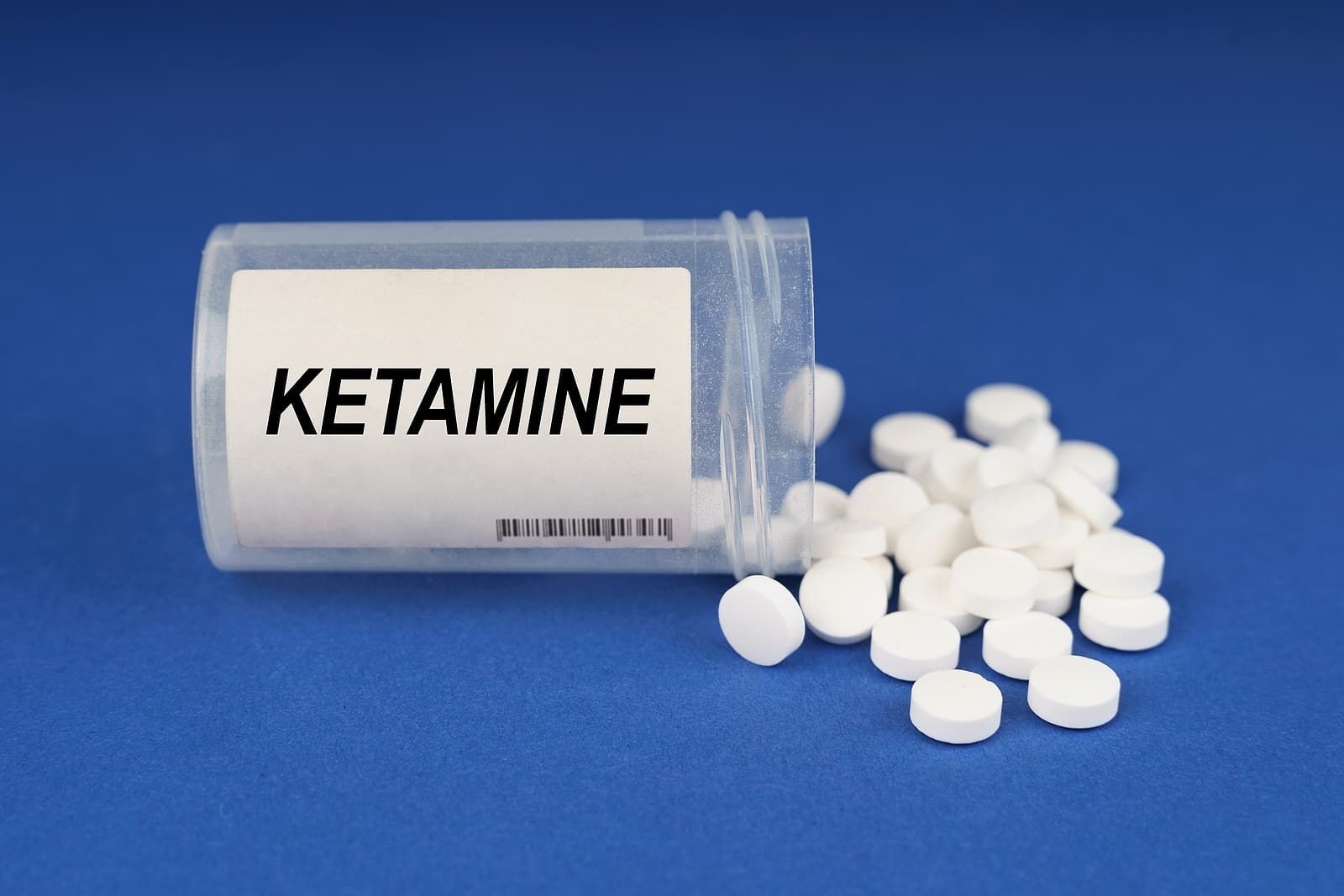
Oral ketamine has been a tantalizing possibility for people with hard-to-treat depression. Instead of traveling to a ketamine clinic for pricey IV infusions or using a nasal spray (esketamine, aka Spravato) under medical supervision, what if a long-acting pill could be taken at home? A new study in JAMA Network Open (June 24, 2026) suggests that a prolonged-release oral ketamine tablet may ease depression quickly with fewer of the “out-of-body” reactions associated with other ketamine treatments. But there is an important catch: the oral ketamine pill did not beat placebo at the study’s main endpoint after three weeks. That means this is not a miracle-drug story. It is a “maybe we are getting closer” story. Please read on for the latest on ketamine against depressi0n.
An Anesthetic Against Psychological Depression?
Drug discovery can sometimes seem interminably slow. A small study published in Biological Psychiatry (Feb. 15, 2000) was one of the first placebo-controlled trials to demonstrate that low-dose ketamine infusions could quickly decrease depressive symptoms.
In 2002 a study of depressed people undergoing orthopedic surgery found that those who received ketamine as their intravenous anesthetic had improvement in their depressive symptoms and suicidal tendencies (Anesthesia and Analgesia, July, 2002). But intravenous infusions are time consuming and expensive. What about oral ketamine to treat depression?
A Patient’s Story:
“When I broke my leg a few years ago I needed surgery to reset the bone correctly. The anesthesiologist gave me intravenous ketamine to put me to sleep. As I was recovering from the anesthesia, I experienced an amazing change in my mood, like a cloud lifting from my brain.
“I have suffered from depression almost all my life. It is cyclical and has not responded to medication for almost 50 years.
“The antidepressant effect of ketamine seemed to last. I have tracked my depression carefully for decades. During my next down cycle, the depression was much reduced.”
The FDA and Oral Ketamine
The FDA has not approved oral ketamine for depression even though there is growing evidence that such a convenient form of ketamine may also ease symptoms of depression (Nature Medicine, June 24, 2024). What makes oral ketamine intriguing is that it seems to help patients who have not benefitted from conventional antidepressant treatments. Another benefit: side effects are less common.
Will the FDA ever approve oral ketamine to treat depression? Do not hold your breath. The agency likes randomized controlled trials. When an old medication such as ketamine gets new attention, there is rarely a drug company willing to spend big bucks to test it adequately for FDA analysis. That may change with a new long-acting oral ketamine formulation.
Why Oral Ketamine Keeps Getting Attention
There is a reason oral ketamine creates such interest. Many people with severe depression have tried multiple antidepressants without meaningful relief. Some have lived with depression for years or even decades. Ketamine appears to work through brain pathways that are different from the traditional serotonin and/or norepinephrine-based antidepressants such as sertraline, fluoxetine, duloxetine, desvenlafaxine, escitalopram or venlafaxine.
That does not make ketamine magic. It does not work for everyone. It can cause serious adverse reactions. And it has a potential for misuse. But for people with treatment-resistant depression, the possibility of a fast-acting treatment is hard to ignore.
The big question has always been whether ketamine could be delivered in a way that is convenient, affordable, effective and safe.
A VERY Quick History of Ketamine
The first study of ketamine as an injectable anesthetic was published in 1965. It was a unique medication that offered both fast acting sedation and impressive pain relief. It did these two things without the worrisome respiratory depression sometimes seen with other anesthetic agents.
I have had a personal interest in ketamine for decades. That’s because my dear friend, advisor and professor of neuropharmacology at the University of Michigan was Edward Domino, MD. I began my study there in 1969. A few years earlier, though, Dr. Domino and his co-authors published a study about a new medication labeled CI-581 (Clinical Pharmacology and Therapeutics, May-June, 1965). They described it as a “Dissociative Anesthetic.”
Dr. Domino was enthusiastic about ketamine because it had dual properties. It put people to sleep quickly, and it produced a “profound analgesia.” In other words, it was amazingly effective against severe pain. That meant that burn patients, who were often in extreme distress, could be put to sleep and treated successfully with ketamine as their anesthetic and analgesic.
The FDA approved ketamine as an injectable anesthetic in 1970 under the name Ketalar. You can read more about the pros and cons of ketamine at this link.
Ketamine Infusions for Depression
Ketamine is no longer under patent protection. That means it is a relatively inexpensive generic anesthetic. It is also being prescribed off label to treat depression at ketamine clinics around the country.
The FDA does not regulate the practice of medicine. Once a drug is approved for one purpose, it can be used for just about anything a physician deems appropriate. That has allowed hundreds of ketamine clinics to proliferate. Some estimates put the number of such treatment centers at over 500.
Because the FDA has not approved intravenous ketamine for depression, insurance rarely, if ever, pays for such treatment. It’s a billion-dollar industry. A single infusion might cost as much as $500 to $800 and a full course of treatment might run over $4,000. That means patients are paying a lot of money out of pocket for an unapproved use.
It also takes time. The patient has to travel to the clinic. The infusion can last up to an hour or longer, depending upon the protocol. And there can be side effects. Patients often have to remain at the clinic for some time because of “dissociation.”
Remember, my mentor, Dr. Domino, described ketamine as a “dissociative” anesthetic. Even in the lower doses used during treatment for depression some patients describe an “out-of-body” sensation. Others may feel dizzy or drowsy and cannot drive. Additional adverse reactions might include elevated blood pressure, nausea, headache, confusion or even hallucinations.
The Nasal Spray Esketamine (Spravato)
There is substantial evidence that ketamine infusions do help some people who have been suffering from life-long depression. Here is a link that describes this effect. But as described above, the treatment is pricey and comes with a fair number of adverse reactions.
The FDA approved a chemical cousin of ketamine called esketamine (Spravato) in 2019. It is a nasal spray. It is not a do-it-yourself project, however.
The FDA requires this oversight:
“SPRAVATO must be administered under the direct supervision of a healthcare provider. A treatment session consists of nasal administration of SPRAVATO and post-administration observation under supervision.
“Respiratory Status Assessment During Treatment
-
Monitor patients for changes in respiratory status for at least 2 hours (including pulse oximetry) at each treatment session.”
Spravato is administered twice per week from weeks 1 to 4 and then once weekly from weeks 5 to 8. After week 9 the patient receives a nasal spritz every week or every two weeks. It is often sold and administered at a doctor’s office.
A few years ago this is what we found at Drugs.Com:
“The cost for Spravato nasal spray (28 mg/device (56 mg dose)) is around $823 for a supply of 2 spray, depending on the pharmacy you visit. Quoted prices are for cash-paying customers and are not valid with insurance plans. This price guide is based on using the Drugs.com discount card which is accepted at most U.S. pharmacies.”
A quick scan of the web reveals that various organizations may charge thousands of dollars in the first month and anywhere from about $600 to $1,500 a month thereafter. That’s without insurance.
The Growing Case for Oral Ketamine Against Depression
There has been growing recognition that oral ketamine represents another option for treating depression. A systematic review published in the World Journal of Biological Psychiatry (Sept-Oct, 2023) reviewed the use of oral ketamine for depression.
The authors describe the nature of their analysis:
“Twenty-two studies, including four randomized clinical trials (RCTs), one case series, six case reports, five open-label trials and six retrospective chart review studies involving 2336 patients with depression were included. All included studies reported significant improvement following ketamine administration. Ketamine was well tolerated without serious adverse events.”
Their conclusions regarding oral ketamine for depression:
“Taken together, preliminary evidence suggests the potential for antidepressant effect of oral ketamine. However, further research with large sample size and long follow-up period is needed to better determine the antisuicidal effect and efficacy in treatment-resistant depression.”
That cautious conclusion was appropriate in 2023. It is still appropriate now.
Oral Ketamine in 2024: The First Big Buzz
A larger study was published on June 24, 2024 (Nature Medicine, June 24, 2024). It evaluated an extended-release oral formulation of ketamine called R-107. People who received the ketamine pills were significantly less likely to experience a return of their depression compared to those on placebo.
These were patients who had treatment-resistant depression (TRD). In other words, these people had not responded well to conventional treatments for depression.
The authors summarized their findings this way:
“In conclusion, extended-release R-107 [oral ketamine] tablets were effective, safe and well tolerated in an enriched patient population with TRD [treatment-resistant depression]. Use of an extended-release oral dosage ketamine formulation may be advantageous compared with intranasal or intravenous dosing, in terms of reduced intensity of dissociation, lower risk of abuse, reduced frequency and intensity of sedative and cardiovascular side effects, and improved convenience for administration in the community.”
The word “enriched” is important. In plain English, that means the researchers first identified people who seemed to respond to oral ketamine. Then they randomized those responders to continue oral ketamine or switch to placebo. That design can be useful, but it can also make a treatment look better than it might appear in a broader, all-comers population.
The New Oral Ketamine Study in JAMA Network Open
Now comes the latest research, published in JAMA Network Open (June 24, 2026). The title was:
“Oral Prolonged-Release Ketamine for Treatment-Resistant Depression: Two Randomized Clinical Trials.”
The formulation was called KET01. It is a prolonged-release tablet containing racemic ketamine. “Racemic” means it contains both mirror-image forms of the ketamine molecule. Spravato, by contrast, contains only esketamine, one of those mirror-image forms.
The investigators conducted two randomized trials.
The first was a phase 1 crossover study in 26 healthy male volunteers. They compared one dose of oral KET01, 240 mg, to the maximum approved dose of intranasal esketamine, 84 mg.
The second was a phase 2 trial in 122 adults with treatment-resistant depression. These patients had failed to respond to at least two antidepressant treatments during their current depressive episode. They were randomly assigned to receive oral KET01 at 120 mg per day, KET01 at 240 mg per day, or placebo for three weeks. The oral ketamine was added to their ongoing standard antidepressant treatment.
What Did the Oral Ketamine Study Find?
Here is the plain-English version.
The oral ketamine pill did not produce much “dissociation.” That is the odd feeling my old mentor, Dr. Ed Domino described back in 1965. It creates a sense of disorientation and distorted reality. Some people have described it as an out-of-body feeling that can be disquieting.
That is a big deal. In the early clinical trials of intranasal esketamine (Spravato), patients commonly reported some degree of dissociation: a kind of perceptual distortion or depersonalization. Oral KET01 did so in only 1 out of 26. That means the nasal spray often produced altered sensations, while the oral prolonged-release pill rarely did.
The oral ketamine pill also did not produce the rapid increases in pulse and blood pressure that may be seen with intranasal esketamine. That also matters, because ketamine-based treatments can sometimes raise blood pressure.
What About Depression?
This is where the story gets complicated. In the phase 2 trial, the higher dose of oral ketamine, 240 mg per day, reduced depression scores more than placebo at day 4 and day 7. In other words, the pill appeared to work quickly.
But by day 21, the difference between oral ketamine and placebo was no longer statistically significant. That was the primary endpoint of the trial. When a study misses its primary endpoint, we have to be careful. It does not mean the drug failed completely. It does mean the study did not prove what it set out to prove.
At day 21, 47.5% of people taking 240 mg of oral ketamine had a clinical response, compared with 37.5% taking placebo. Remission occurred in 40% of those on the higher-dose oral ketamine compared with 25% on placebo. Those numbers are interesting, but they are not definitive.
The placebo response was also substantial. That happens frequently in depression trials. People who enroll in clinical trials often receive more attention, monitoring and support than they usually get in ordinary care. That alone can help.
Oral Ketamine Without the “Out-of-Body” Experience?
One of the fascinating findings from the JAMA Network Open study is that the oral prolonged-release formulation produced very little dissociation. Some researchers have wondered whether the dissociative experience is part of ketamine’s antidepressant effect. In other words, do people need to feel “weird” or “out of body” for the drug to work?
This study suggests the answer may be no. The early improvement in depression occurred without much dissociation. That could be very important if future research confirms it.
The JAMA Network Open commentary (June 24, 2026) accompanying the study was appropriately cautious. The author noted that the evidence from controlled trials is still not sufficient to support oral ketamine for treatment-resistant depression, especially given the widespread community use of ketamine lozenges and other compounded products.
We agree. The new research is encouraging, but it is not a green light for casual home use. The company that is developing KET01 (under the brand name Ketabon) is HMNC Brain Health in Munich, Germany.
Be Careful with Ketamine
There are reasons to be careful with ketamine. The FDA has approved ketamine as an anesthetic. It has not approved ketamine for any psychiatric disorder, including depression. The agency has also warned about compounded ketamine products, including oral formulations, for psychiatric use.
The FDA points out that compounded drugs are not FDA approved. That means the agency has not evaluated them for safety, effectiveness or quality before they are marketed.
That does not mean every compounded medication is bad. Compounding pharmacies can serve a valuable role when patients need customized formulations. But oral ketamine for depression is not like a special skin cream. Ketamine can affect the brain, blood pressure, breathing, thinking and judgment. It also has abuse potential.
The JAMA Network Open trial also raised some safety questions. Liver enzymes increased in some KET01-treated patients, though they normalized after treatment ended. One person in the high-dose group discontinued because of hypertension. Serious adverse events included suicidal depression requiring hospitalization in one patient on 240 mg daily and suicidal ideation in one patient on 120 mg daily. No suicide attempts were documented during the trial.
That is why longer studies are essential. Researchers need to know whether oral ketamine keeps working, whether liver enzyme elevations return or worsen, whether there are bladder problems, whether people misuse it, and how it performs in more diverse populations over months or years.
The Problem for Patients in the United States
The 2024 research was carried out by a team of international investigators. They were from New Zealand, Australia, Singapore, Taiwan and London. The extended-release oral ketamine pills were developed by Douglas Pharmaceuticals in New Zealand. The oral formulation was designed to gradually release ketamine over a 10-hour period of time.
There were no US researchers involved in this study. Although liquid ketamine (for IV use) is approved and widely available in the US, there are no oral formulations permitted by the FDA.
Of course, that has not stopped the illicit use of oral ketamine. It has been used as a “club drug” for many years. Some of its codenames include Special K, Kit Kat, Purple, Bump, K-land and Vitamin K (not to be confused with the actual vitamin). But the FDA is not likely to approve oral ketamine use for depression unless a drug company were to spend hundreds of millions of dollars on randomized controlled trials and submit a new drug application (NDA).
Since ketamine itself is off patent, it is unclear whether a US pharmaceutical manufacturer will take on this project. A special prolonged-release formulation might be patentable, however. If such a product eventually reaches the market, we have no idea what it would cost. We would like to imagine that an old drug in pill form would be affordable. Experience tells us not to count on that.
Final Words:
There is an enormous flaw in our medical system when it comes to developing new uses for old drugs. Ketamine has been available for more than 50 years. That means it is no longer protected by a patent and can be manufactured inexpensively.
A story on NPR from January 30, 2024 was titled “The Ketamine economy: New mental health clinics are a ‘Wild West’ with few rules.”
Here is a key quote:
“A typical dose of ketamine to treat depression, which is one-tenth the dosage used in anesthesia, costs clinics about $1, but clinics charge $600 to $1,000 per treatment.”
We interpret that to mean that an oral ketamine extended-release formulation to treat depression could be amazingly affordable. But few, if any, drug companies in the US are likely to undertake the research necessary to get the FDA to approve this generic medication.
Foreign drug companies, like Douglas Pharmaceuticals in New Zealand, or HMNC Brain Health in Munich, Germany may be reluctant to seek FDA approval in the US because of the huge expense such an undertaking would entail. Remember, the drug has been off patent for decades.
There are hundreds of old, inexpensive medications that could likely be repurposed for new uses. And yet there is no system that encourages the development of such drugs. It could likely save Americans billions of dollars and lead to amazing improvements in care. Sadly, our current medical system does not make such research and development easy.
Repurposing Older Drugs for Novel Uses
We have written about “Teaching Old Drugs New Tricks” at this link. And we have interviewed an amazing researcher, Dr. David Fajgenbaum, on our nationally syndicated radio show heard on many NPR stations. You will want to listen to his incredible story at this link.
We interviewed Dr. Fajgenbaum again about his organization, “EVERY CURE: Unlocking the hidden potential of existing drugs to save lives.” Here is a link to that radio show/podcast:
Show 1401: Are Miracle Cures Hiding in Plain Sight? Unlocking the Lifesaving Potential of Old Drugs
As for oral ketamine, we are cautiously intrigued. The newest study suggests that a prolonged-release pill may offer early antidepressant effects without much dissociation or blood pressure disruption. That could be a big advance.
But the same study did not meet its primary endpoint at three weeks. That is not a footnote. It is a warning flag. Of course typical antidepressants such as sertraline, fluoxetine and duloxetine often take several weeks to provide an antidepressant effect. Many healthcare professionals warn their patients that it can take six weeks before they experience an antidepressant effect from oral medications.
People with treatment-resistant depression deserve better options. Oral ketamine may some day be one of them. For now, it remains promising, unapproved and not ready for prime time.
Please share your thoughts about oral ketamine in the comment section below. If you have ever experienced ketamine anesthesia or received ketamine as a medication for “treatment-resistant depression,” we would love to hear from you.
Citations
- Walter, M., et al, "Oral Prolonged-Release Ketamine for Treatment-Resistant Depression Two Randomized Clinical Trials," JAMA Network Open, June 24, 2026, doi:10.1001/jamanetworkopen.2026.19121
- Rosenblat, J.D., et al, "Oral Ketamine for Depression: A Systematic Review," Journal of Clinical Psychiatry, April 16, 2019, doi: 10.4088/JCP.18r12475
- Meshkat, S., et al, "Oral ketamine for depression: An updated systematic review," World Journal of Biological Psychiatry, Sep-Oct, 2023, doi: 10.1080/15622975.2023.2169349
- Glue, P., et al, "Extended-release ketamine tablets for treatment-resistant depression: a randomized placebo-controlled phase 2 trial," Nature Medicine, June 24, 2024, doi: 10.1038/s41591-024-03063-x