
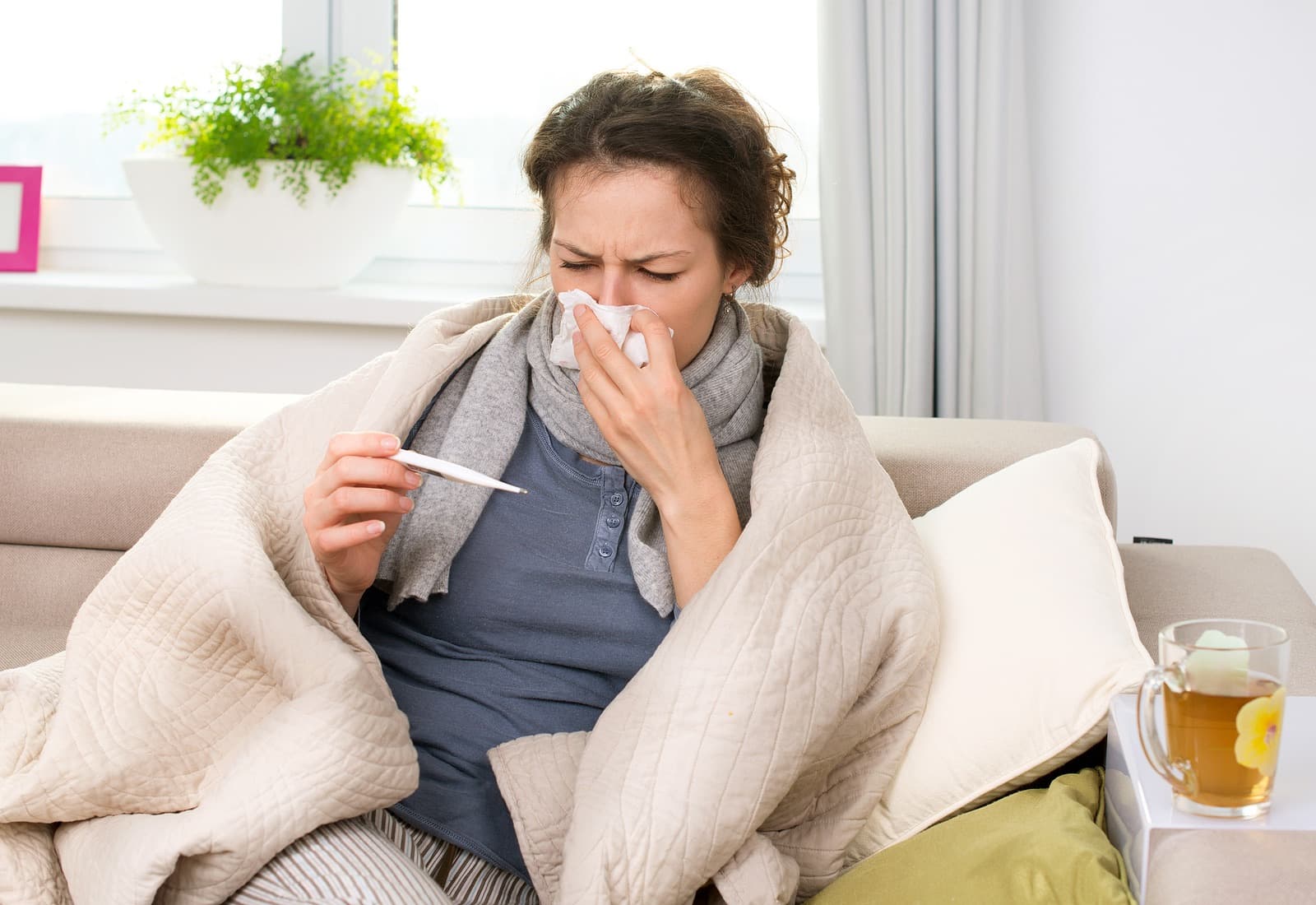
Flu season started earlier than usual, and the influenza virus may be changing in ways that could undermine vaccine protection. That is worrying enough. But there is another question that deserves attention: Could many of the cold and flu remedies Americans buy at their neighborhood pharmacies actually interfere with the body’s ability to fight off influenza?
Most people (and many healthcare professionals) believe that reducing a fever is an essential part of treating cold and flu. In fact, almost any upper respiratory tract infection that raises body temperature is treated with an antipyretic. That’s doctorspeak for fever reducer.
But research raises a provocative possibility: By suppressing fever, could we sometimes be helping the virus rather than the patient? Before we tackle that controversial question, here’s what is happening with influenza this fall.
Influenza Is Spreading Earlier Than Usual
The Centers for Disease Control and Prevention reported on October 30, 2026, that influenza activity is increasing in many parts of the country. Please note that date. It is a week old. In truth, that information is more than two weeks old. That’s because it takes time to gather the data, analyze it and have the CDC put it together in a report. As you read this, there will hopefully be a new CDC report released sometime after November 6, 2026.
Although the CDC still classifies flu activity as low, it was higher than normally expected at this time of year. If you have been reading our Health News Updates, you know that we like to use data from WastewaterScan. These folks analyze sewage from all around the US.
As of November 5, 2026 this organization reports:
“Influenza A activity is “High” with an “Upward trend in the last 21 days and high concentration”
The CDC “Estimates:”
- “CDC estimates in-season disease burden across all ages each week. CDC estimates that there have been at least 1,000,000 illnesses, 16,000 hospitalizations, and 900 deaths from flu so far this season.”
I will be honest with you. I do not believe the CDC’s estimates. The people there offer these influenza estimates each year and they always look far too high to me. That’s just my opinion, mind you. But I have been tracking the CDC’s flu reporting for a very long time.
If we examine last year’s data, for example, here is what we find:
The 2024-2025 Influenza Season:
- CDC estimated over 700,000 hospitalizations due to the flu
- The National Healthcare Safety Network reported 545,026 hospitalizations from flu
- CDC estimated 45,000 deaths
- The number of death certificates documenting influenza was 18,300
I will leave it to you to decide if the CDC’s estimates jibe with reality.
Which Viruses Are Attacking Us?
There is a particularly interesting development involving the virus responsible for most of our flu infections. Of 371 influenza A viruses subtyped by public health laboratories that week, 367 (98.9%) were H1N1. Only four were H3N2.
That is quite a huge change from last winter, when H3N2 received a lot of attention.
The CDC’s FluSight forecasting system predicts that influenza-related emergency department visits and hospital admissions are likely to increase nationally during the week ending November 14. That is not surprising.
The CDC cautions, however, that an early start does not necessarily mean this will turn into an unusually severe influenza season. Then again, if the influenza vaccine turns out to be a bad match, all bets are off.
Has the H1N1 Influenza Virus Mutated?
The short answer is yes. Influenza viruses are constantly changing their genetic makeup. Scientists call this process antigenic drift when the changes alter how the immune system recognizes the virus.
This year’s predominant influenza A strain is still a descendant of the H1N1 virus that emerged during the 2009 pandemic. But the CDC has reported unusual genetic diversity among the H1N1 viruses now circulating.
Most belong to a group scientists call D.3.1.1. Within that group, researchers have identified additional mutations, including one called G155E. Why should anyone care about a mutation with such an obscure name?
The influenza virus has a surface protein called hemagglutinin. This protein helps the virus attach to human cells. It is also an important target for antibodies produced after influenza vaccination. If mutations alter that surface protein sufficiently, antibodies generated against an earlier version of the virus may have more difficulty recognizing the new one. The World Health Organization reported in October that emerging H1N1 viruses carrying the G155E mutation were becoming more common internationally.
Will This Season’s Influenza Vaccine Still Work?
That is the question that the CDC cannot answer at this time. The FDA selected the influenza strains for the 2026-2027 vaccine in March. The H1N1 component was based on a virus called A/Missouri/11/2025.
Unfortunately, influenza viruses don’t stop evolving just because vaccine manufacturers have made their selections. Some of the more recent H1N1 variants show reduced recognition by antibodies in laboratory experiments. In its November 5, 2026, surveillance report, the UK Health Security Agency noted that some H1N1 viruses belonging to the D.3.1.1 group reacted poorly with antibodies directed against the vaccine-reference virus. Of five H1N1 samples tested in one antigenic analysis, three were similar to the vaccine strain.
That is a very small sample, so it would be a mistake to conclude that the vaccine is mismatched. CDC laboratory tests have generally found better antibody recognition of circulating H1N1 viruses, although the agency also acknowledges the emergence of genetically distinct groups.
Here is what remains unknown: Will the mutations significantly reduce vaccine effectiveness against influenza illness or hospitalization?
The People’s Pharmacy answer is we don’t know! It will take weeks before we have an accurate assessment of vaccine effectiveness for the 2026-2027 influenza season. Laboratory antibody testing is not the same as measuring how well a vaccine prevents disease in the real world.
More answers should emerge as influenza spreads and researchers compare outcomes in vaccinated and unvaccinated people. We may know considerably more after Thanksgiving, although definitive answers could take longer.
Other Respiratory Viruses Are Also Circulating
Influenza isn’t the only infection causing coughs, congestion, sore throats and fever this fall. According to the CDC’s October 30 respiratory illness update, rhinoviruses and enteroviruses remain relatively common, although their activity is declining nationally. These are among the viruses responsible for many ordinary colds.
WastewaterScan reports that both SARS-CoV-2 and EVD-68 remain “high.” The CDC suggests that parainfluenza viruses are increasing. RSV [respiratory syncytial virus] activity remains low in most areas but is beginning to increase among young children. Please do not forget that some respiratory illnesses are caused by bacteria, including the organisms responsible for whooping cough and walking pneumonia.
Symptoms cannot always distinguish these various infections from influenza. Testing may be important, especially for people at high risk of complications. As mentioned many times on this website, there are now over-the-counter influenza tests that can distinguish the flu from other infections.
Regardless of the cause, what should you do if you catch a “bug” this fall or winter?
Americans Spend Billions on Cold and Flu Remedies
When people develop the sniffles, a cough, sore throat or fever, they often head for the pharmacy. And what an astonishing business it is! According to retail market research reported in Drug Store News on January 5, 2026, Americans spent more than $7 billion on cough, cold, flu and sinus remedies through physical retail channels during the 52 weeks ending November 2, 2025.
Many familiar nighttime and daytime cold-and-flu preparations contain several ingredients. Depending on the product, these may include a cough suppressant, an antihistamine, a decongestant and a fever reducer.
The fever reducer is often acetaminophen (also known as paracetamol outside the United States). You recognize acetaminophen by its familiar brand name Tylenol.
Other people reach for ibuprofen, naproxen or aspirin to relieve fever, headache and body aches. Aspirin has been discouraged for decades, though. That’s because aspirin use during influenza or other viral illnesses in children and teenagers may increase the risk for Reye’s syndrome. Although it is rare, it is a potentially life-threatening condition.
The theory goes that antipyretics such as acetaminophen or ibuprofen make people feel better. But does lowering a minor to moderate elevated temperature actually ease symptoms?
Challenging Conventional Wisdom That Lowering a Fever Helps
I went searching for scientific support that lowering a fever with cold and flu remedies makes people feel better. I stumbled across some fascinating research.
New Zealand investigators recruited 80 volunteers with positive flu tests to take either acetaminophen or placebo for five days (Respirology, Feb. 2016). Let me remind you that in most of the world, acetaminophen (Tylenol) is called paracetamol. The dose they used was 1 gram of acetaminophen four times a day for 5 days. That’s a big dose!
The authors in their own words:
“To our knowledge this is the first randomized, double‐blind, placebo‐controlled trial on the effect of paracetamol in patients with confirmed influenza infection. Regular daily administration of the maximum recommended dose of paracetamol for 5 days had no effect on viral shedding, temperature or clinical symptoms in participants with PCR‐proven influenza infection.”
Let me translate that into something you care about. Acetaminophen produced no improvement in “clinical symptoms.” Is that not a gut punch?
Modern medicine prides itself on the slogan: “evidence based medicine.” In other words, the FDA, drug companies and clinicians are supposed to only administer medicines that have been proven beneficial in well-conducted scientific studies. The New Zealand researchers reported no benefit from acetaminophen (APAP).
But wait…there’s more! A study published in the Lancet (March 9, 1991) reported on the “Risks and benefits of paracetamol antipyresis in young children with fever of presumed viral origin.” Yes, I admit that is stuffy, but these researchers were surprisingly candid.
They introduce their research this way:
“…there is no convincing evidence that naturally occurring fevers are harmful, even though many doctors and parents maintain that antipyretic treatment improves the febrile child’s comfort and behaviour. In contrast, studies have clearly shown that fever helps laboratory animals to survive an infection whereas antipyresis increases mortality.”
M0re about that increasing mortality in animals shortly. But what about the idea that lowering a fever makes children feel better? Here are the conclusions of a “randomised, double-blind, placebo-controlled trial” with acetaminophen conducted in Montreal, Canada.
The authors wrote that:
“…no significant differences were noted in mood, comfort, appetite, or fluid intake. That overall improvement in behaviour and comfort with paracetamol was not impressive is underscored by the inaccuracy of parents’ “guess” at the end of the trial as to which agent their child had received–45% correct guesses for paracetamol and 52% for placebo. The data suggest that the clinically relevant hazards and benefits of paracetamol antipyresis have been exaggerated.
“The mean duration (in hours) of fever and of other symptoms was quite similar in the two groups, and the differences were statistically non-significant.”
“…parents should be educated that the drug does not necessarily make a child feel better and that treatment should perhaps be reserved for children who have the greatest need for relief, whether that relief is achieved by the antipyretic or analgesic effect of the medication. In other words, we should treat the child, not the thermometer.”
I admit that is rather stuffy doctor talk. The bottom line seems to be that acetaminophen did not make the kids feel way better.
When in doubt, we often turn to Cochrane. The people who conduct these reviews follow a standardized system for analysis of drug effectiveness. In this case, they published results in the journal Evidence-Based Child Health (Sept. 2014). The authors reviewed six studies involving 914 participants.
They reported:
“…the evidence for improvements in measures of child discomfort remains inconclusive.”
There may be other research that is more convincing that lowering a fever makes people feel better. I did not find it.
Could Cold and Flu Remedies Interfere with Immunity?
For hundreds of millions of years, animals have used elevated body temperature as part of their defense against infectious organisms. Even cold-blooded animals, such as lizards, can respond to infection by seeking warmer surroundings.
Fever is not simply an unfortunate side effect of illness. It is a carefully regulated physiological response involving the brain, immune cells and chemical messengers.
Researchers writing in Nature Reviews Immunology (June, 2015) explain that elevated body temperature can enhance the activity of several components of the immune system. These include natural killer cells, lymphocytes and other cells that recognize and attack invading organisms. The authors describe fever as an ancient defense mechanism preserved throughout vertebrate evolution.
Of course, an evolutionary advantage doesn’t mean that every fever is beneficial or that a dangerously high temperature should be ignored. But it does raise an intriguing question: If the body deliberately raises its temperature to help fight infection, what happens when we routinely interfere with that process?
The Surprising Research on Fever Reducers and Influenza Deaths
A team of New Zealand researchers published a systematic review and meta-analysis in the Journal of the Royal Society of Medicine (October, 2010). Their question was straightforward: Does treatment with fever-reducing drugs affect survival during influenza infection?
The investigators examined eight controlled experiments involving 1,116 animals, primarily mice, with some chickens. The animals were infected with influenza A or B and treated with medicines such as aspirin, acetaminophen or diclofenac.
The result borders on a man bites dog story:
Animals receiving fever-reducing drugs had approximately 34% higher odds of dying than untreated controls.
Here are the authors’ conclusions in their own words:
“In animal models, treatment with antipyretics for influenza infection increases the risk of mortality. There are no randomized placebo-controlled trials of antipyretic use in influenza infection in humans that reported data on mortality and a paucity of clinical data by which to assess their efficacy. We suggest that randomized placebo-controlled trials of antipyretic use in human influenza infection are urgently required, and that these are sufficiently powered to investigate a potential effect on mortality.”
These were animal experiments, not clinical trials involving people with ordinary seasonal influenza. Many of the animal models involved unusually severe infections, and mice frequently experience a reduction, rather than an increase, in body temperature during influenza.
Consequently, the results cannot establish that taking Tylenol or ibuprofen increases the risk of dying from influenza in humans. Nevertheless, the researchers believed the evidence justified more rigorous investigation. We agree that the question deserves attention.
Are We Too Quick to Lower a Fever with Cold and Flu Remedies?
Some families immediately reach for Tylenol whenever a child develops even a modest fever. Others believe that an elevated temperature is part of the body’s effort to overcome infection. Interestingly, the American Academy of Pediatrics once advised doctors and parents not to become obsessed with normalizing body temperature (Pediatrics, March, 2011).
The authors emphasize that:
“…the primary goal of treating the febrile child should be to improve the child’s overall comfort rather than focus on the normalization of body temperature.”
Questions remain:
- Do cold and flu remedies improve comfort?
- Do they speed, slow or have no effect on healing?
Fever may serve a useful purpose, but high temperatures, dehydration or significant underlying illness can create dangers of their own. When in doubt always check with a healthcare professional!
What Should You Do If You Catch Influenza?
The first step is to recognize that influenza is not necessarily an ordinary cold. Symptoms often include a sudden onset of fever, chills, headache, fatigue, muscle aches and cough. People at high risk of complications should contact a health professional promptly. They include older adults, pregnant women, young children and people with significant underlying medical conditions.
Prescription antiviral medicines such as oseltamivir (Tamiflu) can shorten influenza illness a tad and may be especially valuable for vulnerable patients. They work best when started within the first 48 hours, although treatment can still be appropriate later in severe illness or for high-risk patients.
For most otherwise healthy adults with an uncomplicated infection, basic supportive care remains important: rest, adequate fluids, avoiding strenuous activity and allowing time for recovery. A mild fever does not automatically require medication simply because the thermometer shows a number above normal.
Another Problem with Cold and Flu Remedies
Fever suppression isn’t the only issue with over-the-counter cold and flu products. For years, manufacturers included oral phenylephrine in numerous products marketed for nasal congestion. But the FDA reviewed the evidence and concluded that oral phenylephrine is not effective as a nasal decongestant at recommended doses.
In November 2024, the agency proposed removing oral phenylephrine from the OTC monograph that permits its marketing for this purpose. As of the FDA’s 2026 public guidance, the proposal had not yet become a final order, so products containing oral phenylephrine can still be sold.
There are other concerns as well. Combination cold medicines may expose people to ingredients they don’t need. Too much acetaminophen can cause liver damage if someone accidentally takes multiple products containing it. NSAIDs such as ibuprofen and naproxen can cause digestive bleeding, kidney problems and other complications, particularly in susceptible individuals. Decongestants can raise blood pressure, and sedating antihistamines may cause confusion, dizziness and falls, especially in older people.
That is why we prefer selecting a medicine for a specific troublesome symptom rather than automatically reaching for a preparation containing four or five drugs.
The Bottom Line on Influenza and Cold and Flu Remedies
The 2026-2027 influenza season is off to an unusually early start. H1N1 is dominating the influenza A viruses that have been subtyped, and scientists are watching genetic changes that could potentially undermine some vaccine protection. We will need more clinical evidence before anyone can say how well the current influenza vaccines are performing against the emerging variants.
Meanwhile, Americans will spend billions of dollars on products promoted to relieve cold and flu symptoms. Some of those medicines may help people feel better…though I suspect the evidence is less impressive than drug companies would like to admit. Feeling better is not the same as recovering faster.
The animal research suggesting that fever suppression could interfere with survival during influenza infection deserves further investigation. The limited human evidence does not establish that routinely lowering fever improves recovery, but neither does it demonstrate increased mortality.
Perhaps the most important lesson is that we should stop treating every fever as an enemy that must immediately be defeated. Mother Nature has been using elevated body temperature as a defense against infectious organisms for hundreds of millions of years. Before automatically reaching for a fever reducer, it may be worth asking whether the fever itself really needs treatment.
Don’t believe me? Here is one of our favorite guests on The People’s Pharmacy radio show, Dr. Roger Seheult. He is an expert in pulmonary medicine:
Want to know some things you can do to overcome the sneezing season? Why not watch the entire interview with Dr. Seheult?
The Winter Virus Survival Guide: What Actually Makes a Difference?
We would love to hear your experience. Do you routinely take Tylenol, Advil or a combination cold remedy when you develop influenza? Have you ever tried allowing a mild fever to run its course? Please share your experience in the comment section below.
Citations
- Wong, T., et al, "Cochrane in context: Combined and alternating paracetamol and ibuprofen therapy for febrile children," Evidence-Based Child Health, Sept. 2014, doi: 10.1002/ebch.1979
- Jefferies, S., et al, "Randomized controlled trial of the effect of regular paracetamol on influenza infection," Respirology, Feb. 2016, doi: 10.1111/resp.12685
- Eyers, S., et al, "The effect on mortality of antipyretics in the treatment of influenza infection: systematic review and meta-analysis," Journal of the Royal Society of Medicine, Oct. 2010, doi: 10.1258/jrsm.2010.090441
- Kramer, M.A., et al, "Risks and benefits of paracetamol antipyresis in young children with fever of presumed viral origin," Lancet, March 9, 1991, doi: 10.1016/0140-6736(91)91648-e

