People who usually have trouble getting to sleep often complain about impaired daytime function. For a long time, researchers couldn’t document that such chronic insomniacs actually do worse than people who sleep normally. Consequently, they assumed that perhaps the problem was more perceived than real. Research called that assumption into question. No wonder many readers are searching for natural, effective approaches to getting the sleep they need.
How Do Chronic Insomniacs Deal With a Night of No Sleep?
One study really shone a spotlight on the trouble with sleep-onset insomnia. The scientists had people stay up all night and then tested them the next day (Nature and Science of Sleep, online Dec. 11, 2019). Those who reported chronic problems falling asleep had terrible performance after staying awake overnight. Volunteers of the same age who reported normal sleep patterns were not nearly as impaired as the chronic insomniacs. It seems as if the harm from sleep deprivation might accumulate night after night.
The lead researcher remarked:
“Our study suggests that even with a few hours of sleep deprivation—which people routinely experience for work or family reasons–those with sleep onset insomnia may be much more impaired than those who normally sleep well at night. This may increase their risk of errors and accidents whenever time-sensitive performance is required, such as while driving or when focused on a safety-critical task.”
According to the authors, their findings underscore the importance of treating insomnia effectively. Otherwise, chronic insomniacs may be at serious risk for mistakes and accidents after prolonged wakefulness. That has implications for the safety of everyone they may encounter as well.
How Can You Overcome Insomnia?
There is no single magic bullet for managing sleep disorders. Some people find that “sleep hygiene” (going to bed and waking at the same time each day, cutting caffeine during the afternoon, avoiding electronic screens for a few hours before bedtime, making time to relax mindfully) is all that they need. Others may want to alter their diets so they steer clear of junk food. Studies have shown that cognitive behavior therapy for insomnia can be very helpful.
Sleeping pills can help people get to sleep, but chronic insomniacs should be wary of relying on them. Many sleeping pills have undesirable side effects, and often patients have difficulty stopping them.
Should You Try Natural Sleep Aids?
Is Homeopathy Helpful?
One reader has found a product that works, at least for the time being. They wonder whether it could be taken indefinitely.
Q. I have a very hard time falling asleep at night and have been searching for a natural remedy. On a friend’s recommendation, I purchased Calms Forté and have used it before bed the past two weeks. It seems to make a significant difference. Is this homeopathic remedy safe?
A. Homeopathic remedies generally contain very low concentrations of natural products. This Hyland’s product contains oats, chamomile, hops and passionflower along with several minerals in phosphate salt form: calcium, iron, potassium and sodium. The herbs have a reputation for helping people with sleep, but there do not seem to be adequate rigorous studies of most homeopathic sleep aids (Complementary Therapies in Medicine, Aug. 4, 2026). This product contains lactose as an inactive ingredient, which might cause digestive symptoms for a person who is quite lactose sensitive.
We don’t see any other red flags, but you should ask your pharmacist to review your record. Make sure it will not interact with any of your other medications.
Could Valerian and Passionflower Help Chronic Insomniacs?
Q. People often ask you how to get to sleep. I used to toss and turn, going over the day’s events in my mind. I finally found a product that works for me. It contains valerian, passionflower and magnesium. It’s completely natural and non-addictive.
A. Thank you for the recommendation. Both valerian and passionflower have a reputation for helping people relax. A systematic review concluded that valerian might offer some benefit with little downside but noted that quality control of herbs needs improvement (Journal of Evidence-Based Internal Medicine, Jan-Dec. 2020). In one randomized controlled trial, passionflower extract increased total sleep time in a polysomnography sleep study (International Clinical Psychopharmacology, Jan. 2020). Perhaps combining them helps (Phytotherapy Research, June 2020).
What About Melatonin?
Q. My husband and I are in our late 50s. Recently we’ve both had trouble sleeping and have tried melatonin. We take half of a 3 mg pill. Is it a problem to take this regularly? Are there other good natural sleep aids?
A. Melatonin is a popular supplement to help people get to sleep. In one small study, melatonin helped patients in an intensive care unit sleep better (Critical Care, online April 18, 2008). Unfortunately, there is not as much research as we’d like on the pros and cons of regular use of melatonin. One systematic review found prolonged-release melatonin helped people fall asleep faster, but the effect was not impressive (Journal of Sleep Research, Dec. 2023). On the other hand, for people over 55 like you and your husband, melatonin improved sleep efficiency quite a bit.
Acoustic Resonance Therapy for Better Sleep
People searching for a natural, nondrug approach to improved sleep might want to consider acoustic resonance therapy. SoundHealth has developed a headband that provides two slightly different frequencies, one in each ear. The brain perceives a third tone. The headband connects to a mobile phone with Bluetooth. This allows software to personalize the frequencies, based on a scan of the person’s face. After three or four weeks of steady use, chronic insomniacs fell asleep more easily and slept better. Here’s a link to a study of this new technology (Journal of Sleep Medicine, 2025). It uses no drugs, and no side effects were reported.
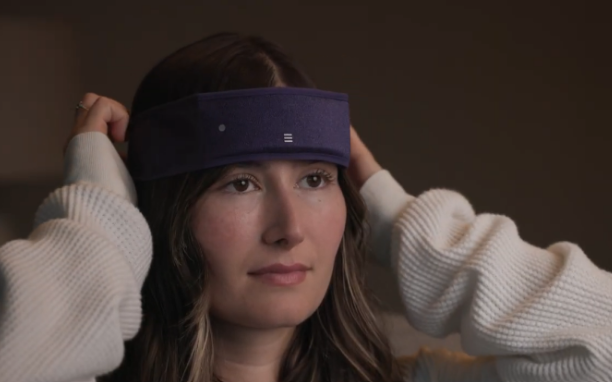
Wearing headband for acoustic resonance therapy binaural beats for insomnia
The headband is called Spatial Sleep, and the study was undertaken in part by scientists affiliated with SoundHealth. The company has provided support to The People’s Pharmacy.
Learn More
We discuss a number of natural approaches to overcoming insomnia as well as sleeping pills in our eGuide to Getting a Good Night’s Sleep. You may also wish to listen to a few of our podcasts, such as Show 1393: How to Get the Sleep You Need.
Another podcast, Show 1246: Getting the Sleep You Need Even in Anxious Times, may also be helpful. Our most recent podcast on the topic is Show 1480: The Sleep Reset: How to Fall Asleep and Stay Asleep.
Citations
- Hansen DA et al, "Psychomotor vigilance impairment during total sleep deprivation is exacerbated in sleep-onset insomnia." Nature and Science of Sleep, online Dec. 11, 2019. DOI: 10.2147/NSS.S224641
- Paracha MA et al, "Effectiveness of homeopathic interventions for insomnia and sleep disorders: A systematic review and meta-analysis." Complementary Therapies in Medicine, Aug. 4, 2026. DOI: 10.1016/j.ctim.2026.103413
- Shinjyo N et al, "Valerian root in treating sleep problems and associated disorders-A systematic review and meta-analysis." Journal of Evidence-Based Internal Medicine, Jan-Dec. 2020. DOI: 10.1177/2515690X20967323
- Lee J et al, "Effects of Passiflora incarnata Linnaeus on polysomnographic sleep parameters in subjects with insomnia disorder: a double-blind randomized placebo-controlled study." International Clinical Psychopharmacology, Jan. 2020. DOI: 10.1097/YIC.0000000000000291
- Keck ME et al, "Effect of the fixed combination of valerian, lemon balm, passionflower, and butterbur extracts (Ze 185) on the prescription pattern of benzodiazepines in hospitalized psychiatric patients-A retrospective case-control investigation." Phytotherapy Research, June 2020. DOI: 10.1002/ptr.6618
- Maruani J et al, "Efficacy of melatonin and ramelteon for the acute and long-term management of insomnia disorder in adults: A systematic review and meta-analysis." Journal of Sleep Research, Dec. 2023. DOI: 10.1111/jsr.13939
- Lin K et al, "Use of customized binaural beats for the treatment of chronic insomnia." Journal of Sleep Medicine, April 30, 2025. https://doi.org/10.13078/jsm.250006