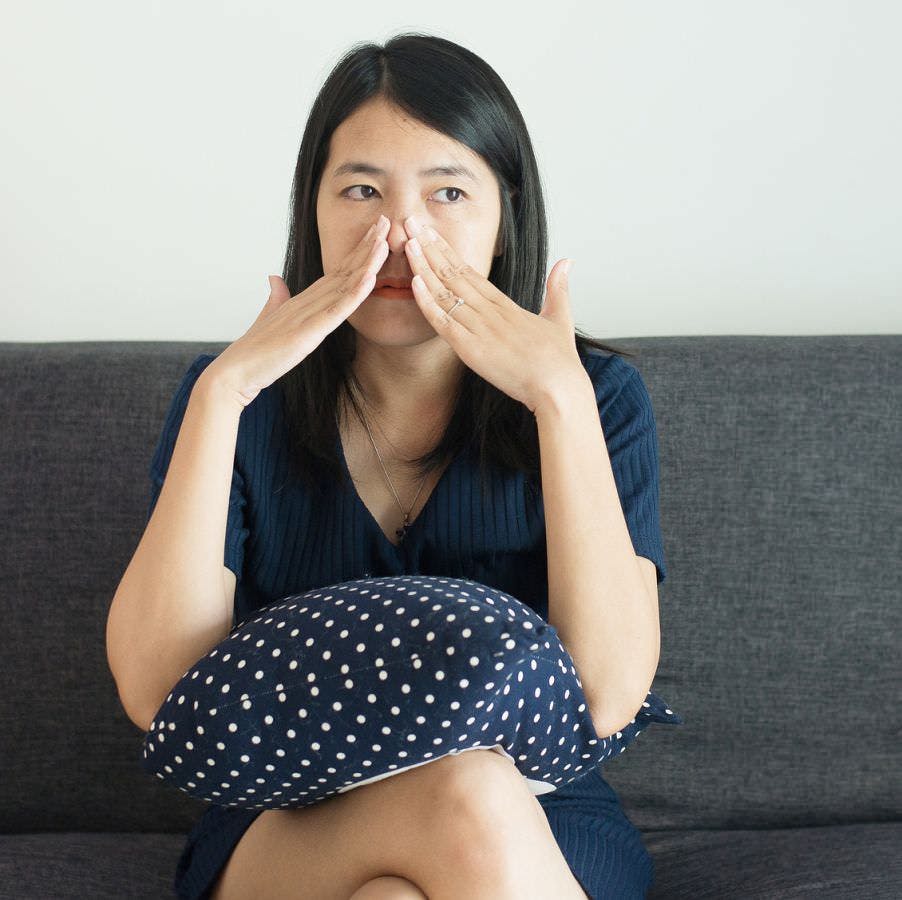
Hay fever and other seasonal allergies can cause a lot of discomfort. The congestion such allergic reactions cause can lead to sinus woes that seem to last a long time. Usually, medication choices are limited because decongestants such as Afrin should not be taken long-term. Are there other medicines that might help? What about natural products?
Guaifenesin for Sinus Woes:
Q. Guaifenesin is a miracle drug for me. For most of my life I’ve had sinus problems. Even with a big sinus infection, guaifenesin clears the congestion within a day or two. Nothing a doctor has prescribed has ever been better.
A. Guaifenesin is sold over the counter as an expectorant. One brand name you might recognize is Mucinex, but there are also numerous generic versions.
An expectorant is supposed to loosen mucus and ease congestion. We’re glad you get such great relief from this very old drug. Researchers have recently raised questions about its effectiveness, though (Otolaryngology-Head and Neck Surgery, May 28, 2024). The authors suggest that doctors consider a botanical preparation called Sinupret. It contains primrose flowers, gentian root, sorrel herb, elder flowers and vervain herb. Like guaifenesin, it is available without a prescription and seems to help ease congestion.
Check Out SONU
Another alternative is nonpharmacological. A company called SoundHealth has developed a headband that produces personalized sound vibrations (acoustic resonance therapy) to ease stuffiness. Here is a link to the website for Sonu. We learned about Sonu because the company supports our podcasts. When we looked into the evidence, we were impressed. The FDA has approved this device for improving nasal congestion in children as well as adults. We especially like that this approach is free of side effects so far as we can determine. Their tagline is “sound instead of steroids.” We appreciate that, especially for kids!

Sonu offers sound against stuffy sinuses
Can You Grow Your Own Antiviral Medicines?
Some readers are very dedicated to avoiding pharmaceuticals when there are alternatives. We recently heard from a person who makes natural medicinals at home.
Q. A few months ago, you wrote about antiviral medicines. Flu season is over now, thank goodness, but there are still some viral illnesses around.
There are probably effective antiviral herbs already in your yard. Sage, thyme and oregano fight viral sickness, and garlic and ginger are probably already in your kitchen. Use them! I make glycerites out of sage, thyme, oregano and many other herbs. I hardly ever get sick anymore, and I used to be sick all winter.
A. Thank you for this excellent reminder. Many herbal and home remedies can be helpful for warding off viral infections. That may be the first step to preventing sinus woes.
Could Chronic Allergies Be Due to Dairy?
What if the problem is not simply seasonal and you end up with chronic sinus troubles? Some readers report that changing their diet makes a big difference.
Q. For years, I suffered from sinusitis and hay fever. It started at age 38 as seasonal allergies, progressed to summer colds and then to all year long sniffling. I used to joke that I had snot dripping off my elbows.
It became intolerable. I was eating lots of dairy, especially milk and cheese. When I read about the dairy connection, I immediately cut it out of my diet.
Magically my allergies abated. Gradually I learned baked goods also caused flare-ups, so I dropped them too. (Many contain milk or whey.)
Now I need no OTC allergy pills. I used to take cetirizine, but it caused crazy brain fog. Once I stopped it, that also cleared up.
Now if I wake with an itchy throat or a bit of stuffiness (rare), I take stinging nettles and a quercetin supplement. That offers immediate relief!
A. Avoiding foods that cause a reaction makes a lot of sense. So do your supplements.
Supplements Against Sinus Woes
Many people have heard about quercetin because of COVID. This natural flavonoid has anti-inflammatory and antioxidant activity as well as antiviral properties (Pharmaceuticals, Sept. 2022).
Scientific evidence suggests that quercetin supplements could also be helpful against allergies (European Review for Medical and Pharmaceutical Sciences, June 2022). In addition to quercetin, curcumin, resveratrol and EGCG from green tea seem to calm mast cells and reduce allergy symptoms (Cells, Nov. 10, 2023).
Stinging nettle may also alleviate allergies (Molecules, April 12, 2024). It seems to affect a range of relevant pathways.
Overcoming Sinus Woes by Dumping Dairy
Q. In recent articles you have addressed nasal issues causing painful sinuses and facial discomfort. Years ago, I used to wake up every morning with “face aches,” aka sinus pain. I went to different doctors who prescribed sulfa until I became allergic to it. Then I read an article that said many sinus woes are caused by an allergy to the milk protein casein.
I stopped drinking milk and have never had the “face aches” again. I use unsweetened almond “milk” for my morning oatmeal, and all is good.
A. There is a popular belief that consuming dairy products can contribute to nasal congestion. We have struggled to find research confirming this connection. We think, however, that people suffering with ongoing sinusitis might want to try switching to non-dairy beverages and foods as an experiment.
Allergies to Dairy Are Fairly Common
A review several years ago demonstrated that more than 10 percent of US adults had food allergies, with shellfish and milk most common (JAMA Network Open, Jan. 4, 2019). People who suspect an allergy would do well to see a doctor about allergy testing. Avoiding the allergen may be the best way to limit suffering from sinusitis.
Learn More
To learn more about managing sinus woes, you may wish to listen to our interview with Dr Zara Patel of Stanford University. It is Show 1448: How to Stop Suffering with Sinusitis. In addition, Show 1255: Natural Ways to Keep Your Immune Response Optimal offers valuable guidelines for natural products that can help.
Anyone who would like more details on using these and other plant medicines may be interested in our book, Spice Up Your Health: How Everyday Kitchen Herbs & Spices Can Lengthen & Strengthen Your Life.
Citations
- Eyassu DG & McCoul ED, "Guaifenesin: The ubiquitous orphan." Otolaryngology-Head and Neck Surgery, May 28, 2024. DOI: 10.1002/ohn.834
- Gasmi A et al, "Quercetin in the prevention and treatment of coronavirus infections: A focus on SARS-CoV-2." Pharmaceuticals, Sept. 2022. doi: 10.3390/ph15091049
- Yamada S et al, "Effects of repeated oral intake of a quercetin-containing supplement on allergic reaction: a randomized, placebo-controlled, double-blind parallel-group study." European Review for Medical and Pharmaceutical Sciences, June 2022. DOI: 10.26355/eurrev_202206_29072
- Kaag S & Lorentz A, "Effects of dietary components on mast cells: Possible use as nutraceuticals for allergies?" Cells, Nov. 10, 2023. DOI: 10.3390/cells12222602
- Culhuac EB & Bello M, "Evaluation of Urtica dioica phytochemicals against therapeutic Ttrgets of allergic rhinitis using computational studies." Molecules, April 12, 2024. DOI: 10.3390/molecules29081765
- Gupta RS et al, "Prevalence and severity of food allergies among US adults." JAMA Network Open, Jan. 4, 2019. DOI: 10.1001/jamanetworkopen.2018.5630