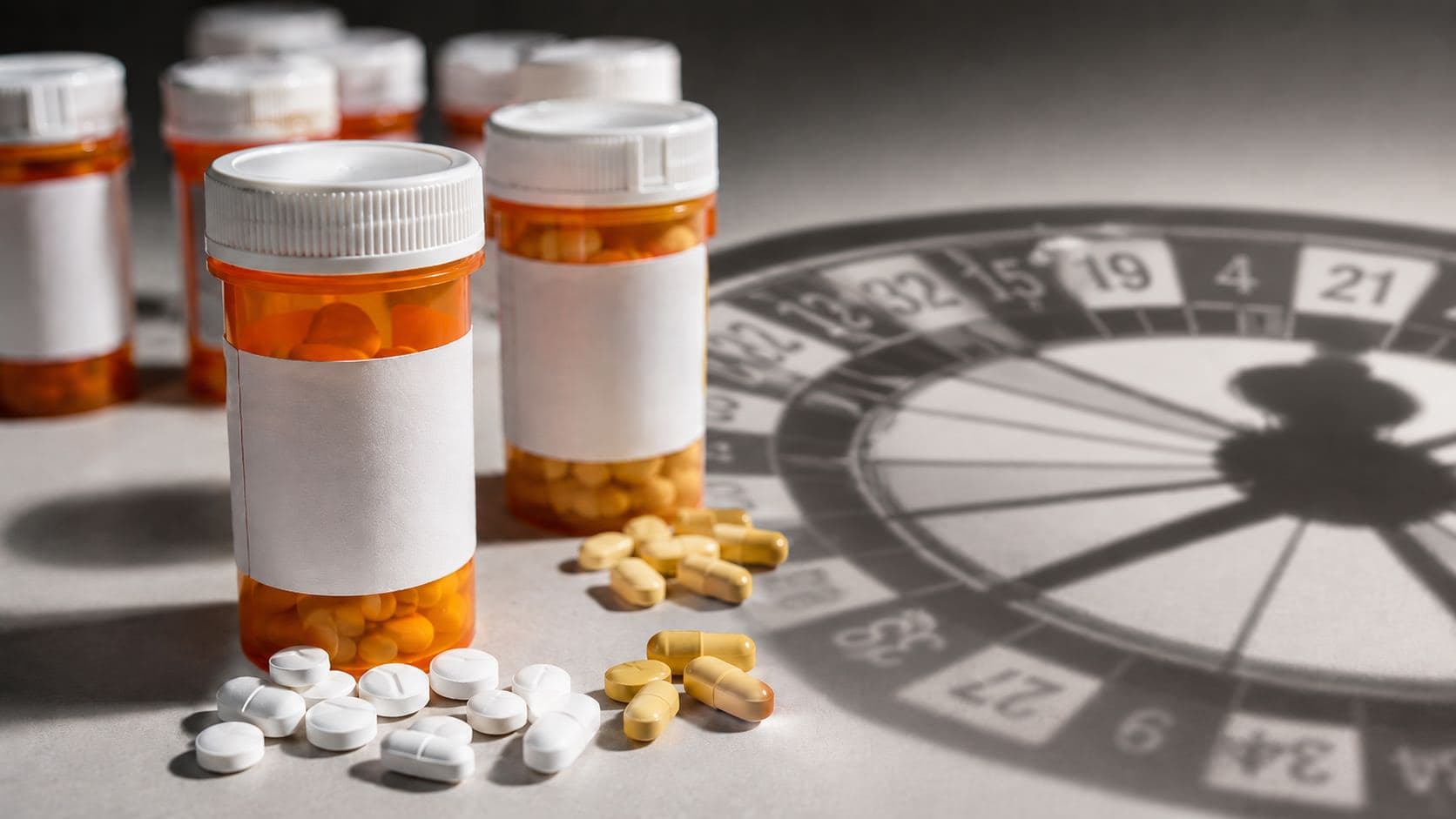
More than 90 percent of prescriptions filled in the United States are generic. That means millions of Americans may be participating in the Generic Drug Lottery without realizing it. Each time a pharmacy changes suppliers, the pills in the bottle may come from a different manufacturer, a different factory and a different formulation. The name and dose on the label stay the same. But will the medicine behave exactly the same way in your body?
The Food and Drug Administration offers emphatic reassurance:
“FDA-approved generic drugs have the same high quality, strength, purity and stability as brand-name drugs. The generic manufacturing, packaging, and testing sites used must pass the same quality standards as those of brand-name drugs.”
There are lots of problems with that statement, though. Here are just a few articles contradicting the FDA:
The FDA Often Doesn’t Test Generic Drugs for Quality Concerns, So ProPublica Did
How FDA’s Lax Generic Drug Rules Can Put Patients’ Lives at Risk
Is Your Medication Made in a Contaminated Factory? The FDA Won’t Tell You
Insiders Expose Secrets: Generic Drugs, Big Pharma, Ads and Mail Order Meds
A Giant Indian Drugmaker Failed to Fix Safety Breaches. The FDA Let It Off the Hook Again and Again
Why The People’s Pharmacy Reversed Course
We were once among the country’s most enthusiastic supporters of generic drugs. Many decades ago, Joe promoted generic drugs on Good Morning America and debated a promoter of brand name medicines. For years, we encouraged readers and radio listeners to ask pharmacists whether a lower-cost generic was available.
Why pay more for a brand-name medicine when an FDA-approved copycat would work exactly the same way? That seemed like common sense.
Then patients began telling us stories that did not fit the official narrative. They would do well on a medicine for months or years. The pharmacy would refill the prescription with pills from a different manufacturer. Within days or weeks, symptoms returned, side effects appeared or laboratory results changed.
When patients raised the possibility that the new generic pills were responsible, they were often told some version of:
“That’s impossible. All FDA-approved generics are equivalent.”
After investigating this issue for nearly two decades, we no longer believe the answer is that simple.
Why the Generic Drug Lottery Matters to Almost Everyone
This is not a fringe issue affecting a handful of unusual medicines. Nine out of 10 prescriptions dispensed in the United States are generic. If you take any medications, including over-the-counter products, chances are very good that you are getting a copycat generic version of the original brand name medicine.
People taking medicine to control blood pressure, prevent blood clots, stabilize thyroid function, suppress seizures, treat depression or protect a transplanted organ are almost certainly taking at least one generic drug. The financial benefits are enormous. Generic competition has saved patients and the healthcare system trillions of dollars. Without affordable generics, many people could not obtain the medicines they need.
Why Quality Matters
Low cost and dependable quality should not be mutually exclusive. When someone buys a generic bottle of ketchup or an off-brand roll of paper towels, a modest difference may not matter much.
If you locate a “Rolex” watch for $240 online that would normally cost over $12,000, your good sense would tell you that it is likely stolen or counterfeit. An inexpensive knock-off is not likely to tell time or last as long as a Rolex that costs 50 times more.
Medicine is different from a roll of paper towels or a watch. A pill may need to dissolve at precisely the right rate, release its active ingredient at the correct location and maintain a predictable concentration in the bloodstream. For some drugs, a relatively small difference could mean the difference between controlling a disease and losing control of it.
That is why the Generic Drug Lottery deserves far more attention from patients, physicians, pharmacists, hospitals and regulators.
Are Generic Drugs Identical to Brand-Name Medicines?
A reader recently asked us a deceptively simple question:
“Does the FDA require a generic drug to be an exact copy of a brand name drug, or does the drug get approval if it is just ‘similar’? I’m not asking about quality control in manufacturing, but about original FDA approval.
“I recently read that generic drugs can be FDA approved if they are just close to the brand name drug. Most of us believe we’re getting the exact formulation at a lower cost. Are we being duped?”
This seemingly simple question actually has a complicated answer.
A generic drug must contain the same “active pharmaceutical ingredient,” or API, in the same strength and dosage form as the brand name product. It must also demonstrate “bioequivalence” under FDA standards.
That does not mean the finished tablets are identical.
The original manufacturer does not hand competing companies its complete manufacturing recipe. The precise production methods and formulation may be protected as trade secrets.
Inactive ingredients—also called excipients—may differ. These substances can include fillers, binders, coatings, coloring agents and compounds that influence how a tablet breaks apart and releases its medicine.
Consequently, generic manufacturers must develop their own formulations that satisfy FDA requirements. The result is not necessarily a molecular photocopy of the brand-name tablet.
Even the FDA acknowledges that generic medicines may look different and contain different inactive ingredients. The agency maintains that such differences should not alter safety or effectiveness. In most cases, that may be true. But “most cases” is not the same as “every patient, every manufacturer and every refill.”
The Coca-Cola Secret
We once tried to explain the difference between a brand name medicine and a copycat version with two classic brands in an article about authorized generic drugs.
“Consider Coca-Cola Original. Other companies can make generic colas. But the makers of Coke do not share their recipe. They do tell you that the ingredients are:
- CARBONATED WATER
- HIGH FRUCTOSE CORN SYRUP
- CARAMEL COLOR
- PHOSPHORIC ACID
- NATURAL FLAVORS
- CAFFEINE
“What they do not tell you are the proportions of those ingredients, what the natural flavors are or how they actually make Coke. The original flavorings in the recipe were formulated over 125 years ago. They are supposedly a deep, dark secret and are kept in a bank vault in Atlanta. You can buy colas at a reduced price, but you realize you are not getting Coca-Cola Original.
“Special Sauce:
“Brand name drug companies keep their formulas and manufacturing processes to themselves too. Think of it a bit like McDonald’s Big Mac secret special sauce. You know the jingle:
“Two all-beef patties, special sauce, lettuce, cheese, pickles, onions on a sesame seed bun.”
“Anyone can put two beef patties together with lettuce, cheese, pickles and onions. Sesame seed buns are easy to get too. But that special sauce gives MacDonald’s Big Macs an edge.”
Bioequivalence and the Generic Drug Lottery
A key turning point in our concerns about generic drug quality began with a generic antidepressant called Budeprion XL 300, a generic version of Wellbutrin XL 300. This example frequently confuses people because it was a generic version of a brand name.
Because the maker of Budeprion XL 300 was the first to market with a long-acting generic form of bupropion, the generic name for Wellbutrin XL 300, the company gave its generic drug a brand: Budeprion XL 300. Someone at the company may have assumed that name might have improved their market share, even though it was a generic drug.
Soon after Budeprion XL 300 reached the market in 2006, readers of The People’s Pharmacy began reporting disturbing changes. People who had done well on brand-name Wellbutrin XL 300 said their depression returned after they were switched to the generic. Others described anxiety, headaches, irritability, insomnia, nausea, tremors, panic attacks and suicidal thoughts.
The Next Steps Took Time
We sent those reports to the FDA. We also arranged for dissolution testing by a colleague, Dr. Tod Cooperman, who founded ConsumerLab.com.
Initially, agency officials dismissed the possibility that the generic formulation was responsible. The two medicines had been declared bioequivalent. Therefore, from the agency’s perspective, the patients’ experiences could not be caused by a difference between the products.
But there was a serious weakness in the original approval process. The 300-milligram generic had not been tested directly against Wellbutrin XL 300 in the customary human bioequivalence study. Testing on a lower strength had been used to support approval of the higher dose.
After five years of complaints and pressure, the FDA arranged additional testing. In 2012, the agency acknowledged that Budeprion XL 300 was not therapeutically equivalent to Wellbutrin XL 300 and requested that it be removed from the market.
FDA scientists later described the episode in The New England Journal of Medicine (December 27, 2012) as the “Withdrawal of Generic Budeprion for Nonbioequivalence.” The agency was still citing the case in a 2025 scientific presentation about modified-release medicines.
Lessons Learned About the Generic Drug Lottery
Patients had been right! Their symptoms were not imaginary. The formulation really did release the medicine differently.
That experience taught us two unforgettable lessons:
- First, extended-release technology can be difficult to duplicate.
- Second, even when hundreds of patients report a consistent problem, it may take regulators years to reconsider an approval decision.
Why Bupropion Complaints Have Never Completely Disappeared
We hoped the Wellbutrin episode would make the FDA far more vigilant. Nevertheless, readers have continued to report trouble after switching among manufacturers of extended-release bupropion.
One person told us:
“When the manufacturer of this generic drug was changed, I started having a lot of premature ventricular contractions. When I went back to the original manufacturer, the PVCs stopped.”
Another wrote:
“After a week of headaches, nausea and vivid dreams, I felt like I wasn’t even taking it. The only change was the manufacturer.”
A patient who had remained stable on one formulation described the return of panic attacks, palpitations and overwhelming fear after receiving another generic version.
Anecdotes cannot prove that a particular product is defective. Depression itself can change over time, and many factors can affect a person’s response to medicine.
But repeated reports following a manufacturer switch should not automatically be dismissed—especially when the original Budeprion controversy demonstrated that a release mechanism really can fail.
The lengthy history, patient accounts and previous People’s Pharmacy reporting supplied for this article show why this issue has persisted for nearly two decades. And by the way, the smell of some generic bupropion pills is quite unpleasant. We discovered that a long time ago when we invited readers to send us bottles of Budeprion XL 300. Some stank. We sent them on to the FDA for analysis and never heard a word back.
When we met the medicinal chemist who had helped formulate the original Wellbutrin XL 300, he told us that a bad smell was an indication that the manufacturing process was faulty.
You can read more about this fascinating saga at this link:
Why Bupropion Smells Bad: Uncovering the Mystery of a Stinky Drug
When food smells bad, we know not to eat it. It could be spoiled. What should we do if an antidepressant like bupropion smells bad?
The Generic Drug Lottery Meets a Life-or-Death Medicine
Bupropion is concerning. Tacrolimus raises the stakes far higher.
Tacrolimus suppresses the immune system after an organ transplant. Too little exposure could permit rejection of the transplanted organ. Too much could cause serious toxicity, including kidney damage.
This is considered a narrow-therapeutic-index drug. There is little room for error.
David Light, a co-founder of the independent pharmaceutical testing company Valisure, and Victor Suarez have been involved in a testing program for medicines supplied through the Military Health System.
According to the presentation and correspondence provided to us, tested products were classified as green, yellow or red:
- Green indicated no concern.
- Yellow indicated a potential concern or marginal result.
- Red indicated a significant concern, such as contamination or an abnormal dissolution pattern.
Across the medicines evaluated, 15 percent reportedly received a red classification.
Where Does Tacrolimus Stand?
The results for tacrolimus were especially disturbing. Of 12 generic products tested, four were rated green, four yellow and four red. In other words, only one-third received the most reassuring classification, while one-third reportedly raised major concerns. That is not an encouraging report for a drug that can determine the survival of a transplanted organ–and thus, of the patient who received that transplant.
These findings were presented in a military healthcare setting and were supplied to us by the investigators. They should not be treated as a comprehensive, peer-reviewed survey of every generic medicine on the American market. Nevertheless, they raise a question that transplant patients and their physicians cannot afford to ignore.
Why should products bearing the same drug name display such different laboratory performance?
The testing program and tacrolimus results are described in the source material provided for this article.
Valisure has publicly described its red-yellow-green system as a way of providing the Military Health System with additional information about drug quality, including results for tacrolimus and the beta blocker metoprolol:
A May 2026 report on the military testing program said that more than 70 percent of tested products received a green rating. That sounds reassuring—until we remember that a medicine does not have to fail very often to devastate an individual patient. Here is a description of the research in Spotlight on America, Monday, May 18th 2026.
“Bad drugs could threaten US troops: Inside lab doing groundbreaking tests to address it”
Dissolution: Will the Pill Let Go of Its Medicine?
“Dissolution” sounds like an obscure pharmaceutical term. It should matter to anyone who swallows a pill. Before an active ingredient can be absorbed, the tablet or capsule must release it. If that happens too slowly, too little medicine may become available when it is needed. If it happens too rapidly, blood levels may rise too quickly and increase the risk of adverse effects.
For an immediate-release pain reliever, a modest difference might merely alter how quickly relief begins. For a long-acting antidepressant, seizure medicine, heart drug or transplant medication, an abnormal release profile can have far more serious consequences.
We suspected that the unique “membrane” technology developed to control the gradual release of bupropion from Wellbutrin XL 300 was apparently still under patent. That meant that generic drug companies had to develop a different way of getting the active drug, bupropion, into the body. The makers of Budeprion XL 300 apparently opted for a markedly different “matrix” formulation. That might have accounted for the contrasting dissolution rates.
Bioequivalence: A Deep Dark Secret
As far as we can tell, the FDA has only released bioequivalence data for Wellbutrin XL and the generic Budeprion XL formulations. The overwhelming majority of generic drug dissolution data are a deep dark secret. The FDA keeps this information under wraps on the grounds that it is “proprietary.” Physicians, pharmacists, purchasers for pharmacy chains and patients are not allowed access to this crucial information. We have no way of seeing bioequivalence curves for most generic formulations.
FDA guidance requires appropriate bioequivalence and dissolution information for generic drug applications. The crucial question is whether the tests used for approval and routine quality control reliably predict what happens inside real patients.
A 2024 investigation into improved dissolution methods for narrow-therapeutic-index drugs concluded that some conventional quality-control tests may not identify formulations likely to perform differently in the body. The researchers argued for more “biopredictive” dissolution methods—laboratory tests designed to more closely simulate human physiology (AAPS PharmSciTech, Dec. 17, 2024).
That is a complicated way of saying that a pill may pass a standard laboratory test without guaranteeing that it will behave exactly as expected in every patient. What concerns us more than anything is the effect of food on drug absorption. The dissolution testing process rarely takes that into consideration.
Investigative Journalists Join the Generic Drug Debate
For years, concerns about generic-drug quality were treated as an eccentric obsession of The People’s Pharmacy.
That is no longer the case. Investigative journalist Katherine Eban documented fraud, data manipulation and manufacturing misconduct in her book Bottle of Lies: The Inside Story of the Generic Drug Boom. You can listen to Katherine describe her research at this link:
Show 1169: What Are the Problems with Generic Drugs?
ProPublica reporters Debbie Cenziper and Megan Rose have investigated the FDA’s oversight of overseas drug factories and generic medicines. They reported on tacrolimus manufactured at a troubled factory and the uncertainty faced by a transplant patient after his kidney failed:
Another investigation described transplant centers’ concerns about generic tacrolimus formulations and reported that some institutions restricted particular products or returned to the brand-name medicine.
Manufacturers have defended the safety and effectiveness of their medicines, and an individual patient’s complication cannot automatically be attributed to a specific generic product. But the absence of definitive proof does not justify ignoring warning signals.
What the FDA Knows, and Patients Cannot Easily Discover
Patients are expected to trust the generic-drug approval process, but they are rarely allowed to review the underlying evidence in a meaningful way. The detailed data used to approve a product—its complete formulation, manufacturing information, dissolution results, bioequivalence data and much of the agency’s analysis—are not presented in a simple, accessible form that doctors, pharmacists or patients can independently evaluate.
Even when inspectors uncover major failures at a factory, the names of drugs made there may be difficult to identify. ProPublica sued the FDA after the agency declined to quickly release documents that would identify medicines manufactured at some troubled foreign facilities.
Transparency should not require a lawsuit. Hospitals, health plans, pharmacies and patients need more than an FDA approval number. They need meaningful information about the quality history of manufacturers, individual production facilities and finished products.
Why Don’t Doctors and Pharmacists Recognize the Generic Drug Lottery?
Most health professionals were taught that FDA-approved generic medicines are interchangeable. That message has been reinforced by regulators, insurers, medical schools, pharmacy programs and pharmacy benefit managers. Questioning a generic product may sound unscientific, or even irresponsible, when affordable medicine is essential.
Doctors rarely know which manufacturer supplied a patient’s last refill. Pharmacists may know the manufacturer when they dispense a particular generic to a patient, but a chain can change suppliers based on contracts, cost and availability.
The patient is the only person who sees the entire sequence:
- I was stable.
- My pills changed.
- My symptoms changed.
- I returned to the previous product.
- My symptoms improved.
That pattern is not definitive proof. It is, however, valuable clinical evidence.
A patient who reports such a sequence deserves curiosity, not dismissal.
How to Protect Yourself From the Generic Drug Lottery
We are not recommending that people reject generic drugs.
Most generic prescriptions appear to work as intended, and they make essential treatment affordable. Stopping an important medicine because of generalized fears about quality could be far more dangerous than continuing it.
Here are some suggestions for prudent monitoring:
- Look at your pills before taking them
When you pick up a refill, compare the tablets or capsules with the ones you have been taking. Note any change in:
- Color
- Shape
- Size
- Markings or imprint
- Odor
- Bottle label
- Manufacturer
A different appearance does not mean the new medicine is defective. It does tell you that the supplier or formulation may have changed.
- Record the manufacturer
Take a photograph of the prescription label and the pill itself. The label may list the manufacturer or distributor. When it does not, ask the pharmacist.
Keep this information with your medication list.
Writing down “bupropion XL 300 mg” may not be enough. Record something like:
Bupropion XL 300 mg—Manufacturer A—white round tablet—imprint XYZ.
That creates a trail if your response changes.
- Pay attention after a switch
Watch for:
- Return of the condition being treated
- New or intensified side effects
- Changes in blood pressure, heart rate or blood sugar
- Changes in seizure control
- Mood changes
- Unusual withdrawal-like symptoms
- Unexpected laboratory results
- Changes in INR for warfarin
- Changes in thyroid tests
- Changes in tacrolimus blood levels
Do not assume every new symptom is caused by the refill. At the same time, do not dismiss the timing.
- Do not stop medicine suddenly
Abruptly discontinuing certain antidepressants, seizure medicines, corticosteroids, beta blockers, blood thinners or transplant drugs can be very dangerous.
Contact the prescriber and pharmacist promptly. Explain exactly what changed and when.
- Ask the pharmacy for the previous manufacturer
Some pharmacists will try to reorder the product that worked well for you. Smaller independent pharmacies may have more flexibility than large chains, although shortages and purchasing contracts can limit everyone’s options.
Ask whether the pharmacy can place a note in your profile specifying the preferred manufacturer.
There is no guarantee that the same product will always be available, but asking is worthwhile.
- Ask the prescriber to document the problem
A clinician can record the suspected formulation problem in the medical chart and, when medically justified, request a particular manufacturer or brand-name product.
Insurance coverage may be difficult. Detailed documentation of treatment failure or adverse effects can strengthen an appeal.
- Monitor narrow-therapeutic-index drugs closely
Extra caution may be warranted with medicines for which relatively small changes in exposure can have serious consequences. Examples may include:
- Tacrolimus and other transplant medicines
- Warfarin
- Certain antiseizure drugs
- Some thyroid preparations
- Digoxin
- Lithium
The appropriate response is not panic. It is careful monitoring and consistency.
Ask the prescriber whether laboratory testing should be repeated after a manufacturer change.
- Report suspected problems to the FDA
The FDA’s MedWatch program accepts reports from patients and health professionals:
Include as much detail as possible:
- Drug name and strength
- Manufacturer
- Pill imprint
- Lot number, when available
- Pharmacy
- Date of the refill
- Previous manufacturer
- Symptoms or loss of effectiveness
- Relevant laboratory findings
- What happened after switching back
One report may be dismissed as coincidence. A pattern of detailed reports involving the same product may be harder to overlook.
- Save a few pills from the suspect refill
Do not send medicine to anyone unless instructed to do so. But retaining several tablets in the original, labeled container may be useful if the FDA, manufacturer or an independent laboratory eventually investigates. Keep them safely away from children, pets and anyone for whom they were not prescribed.
- Never buy prescription medicine from an unverified source
Concerns about generic quality should not drive patients toward questionable websites. Counterfeit, contaminated or improperly stored medicine may be far more dangerous.
Any online pharmacy should require a valid prescription and be properly licensed. Suspiciously low prices and websites willing to sell prescription drugs without a prescription are giant red flags.
How the Generic Drug Lottery Could Be Fixed
Patients should not have to become pharmaceutical detectives. Here are reforms we believe could make the generic-drug system safer:
Independent testing
Finished pills should be purchased anonymously from the commercial marketplace and tested by independent laboratories. Manufacturers should not be allowed to select the samples that represent their products.
Public quality ratings
Hospitals, pharmacists, prescribers and patients should be able to see meaningful quality information for each manufacturer and product.
A red-yellow-green system like the one being explored for the Military Health System could be a useful starting point, provided the methods are transparent and scientifically validated.
Better dissolution testing
Laboratory tests should reflect conditions inside the human digestive tract as closely as possible, especially for extended-release and narrow-therapeutic-index drugs. Food should be considered an important variable when testing for drug dissolution.
Manufacturer information in medical records
Electronic prescribing and pharmacy systems should record the manufacturer and, ideally, the lot number of the product actually dispensed.
A doctor cannot investigate a manufacturer switch without knowing that one occurred.
Rapid investigation of patient complaints
Consistent reports of loss of effectiveness or new side effects should trigger prompt testing, not five years of resistance.
Greater FDA transparency
The agency should make product-specific quality findings, inspection concerns and the reasoning behind therapeutic-equivalence decisions accessible to the public while protecting legitimate trade secrets.
Patients’ lives should take priority over corporate embarrassment.
The Bottom Line on the Generic Drug Lottery
Generic drugs have saved the American healthcare system enormous sums of money. They allow millions of people to obtain treatment they could not otherwise afford. We do not want to destroy confidence in good generic medicines.
We want that confidence to be earned, though. “FDA approved” should represent a continuing guarantee of quality, not merely the successful completion of an approval process years earlier.
The Budeprion XL 300 story demonstrated that patients can detect a genuine formulation problem before regulators acknowledge it. Recent independent testing and investigations involving tacrolimus suggest that questions about dissolution and manufacturing quality have not disappeared.
When a patient says, “My medicine changed, and I changed with it,” health professionals should not reply, “That’s impossible.”
They should ask:
- Who made the previous pills?
- Who made the new ones?
- Did the formulation change?
- Can we obtain the product that worked?
- Should we check blood levels or other laboratory tests?
- Should this be reported?
More than 90 percent of prescriptions are generic. That makes this everybody’s problem. The Generic Drug Lottery will continue until patients, physicians, pharmacists, corporate buyers, hospitals, manufacturers and the FDA can see which products perform reliably…and which ones do not.
Final Words:
Have you experienced a change in effectiveness or side effects after your pharmacy switched generic manufacturers? Please share your story in the comment section. If you think this article is worthy, please share it with friends, family members, pharmacists and healthcare prescribers (physicians, nurse practitioners and physician associates).
Most people have no idea about the problems associated with the Generic Drug Lottery. You can print this article and take it to your prescriber and pharmacist. It just might change their understanding about the FDA’s generic drug approval process.
Citations
- Woodcock, J., et al, "Withdrawal of Generic Budeprion for Nonbioequivalence," New England Journal of Medicine, Dec. 27, 2012, DOI: 10.1056/NEJMp1212969
- Bi, F., et al, "Establishment of Biopredictive Dissolution and Bioequivalence Safe Space Using the Physiologically Based Biopharmaceutics Modeling for Tacrolimus Extended-Release Capsules," AAPS PharSciTech, Dec. 17, 2024, doi: 10.1208/s12249-024-03006-2