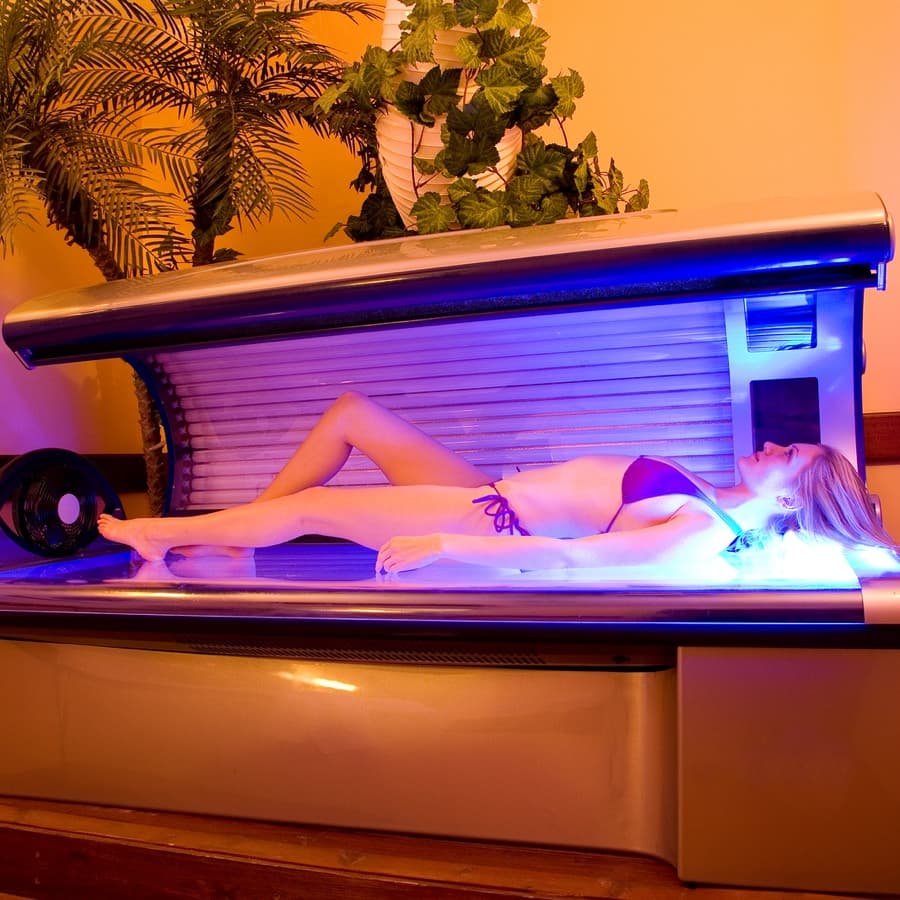
This is the time of year that a lot of people are bundled up against frigid temperatures. But some people crave sunshine. Often they turn to indoor tanning, since tanning beds offer ultraviolet exposure.
A new study published in the journal Science Advances reveals that tanning bed use increases the risk of melanoma, the most dangerous form of skin cancer (Science Advances, Dec. 12, 2025). This has actually been documented, especially in young women for years, as you will read below. What is surprising about this data is the location of the melanomas. They often occur in body sites that don’t get much sun.
The researchers hypothesize that during indoor tanning sessions, people expose places on their body such as the lower back and buttocks that aren’t usually out in the sun. An alternative hypothesis is that tanning beds cause more mutations in the skin everywhere on the body. That translates into a three-times higher risk of dangerous cancer.
Why Don’t People Give Up Indoor Tanning?
Dermatologists are concerned that indoor tanning is on the rise after several years in decline. Young women (“Gen Z”) in particular would rather look good with a tan now than worry about skin cancer in the future. This attitude has led some scientists to wonder if tanning could be addictive. Most people think of tanning beds as a cosmetic indulgence. But research suggests that some young women with depression find indoor tanning especially appealing (Cancer, Epidemiology, Biomarkers & Prevention, Oct. 31, 2017).
Sticking with Tanning Despite Its Hazards:
The authors surveyed nearly 400 young women between 18 and 30 years of age. Many reported regular tanning despite the known risk for skin cancer. (Tanning beds have been labeled carcinogenic by the International Agency for Research on Cancer.) Maintaining a behavior even when you know it is bad for you is part of the picture of addiction.
Some of the women cited the cosmetic benefits of tanning. Others seemed to be getting more of a psychological boost. In fact, the researchers found that women who were depressed were most dependent on exposure to high-intensity UV light.
Ultraviolet Light and Brain Chemicals:
This study reinforces findings from earlier research that showed ultraviolet rays stimulate the production of dopamine, a brain chemical associated with pleasure. Opioid receptors also appear to respond to UV light. Dermatologists have found that indoor tanning may reduce pain in patients with fibromyalgia.
In a recent review, researchers found that
“Several psychiatric disorders are comorbidities of tanning addiction and excessive indoor tanning parallels many of the patterns of substance use disorders.”
They called for development of interventions to treat this addictive behavior (Journal of Cutaneous Medicine and Surgery, May-June 2025). After all, simply telling young women about the dangers of skin cancer or premature aging from their ultraviolet exposure does not seem to work. Instead, the researchers suggest counseling and medications that are used to treat other types of addiction. One clinical trial found that tailored mobile messaging could help tanning addicts quit, at least for a little while (Cancer Epidemiology, Biomarkers & Prevention, Feb. 6, 2025). Lasting success may require more sustained support.
Citations
- Gerami P et al, "Molecular effects of indoor tanning." Science Advances, Dec. 12, 2025. DOI: 10.1126/sciadv.ady4878
- Mays D et al, "Indoor tanning dependence in young adult women." Cancer, Epidemiology, Biomarkers & Prevention, Oct. 31, 2017. https://doi.org/10.1158/1055-9965.EPI-17-0403
- LaMonte OC & Feldman SR, "Indoor tanning addiction: Biological mechanisms and association with other disorders." Journal of Cutaneous Medicine and Surgery, May-June 2025. DOI: 10.1177/12034754241303135
- Mays D et al, "Effects of a tailored mobile messaging intervention for indoor tanning cessation in young females: A randomized clinical trial." Cancer Epidemiology, Biomarkers & Prevention, Feb. 6, 2025. DOI: 10.1158/1055-9965.EPI-24-0964