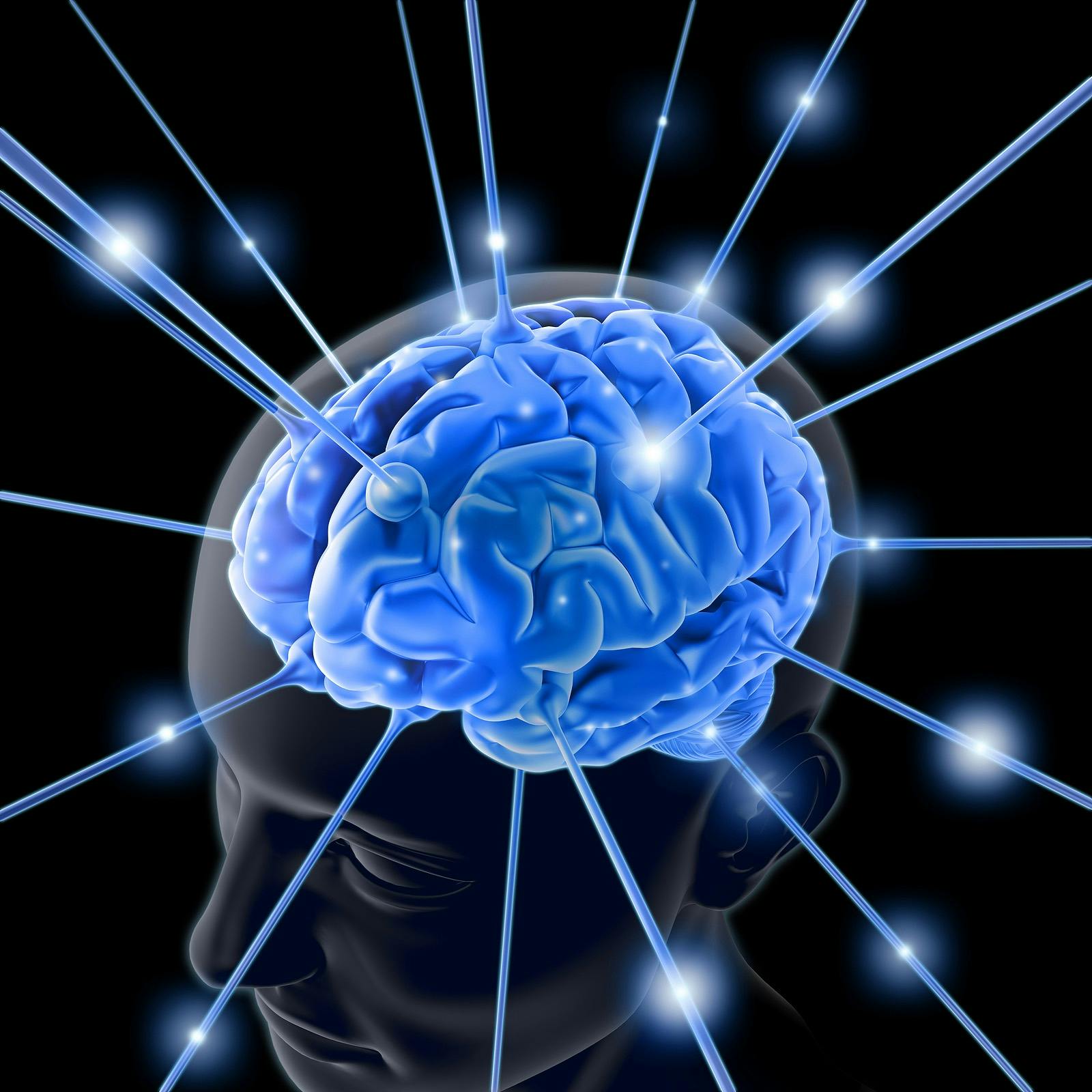
For decades neuroanatomists believed that the brain developed as a single organ from embryonic cells that were all similar to each other. Now, researchers at Stanford have uncovered evidence that the brain actually develops from two distinct populations of nerve progenitor cells (Nature Neuroscience, Sep. 18, 2026).
Two Brains to Make a Single Organ
This astonishing finding shows that we actually develop two brains, but they are so closely coordinated that even neuroscientists did not realize the distinctions. These distinctions arise very early in the development of the embryo, when it is a gastrula. At that stage, it is a tiny hollow blob of cells with an outer layer (ectoderm) and an inner layer (endoderm). Ectoderm cells give rise to the nervous system, but they are not interchangeable.
Here’s the Hindbrain
One group of progenitor cells grows into the parts of the brain that control heart rate, breathing, digestion and other autonomic functions–the hindbrain. Some popular texts about the brain present the hindbrain as the more archaic, reptilian brain. That may underestimate the complexity of reptiles’ brains; they apparently also have dual embryonic origins. In addition, we have no evidence that hindbrains evolved earlier.
Where’s the Forebrain and Midbrain?
Where do the other parts of the brain originate, then? The scientists found that another entirely different group of progenitor cells become areas of the brain that deal with thinking and language. In other words, the front of the brain arises from different cells than the back of the brain. These two separate cell populations package their DNA differently as well.
How Did Scientists Discover the Two-Brains Model of Development?
This surprising division was revealed through analyzing the developmental path individual progenitor cells followed in mouse embryos. Human stem cells follow the same patterns of gene activation and expression, but we are not unique in this respect. This composite brain organization can actually be found in zebra fish, chickens, mice and macaques, among other creatures.
An Evolutionary Journey
It seems that this pattern may have been set in motion at least 500 million years ago.
The investigators use quite technical language in their conclusion:
“Hence, we postulate the brain is a composite organ emanating from two lineage-restricted progenitors; these dual progenitors may be evolutionarily conserved across 550 million years from hemichordates [a category of marine worms] to mammals.”
That double origin producing what appears to be and functions as a single organ seems to be extremely widespread.
Jellyfish, which diverged from our part of the evolutionary tree 600 or 700 million years ago, have two completely separate nervous systems. These also arise from different progenitor cells, but instead of coalescing, they remain apart. That is not to say we evolved from jellyfish, but rather to suggest that is a different way of organizing neural tissue.
How the Two-Brain Hypothesis Could Help Medicine
Researchers hope their novel discovery will lead to new advances in treating challenging neurological diseases. The Stanford scientists were able to coax the hindbrain progenitor cells into developing into hindbrain-type motor neurons. This was a first. Previous teams had been unable to accomplish it, perhaps because they had started with forebrain progenitor cells. If investigators are able to grow hindbrain organoids, they might investigate conditions such as amyotrophic lateral sclerosis more readily. You might recognize this as ALS or Lou Gehrig’s disease.
Neuroscientists have long sought to identify the area of the brain that generates consciousness. As yet, we have no explanations of how that works. Discovering that we actually grow two brains into one organ might help with that research.