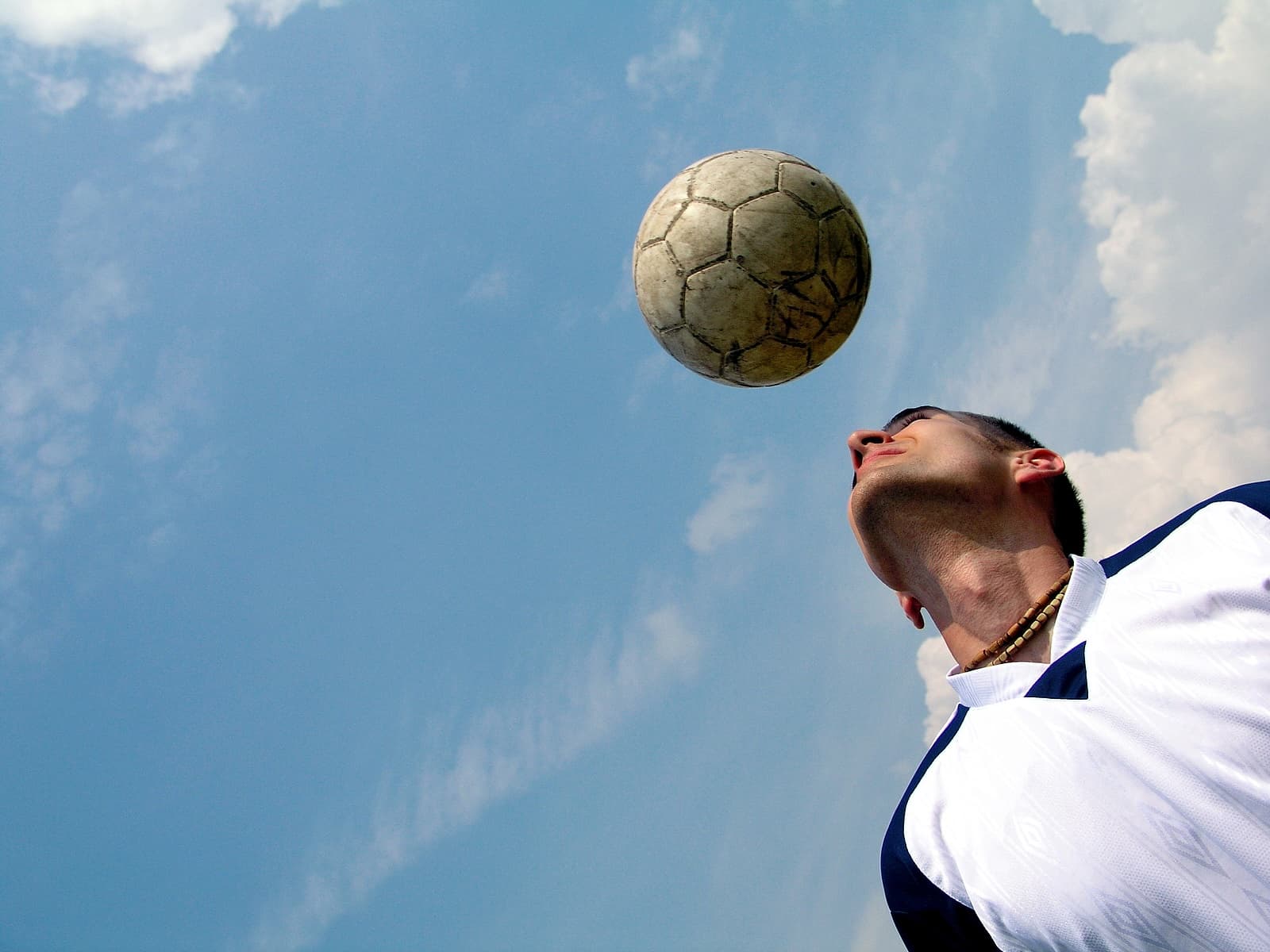
The World Cup competition has generated tremendous interest in soccer, otherwise known around the world as football. If you watched any of the recent matches, you would have seen a dramatic maneuver known as heading. In this tactic, a player bounces the ball off his head, sometimes to score a goal. What is the impact of heading on the brain?
Amateur Soccer Players Show Evidence of Brain Trauma from Heading
A study published in JAMA Neurology this month examined the effect of heading upon biomarkers of neural damage in high-level amateur soccer players (JAMA Neurology, July 1, 2026). High-impact headers during a match were linked to increases in the blood biomarkers p-tau217 and S100B immediately afterwards. These biomarker elevations normalized within a day or two, but these players are amateurs, not pros who may have greater exposure. The authors conclude that amateur-level heading may acutely affect brain integrity.
This is not the first study to find that heading a soccer ball too often could be bad for the brain. Neurologists have suspected this for some time. A study nearly a decade ago pointed to harmful effects.
Heading a Soccer Ball
Researchers at Albert Einstein College of Medicine queried 222 amateur soccer players between the ages of 18 and 55 (Neurology, online Feb. 1, 2017). Over the course of two weeks, subjects reported an average of 40.5 soccer ball headings.
What Were the Results?
Roughly one-fifth of the players experienced symptoms of concussion that were categorized as moderate to quite severe. Some of the neurological complications could be attributed to unintentional head impacts such as a collision with another player.
But the researchers noted that symptoms of concussion were independently linked to heading the ball. Players who headed the ball more frequently appeared to be more vulnerable to concussions.concussi
The results of the new study, published in the journal Neurology, were consistent with prior research. In the investigation, neurologists found structural changes in the brains of players who had headed the soccer ball over 1000 times a year. Coaches and players may need to recognize that concussions after heading are more frequent than most people would imagine.
Learn More
You can learn more about concussions resulting from soccer and other sports in our Show 1011: Sports and Concussions. We explored the consequences of a severe concussion in Show 1012: What to Do About a Ghost in Your Brain.
Citations
- Hoppen MI et al, "Amateur Soccer Heading and Acute Elevations in Blood-Based p-Tau217 and S100B." JAMA Neurology, July 1, 2026. DOI: 10.1001/jamaneurol.2026.1224