 The People's Perspective on Medicine
Show 1464: Can Vaccines Protect the Brain from Dementia?
Description
According to the Alzheimer’s Association, nearly seven million Americans currently suffer from that type of dementia. Experts expect that more will be burdened with it in the future, as baby boomers continue to reach advanced ages. Many people are eager to protect the brain from deterioration. In this episode, we discuss an unexpected approach to lowering your risk for Alzheimer disease (AD) and other dementias–get a shingles shot!
At The People’s Pharmacy, we strive to bring you up‑to‑date, rigorously researched insights and conversations about health, medicine, wellness and health policies and health systems. While these conversations intend to offer insight and perspective, the content is provided solely for informational and educational purposes. Please consult your healthcare provider before making any changes to your medical care or treatment.
How to Protect the Brain with Vaccination
Our guest, Dr. Pascal Geldsetzer, has led three impressive studies that took advantage of natural experiments to see if vaccination against shingles could protect the brain from dementia. The results were remarkably consistent and encouraging.
What Is a Natural Experiment?
In Wales, when the Zostavax shot against shingles first became available, public health authorities established eligibility criteria to get it through the national health system. Welsh citizens had to be born on or after September 2, 1933, to get the shot. This created a situation in which two groups of people differed only by birth date and by whether or not they were immunized. (Most people who were eligible for the shot got it.) This mimics a randomized clinical trial in which the only difference between two groups is the intervention. The absolute risk reduction over 7 years was 3.5%, which means that people who got the shot were 20% less likely (relative risk) to be diagnosed with dementia. That big difference is statistically significant (Nature, April 2, 2025).
Wales is not the only country that set up eligibility requirements. Australia did, too. In Australia, everyone between 70 and 79 years old as of Nov. 1, 2016, could get a free shingles shot and many people did. Here, too, you have a group of senior citizens who differ from each other only by whether they got vaccinated and whether their birthdays were slightly earlier or later. In this case, the absolute reduction in risk of dementia over 7 years was 1.8% (JAMA, April 23, 2025). This difference was also significant.
One More Experiment Suggests Vaccination Can Protect the Brain
Another natural experiment comes not from a nation, but from a province of our norther neighbor, Canada. The province of Ontario decided that people born on or after Jan. 1, 1946, could get a shingles vaccination. People just slightly older were not eligible. Do you recognize a pattern? When the investigators analyzed health records from 1990 to 2022, they found that people eligible for the vaccine based on their date of birth were 2% less likely to get a dementia diagnosis. In other provinces of Canada that had different rules for vaccination eligibility, people don’t show a significant difference in dementia risk based on their birthday. (Lancet Neurology, Feb. 2026).
Which Vaccine Were Scientists Studying?
The original shingles vaccine, Zostavax, was the one available for all these natural experiments. For the most part it has now been replaced by a newer version called Shingrix, which uses different technology. Studies show that Shingrix is better at preventing shingles outbreaks and post-herpetic neuralgia, the lingering pain after shingles (Vaccines, April 28, 2025). It is unclear whether it would also work better to protect the brain from Alzheimer disease. At least one study suggests it works quite well in reducing the risk of dementia (Vaccine, Feb. 5, 2025).
Was the Single-Minded Pursuit of Amyloid Misguided?
For decades, the pharmaceutical industry has focused its anti-Alzheimer efforts on amyloid plaques that are a pathological feature of brains afflicted with Alzheimer disease. They were apparent in the very first brain described by Alois Alzheimer at the turn of the 20th century. But the assumption that getting rid of amyloid plaque would solve the problem has not borne fruit. The FDA has approved three compounds that are quite effective at reducing amyloid plaque in the brain. Two, lecanemab (Leqembi) and donanemab (Kisunla), are still on the market. Their impact on cognitive decline and functionality of AD patients is unimpressive.
Other Infections That May Harm the Brain
It seems odd that neurologists might be resistant to the idea of an infection such as chickenpox (the virus behind shingles) or herpes (which causes cold sores and genital lesions) changing brain function. More than a hundred years ago, before the development of effective antibiotics, doctors were quite aware that tertiary syphilis could lead to dementia. Other infections such as Chlamydia pneumoniae may also interfere with brain function. The COVID pandemic demonstrated that the SARS CoV-2 virus can cause brain fog, and we worry that people with long COVID may be at higher risk for dementia.
Can the Shingles Vaccine Help with Treatment?
One immunization outcome that Dr. Geldsetzer’s team uncovered may help with treatment. In Wales, people with dementia who got the shingles vaccine had a slower progression of their cognitive decline. (Cell, Dec. 11, 2025). This suggests that whatever it is doing to protect the brain may extend into the disease process itself. This definitely deserves more research. Dr. Geldsetzer would like to conduct a true randomized clinical trial to explore this possibility and to tease the differences, if any, between Zostavax and Shingrix with respect to their effects on dementia prevention.
This Week's Guest:
Pascal Geldsetzer, MD, PhD, MPH is an Assistant Professor of Medicine at Stanford University and a Biohub Investigator. His research focuses on identifying and evaluating the most effective interventions for improving health at older ages. In 2026, he was named one of the 100 most influential people in health and medicine globally by TIME Magazine (The TIME100 Health list) for his work on the link between shingles vaccination and dementia. He is currently trying to raise funds from philanthropy for a large-scale clinical trial of shingles vaccination for dementia prevention.
[caption id="attachment_131695" align="alignnone" width="768"]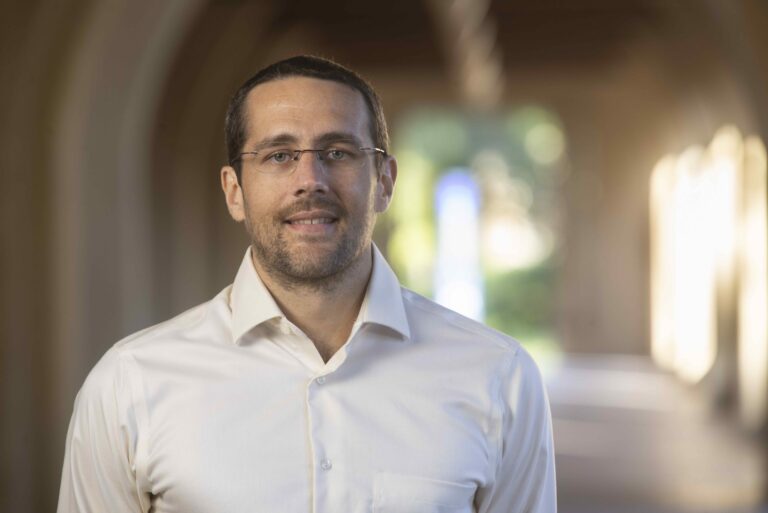 Pascal Geldsetzer, MD
Courtesy Stanford Medicine[/caption]
You can also listen to our previous interview with Dr. Geldsetzer. It is Show 1394: Viruses, Vaccines and Alzheimer Disease.
Confidence
Thank you for sharing your thoughts about one of our products! Please focus on the product performance and quality. Please read our Privacy Policy and Terms of Use for more information about the review process.
The People's Perspective on Medicine© 2026 The People's Pharmacy
All Rights Reserved