Dennis Miller, R.Ph. is a retired chain store pharmacist. His book, The Shocking Truth About Pharmacy: A Pharmacist Reveals All the Disturbing Secrets, can be downloaded in its entirety at Amazon for 99 cents.
Modern societies have become very good at manufacturing abundance and very bad at distinguishing abundance from health. Walk into a supermarket and the point is obvious: entire aisles are devoted to foods that are food-like rather than nourishing. They are engineered for shelf life, craving, convenience, and repeat purchase. The result is a grotesque paradox: people can be overfed and undernourished at the same time.
The pharmaceutical marketplace has developed a disturbingly similar pattern. Medicine, like food, is essential. Antibiotics can save a child from sepsis. Insulin can keep a person with type 1 diabetes alive. Anesthetic drugs make surgery humane. Antiretrovirals have transformed HIV from a death sentence into a manageable condition. To criticize pharmaceutical proliferation is not to deny the miracle of essential drugs.
But the existence of necessities does not justify an empire of excess. Whole foods are essential for life; ultra-processed foods are not. Likewise, some medicines are indispensable; the routine expansion of drug consumption into ever more corners of ordinary life deserves severe scrutiny.
The Processed-Food Model of Medicine
Processed foods do not merely appear on shelves because people freely demand them. They are designed, marketed, normalized, discounted, reformulated, branded, and defended by industries that understand human weakness with scientific precision. The consumer is told that choice is freedom, even when the available choices are variations on the same addictive, nutrient-poor theme.
Pharmaceutical abundance is often presented the same way: more options, more innovation, more personalization, more control. Yet the structure is familiar. A problem is identified, subdivided, renamed, measured, classified, and attached to a product. A threshold shifts. A risk factor becomes a condition. A normal discomfort becomes a syndrome. A life passage becomes a market.
The absurdity is not that drugs exist. The absurdity is that a civilization increasingly reaches for industrial fixes to manage the predictable consequences of industrial living. We eat destabilizing food, sleep under artificial light, sit for most of the day, outsource community, monetize attention, intensify work, and then medicalize the fallout.
Essential Does Not Mean Endless
The strongest defense of the pharmaceutical system is also the easiest to abuse: some medicines save lives. This is true and must be said plainly. It would be reckless, cruel, and anti-scientific to pretend otherwise. The point is not to romanticize a pre-pharmaceutical past filled with untreated infections, unrelieved pain, and premature death.
But the same logic applies to food. Because humans need food, we do not therefore celebrate toaster pastries, neon drinks, and snack products designed to bypass satiety. Because patients need medicines, we should not automatically celebrate the conversion of health into a lifelong subscription model.
The category error is enormous. Essential medicine is one thing. Routine pharmaceutical dependence as a default answer to social, dietary, psychological, and environmental dysfunction is another.
The Expansion of Treatable Life
The pharmaceutical imagination is expansive. It does not merely respond to disease; it helps define what counts as disease. This does not require conspiracy. It requires incentives. If a company profits by selling treatments, it benefits when more people qualify for treatment, when treatment starts earlier, when it lasts longer, and when uncertainty is resolved in favor of prescribing.
That incentive structure can quietly reshape medicine. Borderline measurements become urgent. Preventive care becomes pre-emptive medication. Mild symptoms become chronic identities. The human body becomes a portfolio of numbers to be optimized indefinitely.
This is the medical equivalent of turning hunger into snacking occasions. Breakfast becomes a bar, then a shake, then an energy drink, then a fortified dessert pretending to be wellness. In medicine, the ordinary variability of the body and mind can become a sequence of billable conditions, each paired with a product and a follow-up.
Polypharmacy: The Medicine Cabinet as Junk Drawer
The consequences are not theoretical. Public health agencies have warned that adverse drug events send more than 1.5 million people in the United States to emergency departments each year, with hundreds of thousands requiring hospitalization. Older adults are especially vulnerable because they often accumulate prescriptions across multiple clinicians, each medication added with a rationale, each continued by inertia.
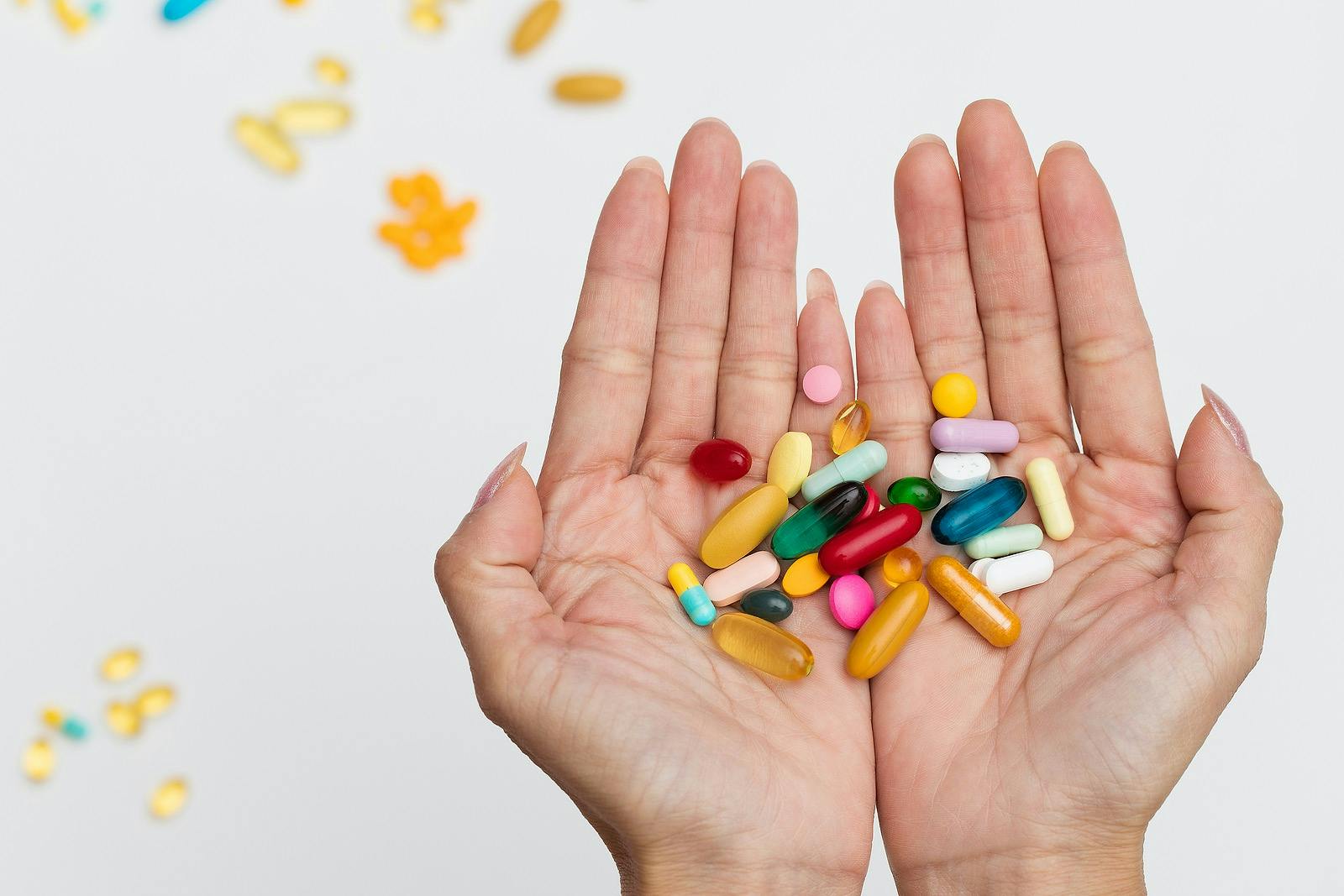
Polypharmacy is the pharmaceutical version of a pantry full of ultra-processed products. Each item may have a story. Each may seem harmless in isolation. Together they create a system that is difficult to understand, harder to manage, and capable of causing harm in ways no single label can fully predict.
A pill causes dizziness, so another pill is added. A drug disturbs sleep, so sleep is medicated. A medication worsens digestion, mood, blood pressure, libido, or cognition, and the cascade continues. The patient becomes a site of chemical negotiation, not a person whose life might need simplification.
The Moral Camouflage of “Innovation”
Innovation is one of the most abused words in health care. It can mean a genuine breakthrough. It can also mean a marginal reformulation, a new delivery mechanism, a patent strategy, a marketing category, or a product that is statistically impressive and clinically underwhelming.
The food industry perfected this language long ago. A cereal becomes “heart healthy.” A candy-like yogurt advertises protein. A processed snack is fortified with vitamins, then sold as responsible. The presence of a beneficial ingredient distracts from the overall pattern.
Pharmaceutical marketing performs a similar maneuver. The existence of real breakthroughs lends moral prestige to the entire pipeline. The public is asked to view the industry through its best cases: the lifesaving cancer drug, the infection cured, the rare disease treated. But an industry cannot be judged only by its miracles. It must also be judged by its pricing, its lobbying, its disease expansion, its side effects, and its dependence on permanent demand.
When Prevention Becomes Product Consumption
The most revealing failure is prevention. A sane health system would be obsessed with the conditions that make illness less likely: decent food, clean air, walkable communities, restorative sleep, meaningful work, social connection, and reduced exposure to toxins. Instead, prevention is often translated into testing, tracking, risk scoring, and prescribing.
This is not because lifestyle advice is always sufficient. It is not. Nor is it because personal responsibility can solve structural problems. It cannot. The scandal is that structural causes are so frequently ignored until they become individual diagnoses, at which point they become monetizable.
A population fed cheap processed food, deprived of time, stressed by economic insecurity, and surrounded by sedentary design will predictably develop chronic illness. Treating that predictable illness one prescription at a time is like selling bottled water downstream while refusing to stop poisoning the river upstream.
The False Choice Between Science and Skepticism
Critics of pharmaceutical excess are often dismissed as anti-science. This is intellectually lazy. Science is not the same thing as industry. Evidence is not the same thing as advertising. Medicine is not the same thing as medication.
Real scientific medicine should be more skeptical, not less. It should ask whether a drug improves outcomes that matter, not merely numbers that look tidy on a chart. It should ask who was included in trials, who was excluded, how long follow-up lasted, what harms were missed, and whether non-drug interventions were fairly compared.
Above all, it should ask whether the treatment burden imposed on a patient is worth the benefit. A life spent managing prescriptions, appointments, side effects, refills, insurance approvals, and anxiety over biomarkers is not automatically a healthier life.
Deprescribing as a Public Health Ethic
If nutrition needs a return to whole foods, medicine needs a stronger ethic of appropriate use. That means prescribing when the case is clear, but also deprescribing when the case has expired.
It means reviewing medication lists with the same seriousness used to start treatment. It means rewarding clinicians for thoughtful restraint, not just action.
It also means admitting that some problems are not best solved by chemistry. Loneliness is not a neurotransmitter deficiency in need of permanent branding. Exhaustion is not always a disorder. Grief is not proof of broken biology. Aging is not a pharmaceutical failure. Risk is not disease.
The mature position is not “no drugs.” It is “the right drugs, for the right people, for the right reasons, for the right duration.” Anything less is not medicine. It is chemical consumerism with a white coat.
A Healthier Standard of Progress
A society should not measure health progress by the number of products consumed. If the supermarket of the future contains ten thousand packaged edible substances and fewer people know how to cook, that is not progress. If the medicine cabinet of the future contains twelve daily prescriptions for conditions rooted partly in food systems, stress systems, sleep systems, and social systems, that is not progress either.
The humane goal is not to reject pharmaceuticals. It is to put them back in their proper place: powerful tools, sometimes miraculous, often useful, occasionally dangerous, and never a substitute for the foundations of health.
Processed food culture taught us what happens when industry captures appetite and calls it choice. Pharmaceutical culture risks teaching us what happens when industry captures vulnerability and calls it care. The first fills the cart. The second fills the cabinet. Both can leave the human being emptier than before.
Dennis Miller, R.Ph. is a retired chain store pharmacist. His book, The Shocking Truth About Pharmacy: A Pharmacist Reveals All the Disturbing Secrets, can be downloaded in its entirety at Amazon for 99 cents.