We really did not want to write about the Cyclospora outbreak again.
Last week, we confessed that we had tried hard to avoid the subject altogether. Plenty of news organizations were already reporting on the parasite behind thousands of cases of prolonged, sometimes explosive diarrhea.
Then Lydia wrote to us.
She wanted to know why public-health officials could not identify the contaminated food, why the media were making such a fuss and how Cyclospora differed from the notorious cruise-ship scourge norovirus.
Lydia’s questions persuaded us to start digging. We explained in last week’s newsletter article that norovirus is a highly contagious sprinter that usually strikes fast and burns out within a few miserable days. Cyclospora is more like a foodborne marathoner. It may take a week or two to announce itself and can cause watery diarrhea that disappears, returns and drags on for a month or longer.
We assumed that by this week the mystery would be mostly solved.
That was overly optimistic.
Instead, the Cyclospora outbreak has turned into a public-health roller coaster featuring soaring case counts, conflicting numbers, a lettuce recall, finger-pointing, a supposedly positive laboratory test that suddenly became negative and an argument over whether federal cutbacks had anything to do with the painfully slow response.
Keep your seat belt fastened. This ride is not over!
The Cyclospora Outbreak Numbers Keep Exploding
The official cyclosporiasis surveillance season started on May 1, 2026. That’s when the CDC started tracking cases of this gastrointestinal parasite. And sure enough, the feds identified a couple of cases in early May.
On July 14, 2026, the Centers for Disease Control and Prevention reported 1,645 confirmed domestically acquired cases and more than 5,100 additional illnesses awaiting analysis.
One week later, the official tally had undergone quite a growth spurt.
The CDC reported 4,173 confirmed domestic cases in 41 states, 767 infections associated with international travel and more than 7,400 additional cases still being evaluated. More than 300 people had been hospitalized.
State health departments were reporting substantially higher numbers. Michigan alone had identified more than 7,000 cases. In a typical year Michigan might report as many as 50 cases. Obviously, something is very different this year!
The People’s Pharmacy is based in North Carolina, far away from Michigan. At last count, more than 500 cases have been reported here. When reporters contacted state agencies individually, the combined number of confirmed and suspected illnesses exceeded 11,000. It makes you wonder how well the CDC, FDA and NIH are doing when it comes to tracking cases during this diarrhea debacle.
The Confusing Timeline of This Cyclospora Outbreak
The increase in cases does not mean that thousands of people suddenly became sick over a weekend. Reports can take weeks to work their way from patients and doctors through laboratories, state health departments and the CDC. Differences in the way states classify probable and confirmed cases also complicate comparisons.
Nevertheless, watching the national count leap by thousands overnight does not exactly inspire confidence in the surveillance system. It is a little like hearing a smoke alarm finally go off after several rooms are already in flames.
Did Investigators Finally Find the Lettuce?
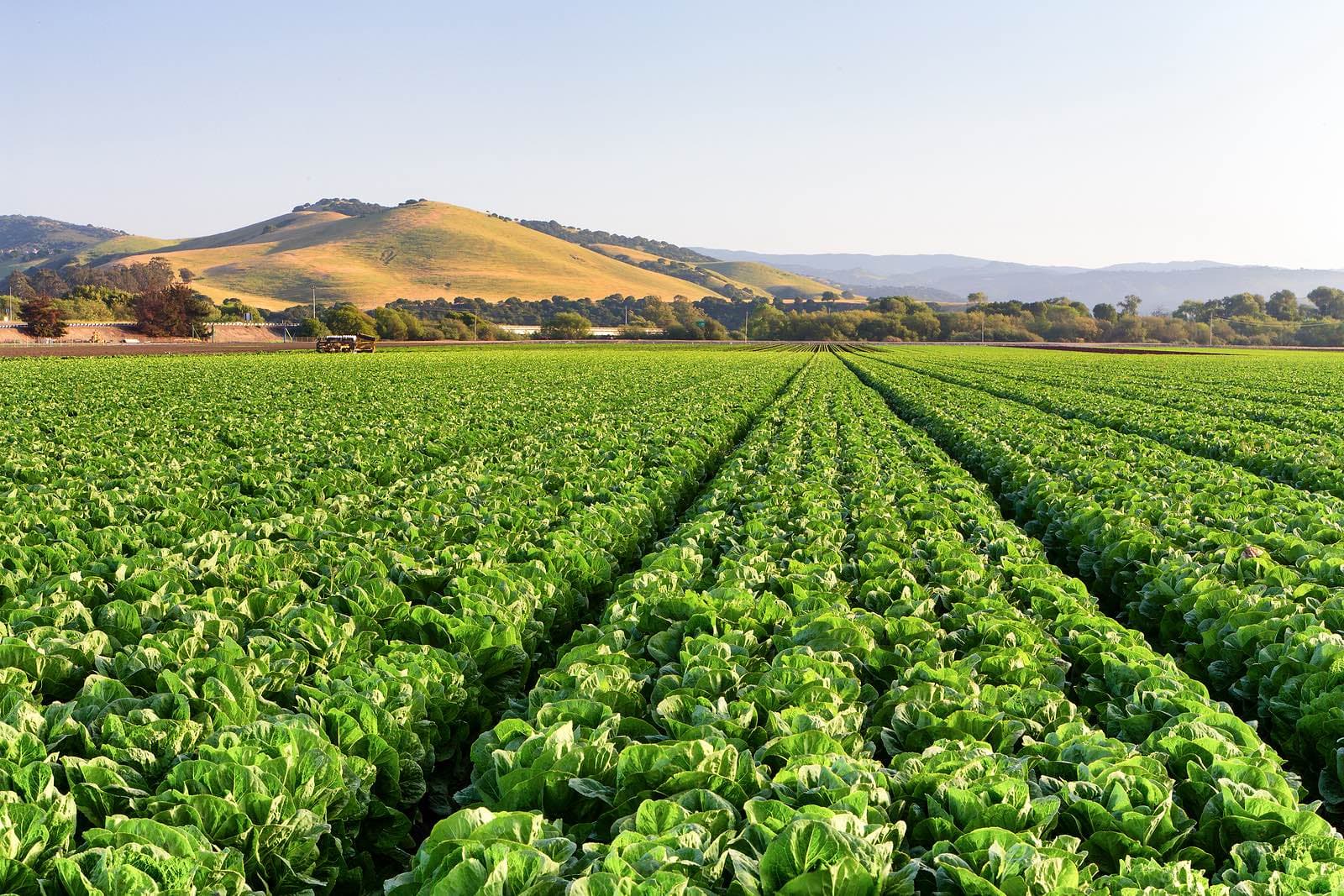
Federal investigators have linked one large cluster of illnesses in Michigan, Ohio, West Virginia, Indiana and Kentucky to shredded iceberg lettuce served at Taco Bell restaurants.
According to the FDA, 1,644 infected people in those states reported eating at Taco Bell before becoming ill. Among 190 Michigan patients whose meals were analyzed in greater detail, 90 percent reported eating iceberg lettuce.
The traceback investigation centered on Taylor Farms de Mexico, a facility in Guanajuato that supplied shredded iceberg lettuce to the affected restaurants. Taylor Farms subsequently removed iceberg lettuce sourced from central Mexico from the American market and recalled numerous food-service products. The recall also includes certain Marketside-brand iceberg salads and shredded lettuce sold at Walmart with specified package sizes and use-by dates. The FDA advises consumers not to eat recalled products and says its investigation is continuing.
Lest you think this is a Mexican company that messed up bigly, follow the money. The parent company is Taylor Fresh Foods, Inc. from California. The Mexican entity is part of the Taylor Farms corporate business empire. As far as I can tell, the organization has gross annual sales of around $7 billion and employs over 20,000 people.
Back to the question of who got sick, where did they get sick and how did they get sick? Many had eaten at the same restaurant chain. Many, if not most, had eaten iceberg lettuce. It was an easy leap to blame the Cyclospora outbreak on contaminated lettuce traced to one supplier.
Case closed? Not quite!
The Positive Test That Wasn’t Positive
On July 18, the FDA reported that a lettuce sample supplied by Taylor Farms de Mexico had tested positive for Cyclospora. That appeared to be the laboratory evidence investigators had been waiting for.
Then the agency took it back.
FDA laboratory experts re-examined the result and concluded that it did not represent true “amplification.” The positive finding was reclassified as a false positive and removed from the agency’s update.
Here is how the FDA corrected itself on July 19, 2026:
“FDA is providing an update regarding the sample of lettuce supplied by Taylor Farms de Mexico which was reported positive on July 18, 2026. Due to the complexity in detection of Cyclospora, FDA laboratory experts re-reviewed the sample results and have concluded that the finding does not represent true amplification and should be considered a false positive.”
As of July 19, the FDA said it had no confirmed positive Cyclospora test from any food sample. On that day the FDA reported case counts of 1,644 total illnesses. Just for the record, that was way behind what was actually happening on the ground.
Taylor Farms then announced that the FDA had apologized. The FDA disputed that characterization.
So now we had a recall, an alleged apology, a denial of the alleged apology and a laboratory result that vanished almost as quickly as it appeared. This was not public-health communication at its finest.
Blaming a company on the basis of a test that is later withdrawn makes the agency look careless. Declaring that the retracted test completely clears the company would be equally misleading.
The false positive does not erase the epidemiologic evidence or the supply-chain traceback. The implicated lettuce had been eaten and discarded long before investigators could test it. A clean or inconclusive sample collected later cannot tell us whether lettuce shipped weeks earlier was contaminated.
But the laboratory reversal gave everyone something new to argue about while making the public even less certain whom to believe.
When thousands of people are sick, government agencies should be reducing confusion, not creating a fresh batch.
Does the False Test Clear Taylor Farms?
No. It also does not prove that Taylor Farms caused every Cyclospora illness reported around the country.
The FDA says the epidemiologic information and traceback records continue to converge on shredded iceberg lettuce from Taylor Farms de Mexico in the five-state Taco Bell cluster. The agency emphasizes that this cluster represents only a subset of the nationwide illnesses. Other brands, restaurants, foods or distribution channels could still be implicated. That distinction matters.
There may be strong evidence linking one large outbreak to a particular supply chain even when investigators cannot produce a contaminated piece of lettuce from the meals people ate several weeks ago.
Politics and the
Just when the Cyclospora story seemed confusing enough, politics entered the produce aisle. Federal campaign-finance records show that Taylor Fresh Foods, the company behind Taylor Farms, contributed $1 million to MAGA Inc., a super PAC supporting Donald Trump, on March 26, 2025. The company and its executives have also made substantial contributions to other Republican-aligned political organizations.
Taylor Farms representatives met with White House and FDA officials on July 16, 2026, while the company was challenging aspects of the federal investigation. Two days later, the FDA reported that a sample of lettuce supplied by Taylor Farms de Mexico had tested positive for Cyclospora. One day after that, the agency announced that the result was a false positive.
That sequence was bound to raise eyebrows. And you already read that Taylor Farms announced that the FDA had “apologized” for its false test. Then the FDA disputed that word. The false-positive result did not actually exonerate Taylor Farms. The FDA continues to say that patient interviews and supply-chain records converge on shredded iceberg lettuce from Taylor Farms facilities in central Mexico as the likely source of the large five-state outbreak.
In other words, one piece of laboratory evidence disappeared. The epidemiologic and traceback evidence did not. The answer to this communications boondoggle is not to point fingers but to trace food better!
Why Is Food Traceability Still So Primitive?
Congress passed the Food Safety Modernization Act in 2010 and it was signed into law in 2011. One of its major goals was to move the country from reacting to foodborne outbreaks toward preventing them.
The FDA eventually developed a Food Traceability Rule requiring companies that handle high-risk foods to maintain detailed electronic records. Those records are supposed to allow investigators to follow contaminated food through farms, processors, distributors, restaurants and retailers much more rapidly.
The FDA started the ball rolling with its “final rule” on November 21, 2022. The original compliance date was January 20, 2026. It was postponed. Congress has now directed the FDA not to enforce the traceability rule before July 20, 2028.
That means a major food-safety law passed in 2011 may not have a fully enforceable traceback system until 17 years later. Seventeen years!
Americans can track an Amazon package from a warehouse to their front porch in real time, but tracing lettuce from a farm to a restaurant requires 17 years of preparation.
During that delay, investigators must still reconstruct complicated supply chains by gathering invoices, shipping records, restaurant receipts and patient recollections from numerous organizations using different systems. Patients may be asked what they ate two weeks earlier. Could you remember everything you ate that long ago?
- Was there lettuce on that taco?
- What kind?
- Which shipment supplied the restaurant?
- Which facility shredded it?
- Which farm grew it?
- What water touched it?
By the time investigators assemble the answers, the food has been eaten, the packaging discarded and the trucks cleaned.
The Food Traceability Rule was designed to help solve precisely this kind of problem. Postponing it until 2028 may be convenient for companies that find the recordkeeping burdensome. It is considerably less convenient for people sprinting to the bathroom.
Did CDC Cutbacks Slow the Cyclospora Outbreak Response?
Health and Human Services Secretary Robert F. Kennedy Jr. has rejected the suggestion that federal reductions contributed to the slow recognition of the Cyclospora outbreak. We cannot prove that the cutbacks caused the delay.
The Foodborne Diseases Active Surveillance Network, or FoodNet, is primarily designed to track long-term trends rather than function as an emergency-response squad. Cyclospora also remains a nationally notifiable disease and continues to be monitored through other reporting systems. But something unquestionably changed.
Beginning July 1, 2025, FoodNet reporting became optional for all pathogens except Salmonella and Shiga toxin-producing E. coli. Cyclospora, Campylobacter, Listeria, Shigella, Vibrio and Yersinia were no longer included in mandatory FoodNet reporting.
Reducing surveillance did not contaminate the lettuce. It did not create Cyclospora. It did not force anyone to eat a taco.
But when a disease-surveillance system is scaled back, officials should not act surprised when the national picture becomes harder to assemble. Public-health monitoring is like a smoke detector. Removing it does not start a fire. It may, however, influence how long the fire burns before everyone realizes the house is filling with smoke.
Who Goofed?
There may be plenty of responsibility to share. Federal officials were far behind state health departments in reporting the scale of the outbreak. Mandatory FoodNet surveillance for Cyclospora had been made optional. The long-awaited food-traceability requirements were postponed. The FDA announced a positive laboratory test and withdrew it one day later. The supplier’s recall information was not initially easy for ordinary shoppers to decipher.
Taylor Farms, meanwhile, appeared eager to portray the false-positive reversal as vindication, even though the FDA said the epidemiologic and traceback evidence had not changed.
Politicians blamed bureaucrats. Companies blamed confusing tests. Some people blamed Taco Bell. Others blamed Mexico. Mexican growers suspected that Americans were looking for a convenient foreign scapegoat.
Everyone seemed ready to assign responsibility before anyone could explain exactly where, when and how the parasite entered the food supply.
Here is our conclusion:
The greatest failure may not be one bad laboratory test or one contaminated shipment. It may be a fragmented food-safety system that still struggles to answer a basic question:
Where did our food come from?
Which Lettuce Has Actually Been Recalled?
The FDA says consumers should avoid recalled iceberg lettuce products from Taylor Farms de Mexico.
These include certain Marketside-brand products sold at selected Walmart stores:
- 12-ounce and 24-ounce Iceberg Salad packages
- 8-ounce and 16-ounce Shredded Lettuce packages
- Relevant “Best if Used By” dates run from July 18 through August 3, 2026
Other recalled products were distributed to restaurants and institutional food-service customers in numerous states. Taco Bell says affected restaurants stopped using lettuce from the implicated supplier.
Anyone who has a recalled product should throw it away or return it for a refund. Containers, refrigerator drawers, cutting boards and surfaces that touched the lettuce should be cleaned carefully. FDA’s investigation remains open, so additional products or distribution channels could be identified.
Is Hydroponic or Greenhouse Lettuce Safer?
We have received questions from visitors to this website who read last week’s article titled:
Cyclospora Parasite Cases Explode as the CDC Plays Catch-Up
A nasty foodborne diarrhea outbreak spreads as the Cyclospora parasite sickens thousands. Lydia wants to know how it differs from norovirus.
Q. Carolynne asked whether hydroponically grown or greenhouse-grown greens can be trusted.
Such produce may reduce exposure to some hazards associated with soil, wildlife and open-field agriculture. A controlled greenhouse may also allow growers to manage water, workers and contamination risks more closely.
But “hydroponic” is not the same as “pathogen-proof.”
Hydroponic lettuce is grown in water rather than soil. If that water, fertilizer solution, equipment or the hands of workers become contaminated, organisms can spread through the system. Lettuce may also be contaminated during harvesting, washing, shredding, packaging, transportation or food preparation.
A greenhouse is a growing method, not a guarantee.
We would not assume that hydroponic Bibb lettuce is contaminated. We also would not treat the word “hydroponic” on the label as an invisible biological force field.
Whole heads that can be separated and washed may offer more control than shredded lettuce or salad mixes that combine produce from numerous farms. Cooking remains the most reliable way to kill Cyclospora, although we concede that cooked lettuce is not everyone’s idea of a culinary triumph.
Q. Can Cyclospora Be Washed Off Lettuce?
Thorough washing is sensible, but it cannot guarantee that Cyclospora will be removed.
The CDC recommends washing produce under running water even when the package says it was prewashed. Firm produce such as cucumbers and melons can be scrubbed with a clean brush. Damaged or bruised portions should be removed.
Do not wash produce with bleach, dishwashing detergent or household disinfectants.
Cyclospora may cling to crevices and leafy surfaces. Chemical sanitizers are also unlikely to eliminate it completely. Cooking produce to at least 158 degrees Fahrenheit, or 70 degrees Celsius, can kill the parasite. Most Americans don’t cook lettuce, though! (Maybe we should. According to The New York Times, stir-fried lettuce symbolizes good luck in Chinese culture. Here’s a gift recipe for stir-fried lettuce with garlic and egg.)
For people at especially high risk from dehydration or prolonged infection, choosing cooked vegetables temporarily may provide additional reassurance.
Could Hotter Weather Be Contributing?
Q. Liz asked whether the unusual number of cases could be related to increasing temperatures.
That is an intriguing question, but we cannot yet blame this particular outbreak on climate change.
Cyclospora illnesses are strongly seasonal. In many regions they increase during warm or rainy periods. Temperature, humidity, rainfall, irrigation practices and contaminated water may all affect how the parasite matures and reaches produce. Researchers have also found that seasonal patterns vary from one country to another.
Warmer temperatures and extreme rainfall could theoretically increase some opportunities for contaminated runoff or irrigation water to reach crops. Drought can create different risks if growers must rely on questionable water sources.
But “plausible” is not the same as “proven.”
Investigators would need evidence about the farms, weather, water and contamination routes involved in this outbreak before concluding that rising temperatures played a role.
Will Cyclospora Go Away Without Treatment?
Q. Carol asked whether the infection will eventually disappear without medicine.
For many otherwise healthy people, it will. The CDC says most people with healthy immune systems eventually recover without treatment. The problem is the word eventually.
Without treatment, symptoms may last from a few days to a month or longer. The diarrhea may improve and then return one or more times. Fatigue and weight loss can linger after the worst gastrointestinal symptoms have subsided.
Older adults, young children and people with weakened immune systems may be especially vulnerable to dehydration and prolonged illness. Millions of people are taking medications that impair their immune system reactivity.
Persistent or recurring watery diarrhea deserves medical attention. Patients should mention any raw lettuce, salads, herbs or other uncooked produce eaten during the preceding two weeks and ask whether a Cyclospora-specific stool test is appropriate.
Routine testing may not automatically include this parasite.
Q. Is It Safe to Take Imodium?
Loperamide, sold under the brand name Imodium, can reduce the frequency and urgency of diarrhea. That may sound awfully appealing to someone who is afraid to venture more than 15 feet from a bathroom.
It does not kill Cyclospora or shorten the infection. Someone with mild watery diarrhea and no warning signs should ask a health professional whether short-term loperamide would be appropriate. It should not become a substitute for diagnosis and treatment when diarrhea is persistent or recurring.
People should not self-treat with loperamide if they have bloody or black stools, fever, severe abdominal pain, significant abdominal swelling or severe diarrhea without first consulting a clinician. The label also advises contacting a health professional if diarrhea lasts more than two days.
The most important first step is replacing fluids and electrolytes. Dizziness, reduced urination, extreme thirst, weakness or confusion can signal dangerous dehydration.
What If Someone Is Allergic to Bactrim?
Trimethoprim-sulfamethoxazole, abbreviated TMP-SMX and sold under the brand names Bactrim and Septra, is the treatment of choice for cyclosporiasis.
Jan cannot take it because of a previous sulfonamide reaction.
Unfortunately, the CDC says that no highly effective alternative has been identified for people who are allergic to or cannot tolerate TMP-SMX.
Possible approaches include supportive care while the infection resolves, trying a drug supported by limited evidence or, in carefully selected patients, undergoing TMP-SMX desensitization under the supervision of an allergy specialist. Desensitization would not be appropriate for someone with certain severe or life-threatening previous reactions.
Ciprofloxacin has shown modest activity in one small study, but the CDC notes that substantial clinical experience suggests it is often ineffective. And drugs in this class (fluoroquinolones) have some extremely serious side effects. Read more about that problem at this link.
Metronidazole, azithromycin, doxycycline, tinidazole and several other drugs also appear ineffective.
What About Nitazoxanide?
Q. Ken mentioned nitazoxanide, sold under the brand name Alinia.
There is an understandable mix-up here. Nitazoxanide is used against Cryptosporidium, another parasite that can cause diarrhea. Cryptosporidium and Cyclospora sound similar and are both protozoan parasites, but they are not the same organism.
The Cleveland Clinic passage Ken quoted refers to cryptosporidiosis, not cyclosporiasis.
Nitazoxanide is not listed by the CDC as an established effective alternative for Cyclospora infection. The agency continues to say that no highly effective substitute for TMP-SMX has been identified.
What Can Consumers Do Right Now?
The Cyclospora outbreak is confusing, but the practical advice need not be:
- Check refrigerators for recalled iceberg lettuce products.
- Discard recalled products or return them for a refund.
- Ask restaurants where their shredded iceberg lettuce came from.
- Wash produce under running water, including packages labeled prewashed.
- Choose whole produce that can be separated, washed or peeled when practical.
- Buy from a farmers’ market when possible. No safety guarantees, but we love our farmers’ market!
- Cook vegetables when feasible, especially for vulnerable individuals.
- Refrigerate cut produce promptly.
- Clean cutting boards, refrigerator drawers and containers that touched recalled lettuce.
- Do not use bleach, detergent or household disinfectants on food.
- Seek medical care for persistent or recurring watery diarrhea.
- Ask specifically about Cyclospora testing.
- Replace fluids and electrolytes.
- Do not assume that Imodium treats the underlying infection.
- Make sure the prescriber and pharmacist know about drug allergies and all other medicines before TMP-SMX is prescribed. It can interact with certain other medications, including ACE inhibitors like lisinopril.
The People’s Pharmacy Bottom Line
Lydia nudged us into covering this story last week. We thought that by now we would be able to tell her precisely what happened. We cannot.
Investigators have linked one huge cluster to shredded iceberg lettuce supplied by Taylor Farms de Mexico. The traceback and epidemiologic evidence remain substantial. But the FDA’s positive sample was retracted as a false positive, leaving the government without laboratory confirmation from the food itself. We are expecting better laboratory testing in the future, but we are not holding our breath.
Meanwhile, thousands of additional cases are still being sorted out. State totals have repeatedly raced ahead of federal numbers. FoodNet surveillance was narrowed. A modern food-traceability system has been postponed until 2028.
Perhaps no single mistake explains this debacle. That may be the most disturbing conclusion of all.
The system appears to depend on:
- Sick people remembering what was on a taco two weeks earlier
- State investigators working with uneven resources
- Companies deciphering their own supply chains
- Federal agencies assembling the pieces after thousands of people have already developed diarrhea.
We do not need officials to assign blame prematurely. We need them to identify contaminated food quickly, communicate clearly and prevent more people from getting sick.
Consumers should not panic or give up fruits and vegetables. They should check the recall, handle produce carefully and seek medical attention for persistent or recurring watery diarrhea.
Public officials should answer a question that has become increasingly difficult to ignore:
How can the United States track a package delivered to our front door almost minute by minute, yet struggle for months to determine where a bag of shredded lettuce came from?
Final Words:
A small favor, please. If you found this article informative, please pass it along to family and friends. There is a lot of confusion around this Cyclospora outbreak. Because there is an available treatment, people should know what to do if they are tested and diagnosed with cyclosporiasis. Thank you for supporting our work.