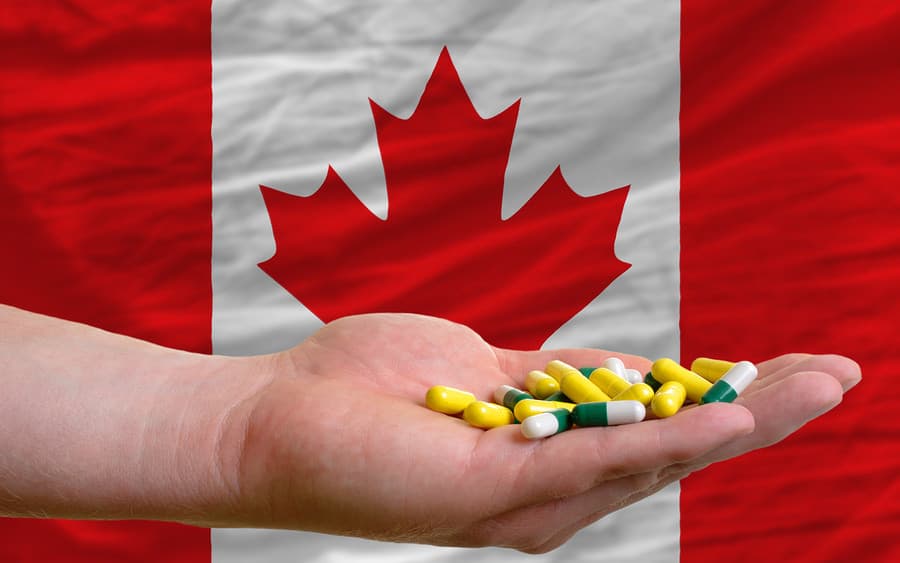
Americans pay a lot more for brand name medicines than people in other countries. We’re not talking about $20 or $30 more. In some cases we are referring to hundreds of dollars a month more. There are even situations where the difference is in the thousands of dollars. That is why Canadian drug imports have provided a financial lifeline for Americans who cannot afford their prescriptions at U.S. prices. Big brand name drug companies hate the idea that Americans are buying their pricey pills at a deep discount from other countries.
Now, many patients fear that their lifeline is about to be cut. That’s because U.S. Customs and Border Protection (CBP) will make it harder, if not impossible, for Americans to obtain brand name medicines from abroad starting on October 22, 2026.
This administrative change in access has many patients panicking. Stopping some medicines could have devastating, if not deadly, consequences.
Why Would Anyone Seek Canadian Drug Imports?
Let’s make one thing abundantly clear. We are not talking about generic medications. The US has some of the lowest generic drug prices anywhere. That’s because most generic drug manufacturing happens abroad where labor costs are much lower and government oversight less stringent. We have written about this problem so many times that you have likely lost count and lost interest.
A recent video from Morning Brew describes the nature of the generic drug problem. Here is a link to explore this scandal in greater depth.
We are discussing brand name medicines made by huge pharmaceutical companies with the most modern manufacturing equipment. These are extremely wealthy organizations that can afford the very best personnel and can implement the highest quality control standards. Although even brand-name drug companies can make mistakes, their profit margins are so great that they seem far more concerned about maintaining high standards than some generic manufacturers.
The Trump Administration Once Bragged About Canadian Imports:
KFF Health News did the research. Phil Galewitze wrote a fascinating article on September 25, 2020. Six years ago the administration was excited that Americans could save money by buying drugs from Canada.
The headline read:
“Trump Approves Final Plan to Import Drugs From Canada ‘for a Fraction of the Price’”
“President Donald Trump, outlining his ‘America First Health Plan’ on Thursday, announced that his administration will allow the importation of prescription drugs from Canada.
“The final plan clears the way for Florida and other states to implement a program bringing medications across the border, despite the strong objections of drugmakers and the Canadian government.”
How Many People Purchase Medications from Abroad?
Here is what Phil Galewitze wrote for KFF Health News:
“For decades, Americans have been buying drugs from Canada for personal use — either by driving over the border, ordering medication on the internet or using storefronts that connect them to foreign pharmacies. Though the practice is illegal, the FDA has generally permitted purchases for individual use.
“About 4 million Americans import medicines for personal use each year, and about 20 million say they or someone in their household has done so because prices are much lower in other countries, according to surveys.”
Why would so many people go to the trouble of buying brand name medicines from abroad? As KFF Health noted above, prices in the U.S. are outrageous. The same identical brand name drugs made by the original manufacturer can be astonishingly affordable in countries like Canada, Australia, New Zealand and the UK.
Keep in mind that pharmaceutical companies are selling medications around the world and making a lot of money in the process. It’s just that they can make so much more money in the U.S. They resent the idea that Americans have access to Canadian drug imports.
The Insurance Company Roulette Wheel
Many insurance companies deny patients access to brand name medicines if a cheap generic is available. In essence, insurance companies get to practice medicine, overruling a physician’s decision about what a patient needs.
Say an endocrinologist decides that she wants her patient with hypothyroidism to take the brand name medicine Synthroid (levothyroxine). The insurance company can refuse to pay on the grounds that the FDA says all generic levothyroxine products are equivalent. If a patient requests Synthroid, the pharmacy may tell that person that she will have to pay for that thyroid medicine out of pocket.
We have described problems with the generic form of the antidepressant medicine, Wellbutrin XL 300 (bupropion XL 300). The last time we checked, the retail price for a month’s worth of Wellbutrin XL 300 was at least $2,500 in the U.S. The identical brand name Wellbutrin XL 300 could cost less than $200 for a three-month supply from an online Canadian pharmacy. Give that price differential more than a 5-second consideration. That is a lot of money, even for someone who is well off financially.
Losing Access to Affordable Canadian Drug Imports
An article in the Wall Street Journal, September 22, 2026 caught our attention this week. It was titled:
“Americans Are About to Lose Access to Cheap Gray-Market Prescriptions From Canada
Millions who use online pharmacies from Canada and other countries could get cut off in October.”
The author describes a woman in Dallas who needs a medication called Xifaxan for her painful digestive tract condition. Because her insurance company would not pay for the drug, the WSJ article lists her out-of-pocket cost in the US at $1,100 a week. The online Canadian pharmacy she has been using charges her a tiny fraction of that for the same brand name Xifaxan.
This woman is not alone. Millions of Americans who depend upon online Canadian pharmacies to afford brand name medications at affordable prices are panicking. Stopping critical medicines could be life threatening. Two drugs that come to mind are anticoagulants, Eliquis (apixaban) and Xarelto (rivaroxaban). These drugs prevent blood clots that could lead to strokes. More about them shortly.
Why Is U.S. Customs and Border Protection (CBP) Changing the Rules?
For roughly 25 years, Americans have ordered prescription medicines for personal use from pharmacies in Canada and other countries. The legality has always been complicated.
The FDA states that in most circumstances it is illegal for individuals to import drugs into the United States for personal use. At the same time, however, the agency has maintained a personal importation policy under which FDA personnel may exercise discretion in certain circumstances.
Among the factors the FDA says it may consider are whether the medicine poses an unreasonable risk, whether it is intended for personal use and whether the quantity is generally no more than a three-month supply.
In practice, Americans have been receiving such prescriptions through international mail for decades. We spoke with Lucia Mueller, President of PharmacyChecker’s International Pharmacy Verification Program & Drug Price Comparisons. She told us that under the previous system, if U.S. Customs and Border Protection (CBP) encountered a questionable medication shipment, the matter could be referred to the FDA for review.
In most cases, though, millions of people have been able to access medications from Canada and around the world with relatively little drama. And they have saved enormous amounts of money, especially for expensive brand name drugs.
For reasons that remain somewhat mysterious, the administration is about to change the rules. Customs and Border Protection (CBP) is instituting new international-mail procedures that will, in essence, prevent the importation of medicines from Canada and/or other countries. Lucia Mueller told us that most prescription medicines currently being shipped to individual Americans from Canada and other countries will stop coming into the United States on or before October 22.
The October 22 Deadline Could Stop Canadian Drug Imports
U.S. Customs and Border Protection has abolished the old de minimis treatment that allowed many packages valued at $800 or less to enter under simplified procedures. CBP has established a new process for low-value international mail, including shipments that are subject to requirements imposed by other federal agencies.
Prescription medicines fall under FDA jurisdiction. Mueller tells us that companies involved in moving international prescriptions through the postal and customs system are concluding that they cannot meet the new requirements for ordinary personal prescription orders.
One of the key companies is Zonos, which handles customs processing for international shipments. According to Mueller, dispensing partners in Canada, Australia, India and elsewhere that depend upon this system are being told that prescription drug shipments will no longer be accepted.
Her bottom-line prediction is sobering:
Few, if any, of the personal prescription shipments now reaching Americans through international mail will continue under the new system.
We will not know whether that prediction proves completely accurate until the new procedures actually take effect. But patients aren’t waiting until October 22 to worry.
Readers Share Their Prescription Panic
Lucia Mueller at PharmacyChecker told us that people are worried that they will lose access to critical medicine.
Linda is one of those worried about the anticoagulant Eliquis:
“I have a high risk of stroke and or heart attack and was placed on Eliquis in 2018. I am on Medicare only now and cannot afford the high drug deductibles, so I have been ordering a 90-day prescription from a Canadian pharmacy for more than 75% less than any American pharmacy charges.
“The only other option I will have is to go off of the Eliquis altogether, which my doctor advises against.”
That last sentence should get everyone’s attention.
Eliquis (apixaban) is an anticoagulant. It helps prevent dangerous blood clots.
Nancy is a nurse and also was prescribed Eliquis:
“Since early 2025 I have been ordering Eliquis from pharmacychecker.com-approved Canadian on-line pharmacies. When I first approached my cardiologist to request a written prescription to order from a Canadian pharmacy, I was unsure what his reaction would be, positive or negative.
“Happily, he did not hold illogical beliefs that drugs purchased from Canada are inferior and was glad to help me save money. He continues providing prescriptions, as do other cardiologists in the same hospital system. Currently I am paying $136 for each 90-day supply of 2.5 mg brand-name Eliquis produced by Pfizer, taken twice a day. This is under $600 per year.
“Even with Part D insurance for those over 65, my annual cost would be well over $2,000. It comes as no surprise that our current Administration has now caused patients great concern, stress and anxiety by announcing that changes in our ability to purchase medications from Canada might be afoot.”
The FDA-approved prescribing information contains a boxed warning that premature discontinuation of Eliquis increases the risk of thrombotic events. In clinical trials involving patients with atrial fibrillation, an increased rate of stroke was observed during a transition off Eliquis.
Xarelto (rivaroxaban), another commonly imported anticoagulant, carries essentially the same warning: stopping it prematurely without adequate alternative anticoagulation increases the risk of thrombotic events. In plain English, thrombotic events are blood clots! They can be life-threatening.
Lee adds this heart-breaking story:
“ Thanks for my chance to reply. I am an 82-year-old senior living only on Social Security, and I’m a three-time cancer survivor with type two diabetes and an irregular heartbeat. I require an expensive diabetes medication and a blood thinner to stay alive and healthy.
“Without International Pharmacy, my medications would cost more than my food. So, I would have to choose food, and live with uncontrolled diabetes and a chance of blood clots any time. Buying my two main medications from foreign pharmacies has probably saved my life.”
In other words, patients taking these medicines should not simply stop them because their international prescription fails to arrive. Anyone who fears an interruption should contact the prescriber or pharmacist promptly to arrange a safe alternative. Hopefully, it will be affordable. But we do fear that millions of people could be left high and dry because the new Customs and Border Protection procedures could cut people off from critical medicines.
Could Cutting Off Established Pharmacies Create Another Risk?
There is also a potential unintended consequence from the CBP crackdown. If patients who have relied on known pharmacies suddenly lose access, some may start searching the internet for alternatives. Desperation creates opportunity for scammers.
Someone accustomed to paying $136 for a three-month supply of Eliquis may be especially vulnerable to a website promising the same medicine for $100 after the pharmacy she previously trusted can no longer ship it. That could expose patients to counterfeit or substandard medicine.
Others may ration what they have left. Some may skip doses. And patients like Linda are already telling PharmacyChecker that they may consider stopping treatment altogether because they cannot afford the U.S. price. For medicines such as Eliquis and Xarelto, that is especially concerning because the official prescribing information specifically warns about an increased risk of blood clots after premature discontinuation.
October 22 Is Coming Fast:
At this point, there are still unanswered questions.
- Will CBP and FDA modify the implementation before October 22?
- Could another customs intermediary develop a workable way to process legitimate personal prescription shipments?
- Might some medicines continue to get through while others are stopped?
- If enough people contact their representatives, will Congress intervene?
We don’t know.
What we do know is that patients and health professionals are already worried, and international pharmacies are preparing for disruption. This is no longer an obscure customs dispute. It is a medication-access issue.
Why This Matters:
For 25 years, personal prescription importation has existed in an uncomfortable gray zone. The FDA has never given Americans blanket permission to order their medicines from foreign pharmacies. I would like to take this opportunity to once again point out that we are mostly discussing brand name medicines with high standards for quality manufacture.
The FDA has allowed generic drug manufacturers to export medicines from China, India, Thailand, Brazil, Colombia and many other countries. The agency does not always inspect factories in such countries on a regular basis. There have been countless manufacturing problems involving generic drug companies over the years.
The FDA does not routinely laboratory-test every imported generic drug shipment. What we do not understand is why individual Americans may lose access to brand-name medicines from established international pharmacies while enormous quantities of generic medicines manufactured abroad continue to enter the U.S. commercial supply chain. They are not tested upon arrival.
For many years the agency has permitted people to purchase pharmaceuticals from abroad. Large numbers of Americans have received prescription medicines through international mail. It has been a kind of don’t ask, don’t tell situation.
Now the plumbing of that system is being changed. Customs rules, postal procedures, importers of record and electronic entry requirements sound mind-numbingly bureaucratic.
But for someone with atrial fibrillation who cannot afford Eliquis, they aren’t bureaucratic at all. They could determine whether the next bottle of life-saving medicine arrives.
If you currently obtain Canadian drug imports or medicines through another international pharmacy, we especially want to hear from you.
- What medicine do you order?
- How much does it cost abroad compared with the United States?
- Have you been warned that shipments may stop?
- What will you do if your next prescription cannot get through?
Please share your experience in the comment section below.
If you would like to oppose the new Customs and Border Protection plan, there is a Campaign for Personal Prescription Importation. Here is a link should you wish to participate.