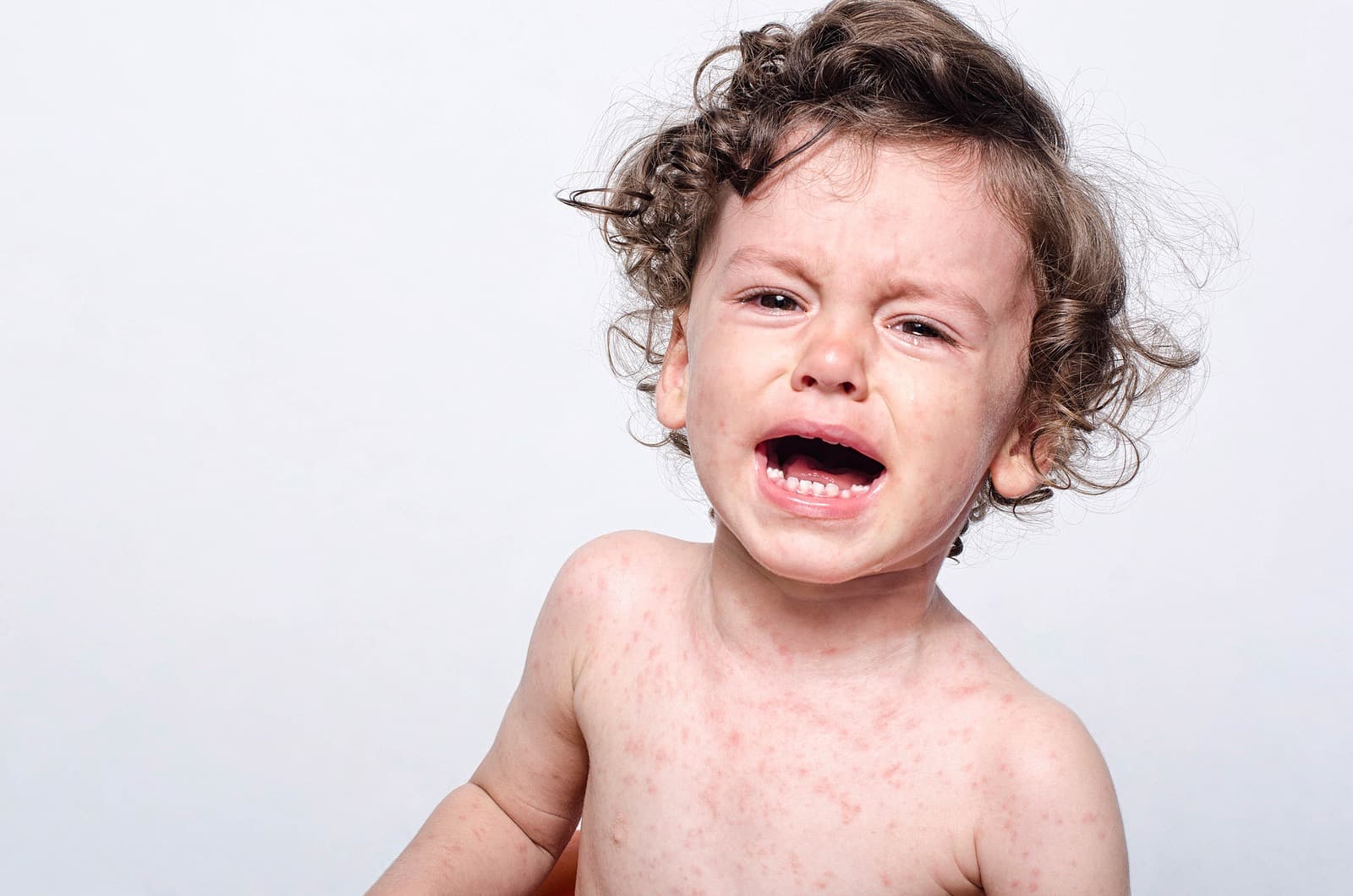
For many older Americans, measles doesn’t seem like such big a deal. They remember getting it as kids, spending a week or two at home and then going back to school. Visitors to this website frequently express the sentiment: “I had measles as a kid. I survived. What’s all the fuss about?” That is one reason America’s Measles Mess is so complicated. Millions of people remember measles as an unpleasant but routine childhood rite of passage.
Other families remember something very different. In this article you will read sharply different perspectives from visitors to this website.
Why Are We in the Middle of a Measles Mess?
More than a quarter century after measles was declared eliminated from the United States, the country is experiencing its worst year for the infection since 1991. Pennsylvania alone has reported hundreds of cases, more than 140 hospitalizations and four measles-associated deaths.
So, how worried should we be?
Measles: No Big Deal?
One reader, C., pretty much summed up the way many baby boomers remember measles:
“Back in the days of my youth, measles was a ‘rite of passage’…everyone had measles, mumps and rubella.
“Yes, some kids were disabled to various degrees but not that many compared to all the kids who were infected. Measles was part of life.”
Thai recalls having what her family called “hard measles.”
“Dad made me keep the window shade down in my bedroom, where I spent my days. He said light and reading were bad for my eyes with measles. That may have been the worst part since I’ve been an avid reader since a very young age; it was so boring lying in bed with a fever with nothing to do! Mom put cold washcloths on my forehead. That’s about all I remember from having hard measles.”
And she recovered.
Another reader, Tim, was even more emphatic. He wrote that his generation and those before it generally experienced measles with “little consequence.” He remembers it as a relatively trivial childhood illness.
Those memories are real. But they are not the whole story.
Karen Remembers a Very Different Measles Mess
Karen’s comment stopped us in our tracks:
“My sister had just turned 6 years old in 1948, an active little girl in kindergarten with no underlying health problems. She caught measles, developed encephalitis, went into a coma and died shortly after. Her death certificate states cause of death as “measles encephalitis.” Losing her devastated my family; my parents never got over it. People don’t realize how dangerous measles can be. The measles vaccine can prevent this type of tragedy; it wasn’t available back then.”
The measles vaccine did not exist in 1948. That puts the “everybody got measles and we turned out fine” argument into a somewhat different perspective.
People who recovered remember the disease. Children who died from it never got the opportunity to tell us what their experience was.
One reader, Dee, called this “survivor bias.” She remembers adults from the pre-vaccine era who knew children left deaf or brain damaged after measles.
A Doctor Remembers the Measles Mess of a Bygone Era
John supplied another perspective we found especially powerful.
Beginning in the early 1980s, he provided medical care at a facility for disabled adults. Some of his patients had survived measles and rubella before widespread vaccination.
He remembers:
“Many of the brain damaged, deaf, and disabled patients were the survivors of measles and rubella. These fellow citizens never had a chance at a normal life. I thought I had seen the last of the results of epidemics which disappeared in the early 1960s in areas where Public Health and Primary Care providers attempted to get 100% vaccination rates. Sadly, we will have unneeded deaths and long term disability again from ignorance and disinformation.”
It is easy to forget cases like those John describes because vaccination made them uncommon.
How Dangerous Is Measles Really?
Most people who get measles will recover. That is important to say clearly. But “most people recover” is not the same thing as “measles is harmless.”
According to the CDC (2026):
- About 1 in 5 unvaccinated Americans with measles is hospitalized.
- As many as 1 in 20 children develops pneumonia.
- About 1 in 1,000 children develops encephalitis, or swelling of the brain. It can result in seizures, deafness or intellectual disability.
- Roughly 1 to 3 children out of every 1,000 infected with measles die from respiratory or neurological complications.
There is also a complication that physicians did not fully appreciate when many of today’s older adults had measles. It is called “immune amnesia.” Here is what I wrote about this worrisome condition:
“Measles Outbreaks! How America Resurrected a Defeated Disease“
“One of the strangest consequences of measles is something scientists call immune amnesia. The immune system normally remembers bacteria and viruses it has encountered before. That memory helps the body respond more rapidly the next time a familiar germ appears.
“Measles can destroy some of those memory cells. After the rash and fever disappear, a child may look completely recovered. But the immune system can remain less capable of recognizing other infectious threats for months or even years.
“Measles can temporarily erase some of the immune system’s previous memory of other infections. In other words, recovering from the rash and fever does not necessarily mean that measles is completely finished with you.
“That means the damage from measles may extend beyond the measles infection itself. A child could become more susceptible to influenza, pneumonia or other illnesses that the immune system previously knew how to fight. It is almost as though measles breaks into the immune system’s library and tears pages out of its reference books.”
Measles Mess: From Bad to Worse to Deadly
Pennsylvania has become the newest center of concern. By Sept. 16, the state had reported 731 measles cases in 38 counties and 141 hospitalizations. Four measles-associated deaths have been reported.
The deaths include two infants, an unvaccinated 40-year-old woman and an unvaccinated 18-year-old who developed a rare neurological complication after measles. The state and federal government are now publicly at odds over how those deaths should be classified in national statistics.
The controversy does not change a larger historical fact. In 2000, the United States declared measles eliminated. That did not mean nobody would ever bring measles into the country again. It meant continuous domestic transmission had been stopped.
Now the United States has recorded more measles cases in 2026 than in any year since 1991.
The Measles Mess = “A Terrible Legacy”
The political controversy surrounding vaccination has become almost as intense as the debate over the disease itself. That is why comments this week from Louisiana Republican Sen. Bill Cassidy caught our attention. Cassidy isn’t just a senator. He is a physician and chairs the Senate Health, Education, Labor and Pensions Committee.
At a Sept. 16 hearing he warned that the measles situation could become:
“a terrible legacy for this administration.”
Senator Cassidy also said:
“Misinformation and misguided policies are leaving children and adults unprotected against disease that we know how to prevent.”
Cassidy criticized politicians for giving medical advice without scientific support and argued that frightening parents into delaying or avoiding vaccination makes Americans less healthy.
The Trump administration strongly disputes the suggestion that it is discouraging measles vaccination. An HHS spokesperson told The Washington Post (September 16, 2026) that such a characterization was “absolutely fake news” and said Health Secretary Robert F. Kennedy Jr. has repeatedly stated that MMR vaccination is the most effective way to prevent measles infection.
That political disagreement is likely to continue. The measles virus, however, doesn’t care which political party anyone belongs to.
Our Readers Are Divided About Vaccines
We don’t have to look far to see how complicated attitudes toward vaccination have become.
Lois told us she strongly supports measles vaccination because of its long record of effectiveness, while remaining deeply skeptical about mRNA vaccines.
Jeanne described herself as neither anti-vaccine nor unquestioningly pro-vaccine. After experiencing reactions she attributed to several vaccinations, she now approaches each vaccine individually. At the same time, she vaccinated her children and is pleased that her granddaughters have been vaccinated.
Perhaps the most revealing comment came from Karen, a retired nurse. She says her attitude toward vaccines has “flip-flopped” repeatedly during her lifetime.
As a child she remembered people suffering from polio and other infectious diseases and welcomed vaccines. Later, adverse reactions she observed or experienced made her distrustful.
Then she worked in global health. Seeing the consequences of infectious diseases changed her perspective again. She now says she researches vaccines carefully but believes they remain our best protection while acknowledging that adverse reactions can occur. That may describe the tension many Americans feel today better than any opinion poll.
“I Had Measles. Am I Still Immune?”
This was one of the most common questions readers asked us.
Michael wrote:
“I had measles in high school, more than 75 years ago. Do I need a booster?”
Paula asked:
“What about those who had the measles when they were young? Are they protected?”
And Rivka, now 77, expressed frustration that she had repeatedly asked the same question without getting a clear answer.
Here is the CDC’s answer:
People who actually had measles are generally considered to have lifelong immunity.
The CDC also considers people born before 1957 to have presumptive immunity because measles circulated so widely before vaccination that nearly everyone was exposed during childhood.
There is another reassuring point that occasionally gets lost in discussions of “natural immunity.” People who received two appropriately administered doses of measles vaccine are also considered protected for life, according to the CDC. Routine measles boosters are not recommended for them.
But What About Those Early Measles Shots?
Rebecca raised an excellent point.
She remembered that some people vaccinated during the 1960s may have received an ineffective form of measles vaccine. She is correct. An inactivated or “killed” measles vaccine was used in the United States between 1963 and 1967. It did not provide adequate protection.
The CDC says people who know they received that vaccine should be revaccinated with today’s live measles-containing vaccine. People vaccinated before 1968 who don’t know which type they received should discuss the issue with a healthcare professional. That could be especially useful information for baby boomers who assume that an old childhood vaccination automatically means they are protected.
“I Had Measles and Turned Out Fine”
This remains one of the most common responses whenever we write about measles. And for millions of people, it is absolutely true. They had measles.
They felt miserable, they recovered and they got on with their lives.
But Steve, another reader, offered a thought worth considering. He said it was disheartening to see comments essentially saying, “I contracted measles and turned out fine.” His point was that people whose families were devastated by a preventable measles death understandably see the calculation rather differently.
- Karen’s six-year-old sister is one such child.
- John’s deaf and brain-damaged patients were among the survivors.
And Pennsylvania is now reporting four measles-associated deaths in 2026.
Perhaps that explains why two people can remember the very same disease and come away with completely different conclusions. One person remembers lying in bed bored because Dad wouldn’t let her read. Another remembers a six-year-old sister who never came home.
How Much Worse Can This Measles Mess Get?
We wish we knew. Measles is one of the most contagious infections on earth. The good news is that it is also one of the vaccine-preventable diseases for which protection is highly effective. Two appropriately administered doses of MMR are about 97 percent effective at preventing measles.
Whether the current Measles Mess continues to grow will depend on many things, including vaccination coverage, how quickly outbreaks are identified and contained, and how willing Americans are to trust public-health recommendations.
One thing is already clear. Measles is no longer something Americans can regard solely as a quaint childhood memory from the 1940s and 1950s.
What Do You Think?
Were you one of the millions of Americans who had measles as a child? Do you remember it as miserable but manageable, or was it a serious illness for you or someone in your family?
Have the controversies surrounding COVID vaccines changed how you think about older vaccines such as MMR? Are you a parent wrestling with decisions about childhood vaccination? Or are you an older adult wondering whether you are still protected against measles?
Please share your thoughts in the comment section below.
We especially want to hear from people whose experiences challenge our assumptions — in either direction. Your stories help make The People’s Pharmacy a conversation rather than a lecture.
We need your help in growing The People’s Pharmacy. If you think our articles have value, please share them with friends and family. Encouraging acquaintances to sign up for our free newsletter at this link will also allow us to keep providing this kind of information. Thank you for your support.