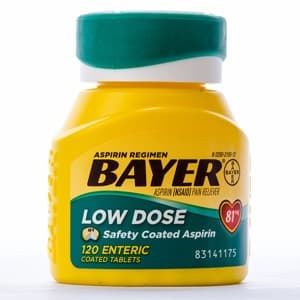
Aspirin gets very little respect. Perhaps that’s because it is well over 100 years old, or because it is inexpensive and available over the counter. Whatever the reason, it’s our observation that people don’t tend to take acetylsalicylic acid (ASA or aspirin) seriously. Many doctors also tend to be dismissive. The United States Preventive Services Task Force (USPSTF) made headlines with its decision to discourage middle-aged and older people from taking low-dose aspirin to avoid a first heart attack or stroke. As a result, millions of people have probably decided to stop taking aspirin. That poses a potential risk. If you stop taking aspirin suddenly, you might experience serious consequences.
The USPSTF
Previous recommendations from the USPSTF task force suggested that people at fairly high risk for cardiovascular disease between ages 50 and 59 might benefit from low-dose aspirin. The updated recommendations extend the age range of those who should discuss this option with their health care providers.
The recommendations were published in JAMA (April 26, 2022):
“Objective To update its 2016 recommendation, the US Preventive Services Task Force (USPSTF) commissioned a systematic review on the effectiveness of aspirin to reduce the risk of CVD [cardiovascular disease] events (myocardial infarction and stroke), cardiovascular mortality, and all-cause mortality in persons without a history of CVD. The systematic review also investigated the effect of aspirin use on colorectal cancer (CRC) incidence and mortality in primary CVD prevention populations, as well as the harms (particularly bleeding) associated with aspirin use.”
Here is the Summary of Recommendations:
People 40-59 years of age:
“The decision to initiate low-dose aspirin use for the primary prevention of CVD in adults aged 40 to 59 years who have a 10% or greater 10-year CVD risk should be an individual one. Evidence indicates that the net benefit of aspirin use in this group is small. Persons who are not at increased risk for bleeding and are willing to take low-dose aspirin daily are more likely to benefit.
Adults 60 years or older:
“The USPSTF recommends against initiating low-dose aspirin use for the primary prevention of CVD in adults 60 years or older.”
The task force was trying to target primary prevention to people most likely to benefit and least likely to experience harm. People taking aspirin following a heart attack (secondary prevention) or on their doctor’s recommendation are not advised to stop without consulting the physician.
The panel points out that for people without cardiovascular disease, low-dose aspirin reduces the chance of heart attack and stroke, but it also increases the possibility of GI and other bleeding complications.
It has been our experience that many doctors started discouraging their patients from taking aspirin. There were no guidelines about how to do that, however. Should they just stop cold turkey, or gradually phase off the aspirin?
This reader wants to know what will happen if he stops.
Can You Ever Safely Stop Taking Aspirin?
Q. I’ve been on daily baby aspirin for 45 years after a heart scan spotted small amounts of calcium. So far, I’ve been healthy, but I have two big questions. Does the risk of bleeding diminish with long-term aspirin use?
Also, is there a dangerous rebound effect if long-term aspirin use is stopped? Two doctors I’ve asked said no, but I’ve read articles saying the chance of stroke or heart attack is significant if you discontinue aspirin suddenly. A lot of us are in limbo and would love answers to these questions.
A. You have asked crucial questions that are rarely addressed. As far as we can tell, the risk of bleeding from aspirin does not disappear over time. One large study, the ASPREE trial, evaluated the risk of digestive tract bleeding in more than 19,000 volunteers (Gut, April 2021).
The authors reported that people taking aspirin for about 5 years were 60 percent more likely to experience a GI bleed. But before anyone overreacts to that seemingly big number, let’s look at the absolute risk. Out of 9,525 people taking aspirin, 162 had a bleed. That’s an absolute risk of 1.7 percent.
In the 9,589-person group on placebo, 102 people had a bleed, a risk of 1.1 percent. That means 6 additional people out of 1000 taking aspirin had a GI bleed. It is a statistically significant difference, and the graph of bleeding events over time shows that the risk of bleeding increases as people age. But you can see that the overall risk is relatively low.
Do people who suddenly stop aspirin experience blood clots? A large Swedish study found that people who stopped their low-dose aspirin abruptly were in fact more likely to experience a heart attack, stroke or other cardiovascular complication (Circulation, Sept. 26, 2017).
This poses a thorny dilemma for aspirin users like you. We could not find guidelines for tapering off aspirin gradually. Please discuss this complex topic with your physician.
What Could Happen If You Stop Taking Aspirin?
After the United States Preventive Services Task Force brought out its recommendations, headlines like these showed up:
“Task force says most people should not take daily aspirin to prevent a heart attack” (NPR)
“Most adults shouldn’t take aspirin to prevent heart attacks and strokes, experts say” (Yahoo! news)
“Aspirin Use to Prevent 1st Heart Attack or Stroke Should Be Curtailed, U.S. Panel Says” (New York Times)
Such headlines were likely to encourage a lot of people to stop taking aspirin quite suddenly. That worried us! Did people die because they stopped aspirin suddenly? We will never know because as far as we can tell, no one was tracking what happened.
The USPSTF Mentioned “Aspirin Discontinuation”
None of the medical pundits or reports we read in the popular press bothered to mention the USPSTF discussion about “aspirin discontinuation.”
Here is what the task force stated:
“Very little is known about any rebound thrombotic risks [blood clots] associated with aspirin discontinuation, although one cohort study has been published since the last review. A Swedish cohort study of over 600,000 adults evaluated the risk of cardiovascular events (hospitalization for MI [heart attack], stroke, or CVD [cardiovascular disease] death) associated with discontinuation of long-term, low-dose aspirin therapy. In the population taking aspirin for CVD primary prevention, discontinuation of aspirin was associated with a 28 percent increase in cardiovascular events over a median of 3 years’ followup.”
Should People With Diabetes Stop Taking Aspirin?
Q. I read your article about discontinuing daily 81 mg aspirin for those over 65. People with diabetes have been taking aspirin for years because of the increased risk of heart attacks and strokes. Is there any research on the risk of diabetics stopping the 81 mg aspirin?
A. This is an important question that doctors are still asking (JAMA Network Open, June 21, 2021). There have been few studies focused on the risks of discontinuing aspirin for people with diabetes. One such trial focused on people with type 2 diabetes (Diabetes Therapy, Oct. 2020). Stopping after short-term aspirin use did not increase the risks of heart attacks, strokes or death after a stent was put in. However, these individuals kept taking a medicine such as clopidogrel designed to prevent blood clots. That might have helped protect them from rebound clotting after discontinuing aspirin.
A Reader’s Concerns About How to Stop Taking Aspirin:
Q. I read your column about a woman who stopped aspirin and had a heart attack. Almost thirty years ago I started taking aspirin.
In December, 2015, I was getting ready to have shoulder replacement surgery. There were a lot of scans and tests to be sure everything looked good before the surgery. They ALL checked out fine. A week before the surgery, I had to stop taking my aspirin, omega-3 fish oil and OTC supplements.
Two days before the surgery, I woke up fuzzy. As it turned out, I’d had a blood clot go to my brain and cause a mild stroke. After three months of heart monitoring and tests, the neurology doctors said it was rare, but they think going off aspirin caused the blood to clot and stop up a small artery.
Serious Consequences for People Who Stop Taking Aspirin:
A. Swedish researchers reported that patients who stop low-dose aspirin appear to be more likely to suffer a heart attack or stroke (Sundstrom et al, Circulation, online, Sept. 25, 2017). They hypothesized that this may be a rebound blood-clotting effect.
Here is how the researchers described the dilemma in their own words:
“Discontinuation of secondary prevention with aspirin has been associated with higher risk of cardiovascular events in some studies, with indications of an increased risk shortly after discontinuation. Aspirin is often withdrawn because of surgery or bleeding, factors that per se may stimulate platelet aggregation and increase the risk of cardiovascular events. Effects of discontinuation in settings other than surgery or bleeding are unknown.”
The authors concluded:
“In this large nationwide patient cohort, discontinuation of long-term low-dose aspirin was associated with a >30% higher risk of cardiovascular events, corresponding to an additional cardiovascular event observed per year in 1 of every 74 patients who discontinue aspirin. The risk appeared to increase as soon as the patients discontinued aspirin, with no safe interval.”
How Should People Stop Taking Aspirin?
The US Preventive Services Task Force did not offer any guidance about how people should stop taking aspirin. As far as we can tell, the FDA has not offered any suggestions either.
We have received a number of questions from readers of our syndicated newspaper column and visitors to this website. This one is fairly typical:
Q. I read with great interest your article on discontinuation of aspirin therapy. Many of us long-term aspirin users are now in limbo.
I’m a healthy 71-year-old male who has taken 81 mg aspirin daily for 40 years for primary prevention. My doctor back then suggested it, and my current doctor will not advise me on whether or how to discontinue. Can you help?
A. We are not surprised that your physician was uncomfortable about offering advice regarding “whether or how” to stop taking aspirin. There is no official guidance for this reader or millions of other people who have a similar question.
And we have been unable to find any studies to show us the safest way to tell people how to stop taking aspirin. This question also poses a dilemma for surgeons. They often advise patients to stop taking aspirin cold turkey prior to surgery to prevent excessive bleeding.
This too is controversial (International Journal of Surgery, Nov. 13, 2013):
“The question asked was: should patients on acetylsalicylic acid (ASA) for secondary prevention stop or continue the medication prior to elective, abdominal surgery. Using the reported search 826 papers were found of which five represented the best evidence to answer the clinical question. The strongest evidence was from a randomized controlled trial (RCT) specifically looking at elective abdominal surgery, which showed no statistically significant difference between ASA continuation and discontinuation in terms of haemorrhagic or thrombotic events…it appears that continuing ASA isn’t associated with excessive bleeding. Further adequately powered trials with well-defined end points are needed to answer this important clinical question.”
What Does the Cochrane Review Say?
We often look to the Cochrane Database of Systematic Reviews to resolve complex pharmacological questions. This independent organization sets very high standards for analyzing available data. Here is what it has to say about “continuation versus discontinuation of antiplatelet therapy” in adults undergoing non-cardiac surgery (Cochrane Database of Systematic Reviews, July 18, 2018).
Aspirin has definite antiplatelet activity and is included in the review. Here are the conclusions:
“We found low-certainty evidence that either continuation or discontinuation of antiplatelet therapy before non-cardiac surgery may make little or no difference to mortality, bleeding requiring surgical intervention, or ischaemic events [blood clots]. We found moderate-certainty evidence that either continuation or discontinuation of antiplatelet therapy before non-cardiac surgery probably makes little or no difference to bleeding requiring transfusion. Evidence was limited to few studies with few participants, and with few events.”
We don’t know about you but we find this analysis disappointing at best and worthless at worst. The bottom line appears to be that no one knows whether stopping aspirin prior to non-cardiac surgery is a problem or not. And they certainly don’t have a proven protocol for how to stop taking aspirin.
Gradual Discontinuation of Other Drugs:
When people try to stop taking acid-suppressing drugs (PPIs) or antidepressants such as duloxetine (Cymbalta) or venlafaxine (Effexor) we generally tell them to try very gradual dose tapering to avoid unpleasant withdrawal symptoms. Here is a link to our article:
How To Stop Duloxetine (Cymbalta) Without Withdrawal Symptoms
In it, readers describe a tapering process that may take months to complete. They open the capsule and remove a few tiny beads of duloxetine at a time. Unfortunately, you can’t do that with aspirin pills.
How Can You Lower the Dose of Aspirin Gradually?
Low-dose aspirin pills are small and often come with a coating. That makes it almost impossible to cut them up into chunks. Trying to smash up a regular-strength tablet to get tiny doses is equally challenging.
Unfortunately, we have been unable to find a clinically validated protocol for tapering aspirin. Anyone considering discontinuing long-term aspirin should discuss the timing and method with the clinician who prescribed it.
Here is one possibility. Old-fashioned Alka-Seltzer effervescent tablets for heartburn contain 325 mg of aspirin, 1,916 mg of sodium bicarbonate (baking soda) and 1000 mg of citric acid. If you follow the instructions that come with Alka-Seltzer, you would dissolve 2 tablets in 4 ounces of water. That’s the dose for heartburn.
If someone were to just put 1 tablet in 8 ounces of water, the resulting fizzy liquid should have about 40 mg of aspirin per ounce. That is about half of a low-dose aspirin pill. One could start out the tapering process with 2 ounces (80 mg of aspirin). Then after a few days reduce the amount of liquid swallowed to 1.5 ounces (44 ml). Proceeding in this way offers a means of gradually reducing the dose of aspirin. This is, of course, completely unvalidated. There are not official recommendations. Always ask your healthcare professional before starting or stopping any such regimen.
There is an inexpensive alternative. Ask your physician if you could put an uncoated 325 mg aspirin tablet into 8 ounces of club soda or seltzer water. Add a small amount of baking soda (1/4 teaspoon or less) and a pinch or two of lemon juice. This will help the aspirin dissolve and create a mixture not that different from Alka-Seltzer. If your doctor agrees it is OK, stir well and then drink an ounce or so as you begin your gradual taper.
Aspirin for a Heart Attack:
Anyone who think they might be experiencing a heart attack should always call 911 first and foremost! The American Heart Association and the Red Cross have suggested that while waiting for the emergency medical team to arrive, consider this approach:
- “First aid for chest pain: In adults with acute chest pain, it is recommended that emergency medical services (EMS) be activated to initiate transport to the closest emergency department (ED). While awaiting the arrival of EMS, first aid providers may encourage alert adults experiencing nontraumatic chest pain to chew and swallow aspirin (162–325 mg), unless the person experiencing pain has a known aspirin allergy or has been advised by a health care professional not to take aspirin.”
Strokes are different. A clotting stroke might benefit from aspirin, but a bleeding (hemorrhagic) stroke would be made worse. Anyone who think they are experiencing a stroke must call 911 immediately!
As far as we can tell, no expert is suggesting that people should skip aspirin if they think they are having a heart attack. Emergency medical personnel still recommend that in such a situation, most people may benefit from chewing an aspirin tablet. We think that can work. So could creating a soluble aspirin mixture by adding a small dose of aspirin to club soda, as described above. Here is a link to our analysis of that approach:
Best Way to Take Aspirin for a Heart Attack
What Do You Think?
What is your experience with aspirin? Has your doctor recommended a baby aspirin to prevent a second heart attack? Before you discontinue aspirin after many years, please check in with your health care provider to ask about the gradual tapering process we discuss above.
If you think this article is worth sharing with friends or family, please scroll to the top of the page and use the icons for email or social media. Thank you for supporting our work.
Citations
- Pace WD, "Daily low-dose aspirin, diabetes, and age—Still looking for a balance." JAMA Network Open, June 21, 2021. doi:10.1001/jamanetworkopen.2021.12875
- Wang Q et al, "Discontinuing aspirin after short term use versus continuous use with a P2Y12 inhibitor for the Tteatment of patients with Type 2 diabetes mellitus following percutaneous coronary intervention: A meta-analysis." Diabetes Therapy, Oct. 2020. DOI: 10.1007/s13300-020-00909-8
- Sundström J et al, "Low-dose aspirin discontinuation and risk of cardiovascular events: A Swedish nationwide, population-based cohort study." Circulation, online, Sept. 25, 2017. https://doi.org/10.1161/CIRCULATIONAHA.117.028321
- Mahady, S.E., et al, "Major GI bleeding in older persons using aspirin: incidence and risk factors in the ASPREE randomised controlled trial," Gut, April 2021, doi: 10.1136/gutjnl-2020-321585
- Lewis, S.R., et al, "Continuation versus discontinuation of antiplatelet therapy for bleeding and ischaemic events in adults undergoing non-cardiac surgery," Cochrane Database if Systematic Reviews, July 18, 2018, doi: 10.1002/14651858.CD012584.pub2