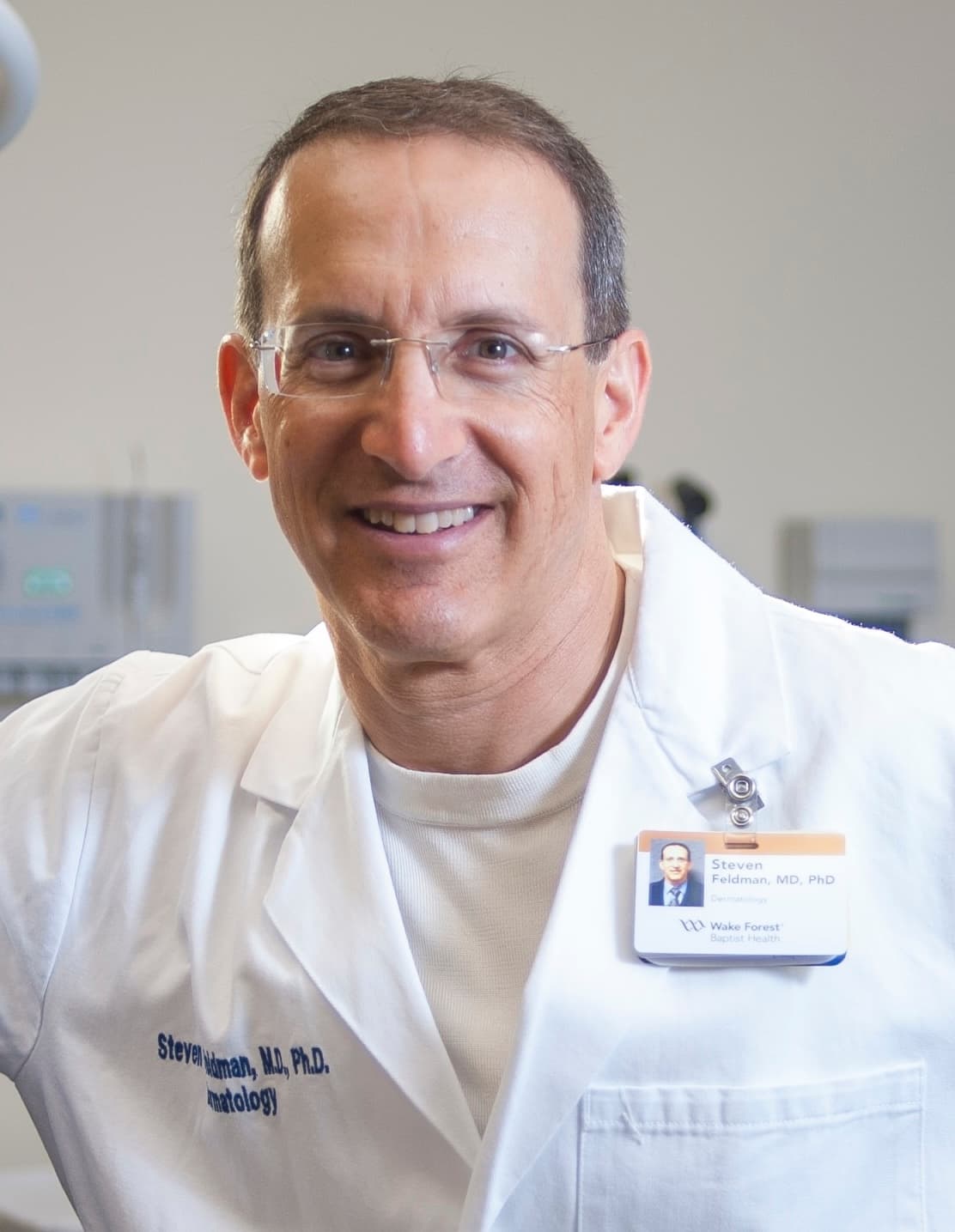
Many dermatologists would encourage us to wear beekeeper outfits to avoid damaging our skin. In other words, completely cover our bodies from head to feet so that no ultraviolet rays can reach our skin. Some derms might even encourage cave dwelling. But not Dr. Steve Feldman! He is an anomaly in the dermatology world. He thinks sunlight might even be good for us, as long as we use common sense and wear a protective hat. Exposing our body to a little sunshine makes us happy!
Why Does Sunshine Make Us Happy?
Most dermatologists warn us to avoid ultraviolet light as if every ray of sunshine were radioactive. Dr. Steve Feldman takes a more provocative view.
In this energetic 20-minute video, the distinguished dermatologist explains why sunlight can make people feel so good. Ultraviolet light appears to trigger the release of endorphins, the body’s natural pleasure-producing chemicals. That may even help explain why frequent tanners sometimes seem to crave UV exposure.
Researchers put that idea to a fascinating test. Regular tanners were offered two tanning beds that looked and felt identical. One emitted ultraviolet light; the other did not. Participants chose the UV-producing bed 95 percent of the time.
When they were given naltrexone, a drug that blocks opioid effects, they could no longer tell which bed delivered UV light. Apparently, the brain may recognize sunshine even when the conscious mind cannot.
That is only the beginning of Dr. Feldman’s dermatological heresy.
Prudent Sun Exposure and Longevity
He does not believe everyone should hide from the sun. He protects his face, ears and scalp with a large hat, but he questions whether extreme sun avoidance is always good for health. He also discusses research suggesting that people who get more sunshine may live longer than those who consistently avoid it.
Then he really challenges conventional wisdom: Dr. Feldman sometimes recommends carefully controlled sunlight—and even tanning beds—for people with psoriasis.
That suggestion may make some of his dermatology colleagues reach for the smelling salts. But ultraviolet light suppresses the overactive immune response that drives psoriasis. Dr. Feldman explains why light treatment can sometimes be a practical and far less expensive alternative to biologic drugs costing thousands of dollars.
He also offers useful advice about heat rash, irritated skin beneath the breasts or in the groin, and the newest treatments for psoriasis.
Dr. Feldman is knowledgeable, candid, entertaining and unafraid to question dermatological dogma. Whether you agree with every conclusion or not, you will never think about sunshine quite the same way again.
Watch our 20-minute conversation: “Is Sunshine Always the Enemy? A Dermatologist Rethinks Sun Exposure.”
If you found this video informative and entertaining, please share it with friends and family. They may be surprised to hear Dr. Feldman’s message.
Other Topics Besides Sunshine Makes Us Happy
We talked about lots of other skin issues during this radio show:
- Does avoiding sunlight prevent melanoma?
Dr. Feldman says avoiding too much light may provide a modest reduction in melanoma risk. He also explains that melanoma can arise because of genetic defects and inherited susceptibility, which may help explain why it sometimes appears on parts of the body that receive little or no sunlight. Severe burns and ultraviolet damage may add to the risk, especially in people with very fair skin. - What might help an adult with heat rash?
Dr. Feldman suggests looking for a practical way to cool the affected area or improve airflow, such as a cooling or ventilated pad for someone whose back remains against a chair for long periods. - What can protect irritated skin beneath the breasts or in the groin?
He recommends zinc oxide paste as a barrier that can protect skin in body folds from irritants. His preference is 50 percent zinc oxide in petrolatum without fragrance, since fragrance allergies could make dermatitis worse. - What does psoriasis look like?
Psoriasis is a raised, red, scaly rash with sharply defined borders. It commonly appears on the scalp, elbows, knees, nails, belly button and between the buttocks. - What causes psoriasis?
Dr. Feldman describes psoriasis as an overactive immune response involving signaling molecules including interleukin-23 and interleukin-17. The reaction resembles the immune response to a superficial fungal infection, even though no fungus is present. - Why do some people develop psoriasis while others do not?
Genetics can create a predisposition to psoriasis. Environmental factors can also contribute. For example, an infection may activate the immune system and trigger a widespread flare in someone who is genetically susceptible. - Why can ultraviolet light improve psoriasis?
Ultraviolet light reduces immune activity in the skin by destroying critical immune cells. That same action helps explain both why UV exposure can contribute to skin cancer and why it can improve psoriasis. - Does Dr. Feldman still use light therapy for psoriasis?
Yes. His office has light boxes, although he describes office treatment as costly and inconvenient. He often recommends home light-treatment units and says that one such unit, which may last a lifetime, can cost less than the first month of some biologic drugs. - Can sunlight or tanning beds be used to treat psoriasis?
Dr. Feldman considers sun exposure a reasonable treatment for some people and also sends some patients to tanning beds because he believes they can provide a controlled, cost-effective source of light. For psoriasis treatment in the sun, he advises starting with a small amount of exposure and gradually working up. - What does he say about the newer psoriasis medicines?
Dr. Feldman describes IL-23 blockers such as Skyrizi, Tremfya and Ilumya as very effective, very safe medicines that may be given only once every two or three months. He identifies cost as their biggest downside. - Is there a less expensive biologic option?
He mentions Stelara, an older medicine that he says is not quite as effective but is now available as a biosimilar. At the time he last checked the Mark Cuban Cost Plus Drug Company website, he found a price of approximately $350 per dose.
This video is an excerpt from our full conversation with Dr. Steve Feldman about the pleasures and potential hazards of sunlight, practical approaches to summertime skin problems and changing options for treating psoriasis.
If you want to listen to the full interview on our People’s Pharmacy Podcast, here is a link. You can find The People’s Pharmacy podcast in theApple Podcasts, on Spotify, Youtube as well as on the RSS Feed.