
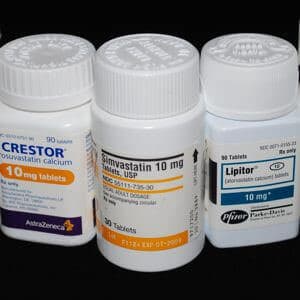
Statin enthusiasts have a hard time accepting that statin-type cholesterol-lowering drugs have side effects. One clinical trial analysis from the UK concluded “At the doses tested in these 83,880 patients, only a small minority of symptoms reported on statins are genuinely due to the statins: almost all reported symptoms occurred just as frequently when patients were administered placebo.” Many newspapers had headlines like: “Statins Have Virtually No Side-Effects, Study Finds” and “Statins have ‘fewer side effects than placebo’, suggests UK study.” What about neuropathy? Do statins cause nerve pain? It does not show up in the clinical trials, but some of our readers report trouble.
What to Do About Nerve Pain Linked to Statins?
Q. After I used food and supplements to rid myself of the pain of osteoarthritis and bursitis, I discovered I still had some pains in the nerves of my legs, along with numbness and tingling in my extremities. I suspected these might be caused by atorvastatin, which had been prescribed to lower high cholesterol. When I stopped taking it, the pains disappeared.
Later, I was prescribed rosuvastatin to lower my cholesterol. Before long I noticed pains in the muscles of my shoulders and arms and numbness in my fingers.
Now I see a doctor who has faith in my ability to use natural remedies reliably. Using information from The People’s Pharmacy Quick & Handy Home Remedies, within a month I had reduced my total cholesterol; raised my HDL above the normal range; and reduced both triglycerides and LDL. She was amazed at the results.
A. We’re glad you are under medical supervision and that you have achieved such impressive results. The book you mention offers lots of tips for lowering cholesterol and triglycerides along with many of our favorite recipes. Look for it in the book section of the store at www.PeoplesPharmacy.com.
As for the controversial question of whether statins cause nerve pain, a review by Italian researchers confirmed that they can do so (International Journal of Molecular Sciences, July 28, 2022). A fascinating case study of a person whose rosuvastatin reaction was wrongly diagnosed as Guillain-Barré syndrome at first underscores the potential for statins to disrupt both muscles and nerves (Cureus, Aug. 8, 2024).
Can Medications Cause Nerve Pain?
Q. I take a statin for high cholesterol. Over the years, I have developed neuropathy. I suspect the statins caused this problem. Is there any research that links neuropathy to statin use? I’d be grateful for whatever you can send me.
A. Nerve damage leading to pain (neuropathy) is controversial as a statin side effect. If you review the clinical trial data for popular statins like atorvastatin (Lipitor), rosuvastatin (Crestor) or simvastatin (Zocor) you would conclude that such statins do not cause nerve pain. At least there is nothing in the official prescribing information about this.
Dig a little deeper, however, and you will find in the FDA’s official monographs for such drugs under the category Postmarketing Experience:
“peripheral neuropathy”
There are no details. We have no idea how common neuropathic pain or peripheral neuropathy might be for patients taking statins.

Is There Any Research Suggesting Statins Cause Nerve Pain?
A review of less-recognized adverse effects of these cholesterol-lowering drugs notes that peripheral neuropathy has been reported (American Journal of Cardiovascular Drugs, 2008). The authors cite the Australian Adverse Drug Reaction Bulletin:
“Statin-associated peripheral neuropathy may persist for months or years after withdrawal of the statin…”
Chris wrote about his experience with atorvastatin:
“I was a healthy and vibrant 34-year-old critical care RN. After taking atorvastatin I became like a patient with Alzheimer’s disease. I was unable to walk or talk coherently. An MRI showed dozens of lesions in the gray and white mater of my brain. A brain biopsy revealed, autophagic vacuoles (holes). Mitochondrial DNA mutation most closely resembling MELAS (Mitochondrial Encephalomyopathy with Lactic Acidosis and Stroke-like episodes.
“Muscle biopsy revealed similar findings. I did not improve until I was evaluated by a visiting professor, who suggested a mitochondrial cocktail (essentially 12 vitamins, amino acids and 1 key component, Ubiquinol aka coQ10). I improved to the point I could go home with aggressive rehab therapies: physical, occupational and speech.
“I have been unable to work in any capacity since 11/02. Neuropsych evaluation revealed “significant cognitive impairments, of severity to limit any substantial gainful employment.” One month post discharge, I enrolled in the UCSD statin effects study, where it was determined that Lipitor was the causal contributor to the holes in my brain, the mitochondrial DNA mutations and the peripheral neuropathy.”
Do Statins Cause Nerve Pain?
Most clinicians would say no. There is virtually nothing in the clinical trial data about peripheral neuropathy. This complication comes on slowly. If researchers are not looking for it patients might not report it. We have no idea how common this side effect might be. All we have is the FDA’s acknowledgement that patients and providers have reported peripheral neuropathy as a postmarketing adverse reaction.
What’s your experience? Please share your story in the comment section below.
Citations
- Attardo S et al, "Statins neuromuscular adverse effects." International Journal of Molecular Sciences, July 28, 2022. DOI: 10.3390/ijms23158364
- Shinde V et al, "A neuropathy mimic: Statin-induced myopathy presenting as Guillain-Barré Syndrome." Cureus, Aug. 8, 2024. DOI: 10.7759/cureus.66483
- Golomb BA & Evans MA, "Statin adverse effects: A review of the literature and evidence for a mitochondrial mechanism." American Journal of Cardiovascular Drugs, 2008. doi: 10.2165/0129784-200808060-00004

?&description=Statins are among the most prescribed drugs in the world. Do such medications cause nerve pain (peripheral neuropathy)? Experts disagree.&message=Do Statins Cause Nerve Pain (Neuropathy)?&redirect_asPath=https://www.peoplespharmacy.com/articles/do-statins-cause-nerve-pain-neuropathy)