Are you fed up with COVID-19 stories? We don’t blame you. Everyone wants to forget this traumatic experience. We just returned from a cross country trip. As far as we can tell, the overwhelming majority of people are behaving as if the SARS-CoV-2 virus has disappeared for good. That was true in Raleigh, North Carolina, Seattle, Washington, Portland, Oregon and San Francisco, California. After over six years of warnings about variants, vaccines, boosters, masks and testing, most people have decided that they just don’t care any more. The assumption seems to be that even if COVID is back, it’s no worse than the flu or a cold, so nothing to worry about.
The Summer Surge Has Hit, So COVID is Back
According to the Centers for Disease Control and Prevention (CDC):
“As of August 26, 2026, we estimate that COVID-19 infections are growing or likely growing in 48 states, declining or likely declining in 0 states, and not changing in 2 states.”
Of course the CDC is always behind what is actually happening. The lag is probably at least a week or more. One headline reports that COVID is now in 49 states and we suspect that all 50 have cases.
Our review of newspapers around the country reveals that COVID-19 infections are spreading through California, Texas, New York, Oregon, North Carolina, Louisiana, Virginia, New Jersey, Massachusetts, Connecticut, and Tennessee, to name just a few. That does not mean hospitals are overflowing with COVID cases. They aren’t. Overall respiratory illness remains relatively low nationally. But the direction of COVID transmission is unmistakably up.
Wastewater Surveillance Also Reveals that COVID is Back
If you have been reading The People’s Pharmacy newsletter and website articles, you know that we track the WastewaterSCAN Dashboard on a regular basis. Let’s be blunt: WastewaterSCAN monitors sewage! It’s an incredibly valuable tool to assess infectious diseases. These folks monitor “nearly 150 locations across 40 states serving more than 39 million people.”
Wastewater surveillance is detecting increasing viral activity in many parts of the country. As of September 3, 2026 the dashboard reports that SARS-CoV-2 activity is:
“High”
This type of monitoring has become especially valuable now that relatively few people report home COVID tests. Sewage doesn’t care whether anybody bothers to stick a swab up their nose.
So, yes, there is another summer/post summer COVID wave underway…again.
Yawn.
That may be the response of a great many Americans.
COVID Is Back. Why?
We understand why colds and influenza spread during the winter. People spend more time indoors. Schools are in session. Holiday gatherings bring people together. Cold, dry air may also favor transmission of some respiratory viruses. At least those are the explanations we have been getting from infectious disease experts and public health officials for years.
So what’s COVID doing surging in July, August and September? It’s still hot and humid at this time of year in many parts of the US.
Good question. Apparently, even the infectious disease experts don’t have a satisfying answer.
Epidemiologist Dr. Caitlin Rivers of Johns Hopkins told NPR that COVID is unusual because it repeatedly produces both winter and summer waves.
She told Rob Stein on NPR (August, 2026):
“COVID-19 is still dangerous, particularly for older adults, infants and people who are immunocompromised. In a typical office, if you have 20 colleagues, it’s likely that one or two of them have some degree of immunocompromise. So it’s very common that people have risk factors that make COVID-19 dangerous.”
“It’s a big mystery as far as I’m concerned. It is the only seasonal respiratory virus that has a summer season. To my knowledge, we don’t know what is causing this seasonality.”
We appreciate that candor. After years of listening to authoritative explanations about respiratory-virus seasonality, it is refreshing to hear an expert say, in essence: We don’t know.
What we do know is that this pattern has repeated itself. COVID has surged during the summer for several years running. This year’s outbreak is still relatively modest compared with the gigantic waves of the early pandemic. Emergency department visits are low, and widespread immunity from previous infections and vaccinations appears to be protecting many people against severe disease.
That is, in our opinion, good news. But “less dangerous than 2020” is not the same thing as “harmless.”
Older people, infants, immunocompromised individuals and people with certain chronic conditions can still become seriously ill. Our back-of-the-envelope calculations put that number at around 100 million people. Even a “mild” case of COVID can ruin a vacation, knock someone out of work for a week or two or lead to lingering symptoms. You have heard of long COVID, right?
Are Symptoms and Different This Time Around?
The classic COVID symptoms include fever, cough, nasal congestion, sore throat, breathing problems, loss of smell or taste and headache. Digestive tract issues are more common with the latest variant. They include nausea, vomiting and diarrhea.
Of course all these complaints are common and could occur with almost any infection. The only way to know for sure is to be tested, but relatively few people have COVID tests on hand any more.
COVID Is Back, But Haven’t We All Had It Already?
For some people, the current attitude seems to be:
I’ve already had COVID two or three times. What’s one more infection?
That question deserves more attention than it gets. One impressive study published in Nature Medicine (November, 2022) examined the health records of nearly 6 million people in the Department of Veterans Affairs health system.
Here’s the summary:
“In this study of 5,819,264 people, including 443,588 people with a first infection, 40,947 people who had reinfection and 5,334,729 noninfected controls, we showed that compared to people with no reinfection, people who had reinfection exhibited increased risks of all-cause mortality, hospitalization and several prespecified outcomes.”
The authors reported “sequelae” related to reinfection:
“…including pulmonary, cardiovascular, hematological, diabetes, gastrointestinal, kidney, mental health, musculoskeletal and neurological disorders.”
Even more intriguing, the investigators found a graded relationship between the number of infections and the cumulative burden of adverse health outcomes. Risks were lowest after one infection, higher among people who had experienced two and highest among those with three or more infections.
Should You Worry About COVID Reinfection?
Some people will disregard the study in Nature Medicine on the grounds that it dates back to 2022. They may assume that SARS-CoV-2 was more dangerous four years ago. But wait…there is a more recent study in BMC Global and Public Health (Nov. 19, 2025). The data come from Singapore where they keep careful track of health records for their population.
Conclusions:
“Reinfection was associated with increased risk of diagnoses of any post-acute sequelae and sequelae across multiple organ systems, even in boosted individuals in Singapore. The findings highlight the continued significance of re-infection in influencing the risk of post-acute sequelae. Our results emphasise the need for preventative strategies against SARS-CoV-2 infection, such as updated vaccines that have better effectiveness against infection.”
In other words, reinfection with SARS-CoV-2 led to an increased risk for long COVID. We know that most people do not want to hear that. But every new infection represents another opportunity for something to go wrong. Most people will recover. Some won’t. Avoiding an infection still seems preferable to catching COVID again.
COVID Is Back. What About the Fall Vaccine?
Here is where things get really confusing. For years, Americans could count on the CDC to make fairly straightforward recommendations about who should get the latest COVID vaccine. Not this year.
The federal vaccine recommendation process has been disrupted by political, administrative and legal battles. As a result, professional organizations have increasingly been developing their own recommendations. Meanwhile, vaccine manufacturers have prepared updated shots for the 2026-2027 season.
In May, the FDA’s vaccine advisory committee recommended that this fall’s COVID vaccines target the XFG variant from the JN.1 lineage. That is important because SARS-CoV-2 keeps changing. Like influenza vaccines, COVID vaccines are being reformulated in an attempt to better match the viruses people are likely to encounter.
Will Americans line up for the new shots? We wouldn’t bet the farm on it.
“I Am DONE-DONE-DONE With COVID Vaccines!”
We hear regularly from visitors to this website who are intensely skeptical of COVID vaccinations.
Some don’t trust mRNA technology. Others believe they experienced serious side effects after a previous vaccination. Some received several doses and caught COVID anyway. Others simply don’t want any more shots.
They are DONE-DONE-DONE!
Here are just a few comments from the hundreds we have received:
Rose shares this sad story:
“In 2023 I had a Covid shot. I continue to have myalgia in the spot where the shot was administered. It makes me anxious about getting another mRNA type of vaccine. The pain has been persistent and permanent. I haven’t received a Covid shot since then and I’ve been fine.”
Judy describes a tragedy:
“My husband almost died from the Moderna booster. The company did not trial those vaccines properly either. We will take the standard dose for seniors. It is a shame the FDA cares so little for the people they are suppose to protect.”
Tim expresses a sentiment we hear from many others:
“I saw way too many serious injuries from the mRNA COVID vaccine to trust any such technology again. People close to me are still suffering injuries from the COVID shots. The bottom line is that diet, lifestyle and good sleep are the most important preventatives people can take against viral disease. We are systematically poisoning our population with pesticide and herbicide residue along with all the other chemicals in processed food. No amount of pharmaceuticals is going to be able to overcome that toxicity.”
Sherree offers a more positive message:
“I am 62, have gotten the COVID vaccines since they became available. I have never had covid. I always get my flu vaccines, and haven’t had the flu in decades. “
We don’t think public health authorities should pretend that negative sentiments don’t exist. Nor should they assume that everyone who has questions about vaccination is ignorant or “anti-science.”
People deserve clear answers about benefits, risks and uncertainties.
At the same time, we should be cautious about concluding from loud online commentary that practically all Americans have turned against vaccines. Vaccine skepticism may receive disproportionate attention because angry voices tend to get more attention.
What About New Vaccines Now That COVID is Back?
COVID vaccination is much better at reducing the likelihood of severe illness, hospitalization and death than it is at guaranteeing you will never catch SARS-CoV-2. Someone who received multiple COVID shots and nevertheless became infected may reasonably ask: What was the point?
The answer isn’t that vaccination created an impenetrable force field around that person’s nose. It didn’t! The more relevant question is whether that infection might have been worse without some sort of prior immunity.
People who are older, immunocompromised or otherwise at increased risk of severe COVID should discuss the updated vaccine with a knowledgeable health professional once the fall recommendations and products become clearer.
What Vaccines Are Available?
The FDA has given the green light for the fall 2026 shots. For those who are not spooked by mRNA technology there is Moderna’s latest vaccine mNEXSPIKE. There is an older vax called Spikevax.
Pfizer has its own brand, Comirnaty. People with an underlying condition that makes them susceptible to COVID complications are eligible. And most insurance companies are covering all the new vaccines.
I like Sanofi’s Nuvaxovid in part because it used an older approach. It is not based on mRNA technologhy. But it should also be effective against the new variants.
People who remain skeptical will have to make their own decisions. But vaccines aren’t the only tool we have. And that brings us to one of our greatest frustrations from the entire COVID pandemic.
COVID Is Back. Why Aren’t We Talking About Air Quality?
Remember 2020? Americans were scrubbing groceries and boxes of cereal. People were disinfecting doorknobs. Hand sanitizer disappeared from store shelves.
And early in the pandemic, public health authorities were reluctant to acknowledge what ultimately became obvious:
SARS-CoV-2 Spreads through the Air
An infected person exhales virus-containing respiratory particles. Some can remain suspended in indoor air, especially when ventilation is poor. Once that became clear, you might have expected a national campaign to improve the air we breathe in schools, hospitals, nursing homes, offices, pharmacies, airports, restaurants and other public buildings.
Where was it? We are still waiting.
We have been complaining about this for years. Better ventilation, effective filtration and appropriately designed air-cleaning systems don’t require every person entering a building to remember to do something. Judging from our own experience, many people are:
- Not wearing a mask and probably never will again
- Not seeking Paxlovid when they come down with COVID (it’s pricey)
- Not planning their next vaccine appointment
The beauty of improved air quality is that you don’t need to do anything. You simply breathe.
A review in JAMA pointed out several years ago that bringing more outside air indoors, improving HVAC filtration and using portable HEPA cleaners can reduce concentrations of infectious respiratory particles in shared indoor spaces.
Here are the conclusions of this article in JAMA:
“Improving air quality has the potential to reduce not only infections with SARS-CoV-2 but also infections with other respiratory viruses and bacteria, reactive airway disease (eg, asthma) triggered by antigens, pulmonary and cardiovascular injury from inhalation of harmful respiratory particulates (eg, wildfires, smog), and toxicity from inhalation of volatile organic compounds. A once-in-decades opportunity now exists to make sustained improvements to public and private indoor air quality, reduce COVID-19 risk, and improve school, workplace, and consumer health and safety.”
We could not have said it better ourselves. So why didn’t improving indoor air become a major public health priority?
Money undoubtedly has something to do with it. Retrofitting HVAC systems isn’t cheap. Increasing outdoor air exchange can increase heating and cooling bills. High-quality filters need to be purchased and replaced on a regular schedule. It is much easier to tell individuals what they should do than to require institutions to change buildings. Public health authorities and government agencies do not seem to have made air quality a priority.
What About Ultraviolet Light?
There is another intriguing possibility: germicidal ultraviolet light. These devices are designed to inactivate airborne viruses, bacteria and fungi. The idea sounds almost too good to be true, so we were pleased to see researchers actually test it.
Australian investigators conducted a randomized clinical trial of germicidal ultraviolet devices in long-term-care facilities (JAMA Internal Medicine, Sept. 1, 2025). The results were not spectacular, but they weren’t nothing either.
The devices produced a modest reduction in acute respiratory infections overall, and the investigators reported a statistically significant reduction in the total number of respiratory infections among residents.
We are awaiting a fabulous French study of “ultraviolet germicidal irradiation (UVGI) devices (Trials, May, 2026). The study is called “RESPROTECT.”
Here is the plan:
“A total of 848 UVGI devices were installed in communal living areas of 12 nursing homes in the Haute-Loire region, France. All devices are switched on, but some contain internal filters that deactivate UV light while remaining indistinguishable from the outside…The primary outcome is the incidence of severe ARIs. Secondary outcomes include the incidence of ARIs of any grade, all-cause hospitalization or death, adverse events of interest (keratitis and erythema), antibiotic consumption, airborne and surface pathogen loads, and cost-effectiveness.”
This study should tell us whether ultraviolet light is beneficial against airborne infections. In the meantime, though, you may want to read our article on this topic:
Improve Indoor Air Quality with UV Light to Fight COVID and Flu!
How can we improve indoor air quality to avoid COVID, flu, norovirus, measles, and other infections? What about germicidal UV light (GUV)?
At this moment we cannot say that installing UV devices in every school, doctor’s office or supermarket would prevent COVID outbreaks. The French study should give us some decent data in that regard.
Why aren’t the NIH, the CDC, the FDA and other public health organizations following the French example and carrying out such research? In fact, why don’t we have solid scientific data right now to help us make informed decisions about air quality? Isn’t this the sort of research public health agencies should have made a top priority after a pandemic brought on by an airborne virus?
Instead, years later, we are still arguing about masks.
Masks Are Not Coming Back
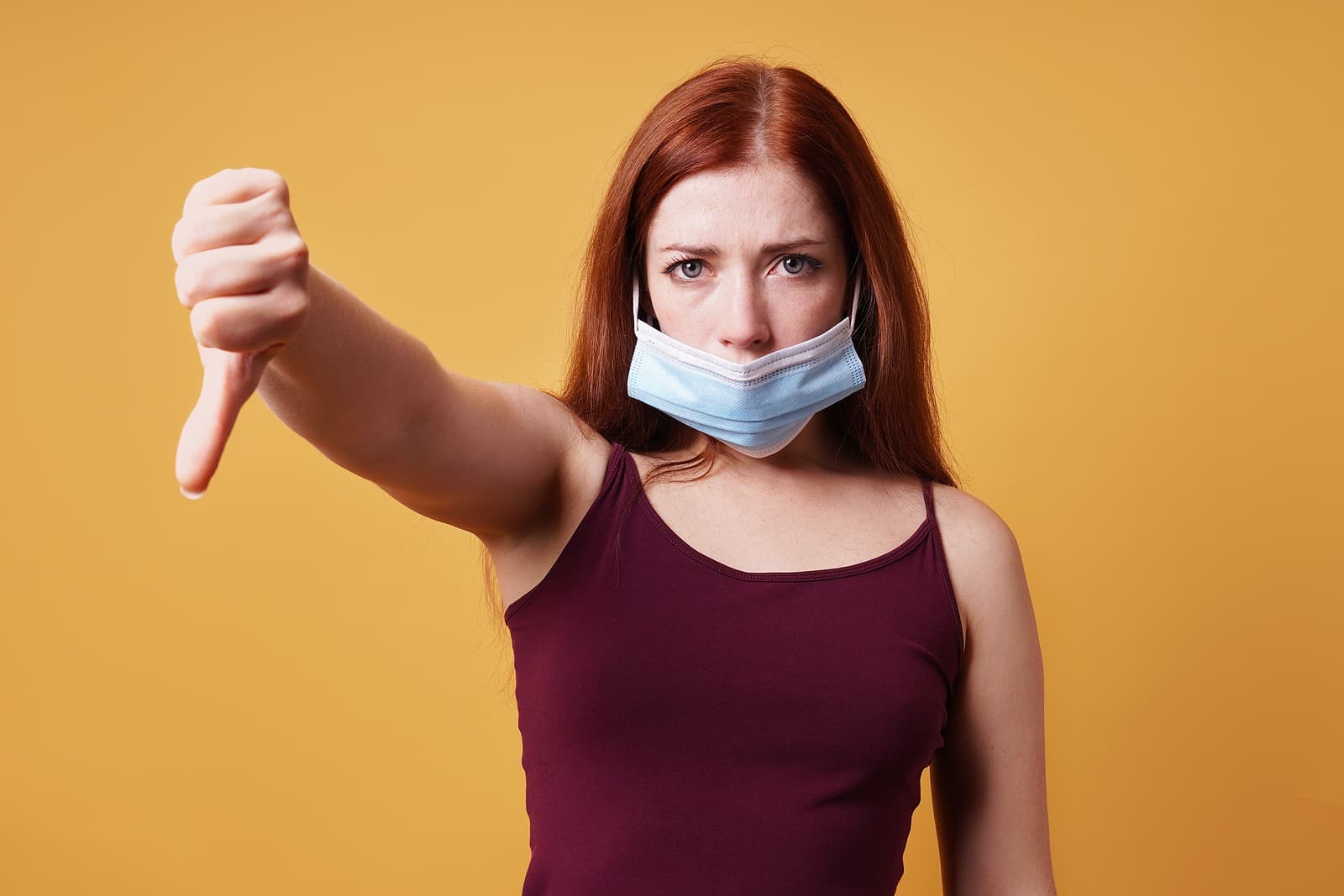
We are going to make a prediction. Even if this summer and fall the COVID wave gets much worse, most Americans are not going back to routine masking. We aren’t advocating for mandates. We are describing reality. Masks became so culturally and politically toxic during the pandemic that broad public acceptance seems highly unlikely.
Some individuals will continue wearing a high-quality N95 or similar respirator in airports, airplanes, medical settings or crowded indoor environments. That is their choice. Please be kind to them! They may have cancer and be immunocompromised. Or they may have some other chronic condition that makes them more vulnerable to infections.
Most people won’t wear a mask, though. That is precisely why cleaner indoor air deserves so much more attention. A person can refuse a mask. A person can refuse a vaccine. But everyone entering a building benefits when the air contains fewer infectious particles.
Florence Nightingale Understood This More Than 165 Years Ago
One of the pioneers of modern nursing understood the importance of air quality long before anyone had heard of coronavirus. Florence Nightingale made ventilation a central principle of hospital design. In her famous 1859 book Notes on Nursing, she emphasized keeping indoor air as pure as the air outside.
Modern buildings have often moved in the opposite direction. To conserve energy, we sealed them tightly. Windows stopped opening. Outside-air exchange was reduced. We became extraordinarily sophisticated at heating and cooling indoor air without necessarily asking enough questions about what else was circulating in it.
The COVID pandemic gave us an extraordinary opportunity to rethink that system. We largely wasted that opportunity! Are you as mad/sad as I am?
COVID Is Back! Should You Be Scared?
No! That isn’t our message. COVID in September 2026 is not COVID in April 2020. The CDC reports that overall respiratory illness remains low, even though COVID infections are increasing. Population immunity is substantial, and severe outcomes are much less common than they were during the early phase of the pandemic.
But pretending the virus disappeared isn’t sensible either. Perhaps there is a reasonable middle ground between panic and pretending. If COVID activity is high where you live and you are vulnerable, crowded indoor spaces may deserve a little extra thought. If you develop symptoms, testing can still provide useful information.
People at high risk of severe disease should know in advance what treatments might be appropriate and how quickly they need to be started. Such individuals may want to consider wearing a well-fitting N95 respirator in poorly ventilated rooms with lots of people.
Those who want an updated fall vaccine should be able to get straightforward information about its potential benefits and risks without political spin from either direction. And public health authorities should finally get serious about something Florence Nightingale understood more than a century and a half ago:
The quality of the air we breathe matters.
The People’s Pharmacy Bottom Line
We understand why people are tired of COVID. We are too. But our exhaustion has no biological effect whatsoever on SARS-CoV-2. The virus doesn’t care whether we read another COVID story, get another vaccine, wear another mask or swear never to think about the pandemic again.
COVID is back whether we like it or not.
Fortunately, that doesn’t mean catastrophe is around the corner. It does mean we should learn something from the last six years. We need better information about the risks of repeated infections. We need honest, comprehensible communication about vaccines. And we desperately need serious research and investment in cleaner indoor air.
If another dangerous airborne virus appears someday—and history suggests that eventually one will—we shouldn’t once again discover that the air inside our schools, hospitals, nursing homes, airports and other public buildings was an afterthought.
What Do You Think?
Have you stopped worrying about COVID completely? Would you consider another COVID vaccine this fall? Have you had COVID three, four or even five times? Have you avoided COVID completely? We would love to read your story below in the comment section. Just click on the green box that says “View Comments.” It will allow you to add your own thoughts.
Would you like to see schools, hospitals and other public buildings required to tell us something about the quality of the air we breathe? It would be super easy. Such buildings could install carbon dioxide monitors and post the minute-by-minute results on electronic signs at the entrance to the building or even in individual rooms. This information would enable people to tell at a glance if the air quality is good or bad. What do you think?
Please share your thoughts in the comment section below. If you believe this article is worthy of sharing, please pass it along to friends and family members. The way The People’s Pharmacy can keep moving forward is when you encourage acquaintances to sign up for our free newsletter at this link. Your donations also help. Thank you for your support.
Citations
- Lim, J.T., et al, "Multi-systemic risk of post-acute sequelae associated with SARS-CoV-2 reinfection," BMC Global and Public Health, Nov. 19, 2025, doi: 10.1186/s44263-025-00222-1
- Shoubridge, A.P., et al, "Germicidal UV Light and Incidence of Acute Respiratory Infection in Long-Term Care for Older Adults: A Randomized Clinical Trial," JAMA Internal Medicine, Sept. 1, 2025, doi: 10.1001/jamainternmed.2025.3388
- Bowe, B., et al, "Acute and postacute sequelae associated with SARS-CoV-2 reinfection," Nature Medicine, Nov. 2022, doi: 10.1038/s41591-022-02051-3
- Dowell, D., et al, "Reducing SARS-CoV-2 in Shared Indoor Air," JAMA, July 12, 2022, doi: 10.1001/jama.2022.9970