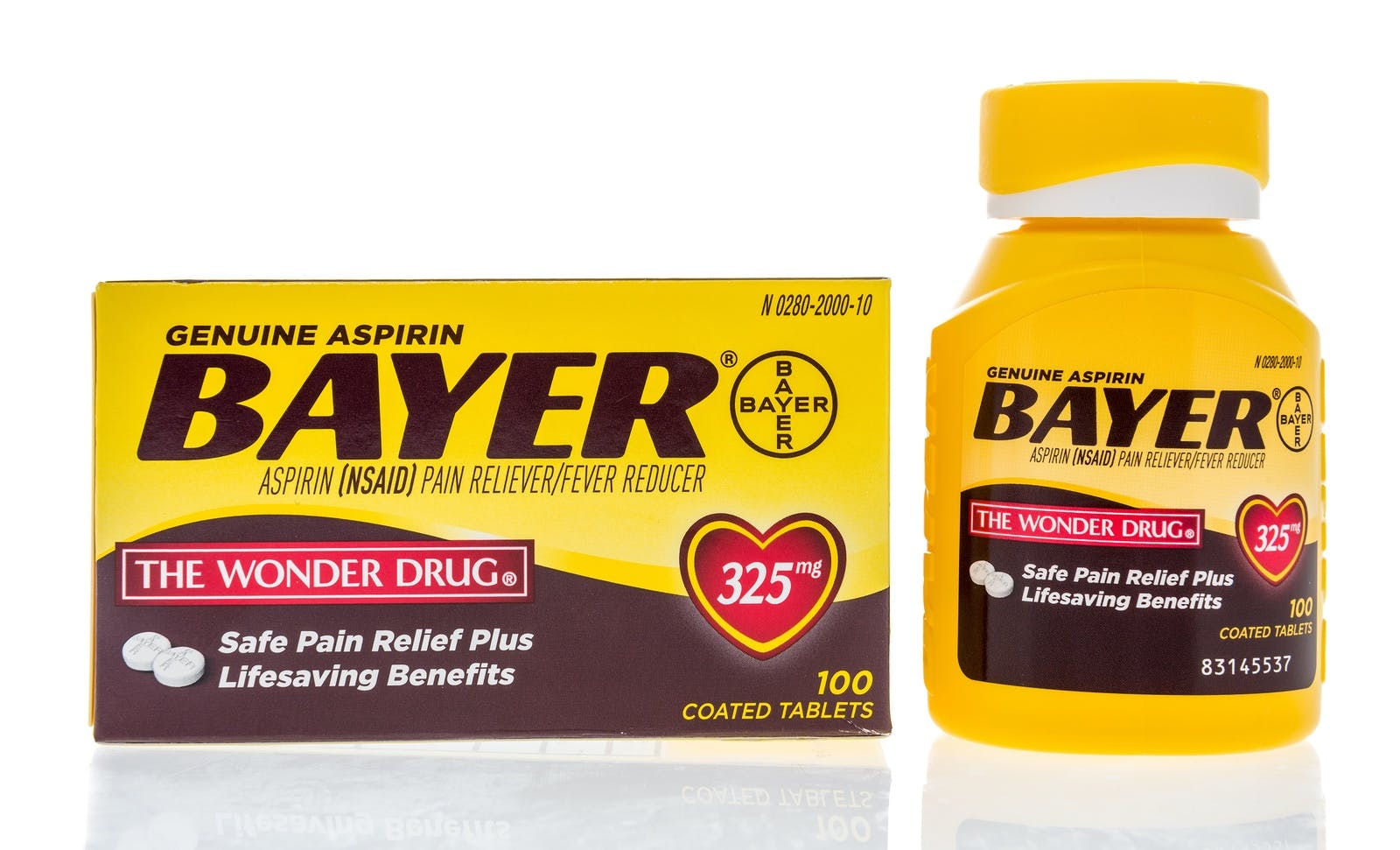
When you think of aspirin you probably think of 1) a pain reliever, 2) a fever reducer and 3) heart attack protection for high-risk patients. But for more than three decades, we have been talking about aspirin and cancer. Why hasn’t the medical profession embraced the idea that aspirin might prevent or help control cancer?
- Not in whispers
- Not as a footnote
- Not as an “interesting but unproven” concept
I mean really shouting about aspirin and cancer given the weight of the evidence that keeps piling up year after year.
The Aspirin Handbook:
Back in 1993, when Terry and I coauthored The Aspirin Handbook with Tom Ferguson, MD, we wrote something that still feels strangely prophetic:
“You can talk about heart attack and stroke prevention until you are blue in the face, but if you really want to catch someone’s attention, all you have to do is whisper that aspirin could prevent cancer—or reduce the likelihood it will return.”
We also wrote that aspirin is:
“the Rodney Dangerfield of the drug world”
In other words: Aspirin
“Don’t get no respect!”
More than 30 years after we whispered that aspirin and cancer had been overlooked for far too long, there is now a full-throated chorus supporting the benefits of aspirin. And yet, many healthcare professionals still barely clear their throats.
A Letter About Aspirin and Cancer That Stopped Us Cold!
Every once in awhile we receive a comment on our PeoplesPharmacy.com website that makes the science feel intensely personal.
Q. I’m 76 years old, and I’ve taken an aspirin every day since I was 28 because of arthritis. Although cancer runs in my family on both sides, I’ve never had cancer of any sort.
My dad died of prostate cancer. My mom has had breast cancer with both breasts removed. She also had skin cancer. My sister had breast cancer in both breasts. My first cousin had breast cancer and thyroid cancer. My aunt and another first cousin both died of colon cancer. None of them took aspirin unless they had a headache.
Like another person who wrote to you, I definitely believe aspirin has helped me avoid cancer. I’ve taken an aspirin every day for almost 50 years.
A. The previous writer focused on colon cancer, which was prevalent in that family. As we responded, there is evidence that regular aspirin use may reduce the risk of colorectal cancer in people with genetic susceptibility (New England Journal of Medicine, Sept. 18, 2025).
Let me summarize how cancer has profoundly impacted your family:
- Your father died of prostate cancer
- Your mother had breast cancer in both breasts, plus skin cancer
- Your sister had bilateral breast cancer
- A cousin had breast and thyroid cancer
- An aunt and another cousin died of colon cancer
Your family’s history of cancer suggests a genetic component. Among genetically vulnerable individuals, low-dose aspirin appears to be useful in reducing the chance of certain malignancies (JAMA Oncology, Nov. 1, 2025). The evidence appears to be strongest for colorectal cancer (Medicine, Sep. 5, 2025).
Breast cancer (Cancer Epidemiology, Biomarkers & Prevention, Dec. 1, 2025) and skin cancer (World Journal of Oncology, Dec. 2022) both appear less likely among regular aspirin users.
There are also data supporting the use of aspirin against prostate cancer (Journal of Clinical Medicine, Aug. 18, 2020).
No one should undertake prolonged aspirin use unless under medical supervision. Stomach ulcers and bleeding problems are serious aspirin side effects. Drug interactions are also a concern.
Aspirin and Cancer Survival:
The person who wrote to us about her family history of cancer concluded:
“I definitely believe aspirin has helped me avoid cancer.”
Most healthcare professionals would likely dismiss such a story as coincidence. But the problem with brushing off this idea is that the science increasingly backs it up.
The strongest evidence has long centered on colorectal cancer. As early as 1991, a landmark New England Journal of Medicine (Dec. 5, 1991) study reported that regular aspirin users were 40 to 50 percent less likely to die of colon cancer.
Here is how they describe this outcome in their own words:
“The risk of death from colon cancer among persons using aspirin 16 or more times per month remained approximately half that of nonusers, and the trend toward decreasing risk with increasing dose remained statistically significant in both sexes.
“In contrast to aspirin, acetaminophen was not associated with a decrease in the risk of fatal colon cancer, in either the cohort analysis or the case–control analysis. Among users of acetaminophen who took no aspirin, there was a statistically insignificant trend toward increased risk.”
Fast Forward 34 Years:
Another research paper published in the New England Journal of Medicine (Sept. 18, 2025) reports that people taking aspirin had a significantly lower chance of colorectal cancer recurrence. The Swedish scientists were specifically looking at a genetic predisposition to colorectal cancer because of a mutation referred to as PIK3CA. The participants took half an aspirin tablet (160 mg) daily for three years.
The conclusions of the latest study on aspirin and cancer in the most prestigious medical journal in the world:
“The trial showed that aspirin led to a significantly lower incidence of colorectal cancer recurrence among patients with PIK3CA hotspot mutations than placebo over a 3-year period and provided evidence that a benefit of aspirin is also predicted by the presence of other somatic alterations in PI3K pathway genes. Taken together with previous observational, genomic, and early trial data, our findings support the integration of aspirin into clinical practice for a molecularly defined subgroup of patients with colorectal cancer.”
The History of Aspirin and Cancer Is One of Medical Mistrust:
Over the decades the number of medical articles written about aspirin and cancer has increased dramatically. If you put the terms aspirin + cancer into a National Library of Medicine (PubMed) search you get 7,713 articles. That is on December 29, 2025. It will continue to increase during 2026 because researchers find this a fertile ground for investigation.
If you click on this article you can learn much more about aspirin and cancers such as skin, lung, liver, esophagus, breast, and stomach. But despite such research, most clinicians resist the idea that aspirin might have anticancer benefits. The majority of cardiologists now discourage routine use of aspirin as a heart attack prevention strategy unless someone is at high risk and/or has already had a heart attack.
We find this a bit puzzling though. President Donald J. Trump gets the best medical care any person could possibly imagine. He receives extensive medical exams and follow-up care at the Walter Reed National Military Medical Center. The physicians there all practice “evidence based medicine.” It should come as a surprise, then, to learn that President Trump takes a daily aspirin. He has never had a heart attack.
The American College of Cardiology and the American Heart Association advise against daily aspirin unless someone has a prior history of cardiovascular disease. We’re not sure what to make of that anomaly.
The Downsides of Daily Aspirin:
It’s not all good news, about aspirin. Not everyone with colon cancer may benefit.
A recent study in the International Journal of Genomics (Dec. 17, 2025) concludes:
“We developed a validated metastasis gene predictive model. Colon cancer patients with upregulated NOX4, CXCL8, CXCL5, GDF15, or MMP13 may not benefit from aspirin chemoprophylaxis. Conversely, patients showing aspirin-induced downregulation of E2F1, CCNE1, VEGFA, and MMP3 may derive chemoprophylactic benefit.”
In other words, some genetic variants will benefit from aspirin treatment and others may not.
And a study in the Journal of Psychiatric Research (Dec. 21, 2025) reveals that if aspirin is combined with SSRI-type antidepressants such as paroxetine (Paxil), there could be an increased risk of gastrointestinal bleeding.
Drug interactions are a serious risk with aspirin. No one should ever undertake long-term aspirin treatment without careful consultation with a physician and pharmacist. Drug interactions with aspirin can be a serious problem. Bleeding ulcers and bleeding strokes are also serious risks that must never be ignored.
Final Words About Aspirin and Cancer:
Aspirin has been available for more than 125 years. It remains one of the least expensive drugs in the world. A bottle containing 200 tablets of brand name Bayer aspirin would cost about $11 at a discount pharmacy. There is no anti-cancer treatment in the world that comes close to that price. Many of our most sophisticated treatments now cost hundreds of thousands of dollars. We are not suggesting that aspirin is a substitute for standard cancer care. We are suggesting that aspirin deserves a little respect.
Aspirin is not fringe science! Aspirin’s anticancer effects are not wishful thinking. Aspirin is not a cancer cure, but it does appear to have anticancer activity. We do not understand why so many healthcare professionals downplay aspirin’s benefits while emphasizing its risks. Aspirin, just like all medicines, has positives and negatives. Balancing the pros against the cons is always a challenging process.
The 76-year-old reader who contacted us did not have a crystal ball. She did not take aspirin to prevent cancer. She took it for arthritis. Yet she has outlived cancer in a family where it struck again and again. She did so while participating in an “n of 1” experiment and yet it is one of the longest unintentional experiments in preventive medicine. Her story does not prove aspirin prevents cancer. But when you take her experience, along with genetic insights and randomized trials, it asks a question that should no longer be ignored:
What if aspirin has been telling us the truth all along?
What do you think? Please share your thoughts about aspirin in the comment section below. If you have had a bad reaction to aspirin, we want to hear from you as well. And if you think someone might benefit from this article, please share it. Thank you for your support.
Citations
- Thun, M.J., et al, "Aspirin Use and Reduced Risk of Fatal Colon Cancer," New England Journal of Medicine, Dec. 5, 1991, DOI: 10.1056/NEJM199112053252301
- Martling, A., et al, "Low-Dose Aspirin for PI3K-Altered Localized Colorectal Cancer," New England Journal of Medicine, Sept. 18, 2025, doi: 10.1056/NEJMoa2504650
- Petrelli, F., et al, "Effect of aspirin use on cancer incidence and mortality: An updated systematic review and meta-analysis," Public Health, Aug. 25, 2025, doi: 10.1016/j.puhe.2025.105924
- Thao, L.T.P., et al, "Low-Dose Aspirin for Individualized Cancer Prevention in Older Adults: A Secondary Analysis of the ASPREE Randomized Clinical Trial," JAMA Oncology, Nov. 1, 2025, doi: 10.1001/jamaoncol.2025.3593
- Yang, S., et al, "Genetically predicted causal relationship between aspirin and colorectal cancer in individuals of European ancestry," Medicine, Sept. 5, 2025, doi: 10.1097/MD.0000000000044292
- Wang, X., et al, "Aspirin Use and Risk of Breast Cancer Recurrence in Chinese Patients," Cancer Epidemiology Biomarkers & Prevention, Dec. 1, 2025, doi: 10.1158/1055-9965.EPI-25-0842
- Frankel, L., et al, "The Association Between Aspirin and Basal Cell Carcinoma: A Clinical and Financial Analysis," World Journal of Oncology, Dec. 2022,
- Hatano, K., et al, "Application of Anti-Inflammatory Agents in Prostate Cancer," Journal of Clinical Medicine, Aug. 18, 2020, doi: 10.3390/jcm9082680