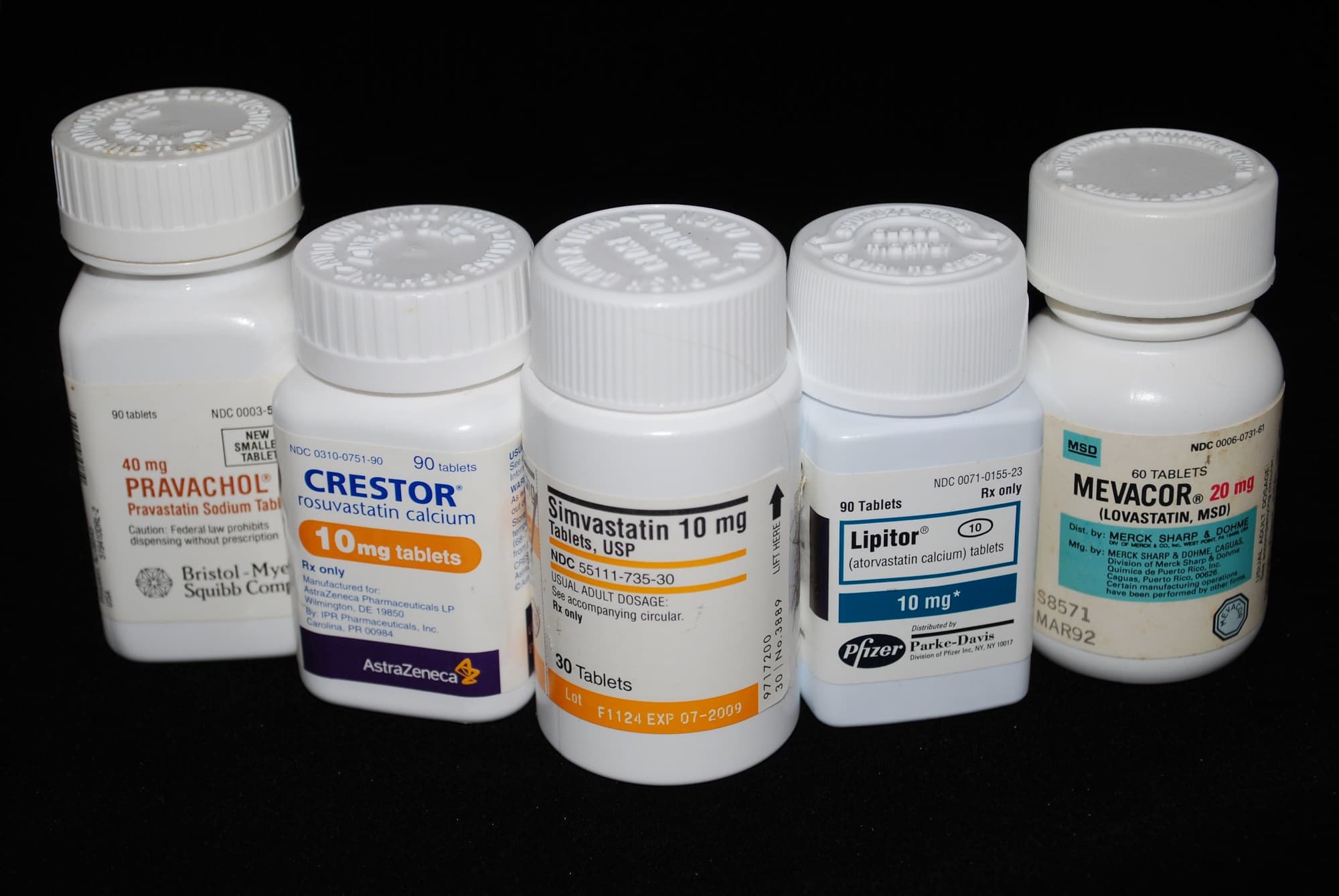
Statins remain a never-ending source of controversy. After nearly 40 years, doctors have debated the pros and cons of statins with little resolution. Over 50 million Americans take a drug such as atorvastatin, rosuvastatin or simvastatin every day. Many cardiologists believe that such statins have few, if any, side effects. But one especially controversial symptom that our readers have reported is cognitive dysfunction. The question remains: Do statins impair memory? A new study in the journal NeuroToxicology (March 2026) suggests that they can.
For the first time, researchers offer a scientific explanation for the many reports we have received over the decades. Will statin enthusiasts accept the possibility that such drugs interfere with brain function? Probably not. Here is a very short overview of what we have learned from readers of our syndicated newspaper column and what the latest research has to offer to unravel this mystery.
A Short Historical Perspective
The first inkling we had that statins might impact cognitive function was in May of 2000.
That’s when a reader of our syndicated newspaper column wrote to ask:
“Last fall my doctor prescribed Lipitor, and after several months I found I was having trouble remembering names and coming up with the right word. At dinner once I said ‘please pass the elephant’ though I wanted the bread. I told my husband I thought I’d had a stroke.
“In January a friend came to visit. She was worried about her memory and couldn’t think of her daughter’s name on the telephone. She too was on Lipitor.
“I asked my doctor to prescribe a different cholesterol medicine. Within a couple of weeks I was more mentally alert. But my friend (still on Lipitor) was in worse shape and afraid she would lose her job. Her doctor said forgetfulness could not be due to the drug. She finally stopped taking Lipitor anyway and now is much sharper.
“I am concerned that some people taking Lipitor might think such a reaction was just due to getting older. Is this side effect well known?”
We responded with this answer:
A. This side effect is not reported in the official prescribing information for Lipitor (atorvastatin). Without a study it is impossible to determine whether this powerful cholesterol-lowering drug is causing confusion and memory loss.
Cholesterol is often viewed as a dangerous compound, but it is an essential building block for many crucial chemicals and is also important in nerve function. Studies suggest that people with very low cholesterol may be more vulnerable to depression, so it’s not inconceivable that lowering cholesterol significantly might affect mental function for some people.
That was the first trickle in what eventually turned into a raging flood. Over the last two decades we have heard from hundreds, if not thousands, of people who experienced memory problems or cognitive difficulties after taking statins. Most were convinced that statins impair memory.
The FDA Has Offered a Small Acknowledgement that Statins Impair Memory
In 2000 there was no mention of cognitive impairment in the prescribing information for most statins.
Now, however, the FDA requires this warning for atorvastatin:
“There have been rare reports of cognitive impairment (e.g., memory loss, forgetfulness, amnesia, memory impairment, confusion) associated with the use of all statins. Cognitive impairment was generally nonserious, and reversible upon statin discontinuation, with variable times to symptom onset (1 day to years) and symptom resolution (median of 3 weeks).”
Many healthcare professionals dismiss such complications. Some insist that they are not real because they did not show up in the original randomized controlled trials necessary for FDA approval. Others maintain that if such complications occur, they are extremely rare.
Dr. Dwayne Graveline’s First Communication
In March of 2001 we heard from Dr. Duane Graveline.
Here is his original message:
Q. I am a retired family doctor and former astronaut (www.spacedoc.net). Two years ago at my annual astronaut physical at Johnson Space Center (JSC) I was started on Lipitor. Six weeks later I experienced my first episode of total global amnesia lasting six hours. They couldn’t find anything wrong with me so I suspected Lipitor and discontinued it.
Other doctors and pharmacists did not seem to be aware of similar problems. Believing it must have been a simple coincidence, I decided a year later to restart Lipitor. Six weeks later I was brought to the ER with a twelve-hour episode of total global amnesia. I am more convinced than ever of a Lipitor relationship.
Do you have any information on other people who may have had such an experience? I have my astronaut physical again in a few weeks and would like to tell the doctors about this if you have any data. This drug is in common use at JSC and for all I know other astronauts may be on it as part of their enthusiasm for preventive medicine.
We checked the medical literature and concluded that total global amnesia was a pretty rare complication of statins. We also consulted Beatrice Golomb, M.D., Ph.D., Principal Investigator of the Statin Study at the University of California, San Diego.
She told us:
“We have received dozens of reports from people citing significant memory problems with Lipitor that seem to resolve with discontinuation. Some are from older people who have gone from very bright and verbal to not recalling the names of their children or grandchildren, in short order; and others are from younger people who have rather abruptly developed memory problems. Several have gone so far as to get work-ups for early Alzheimer’s in their 40s or early 50s, only to find that the problems resolved when they discontinued statin drugs.”
Dr. Graveline went on to write several books including Lipitor, Thief of Memory; Statin Drugs, Side Effects and The Misguided War on Cholesterol; The Statin Damage Crisis and The Dark Side of Statins: Plus: The Wonder of Cholesterol. Dr. Graveline died on Sept. 5, 2016.
Can Statins Impair Memory in 2026?
During the last few decades, we have continued to receive many reports of memory problems, fuzzy thinking and other cognitive difficulties associated with statins.
Here is a question that came in via email:
Q. I recently read that statins don’t cause memory problems. Let me tell you about my experience with statins.
Over the last two decades I have been prescribed simvastatin, atorvastatin, fluvastatin and pravastatin. I would not call my problem memory loss. What I get is stupid. Really! It was difficult to figure out slightly complex tasks at work. I was often in a daze, not able to focus. It was like my brain could not process information. I couldn’t think—literally. I eventually stopped the statins.
I recently tried atorvastatin again. Within a week or so I started having the same problems. Now I take gemfibrozil and niacin to control my cholesterol. They do not affect my brain.
So, Do Statins Impair Memory?
A. Doctors disagree about whether brain fog is a side effect of statin-type cholesterol-lowering medications.
An epidemiological study from Australia concluded that:
“statin therapy was not associated with any decline in memory or cognition over six years” (Journal of the American College of Cardiology, Nov. 2019).
Another group of Australian scientists analyzed studies and case reports (Expert Reviews in Clinical Pharmacology, April 27, 2019).
They concluded that:
“statin-induced cognitive decline does exist, needs to be better recognized and requires more studies of prevention and treatment.”
You are forgiven if you find these contrasting statements confusing. Even some doctors admit to being confused. One cardiologist we appreciate admits that statins affected him personally. He experienced brain fog and other cognitive dysfunction. He still thinks they are great drugs, though.
New Science on Why Statins Impair Memory
A new study sheds light on a possible mechanism to explain how statins might lead to cognitive difficulties. Researchers writing in the journal NeuroToxicology (March 2026) report that rosuvastatin affects the function of brain cells called microglia. These cells patrol the brain, removing debris and fighting infections. They also control inflammation and help keep neurons healthy and working well.
The research showed that rosuvastatin interferes with microglia signaling. As a result, these cells are less able to move around the brain to address trouble. They also age far more quickly and become less able to calm inflammation or remove pathogens.
The conclusion:
“These findings suggest that rosuvastatin-induced disruption of microglial function may contribute to cognitive impairment.”
This new research may help explain why so many of our readers have complained about brain fog, memory problems and mental confusion. There are even reports of transient global amnesia (TGA) in which people temporarily forget key aspects of their life.
Fortunately, these reactions do not appear to be common. Most people can take a statin without experiencing cognitive impairment. But the new research suggests that prescribers should take this complaint seriously, now that there is a plausible explanation for it.
Statin Side Effects in 2026?
We doubt that the statin side effect controversy will be resolved any time soon. Just as in politics, the statin enthusiasts and the statin critics are dug in to their respective positions. It is not likely that there will be agreement any time soon about the question: do statins impair memory?
Anyone who would like to read more about statin side effects and other drugs that could affect cognitive function may wish to consult our book Top Screwups. It is available at this link.
Please share your own statin story in the comment section below. Perhaps your physician would want to read the new study in NeuroToxicology (March 2026). It offers a comprehensive and scientific explanation for why statins might contribute to cognitive dysfunction.
Citations
- Samaras, K., et al, "Effects of Statins on Memory, Cognition, and Brain Volume in the Elderly," Journal of the American College of Cardiology, November, 2019, DOI: 10.1016/j.jacc.2019.09.041
- Tan, B., et al, "Evidence and mechanisms for statin-induced cognitive decline," Expert Review of Clinical Pharmacology, April 27, 2019, doi: 10.1080/17512433.2019.1606711
- Sang, X., et al, “ Microglia as a key mediator in rosuvastatin-associated cognitive impairment,” NeuroToxicology, March, 2026, doi: 10.1016/j.neuro.2026.103405