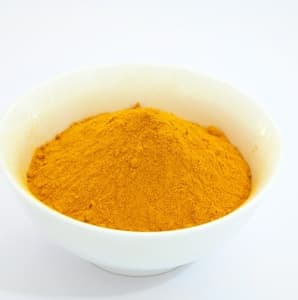
Who would imagine that curry, guacamole, cranberries or mango could interact with a medicine to cause a potentially life-threatening interaction? All these foods may alter the action of warfarin (Coumadin), an anticoagulant used to prevent blood clots. What should you know about food-drug interactions? Did you realize that turmeric interacts with warfarin?
Scary Food-Drug Interactions:
Both doctors and patients may overlook food-drug interactions when they are discussing a new prescription medication. As a result, patients may not realize when their eating habits put them in harm’s way. One reader learned about this the hard way.
Turmeric Interacts with Warfarin:
Q. Turmeric increases the anticoagulant effect of Coumadin. I have been on Coumadin for 15 years because of an artificial aortic valve.
I had read that turmeric was effective in lowering cholesterol and began sprinkling it on broccoli. My INR went up dramatically and my pharmacist said, “STOP!” Have there been any studies on the blood-thinning effect of turmeric?
A. You are not the first person to report this interaction between Coumadin (warfarin) and turmeric. Others have reported a spike in their INR lab values (a measure of blood anticoagulation) and we believe this is a dangerous combination. Our fear is that this could lead to a serious bleeding episode.
Interactions That Reduce the Effectiveness of Warfarin:
Coumadin is actually an exception. Most prescribers are aware of potential interactions between this blood-thinner and the vitamin K contained in green leafy vegetables. Excess vitamin K can reverse the effect of warfarin and lead to dangerous blood clots.
In response to this advice, however, people may restrict their diets too stringently. Some patients become frustrated wondering how to get their vitamins because they have been told to swear off all salads, vegetables and multi-vitamins containing vitamin K. Instead, health care professionals should tell them to get the same amount of vitamin K each day from food (as they would from a multivitamin). As a result, the prescriber could adjust the dose appropriately.
Very few people taking warfarin are warned that avocados, green tea or menthol cough drops could also interfere with warfarin’s effectiveness. Dietary supplements may pose a risk as well. St. John’s wort, Coenzyme Q10 and ginseng may interact in the same way.
Interactions That Increase Warfarin Activity:
Cranberry juice, mango, garlic, fish oil and turmeric (in curry or in curcumin pills), on the other hand, may increase the blood thinning activity of warfarin (Norwood et al, Journal of Pharmacy Practice, Dec. 2015). A recent review cites evidence that curcumin has anti-clotting activity (Keihanian et al, Journal of Cellular Physiology, June 2018). Scientists did research in rats to check out interactions between curcumin with warfarin and clopidogrel (Liu et al, Planta Medica, July 2013). They found that curcumin affects absorption of both warfarin and Plavix, but they saw no evidence of increased bleeding. The higher INR values that many patients have reported to us suggest that this combination is too tricky to try at home, however.
Other Food and Drug Interactions:
Many other drugs and dietary supplements can be affected by food or drink. Tea (hot or iced) can reduce the absorption of iron from pills or non-meat foods such as spinach. Coffee and foods based on soybeans cut absorption of the thyroid hormone levothyroxine (Skelin et al, Clinical Therapeutics, Feb. 2017).
Fiber in bran can diminish the absorption of a powerful heart medicine called Lanoxin (digoxin) and statin-type cholesterol-lowering medicines such as Lipitor (atorvastatin) and Zocor (simvastatin). High fiber foods such as bran muffins can also make certain antidepressants less effective.
Watch Out for Peppermint:
Peppermint is a popular ingredient in candy, chewing gum, cough drops and herbal tea. It is used in dietary supplements for treating irritable bowel syndrome. Research shows that peppermint may affect enzymes in the body that that help process many medicines (Unger & Frank, Rapid Communications in Mass Spectrometry, 2004). Unfortunately, the practical implications of this activity have not been explored.
Food-Drug Interactions with Grapefruit:
Grapefruit has a similar but stronger impact. It can raise blood levels of a range of medications including Lipitor, Mevacor and Zocor as well as BuSpar, Estrace, Plendil, Sonata, Tegretol and Viagra. Significantly, a recent review found that grapefruit juice increased blood levels and duration of the opioid oxycodone (Feng, Zhu & Zhou, Journal of Pain Research, May 24, 2017). The volunteers in the study drank almost a cup of grapefruit juice three times a day.
Certain drugs used to treat overactive bladder, such as fesoteradine (Toviaz), also interact with grapefruit and grapefruit juice (Pasko et al, International Journal of Clinical Pharmacy, Dec. 2016). As a result, people may be more likely to suffer side effects such as dry mouth, irregular heartbeat, blurred vision, headache, difficult urination or constipation.
The allergy drug fexofenadine (Allegra) interacts with grapefruit juice as well, albeit through a different mechanism (Yu et al, Journal of Pharmaceutical Sciences, online April 13, 2017). Paradoxically, this interaction dramatically decreases the amount of fexofenadine in the bloodstream.
Learn More:
Such food-drug interactions can be confusing. Anyone who would like to know more may want to consult our Guides to Coumadin, Food and Grapefruit Interactions.
Drugs can interact with other medicines as well as with foods, beverages or dietary supplements. Bad combinations cause thousands of deaths each year. The best protection is information and vigilance. Your health professional may not be aware of every possible danger, so you need to protect yourself.
Revised 5/28/18