
Q. I have gotten conflicting information from my doctor, a couple of pharmacists and patient information inserts about how to avoid interactions between statins and grapefruit:
Don't take the medication with grapefruit juice.
Don't have grapefruit products at the same time of day as a statin.
It’s OK to have grapefruit products after, but not before, a statin.
Don't have more than 1 quart (though one said 8 oz.) of grapefruit products a day.
Don't have any grapefruit products at all while taking statins.
This warning applies to other citrus products beside grapefruit.
I hope you can clarify this. I have been avoiding grapefruit (though not other citrus) completely, and would like to be able to eat it again if it is safe to do so.
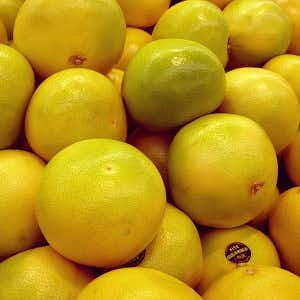
A. Certain cholesterol-lowering drugs such as atorvastatin (Lipitor), lovastatin (Mevacor) and simvastatin (Zocor) interact with compounds in grapefruit and its juice. These natural chemicals can slow the rate at which the drugs are processed by the body. This may result in a higher blood level of the drug and consequently a greater risk of side effects.
Only grapefruit and bitter orange (not regular oranges) contain the active compounds. The enzymes that are affected may show changed activity for more than 24 hours after a person drinks a glass of juice, so the idea that one could have grapefruit for breakfast and take a pill before bedtime is mistaken.
Some people are far more susceptible to this effect than others. We are sending you our Guides to Grapefruit Interactions and Cholesterol-Lowering Drugs for lots more information on the interaction and on statin drugs that are not affected by grapefruit.



I don't have any experience related to this article, but just a question and comment. If taking grapefruit with a drug may result in a higher blood level of the drug, why don't doctors prescribe LESS DRUG and MORE GRAPEFRUIT until the desired effects are reached with no side effects? It seems to me it's the drug, not the grapefuit, creating the dangerous side effects. Am I naive or dumb, but I have had this thought for a while...
In a different article in the newspaper--so many people write to you re: restless legs at nite. I have found that grapefruit juice prevents them and takes them away. If I happen to forget to take it and I get up at nite to drink it.
As a structural bodyworker I hear lots of reports from clients about pharmaceuticals, etc. Last week I had a client who related a detailed experiment he did (with his doctor's participation) in which he diligently took 8 oz of grapefruit juice daily. His doctor was amazed, but because of the positive result, ended up reducing my client's statin prescription to 10% of his pre-experiment dosage. My client says that this approach absolutely requires that he take his grapefruit juice as diligently as he takes his "other medications." He's quite happy to not have to take nearly so much of his pharmaceuticals.
By the way, I understand that the "grapefruit effect" is not limited to statins, but applies to many other pharmaceuticals as well... It bears repeating, however, to never change medications without your physician's agreement.
I also am against some of these statins. Have had reactions in the muscle weakness category with Lipitor, Zocor. I haven't found the one that works yet, if there is one. Hopefully I won't get the stroke before I find the right one. Trying to be healthy--but difficult to do.
I will receive a box of Honeybells in January. These are a cross between a grapefruit and an orange. Should these be treated the same as all grapefruit as far as how they affect statins?
I love the dried Pomelo (a large citrus fruit) product that Trader Joe sells. Does Pomelo, fresh or dried, interact with Statin drugs such as Simvastatin similar to grapefruit?
In my experience this is the kind of grey area where the typical G.P. will have no response other than what the drug company recommends. Obviously the drug companies are not going to provide any information (to your doctor) of the kind which says if you swing your diet to more fruits and vegetables including more grapefruit then you may not need to take Statins at all.
Certainly the possible consequent occurrence of rhabdomyolysis (the notable side-effect of statins) worries me because muscle aches are such vague symptoms. So what benefit taking a drug to prevent cardiovascular disease if one dies instead of kidney failure?
Likewise we will not see too much research done on the tradeoff between grapefruit consumption and statin use for the same commercial reasons. All in all, isn't it amazing how the medical profession is not interested in issues of prevention of disease, unless it comes in the form of a pill. Let's not switch your diet, but find another drug to offset the muscle damage so you can have your statins and grapefruit too.